Dr. Gymbro
←

#healthy aging

5 articles
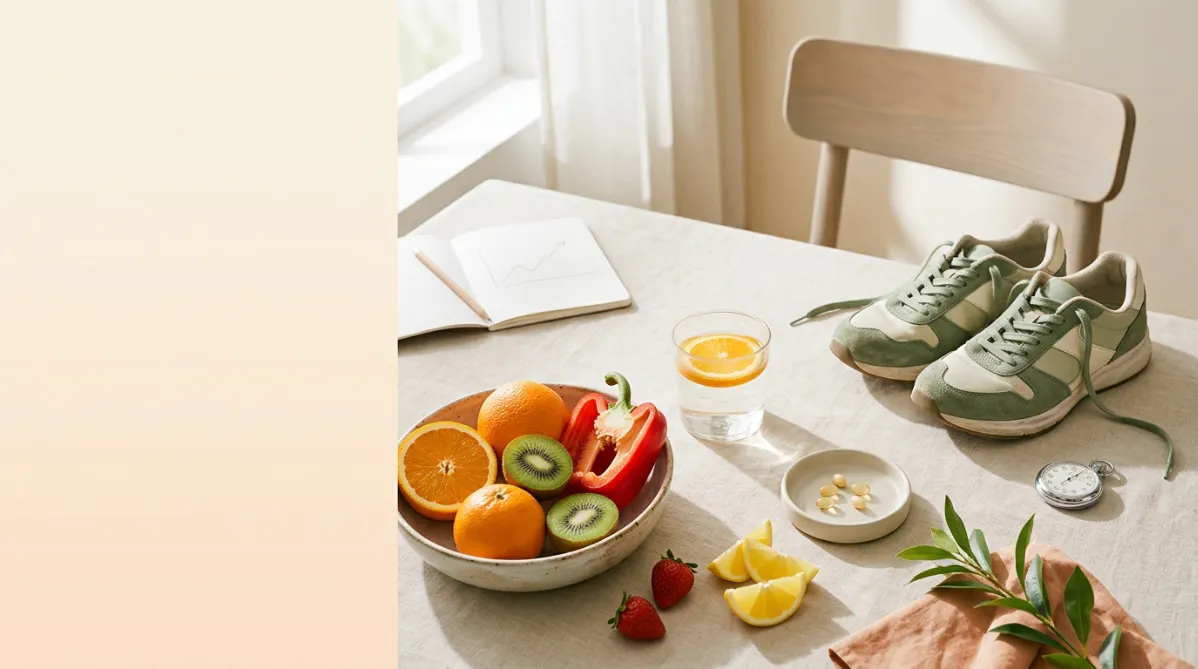
A bright, airy editorial still life photographed from slightly above on a pale oat-colored linen surface, in soft natural window light with gentle long shadows. In the foreground, a rustic ceramic bowl holds halved and whole oranges, glossy red bell pepper slices, and a few kiwi halves with emerald flesh. Beside it sit loose strawberries and a small pile of bright yellow lemon wedges. Their colors pop against the muted neutral palette. A single clear glass of water with a slice of orange rests nearby, catching the light.

On the right side of the frame, a pair of well-worn but clean walking sneakers in sage green and cream sits casually on the surface, with one lace loosely trailing. Behind them, a simple wooden chair with a light ash finish is partly visible and slightly out of focus, a quiet nod to the sit-to-stand test. A small stainless-steel stopwatch lies next to the shoes, with a subtle reflective glint.

A minimalist ceramic dish holds a few small, round, pale-yellow vitamin capsules, kept understated. A sprig of green leaves and a folded cotton napkin in soft terracotta add a warm accent. A small open notebook with a pencil rests in the upper left, its page blank except for faint, abstract pencil lines suggesting a simple rising graph, with no legible text.

The composition leaves generous negative space on the left third for title overlay, with a soft cream-to-peach gradient background. The mood is fresh, healthy, and contemplative, like a modern wellness magazine or a trendy online journal. The color palette is warm citrus orange, sunny yellow, sage green, and soft cream, with gentle terracotta accents. The depth of field is shallow, with crisp focus on the fruit and shoes and a creamy blur in the background. The overall look is clean, natural, and editorial, with fine film-like grain, true-to-life color, and a calm, optimistic tone. Landscape 16:9 framing.
nutrition

Una vitamina económica vinculada a piernas más fuertes al envejecer

BY DR. GYMBRO ·

Un amplio estudio británico con más de 5 000 adultos de 48 a 92 años mostró que las personas con niveles óptimos de vitamina C en sangre (≥ 50 µmol/L) caminaban más rápido y se levantaban de una silla con mayor rapidez que quienes tenían niveles bajos. En las mujeres, además, se observó una mayor fuerza de agarre ajustada por altura; en los hombres no se encontró relación alguna. La vitamina C procedente de los alimentos se asoció solo en mujeres y sin un patrón claro. Al ser un estudio transversal, no se puede afirmar que la vitamina C cause una mejor función. A continuación se explica qué indican los datos, qué no, y por qué podría valer la pena conocer tu nivel sanguíneo.
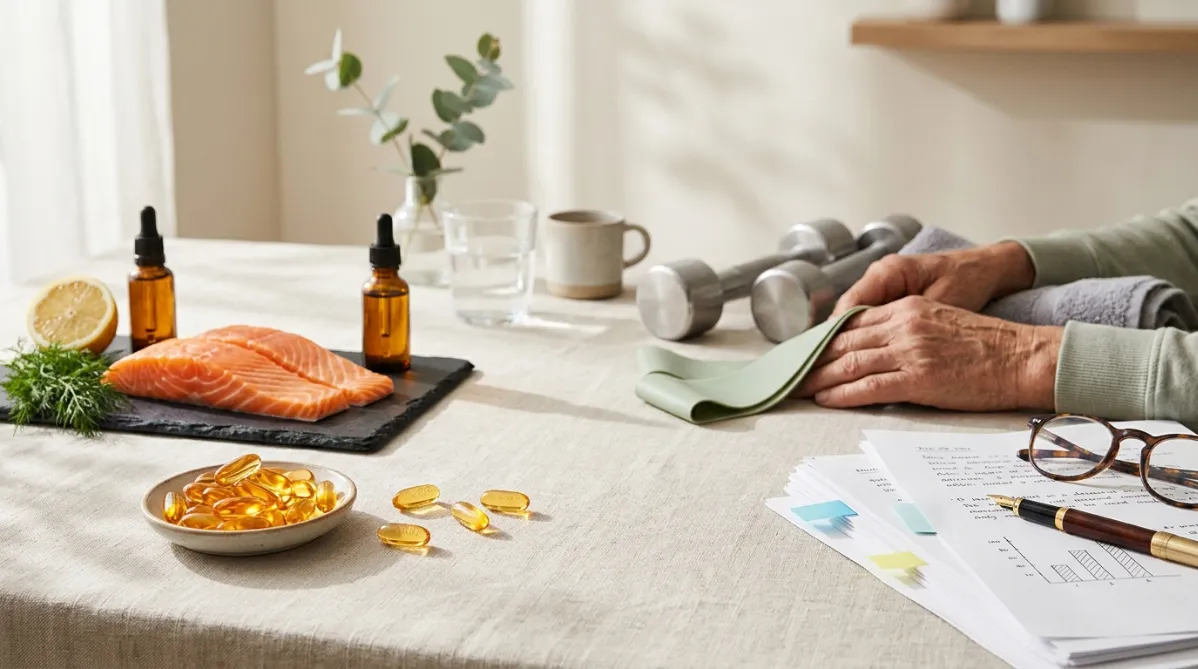
A softly lit editorial still life on a pale oatmeal-colored linen surface, shot from a slightly elevated three-quarter angle with a shallow depth of field. In the left foreground, a small ceramic dish holds several translucent golden-amber fish oil softgel capsules, glowing as if lit from within by warm morning window light. A few capsules are scattered casually beside it, catching crisp highlights. Just behind them, a sliced fresh salmon fillet with vivid coral-orange flesh rests on a matte slate board next to a sprig of dill, a halved lemon, and a small glass dropper bottle of golden oil.

In the soft-focus midground, a pair of weathered, capable older adult hands rests on the edge of the table, gently holding a pale sage-green resistance band, a hint of an active lifestyle. Beside them sits a modest set of brushed-steel dumbbells and a folded heather-gray towel. Subtle natural details add warmth: a glass of water, a small ceramic mug, and a sprig of eucalyptus in a bud vase.

On the right side, a tidy stack of printed research papers with a few pastel sticky tabs and a pair of thin tortoiseshell reading glasses sits on top, suggesting scholarly review. A fountain pen lies across the pages, with a few abstract handwritten notes and a simple hand-drawn bar chart visible but unreadable.

The palette is warm and calming: cream, soft sage, terracotta, honey gold, and coral accents against muted neutral tones. Window light enters from the left, producing long gentle shadows and a faint dappled leaf-shadow pattern across the linen. The background fades into a creamy blur of pale wall and a hint of a wooden shelf.

The composition leaves clean negative space across the upper right third for headline text overlay. The mood is trustworthy, health-forward, and modern, reminiscent of a contemporary wellness and science journal's photography. Fine film-like grain, natural color grading, high-resolution editorial photography, 16:9 landscape format.
nutrition

Aceite de pescado y músculos envejecidos: lo que realmente demuestran 14 estudios

BY DR. GYMBRO ·

El aceite de pescado se promociona como un escudo para los músculos que envejecen, pero ¿qué dice la evidencia? Una revisión umbrella de 2026 reunió siete ensayos controlados aleatorizados y siete metaanálisis en adultos de 55 años o más. Encontró aumentos modestos pero medibles en la fuerza, con la señal más clara en la fuerza y la función de la parte inferior del cuerpo. La fuerza de agarre, la velocidad al caminar y la fuerza del tronco mostraron mucha menos certeza, y la gran superposición entre los estudios hace que la evidencia sea más frágil de lo que parece.
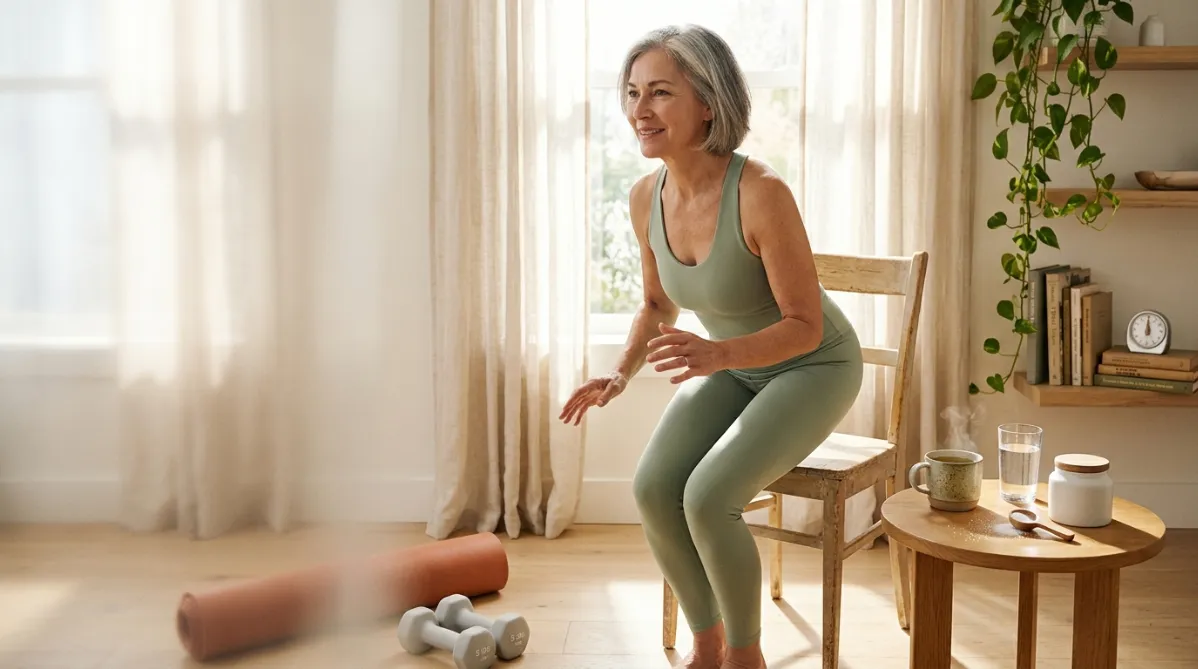
A wide landscape editorial photograph of a bright, airy sunlit living room with pale oak floors and a large window with sheer linen curtains. In the center, a woman in her late 50s with silver-streaked hair, wearing soft sage-green athletic wear, rises from a simple wooden chair, caught mid-motion with a calm, determined expression. Her hands are lightly extended forward for balance. Beside her on a small round oak side table sits a ceramic mug of tea, a glass of water, and a small matte white jar with a wooden scoop resting beside it, a few fine white crystalline grains scattered on the tabletop. In the soft-focus foreground, a pair of light-gray dumbbells and a rolled terracotta-colored yoga mat rest on the floor. A trailing green pothos plant spills from a shelf in the background, with a stack of books and a small analog kitchen timer nearby.

The color palette is warm and muted: cream, sage green, soft terracotta, natural wood, and gentle morning-gold light. Light streams diagonally across the scene, creating long soft shadows and a subtle glow on the woman's shoulders. Shallow depth of field blurs the background gently, while the woman and the table remain crisp. The composition follows the rule of thirds, with the woman on the right and generous negative space on the left, suited for headline overlay. The mood is hopeful, grounded, and modern, like a high-end wellness magazine or a trendy health journal. Natural film-like grain, soft contrast, and a slight matte finish give it a contemporary lifestyle photography feel. There are no futuristic elements, no digital overlays, and no text.
science research

La creatina ayuda a mujeres con rodillas dañadas a levantarse mejor, pero no por lo que piensas

BY DR. GYMBRO ·

La creatina suele promocionarse entre los jóvenes que levantan pesas, pero un ensayo aleatorizado y doble ciego la probó en mujeres posmenopáusicas con osteoartritis de rodilla. Tras 12 semanas de entrenamiento de piernas, el grupo que tomó creatina mejoró su puntuación en la prueba de levantarse de una silla de 15,7 a 18,1, mientras que el placebo apenas cambió (de 15,0 a 15,2). La creatina también redujo la rigidez, aumentó la masa magra y mejoró la calidad de vida. Sin embargo, el alivio del dolor y la fuerza máxima en la prensa de piernas no fueron superiores al placebo. Aquí se muestra lo que revelan los números y a quién podría ayudar realmente.
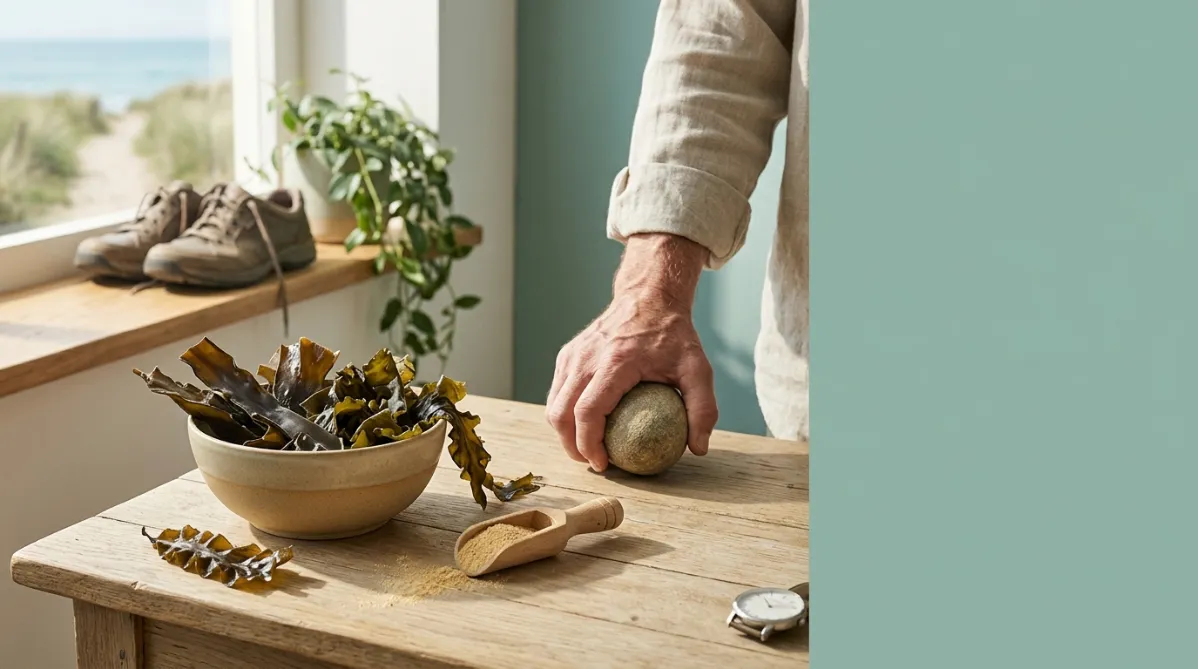
A wide, softly lit editorial photograph of a rustic light-oak table by a sunny window. On it, a handful of dried brown kelp and wakame seaweed fronds spill from a handmade matte ceramic bowl in warm sand tones, their glossy, ruffled edges catching the light. Beside the bowl sits a small wooden scoop holding fine golden-beige powder, with a little of it dusted across the table. In the middle ground, an older adult's weathered but strong hand grips a smooth, rounded river stone, with the knuckles and tendons subtly emphasized to suggest strength and vitality. Only the hand and part of a forearm in a soft oatmeal linen sleeve are visible.

In the background, slightly out of focus, a pair of worn leather walking shoes rests on a windowsill next to a trailing green plant. Beyond the window, a blurred coastal path winds through dune grass toward a pale blue sea, hinting at walking and an active daily life. A simple analog wristwatch lies on the table's edge, a quiet nod to the twelve-week timeline.

The palette is muted and natural: sage green, warm sand, soft ocean teal, and creamy off-white, with deep olive-brown accents from the seaweed. Morning light streams in from the left, casting long, gentle shadows and a faint golden glow. The depth of field is shallow, with crisp focus on the hand and seaweed and a creamy bokeh background. The composition follows the rule of thirds, with the hand and bowl on the left and generous negative space on the right for headline text. The mood is calm and hopeful, with a clean, contemporary wellness-magazine feel. The image is shot as if on a 50mm lens with subtle film grain and a natural, uncluttered, tactile look.
science research

El fucoidano de alga marina aumentó la fuerza de agarre en mayores de 60 años en 12 semanas

BY DR. GYMBRO ·

La pérdida de fuerza con la edad es una de las consecuencias más comunes y menos comentadas del envejecimiento, y el entrenamiento de resistencia no es una opción para todos. Un ensayo aleatorizado de 12 semanas descubrió que un fucoidano de alga marina de bajo peso molecular, administrado a 1.650 mg al día, mejoró significativamente la fuerza de agarre y el desempeño en la prueba de caminata de seis minutos en adultos mayores de 60 años. Sorprendentemente, la masa muscular no cambió y la combinación con BCAA y vitamina D no aportó beneficios adicionales. El estudio, pequeño y centrado en un único producto de marca, ofrece una pista prometedora más que una conclusión definitiva. A continuación, se resume lo que encontró el estudio y qué implica en la práctica.
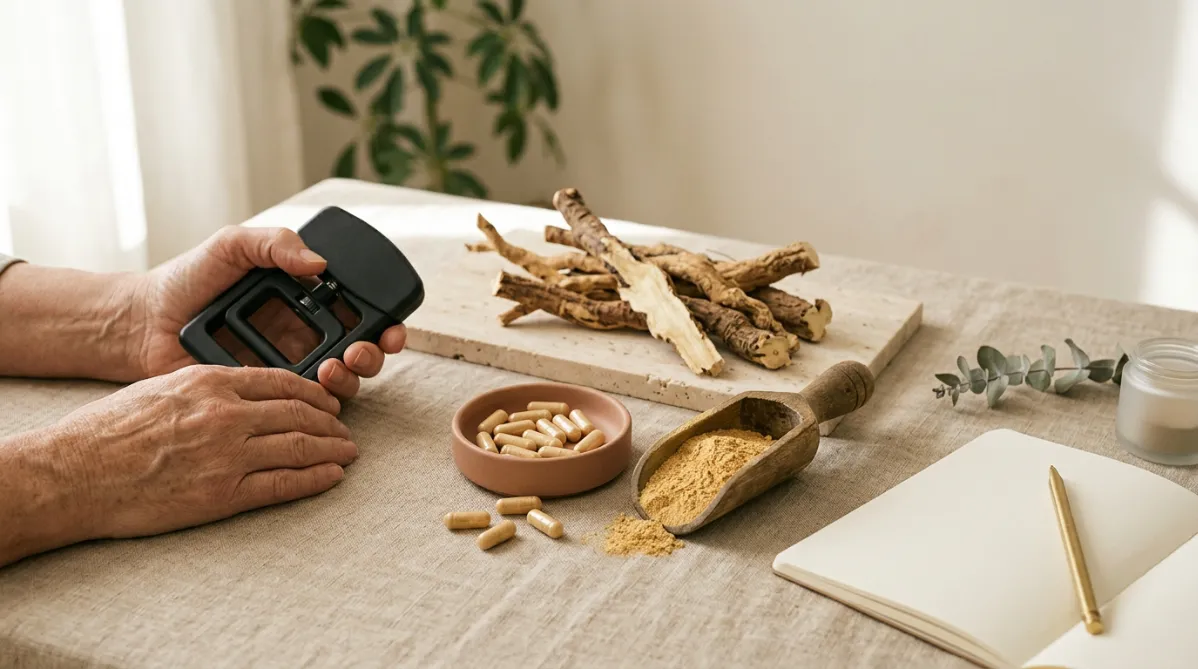
A landscape editorial still life on a warm, softly textured oatmeal-colored linen surface, photographed from a slightly elevated three-quarter angle in gentle morning window light. At the center sits a small matte ceramic dish in muted terracotta holding a handful of pale amber capsules, with a few spilled casually onto the linen. Beside it is a rustic wooden scoop holding a pile of fine, golden-tan powdered root extract. Behind these, a loose arrangement of raw Tongkat Ali root pieces, gnarled and fibrous with pale cream interiors and rough brown bark, rests on a slab of pale travertine stone.

On the left, a pair of older adult hands, seen only from the wrists down, with natural skin texture, hold a simple matte-black hand dynamometer in a relaxed grip. The tone is dignified and healthy, not athletic or posed. A sage-green ceramic mug of tea sits slightly out of focus nearby, with a thin curl of steam.

On the right, a minimalist open notebook with blank cream pages and a slim brass pen lies beside a sprig of dried eucalyptus. A small frosted glass jar adds a quiet pharmacy-apothecary note.

The palette is earthy and calm: warm beige, terracotta, sage, soft brown, and cream, with subtle brass accents. The shadows are long and soft, the depth of field shallow with a creamy blurred background of a sunlit neutral wall and a hint of a leafy plant. Negative space on the upper right suits headline overlay.

The style is modern wellness-journal photography, like a high-end health magazine or a Kinfolk-inspired lifestyle site: tactile, calm, and refined, with subtle film grain and natural color grading. There is no text, no logos, no futuristic elements, and no clinical lab equipment.
nutrition

Tongkat Ali: 400 mg durante 5 semanas incrementaron la testosterona y la fuerza de agarre

BY DR. GYMBRO ·

Tongkat Ali es uno de los potenciadores de testosterona más buscados en internet, y un pequeño estudio piloto aporta datos humanos reales. Veinticinco adultos activos de 57 a 72 años tomaron 400 mg de extracto al día durante 5 semanas, y tanto la testosterona total como la libre aumentaron, al mismo tiempo que la fuerza de agarre. El nivel de testosterona libre en las mujeres también subió, aparentemente porque el SHBG cayó. Pero al no haber grupo placebo, los resultados son prometedores y no concluyentes.

This page is available in