Dr. Gymbro
←

#doms

2 articles
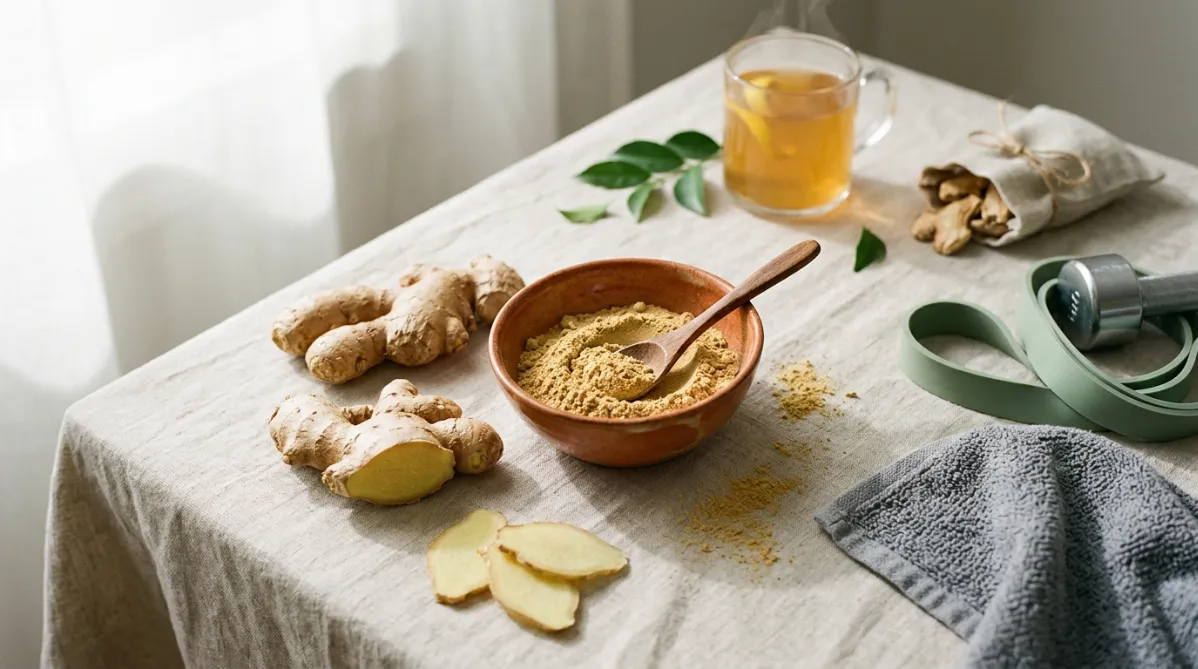
A wide, editorial-style still life photographed from slightly above on a pale oat-colored linen surface, lit by soft natural window light from the left. At the center sits a rustic ceramic bowl of finely ground golden-tan ginger powder, with a small wooden spoon resting in it and a light dusting of spice across the cloth. Beside it lie several whole ginger rhizomes, knobby and honey-brown. One is sliced open to show its pale yellow, fibrous interior, and a few paper-thin slices fan out in the foreground. On the right, a folded heather-gray gym towel, a matte sage-green resistance band coiled loosely, and a single brushed-steel dumbbell sit just inside the frame, softly out of focus. A glass of warm amber ginger tea steams faintly near the upper right, with a thin curl of lemon peel inside. A few fresh green leaves and a small linen pouch of dried ginger add texture. The palette is warm and muted: cream, soft gold, sage, terracotta, and charcoal accents. The shallow depth of field keeps the ginger bowl and sliced root crisp while the gym elements melt into a gentle blur. Shadows are long and soft, and the negative space on the upper left leaves room for a headline. The mood is calm, clean, and modern, like a contemporary wellness or science journal cover. It is a natural, tactile, high-resolution photograph with subtle film grain and no text, no people, and no futuristic elements.
recovery

2 grammi di zenzero riducono il dolore muscolare del giorno successivo di circa il 25 % in due studi

BY DR. GYMBRO ·

Una spezia da cucina comune si è appena scontrata con una delle lamentele più universali della palestra: il dolore muscolare del giorno dopo. In due studi in doppio cieco, chi ha assunto 2 grammi di zenzero al giorno per 11 giorni ha riportato circa il 25 % in meno di dolore 24 ore dopo un esercizio eccentrico intenso. Tuttavia lo zenzero non ha mostrato miglioramenti chiari in forza o gonfiore, e nessuno lo ha confrontato con l’ibuprofene. Ecco cosa mostrano le ricerche, perché potrebbe funzionare, dove le prove sono deboli e chi potrebbe valutarne l’uso.
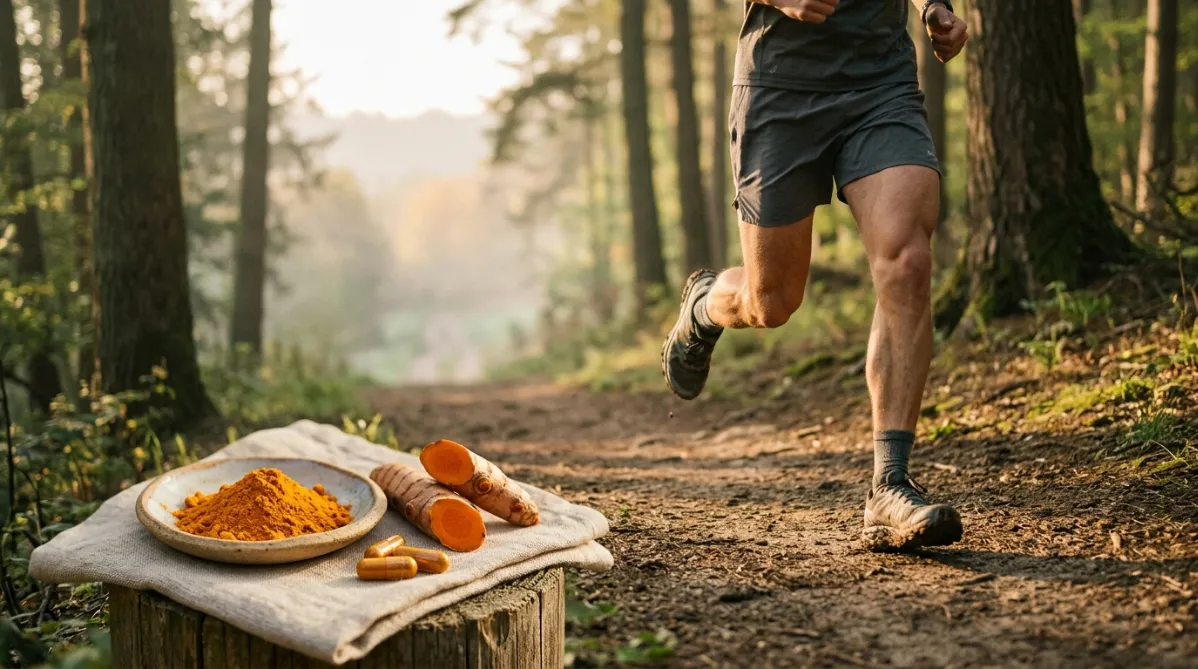
A wide, editorial-style photograph of a male runner mid-stride on a gently sloping forest trail at early morning, shot from a low three-quarter angle. Soft golden light filters through tall trees and casts long dappled shadows across the packed dirt path. The runner is captured from the waist down and slightly from the side, wearing charcoal running shorts and worn trail shoes, with the quadriceps and thigh muscles defined and naturally lit. A fine mist hangs in the background, and the slope descends toward a blurred, softly glowing horizon.

In the foreground, slightly out of focus on a weathered wooden post or flat mossy stone at the trail's edge, rests a small ceramic dish holding a pile of vivid golden-orange turmeric powder. Beside it sit two fresh turmeric roots, one cut open to show a deep saffron interior, and a few amber capsules. A thin linen cloth is draped beneath them. The saturated yellow-orange of the turmeric contrasts with the cool green and muted brown tones of the forest, creating a strong color anchor on the left third of the frame.

The composition follows the rule of thirds, with the turmeric in the lower left foreground and the runner in the right two-thirds, leaving open negative space in the upper left for headline text. Shallow depth of field, creamy bokeh, and natural film-like grain give it a refined, modern health-and-science magazine feel. The palette is warm and earthy: golden amber, moss green, soft cream, and deep umber. The lighting is natural and gentle, with subtle rim light on the runner's calves and hamstrings. No text, no logos, no graphics, and no futuristic elements. The result should feel clean, calm, and aspirational, like a cover image for a premium wellness and sports-nutrition journal.
recovery

Meriva Curcuma riduce i danni muscolari alla risonanza magnetica dopo la corsa in discesa

BY DR. GYMBRO ·

Uno studio randomizzato del 2014 ha mostrato che la curcuma Meriva, formulata con lecitina da Indena, è associata a un minor numero di lesioni muscolari visibili alla risonanza magnetica nelle cosce dopo una corsa in discesa. Venti uomini hanno assunto 1 g due volte al giorno, iniziando 48 ore prima del test e proseguendo per 24 ore dopo. Le immagini sono state sorprendenti, ma il beneficio sul dolore è stato significativo solo nella parte anteriore delle cosce. I marcatori di stress ossidativo e l'istologia muscolare non hanno mostrato differenze. Ecco il dosaggio, il timing, l’avvertenza industriale e cosa i dati possono (o non possono) affermare.

This page is available in