Dr. Gymbro
←

#eccentric exercise

5 articles
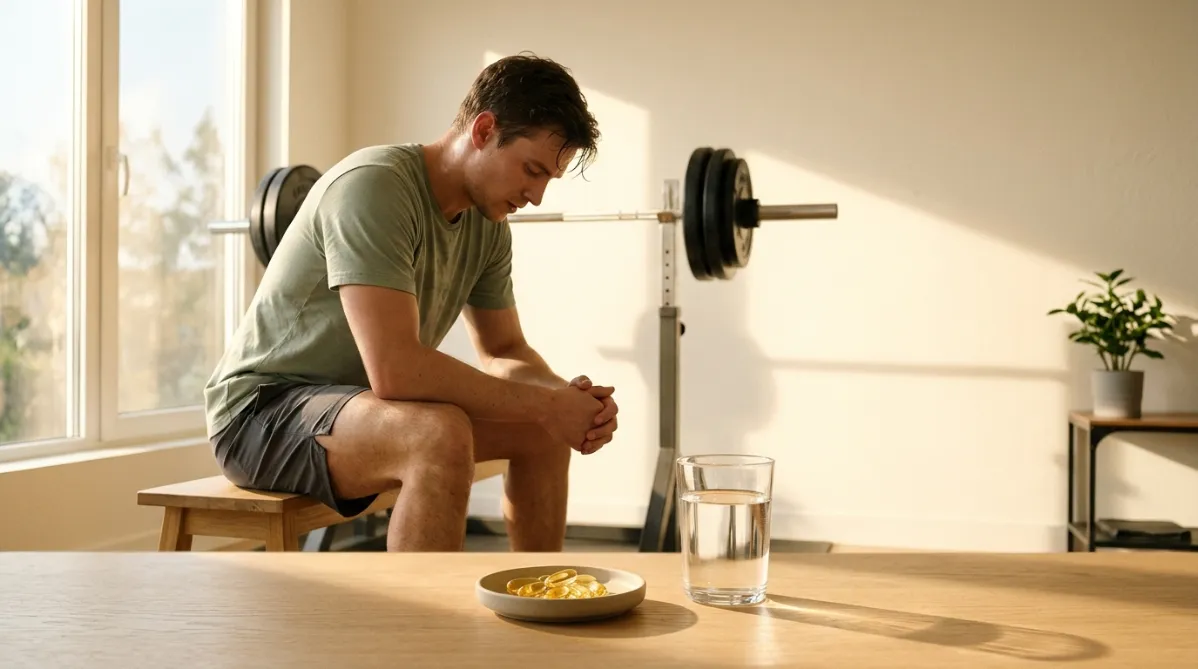
A sunlit, minimalist home gym corner photographed in soft golden morning light, with a young athletic man seated on a wooden bench, leaning forward with his elbows resting on his knees, catching his breath after a hard leg session. He wears a muted sage-green t-shirt and charcoal shorts, his face turned slightly away from the camera, calm and focused. A matte ceramic dish in the foreground holds a few small, translucent golden softgel capsules, with a glass of water beside it catching the light and casting a soft caustic shadow across a pale oak floor. Behind him, a loaded barbell rests on a squat rack, slightly out of focus, and a tall window pours warm sunlight diagonally across the scene, creating long gentle shadows and a hazy glow. A small potted green plant sits on a shelf at the edge of the frame. The color palette is warm and editorial: cream, soft gold, sage green, pale wood, and charcoal accents. Shallow depth of field, with crisp focus on the capsules and glass in the lower third and a creamy bokeh background. The composition leaves generous negative space on the right side for a headline overlay. The mood is clean, modern, and aspirational, like a high-end wellness magazine or a trendy health journal feature. Shot on a 50mm lens, natural light, fine film grain, subtle matte finish, landscape 16:9 framing.
recovery

Vitamin D Sped Strength Recovery in Men Who Weren't Deficient

BY DR. GYMBRO ·

Men with perfectly normal vitamin D levels still recovered strength faster after a brutal leg workout when they took 4,000 IU daily. In this randomized, placebo-controlled trial of 28 active men, peak isometric force bounced back about 8% better at 24 hours. Muscle-damage markers ALT and AST also rose less. But there's a twist: soreness didn't improve at all. Here's what the study found, where it falls short, and who might actually care.
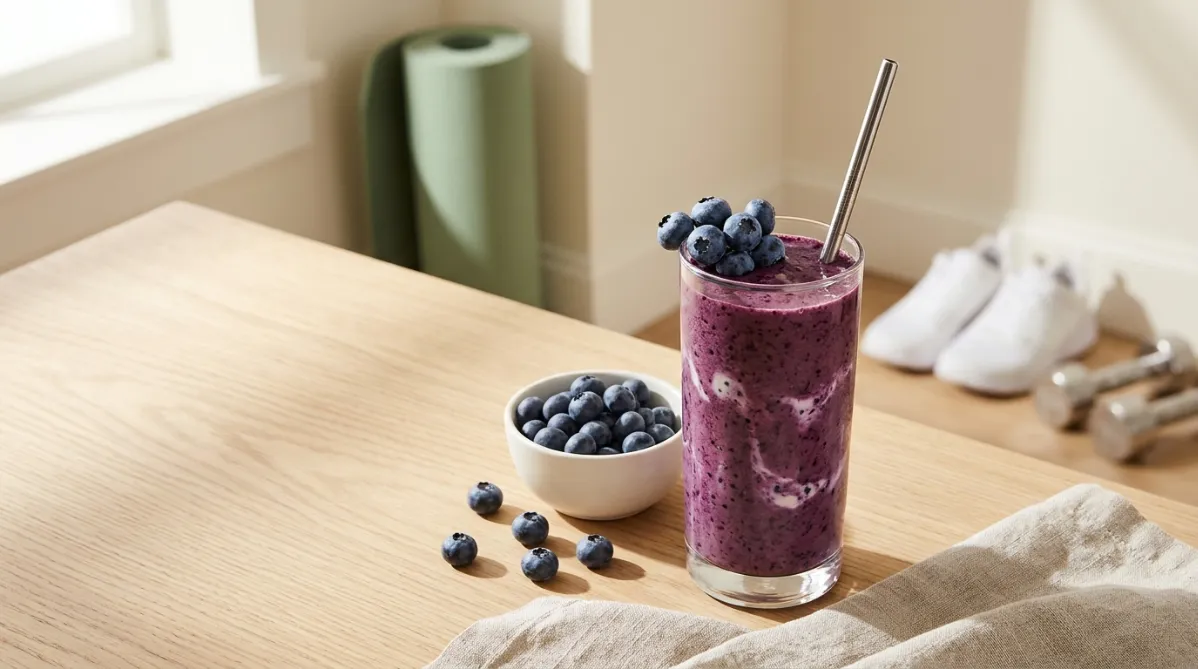
A bright, airy editorial photograph shot from above at a slight angle, showing a tall clear glass of deep violet blueberry smoothie on a pale oak wooden table. The smoothie has a creamy, velvety texture with a few lighter swirls, and a small cluster of fresh blueberries with dusty blue skins rests on the rim of the glass. A matte white ceramic bowl of whole blueberries sits to the left, with a few berries scattered naturally across the tabletop. A folded linen napkin in soft oatmeal tones and a stainless steel straw add subtle texture.

In the softly blurred background, a rolled-up sage green yoga mat leans against a light wall next to a pair of clean white running shoes and a small pair of brushed-metal dumbbells. A sliver of warm morning sunlight enters from the left window, casting gentle diagonal shadows and a golden glow across the table, with soft highlights on the glass and the berries' surface bloom.

The color palette is fresh and modern: deep indigo and violet from the smoothie, balanced by cream, warm beige, soft sage green, and touches of white. The composition follows the rule of thirds, with the glass placed on the right third and generous negative space on the left, suitable for headline overlay. Shallow depth of field, crisp focus on the glass and berries, creamy bokeh in the background. The mood is calm, healthy, and aspirational, like a contemporary wellness magazine or a trendy health journal website. Natural, realistic, high-end food and lifestyle photography style, 16:9 landscape format, clean and uncluttered.
nutrition

Blueberry Smoothie Helped Sore Legs Regain Strength Faster

BY DR. GYMBRO ·

Ten women, 300 brutal eccentric quad contractions, and one blueberry smoothie. In this randomized crossover trial, the berry drink sped up the recovery of peak isometric strength over 60 hours (p = 0.047), while a placebo matched for antioxidant capacity did not. That means the benefit probably wasn't just about antioxidants. Only one outcome reached significance and the sample was tiny, so the evidence is promising rather than conclusive. Here is how the study worked, what it found, and how to use it around your hardest leg days.
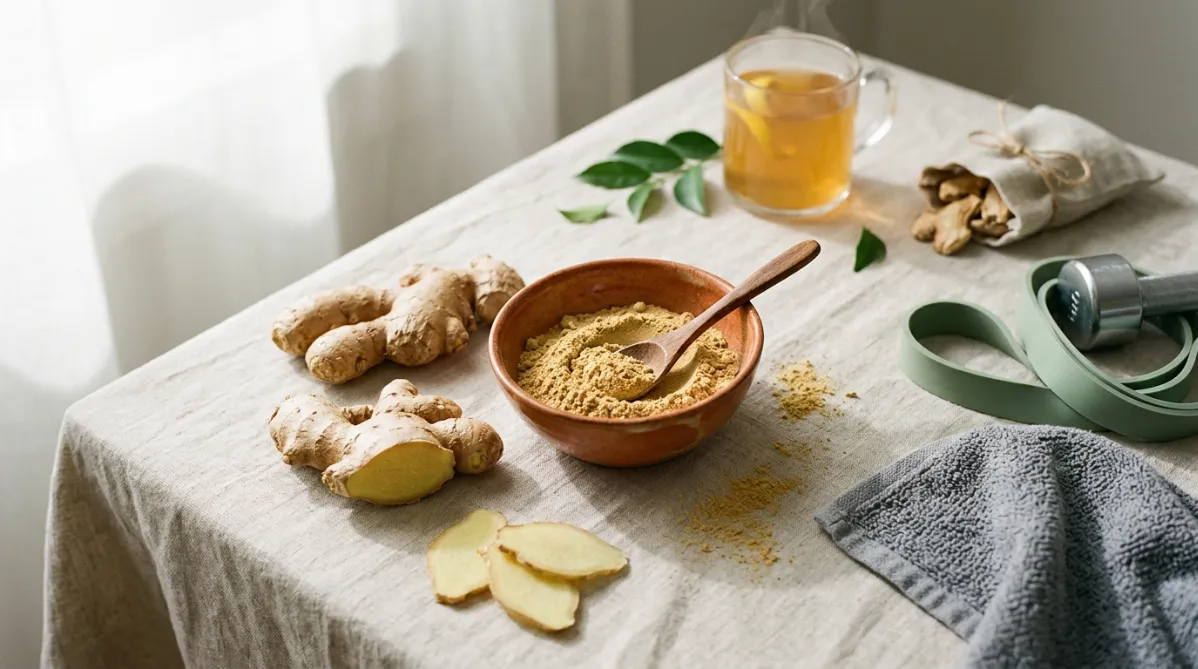
A wide, editorial-style still life photographed from slightly above on a pale oat-colored linen surface, lit by soft natural window light from the left. At the center sits a rustic ceramic bowl of finely ground golden-tan ginger powder, with a small wooden spoon resting in it and a light dusting of spice across the cloth. Beside it lie several whole ginger rhizomes, knobby and honey-brown. One is sliced open to show its pale yellow, fibrous interior, and a few paper-thin slices fan out in the foreground. On the right, a folded heather-gray gym towel, a matte sage-green resistance band coiled loosely, and a single brushed-steel dumbbell sit just inside the frame, softly out of focus. A glass of warm amber ginger tea steams faintly near the upper right, with a thin curl of lemon peel inside. A few fresh green leaves and a small linen pouch of dried ginger add texture. The palette is warm and muted: cream, soft gold, sage, terracotta, and charcoal accents. The shallow depth of field keeps the ginger bowl and sliced root crisp while the gym elements melt into a gentle blur. Shadows are long and soft, and the negative space on the upper left leaves room for a headline. The mood is calm, clean, and modern, like a contemporary wellness or science journal cover. It is a natural, tactile, high-resolution photograph with subtle film grain and no text, no people, and no futuristic elements.
recovery

2 Grams of Ginger Cut Next-Day Muscle Pain by ~25% in Two Trials

BY DR. GYMBRO ·

A common kitchen spice just went head-to-head with one of the gym's most universal complaints: next-day muscle soreness. In two double-blind trials, people who took 2 grams of ginger daily for 11 days reported roughly 25% less pain 24 hours after punishing eccentric exercise. But ginger didn't clearly improve strength or swelling, and nobody tested it against ibuprofen. Here is what the research shows, why it might work, where the evidence falls short, and who should consider trying it.
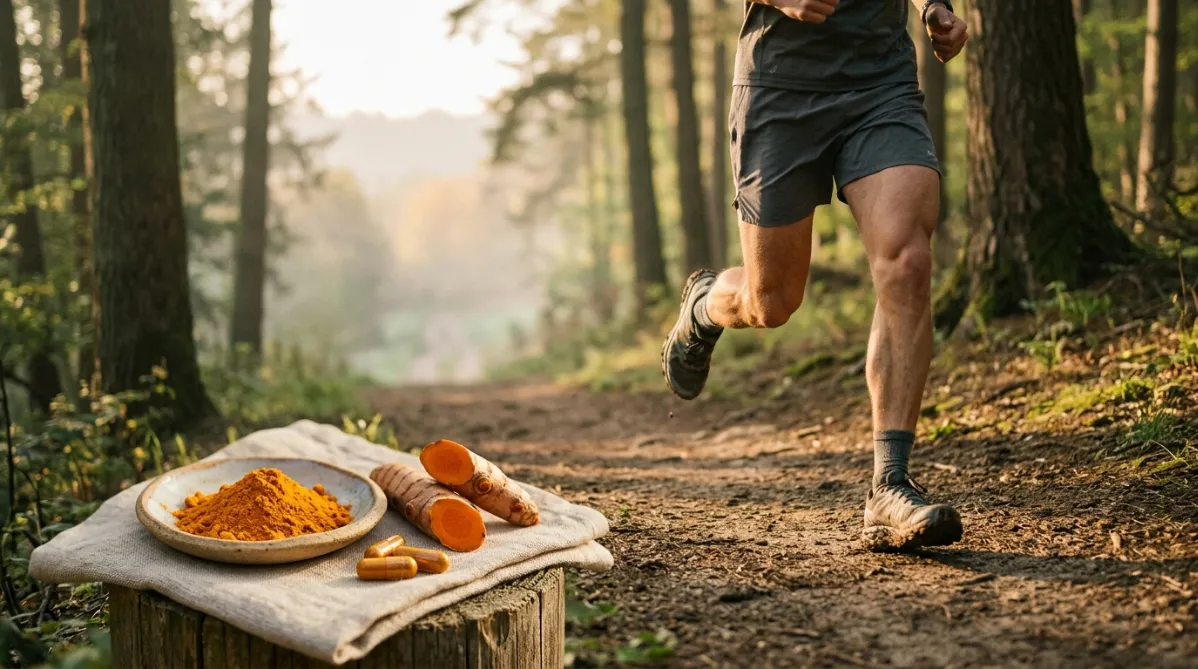
A wide, editorial-style photograph of a male runner mid-stride on a gently sloping forest trail at early morning, shot from a low three-quarter angle. Soft golden light filters through tall trees and casts long dappled shadows across the packed dirt path. The runner is captured from the waist down and slightly from the side, wearing charcoal running shorts and worn trail shoes, with the quadriceps and thigh muscles defined and naturally lit. A fine mist hangs in the background, and the slope descends toward a blurred, softly glowing horizon.

In the foreground, slightly out of focus on a weathered wooden post or flat mossy stone at the trail's edge, rests a small ceramic dish holding a pile of vivid golden-orange turmeric powder. Beside it sit two fresh turmeric roots, one cut open to show a deep saffron interior, and a few amber capsules. A thin linen cloth is draped beneath them. The saturated yellow-orange of the turmeric contrasts with the cool green and muted brown tones of the forest, creating a strong color anchor on the left third of the frame.

The composition follows the rule of thirds, with the turmeric in the lower left foreground and the runner in the right two-thirds, leaving open negative space in the upper left for headline text. Shallow depth of field, creamy bokeh, and natural film-like grain give it a refined, modern health-and-science magazine feel. The palette is warm and earthy: golden amber, moss green, soft cream, and deep umber. The lighting is natural and gentle, with subtle rim light on the runner's calves and hamstrings. No text, no logos, no graphics, and no futuristic elements. The result should feel clean, calm, and aspirational, like a cover image for a premium wellness and sports-nutrition journal.
recovery

Meriva Curcumin Cut MRI Muscle Damage After Downhill Running

BY DR. GYMBRO ·

A small 2014 randomized trial found that Meriva curcumin, a lecithin-based form made by Indena, was linked to fewer MRI-visible thigh muscle injuries after a downhill run. Twenty men took 1 g twice daily, starting 48 hours before the test and continuing 24 hours after. The imaging result stood out, but the pain benefit was significant only in the front of the thighs. Oxidative stress markers and muscle histology showed no differences. Here is the dose, the timing, the industry caveat, and what the data can and can't tell you.
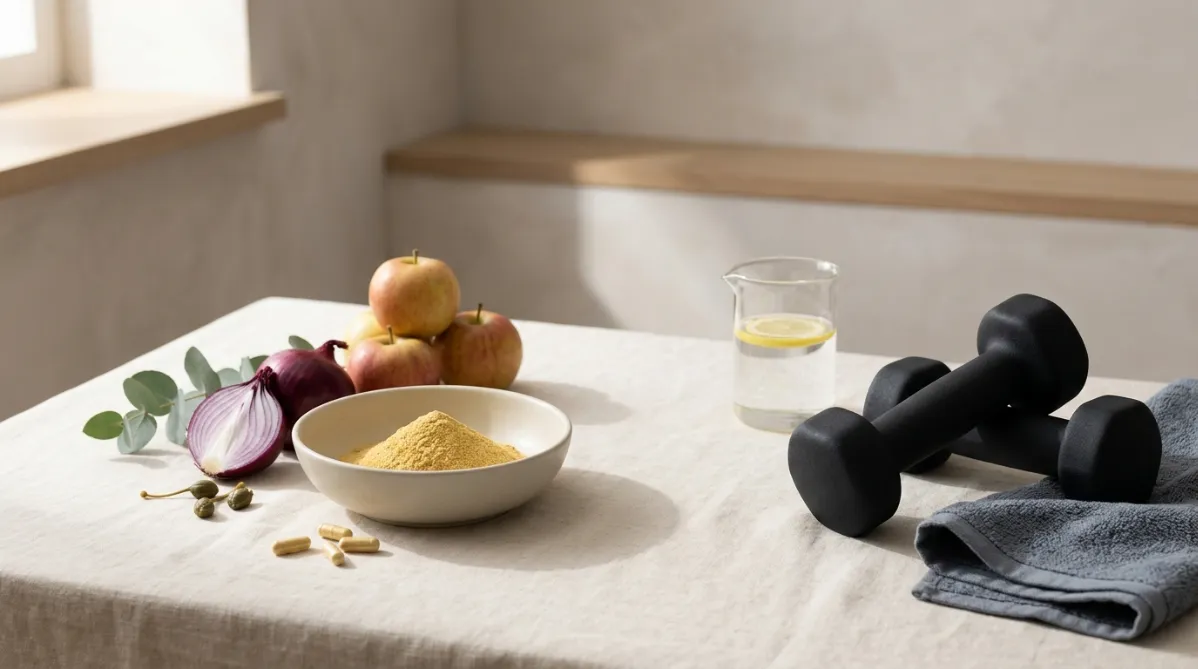
A wide, softly lit editorial still life on a warm off-white linen surface. At the center-left, a matte ceramic bowl holds a small mound of fine golden-yellow quercetin powder, with a few scattered capsules beside it. Next to the bowl sit fresh red onions (one halved to show its translucent purple layers), a few capers, and a small cluster of ripe apples with the skin on, all natural quercetin sources. On the right side of the frame, a sleek matte-black dumbbell rests at an angle beside a folded slate-gray gym towel. A minimalist glass beaker of water with a thin lemon slice sits just behind it.

Soft diffused morning window light enters from the upper left, casting gentle long shadows and subtle highlights on the powder and glossy onion skin. The color palette is muted and sophisticated: butter yellow, deep plum, warm cream, charcoal, with small touches of sage green from a single eucalyptus sprig. A subtle, out-of-focus background of pale plaster wall and a wooden shelf adds depth.

Shallow depth of field, shot from a slightly elevated three-quarter angle with a 50mm lens feel. Generous negative space in the upper right for a title overlay. The mood is clean, calm, and modern, like a premium wellness and science journal feature: tactile textures, natural materials, restrained composition, high-end editorial photography, and no text or logos.
science research

1 g/Day Quercetin Before Eccentric Curls: The IGF Twist

BY DR. GYMBRO ·

What happens when you load up on 1 g/day of quercetin for 14 days before smashing your biceps with eccentric work? In a small placebo-controlled crossover study, damage markers like CK, LDH and myoglobin dropped, and so did IL-6. Even stranger, the IGF-I response got bigger and the IGF-II peak showed up days earlier than normal. But with only twelve men and no hypertrophy data, this is a promising recovery signal, not a muscle-building guarantee. Here is what the study found and how to use it wisely.

This page is available in