
The Cheap Vitamin Linked to Stronger Legs as You Age
A large British study of more than 5,000 adults aged 48 to 92 found that people with optimal blood vitamin C (50 µmol/L or higher) walked faster and stood from a chair more quickly than those with low levels. Women also had stronger height-adjusted grip, while men showed no grip link. Food-based vitamin C showed associations only in women, and not in a tidy pattern. The design is cross-sectional, so it can't prove vitamin C causes better function. Here's what the numbers show, what they don't, and why your blood level may be worth checking.
Fish Oil for Aging Muscles: What 14 Studies Actually Show
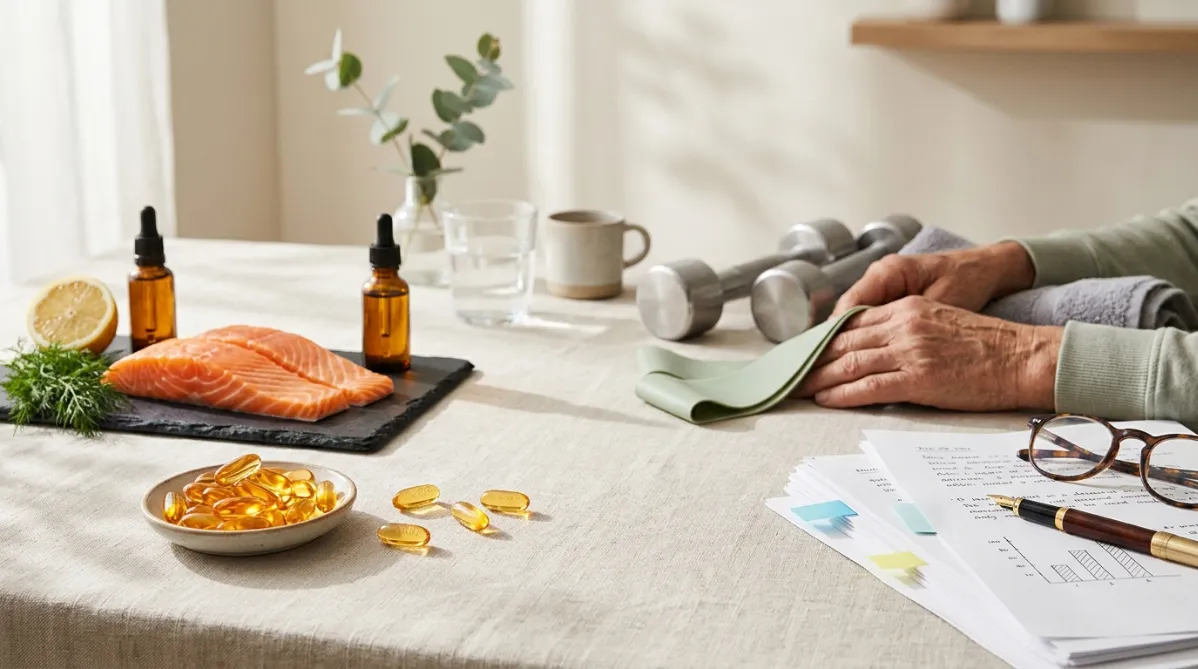
Fish oil is being pitched as armor for aging muscles, but what does the evidence actually say? A 2026 umbrella review pooled seven RCTs and seven meta-analyses in adults 55 and older. It found modest but measurable strength gains, with the clearest signal for lower-body strength and function. Grip strength, walking speed, and upper-body strength were far less certain, and heavy overlap among the studies means the evidence is shakier than it looks. Here is what it means, who it may help, and who should check with a doctor first.

Creatine's Precursor Beat Creatine for Grip Strength in Over-65s
A small trial in adults over 65 found that guanidinoacetic acid (GAA), the direct precursor of creatine, improved grip strength more than creatine monohydrate. The catch is that it was an 8-week pilot with just 21 completers, no exercise program, and a confidence interval that barely cleared zero. GAA also showed greater myostatin suppression and BIA-measured gains in muscle-related indices, though those readings may partly reflect hydration. Homocysteine is the safety question to watch, since GAA consumes methyl groups and has raised it in other studies. Here is what the study found, what it can't tell us, and why creatine monohydrate is still the proven default.

Creatine + HMB Made Over-60s Stronger in 6 Weeks, Not Bigger
Over-60s on a creatine + HMB stack got stronger in just six weeks, yet the muscle-mass numbers barely moved. This double-blind crossover trial of 30 active older adults found gains in leg, back and arm strength plus upper-body and core endurance. Regression analyses suggested the improvements were largely independent of muscle size, pointing toward a neuromuscular effect. Before you rush to buy, there are real caveats: a short six-week window, a small sample, and body composition measured by BIA. Here's what the study found, what it didn't, and how to read it.
Seaweed Fucoidan Boosted Grip Strength in Over-60s in 12 Weeks
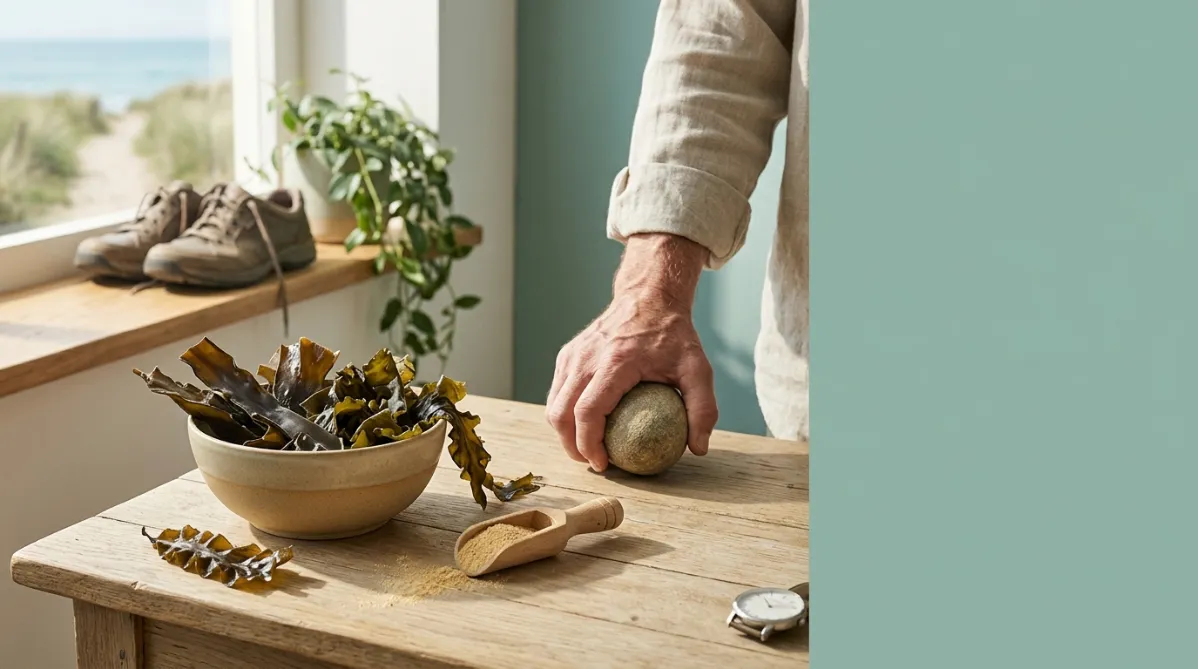
Losing strength with age is one of the most common and least discussed parts of getting older, and resistance training isn't an option for everyone. A new 12-week randomized trial found that a low-molecular-weight seaweed fucoidan, taken at 1,650 mg per day, significantly improved grip strength and six-minute walk performance in adults over 60. Surprisingly, muscle mass didn't change, and adding BCAAs and vitamin D offered no extra benefit. The trial was small and tested a single branded product, so it's a promising lead rather than a verdict. Here's what the study found and what it means in practice.