Dr. Gymbro
←

#presleep protein

1 article
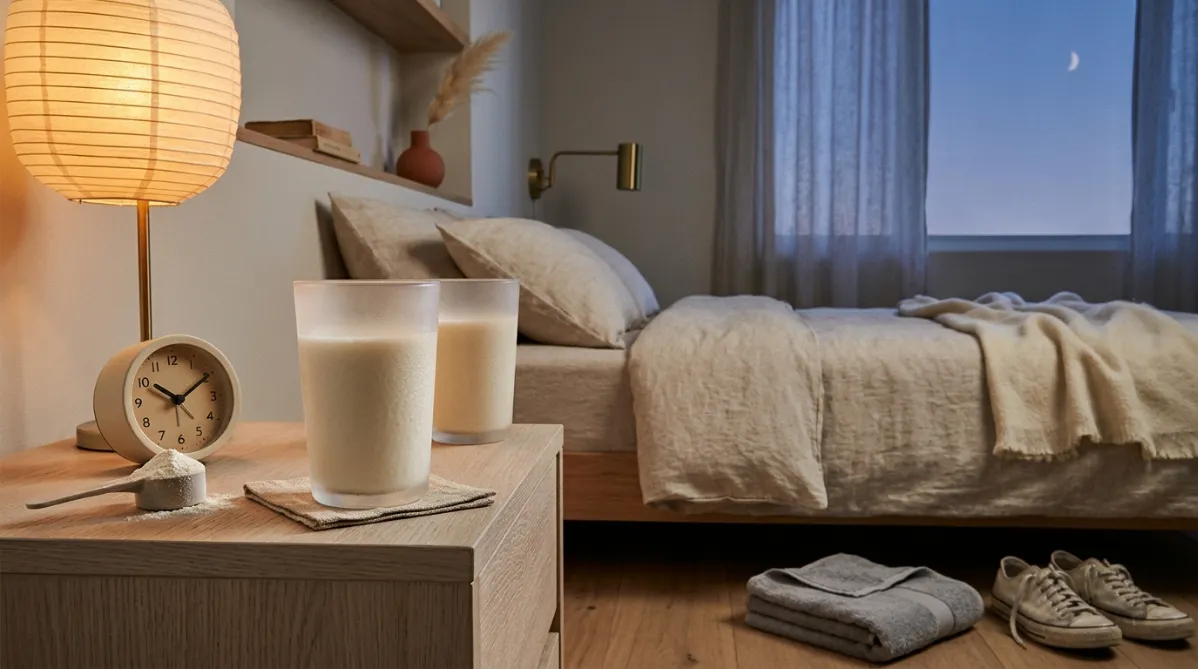
A serene, softly lit bedside scene in a modern minimalist bedroom, photographed in a warm editorial style. On a pale oak nightstand sit two matching frosted glass tumblers of creamy white protein shake, one slightly closer to the camera in sharp focus, the other gently blurred behind it. Beside them rests a small analog alarm clock with a matte cream face, its hands showing a late-evening hour, and a single ceramic scoop dusted with fine white powder on a linen coaster. A folded gray gym towel and a pair of worn sneakers are tucked at the edge of the frame, hinting at an earlier workout.

In the background, a neatly made bed with textured oatmeal linen bedding and a rumpled cream throw blanket glows under the amber light of a small paper-shade lamp. A sheer curtain filters deep indigo twilight from a window, with a faint crescent moon visible. The palette is muted and calming: warm cream, soft sand, dusty blue, and touches of terracotta from a small clay vase holding a dried pampas stem.

Shallow depth of field, gentle film-like grain, soft window light mixing with the warm lamp glow, long soft shadows across the wood grain. Composition follows the rule of thirds with the glasses on the left third and open negative space on the right, suitable for headline overlay. The mood is quiet, thoughtful, and contemporary, like a lifestyle and science feature in a trendy wellness journal. Clean, natural, tactile, with no text, no people, and no futuristic elements.
nutrition

El suero antes de dormir redujo a la mitad el tiempo para conciliar el sueño; la caseína no lo hizo

BY DR. GYMBRO ·

Todo el mundo dice que la caseína es la proteína de la hora de dormir, pero un ensayo aleatorizado, doble ciego y cruzado en humanos encontró algo curioso. Después de un entrenamiento de resistencia, 40 g de suero consumidos 30 min antes de acostarse redujeron la latencia del sueño de 19 a 9 minutos frente a un control de carbohidratos, y también disminuyeron el dolor muscular al día siguiente. La caseína no mostró mejoras significativas respecto al control. El estudio incluye solo a nueve participantes y el suero no fue estadísticamente superior a la caseína en una comparación directa. Aquí tienes los datos y sus limitaciones.

This page is available in