Dr. Gymbro
←

#hiit

2 articles
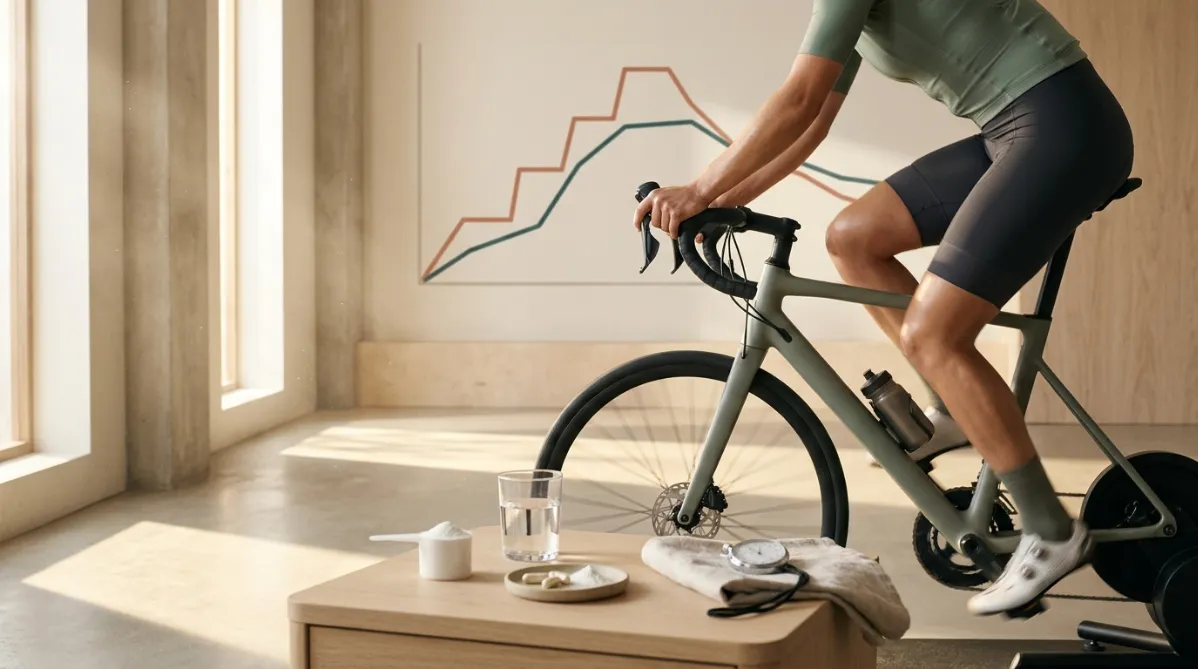
A wide, editorial-style photograph of a lone cyclist's legs and torso mid-sprint on a stationary indoor bike in a bright, minimalist performance studio. The scene is shot from a low three-quarter angle with shallow depth of field. The cyclist wears matte charcoal shorts and a fitted sage-green top, with a subtle sheen of sweat catching soft window light. Their hands grip the handlebars and the pedals are caught in a slight motion blur, which conveys explosive effort.

In the foreground, slightly out of focus on a pale oak side table, sit a small matte white scoop and a clear glass of water. Next to them is a little ceramic dish holding a few off-white capsules and a pinch of fine white powder. A folded linen towel and a slim stopwatch rest nearby. The stopwatch face is softly legible, hinting at timed sprint intervals.

The background is warm cream concrete and pale wood, with tall windows casting long diagonal shafts of golden morning light across the floor. Faint dust motes drift in the light. On the wall behind, a clean, abstract line graph is painted in muted terracotta and deep teal. It shows one line rising in steps like five sprint bouts and another line gently falling, a subtle visual nod to power up and lactate down. The graph is minimal and stylized, with no readable numbers or text.

The color palette is earthy and modern: sage green, terracotta, warm cream, soft charcoal, and touches of natural wood. The lighting is soft and directional with gentle highlights and natural shadows. The overall look is calm, refined, and contemporary, like a premium wellness and sports science magazine cover. The composition follows the rule of thirds, with the cyclist on the right and open negative space on the left for a headline. The image is crisp, grainy in a subtle film-like way, and free of any futuristic or sci-fi elements.
science research

Cette forme de carnitine a augmenté la puissance des sprints jusqu’à 15 % et a réduit le lactate

BY DR. GYMBRO ·

Une étude croisée de 2009 a montré qu’une dose unique de 4,5 g de glycine propionyl‑L‑carnitine (GPLC) pouvait augmenter la puissance maximale et moyenne des sprints de 2,6 % à 15 % sur cinq efforts en tout‑ou‑rien. Le taux de lactate sanguin était aussi 16,2 % plus bas 14 minutes après l’exercice. Mais le « 15 % » correspond au maximum de la fourchette, pas à une moyenne, et l’échantillon ne comptait que 24 hommes dans un seul laboratoire. Cet article décortique les différences entre le GPLC, la L‑carnitine classique et l’ALCAR, le rôle éventuel de l’oxyde nitrique, ainsi que les doses, le timing et les limites des preuves.
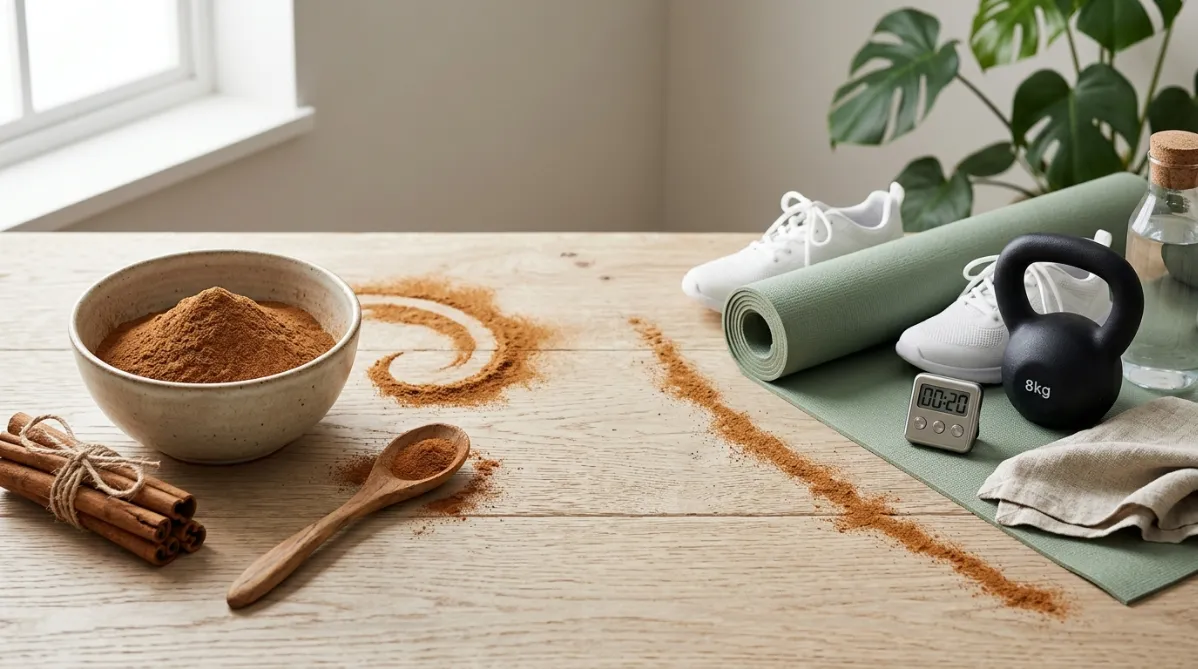
A wide, landscape editorial photograph shot from slightly above on a pale oak wooden surface, styled like a modern wellness magazine cover. On the left, a rustic ceramic bowl in matte oatmeal glaze holds ground cinnamon in a soft mound. Beside it sit several whole cinnamon sticks tied with natural twine, and a small wooden spoon dusted with warm reddish-brown powder. A loose cinnamon swirl spills across the surface in a graceful, organic arc. On the right, a minimalist fitness scene flows into the frame: a matte sage-green yoga mat partly unrolled, a stainless steel interval timer reading 00:20, a pair of clean white training sneakers, and a compact black kettlebell. A folded linen towel and a glass bottle of water add quiet, lifestyle-oriented detail. The two halves are linked by a thin line of scattered cinnamon powder that runs across the table like a brushstroke, joining the kitchen and the workout.

Soft morning window light enters from the upper left. It casts gentle, long diffused shadows and highlights the texture of the spice, the grain of the wood, and the curled bark of the sticks. The palette is warm and earthy: cinnamon brown, terracotta, cream, sage green, and soft charcoal, with one small accent of burnt orange. The background is a softly blurred neutral wall with a hint of a leafy plant in the top corner, giving shallow depth of field. The composition leaves generous negative space at the top and center-right for headline text. The mood is calm, fresh, health-forward, and trustworthy, with a subtle scientific-journal sophistication. Crisp focus on the cinnamon, creamy bokeh in the background, and a fine film-like grain. The image is realistic, tactile, and uncluttered, with no people, no text, no logos, and nothing futuristic.
nutrition

Cannelle + Tabata dépassent l’entraînement seul pour la perte de graisse lors d’un essai de 8 semaines

BY DR. GYMBRO ·

Une simple épice de cuisine pourrait offrir un petit plus aux pratiquants du Tabata. Dans une étude de huit semaines, les hommes ayant consommé 1,5 g de cannelle chaque jour en plus des séances à haute intensité ont perdu 7,86 % de masse grasse, soit nettement plus que ceux qui s’entraînaient sans supplément (p = 0,013). L’inflammation a diminué et l’irisine a le mieux augmenté dans le groupe combiné, tandis que les variations d’insuline se sont manifestées dans tous les groupes d’entraînement. Avec seulement une dizaine d’hommes par groupe et la cannelle seule ne reproduisant pas les effets du combo, il s’agit d’un résultat prometteur mais non confirmé.

This page is available in