Dr. Gymbro
←

#phenylcapsaicin

1 article
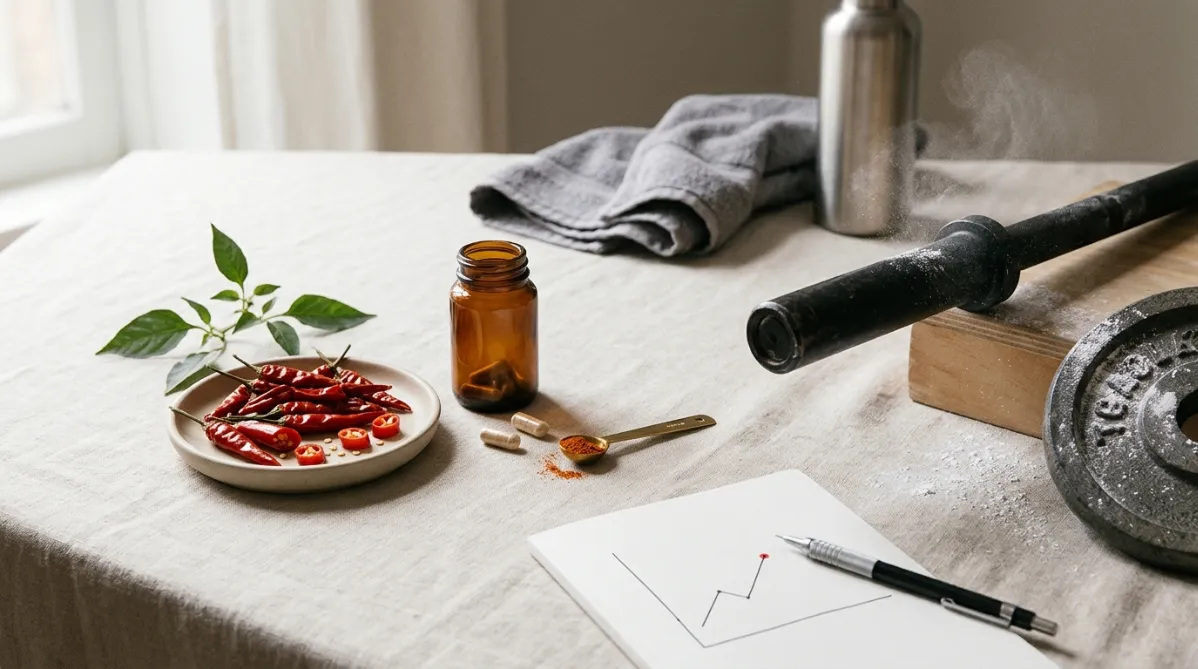
A wide, editorial-style still life photographed in soft natural window light on a pale oatmeal-colored linen surface. In the center-left, a small matte ceramic dish holds a modest pile of vivid red dried chili peppers and a few sliced fresh chilies, their glossy seeds catching the light. Beside it sits a minimalist amber glass capsule bottle without a label, with two translucent capsules spilled onto the linen, along with a tiny brass measuring spoon holding a pinch of fine orange-red powder.

On the right side of the frame, slightly out of focus, a worn black barbell rests across a wooden gym box, with a chalk-dusted steel plate leaning nearby. A small cloud of white chalk dust hangs delicately in the air, backlit by the light. A folded gray cotton gym towel and a simple stainless steel water bottle sit in the soft background.

In the foreground, a minimalist white notebook lies open with a clean hand-drawn line graph in thin black ink, with a small red dot marking one point. A mechanical pencil rests across the page.

The palette is warm and restrained: terracotta red, burnt orange, cream, charcoal, and muted sage green accents from a single leafy chili plant stem. Shallow depth of field, subtle film grain, gentle shadows, generous negative space at the top of the frame for a title overlay. Modern health and science journal aesthetic, calm, clean, tactile, and slightly moody, like a magazine feature on sports nutrition. No people, no text, no logos.
nutrition

Phenylcapsaicin Pre-Workout Boosted CrossFit Squats and Cut Soreness

BY DR. GYMBRO ·

A chili-derived compound called phenylcapsaicin just went through a triple-blind crossover trial with 50 CrossFit athletes. A single 2.5 mg dose taken 45 minutes before training improved post-session squat load and reps, reduced jump-height loss, and lowered soreness at 24 and 48 hours. But it did nothing for the WOD itself, and lactate, RPE, and heart rate didn't budge. Two authors also advise a supplement brand, and the study only covers a single acute dose. Here is what the data show, what they don't, and who might actually want to try it.

This page is available in