Dr. Gymbro
←

#dht

1 article
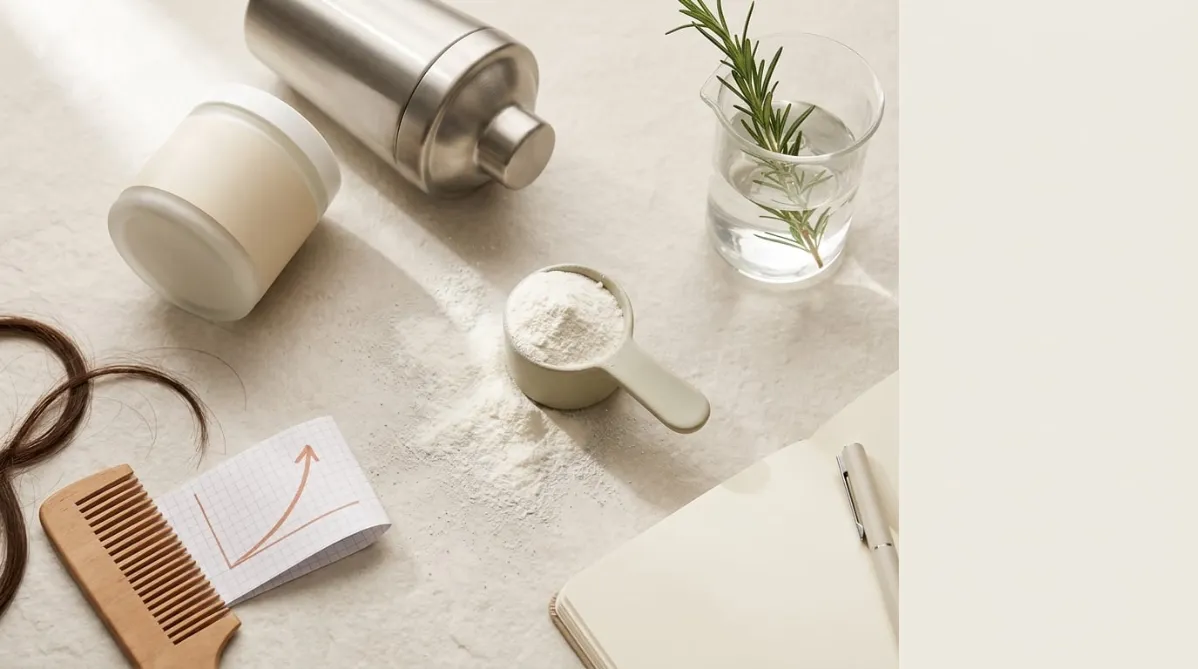
A bright, modern editorial flat-lay photographed from above on a soft off-white stone surface. At the center sits a matte ceramic scoop heaped with fine white creatine powder, with a loose dusting of powder fanning out across the surface. Beside it is a minimalist frosted-glass jar with a plain label and a brushed-steel shaker bottle lying on its side. To the left, a wooden comb and a small folded strip of graph paper with a single hand-drawn upward curve in muted terracotta ink, suggesting a data spike without any text. A few loose strands of dark brown hair curve elegantly across the stone near the comb. To the right, a clean glass beaker filled with water and a sprig of green rosemary, and an open notebook with blank pages and a sleek pen. The palette is warm neutrals: cream, sand, soft sage green, and a single accent of terracotta orange. Natural window light falls from the upper left, casting long, gentle shadows and a subtle diffused glow. The composition leaves generous negative space on the right third for title overlay. Shallow depth of field with crisp focus on the powder scoop, a premium health-and-science magazine look, minimalist, calm, and trendy, with fine grain and soft contrast. Landscape 16:9 framing.
science research

Kreatin und Haarausfall: Der 56 % DHT‑Anstieg erklärt

BY DR. GYMBRO ·

Eine Studie von 2009 zeigte, dass eine siebentägige Kreatin‑Ladephase mit 25 g pro Tag den Serum‑DHT‑Spiegel um 56 % ansteigen ließ, während er bei einer Erhaltungsdosis von 5 g pro Tag noch etwa 40 % über dem Ausgangswert lag und das Testosteron unverändert blieb. Da DHT mit erblich bedingtem Haarausfall bei Männern in Verbindung gebracht wird, löste dieses Ergebnis intensive Diskussionen über Kreatin und Haarausfall aus. Die Untersuchung umfasste jedoch nur 20 Rugby‑Spieler, dauerte drei Wochen und maß keinen Haarausfall. Spätere Studien konnten den DHT‑Anstieg nicht konsequent reproduzieren. Im Folgenden erfahren Sie, was die Forschung tatsächlich zeigt, für wen das relevant ist und wie Sie bei Bedenken vorgehen können.

This page is available in