Dr. Gymbro
←

#carbohydrate

2 articles
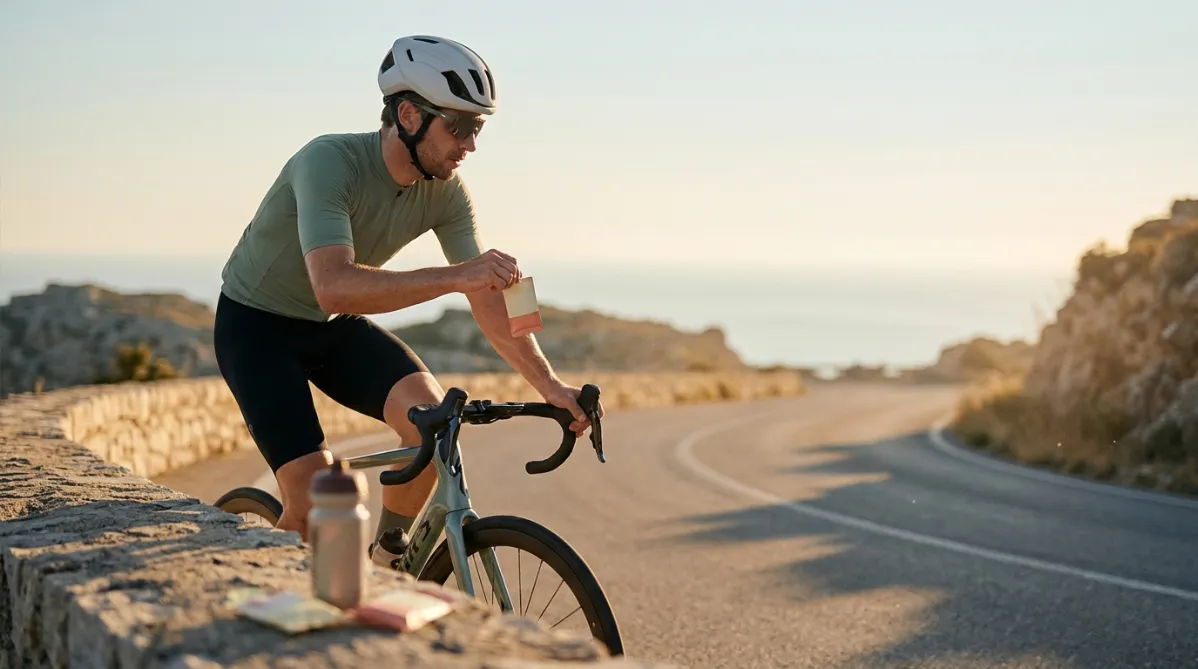
A cyclist in profile, riding a sleek road bike along a quiet coastal road in warm golden-hour light, shot from a low side angle with a shallow depth of field. The rider wears a muted sage-green jersey, black bib shorts, a matte white helmet, and sunglasses. Their face shows calm, focused fatigue, with a faint sheen of sweat on the forearms. One hand is lifted slightly from the handlebars, holding a small, unbranded matte gel packet in soft cream and coral tones, just before opening it. The road curves gently behind them toward a hazy, softly blurred horizon of pale sea and distant hills, with long amber shadows stretching across the asphalt.

In the foreground, slightly out of focus, a few gel sachets and a bike bottle rest on a weathered stone wall at the left edge of the frame, adding editorial depth. Fine dust and sunlight glow in the air. The palette is warm and restrained: butter yellow, soft peach, sage, and slate blue, with gentle film-like grain. The composition leaves open negative space in the upper right, a pale gradient sky, for headline overlay. The overall look is a modern, minimalist sports-science magazine photograph: natural, premium, and clean, with realistic textures, cinematic but understated color grading, and no text, logos, or graphics.
nutrition

Gel Bicarb Trên Đường Đua Tăng 12 W Sau 3 Giờ Đạp Xe

BY DR. GYMBRO ·

Nếu thời điểm tối ưu để dùng bicarbonate không phải trước khi xuất phát mà là trong lúc đua thì sao? Một thí nghiệm ngẫu nhiên trên 11 vận động viên đạp xe được đào tạo đã so sánh gel chứa bicarbonate kết hợp carbohydrate trong suốt 3 giờ đạp. Khi đã mệt, công suất trong bài kiểm tra thời gian 12 phút tăng hơn 12 W so với chỉ dùng carbohydrate, trong khi các triệu chứng tiêu hoá không khác biệt. Tuy nhiên, các bài chạy ngắn và nỗ lực 2 phút không cho thấy lợi ích đáng kể, mẫu nghiên cứu rất nhỏ và sản phẩm được tài trợ bởi MNSTRY. Dưới đây là các số liệu thực tế.
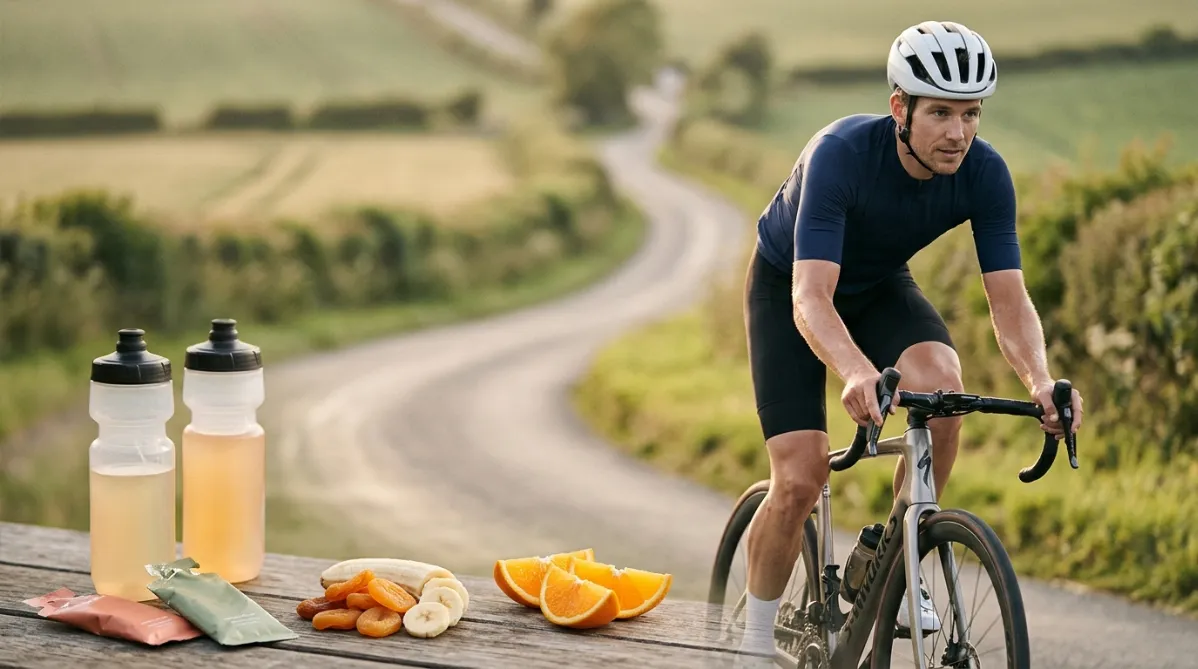
A cyclist in mid-ride, photographed from a low three-quarter side angle on a quiet country road at golden hour, wearing a matte navy jersey and a white helmet, with soft warm light catching the sweat on his forearms. His expression is calm and focused. The road bends gently through rolling green fields, and the background is softly blurred with creamy bokeh.

In the foreground on the left, a styled flat-lay-inspired still life sits on a weathered wooden surface and blends into the scene. It includes two clear water bottles with pale citrus-tinted liquid, a few torn energy gel packets in muted coral and sage, and a small pile of dried apricots and sliced banana. A handful of glossy orange slices adds a bright accent. The shallow depth of field keeps the cyclist sharp in the middle distance while the foreground items are gently softened.

The color palette is warm and editorial: soft peach, muted terracotta, sage green, cream, and deep navy. The light is natural and golden, with long, gentle shadows and a slight film-grain texture, like a high-end lifestyle or sports-science magazine spread. The composition follows the rule of thirds, with the cyclist on the right third and open negative space in the upper left, suitable for headline overlay.

The mood is energetic yet thoughtful, clean and modern, and the photograph feels authentic rather than staged. There are no logos, no readable text, and no futuristic or sci-fi elements. The overall look is crisp, airy, and refined, in the style of a contemporary health and performance journal cover.
nutrition

100 g Carbs mỗi giờ giúp Vận động viên đạp xe nhanh hơn — Glycogen không phải là lý do

BY COACH RYAN ·

Sau bốn giờ đạp xe căng thẳng, người nạp 100 g carbohydrate mỗi giờ mất ít sức mạnh hơn so với người chỉ nạp 60 g. Điều bất ngờ là hàm lượng glycogen trong cơ bắp của hai nhóm cuối cùng gần như giống nhau. Nghiên cứu ngẫu nhiên, mù đôi, dạng chuyển giao với 15 nam vận động viên cho thấy có yếu tố nào đó vượt ra ngoài việc bảo tồn glycogen. Bài viết sẽ phân tích số liệu, tỷ lệ glucose:fructose 1:0,8 và cách áp dụng thực tế, đồng thời xem ai nên bỏ qua phương pháp này và tại sao mẫu nghiên cứu chỉ gồm nam giới lại quan trọng.

This page is available in