Dr. Gymbro
←

#10k

1 article
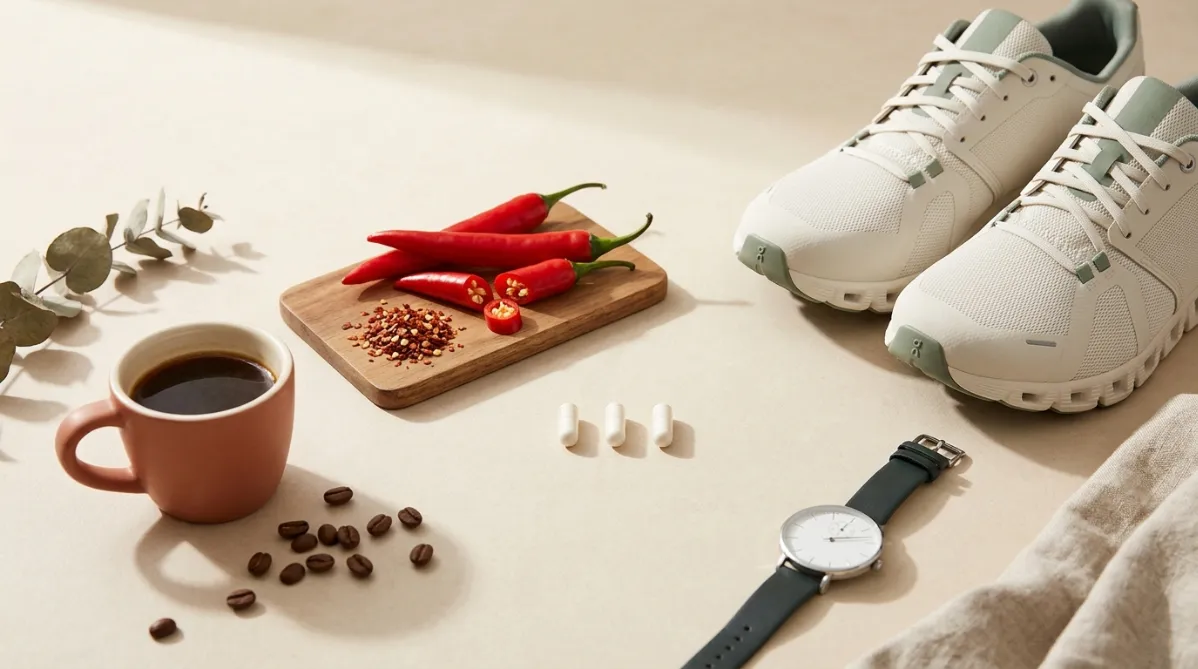
A wide, editorial-style flat lay on a warm, matte cream stone surface, shot from slightly above in soft natural morning light. On the left, a ceramic espresso cup in muted terracotta holds dark coffee, with a few roasted coffee beans scattered beside it. In the center, a small wooden board holds three bright red chili peppers, one sliced open to show pale seeds, next to a small pile of coarse red pepper flakes. On the right, a pair of minimalist off-white running shoes with sage green accents rests at an angle, and a slim stopwatch with a clean white face lies in front of them. Three small matte white capsules sit in a neat row at the center of the composition, a quiet nod to the placebo and the active doses. Soft shadows fall to the lower right. A sprig of dried eucalyptus and a folded linen cloth in oatmeal tones add texture at the edges. The palette is warm and restrained: terracotta, chili red, cream, sage, and charcoal brown, with a gentle pop of red as the focal accent. The depth of field is shallow, so the foreground beans are slightly soft and the chilies and capsules stay crisp. The mood is clean, modern, and magazine-like, in the style of a contemporary health and science journal. There is no text, no people, and no logos, and plenty of negative space on the upper left and right edges leaves room for a headline overlay.
nutrition

Cafeína + capsicina superó al placebo en una carrera de 10 km; la capsicina sola no lo hizo

BY COACH RYAN ·

Un compuesto de chile combinado con cafeína fue la única mezcla que superó al placebo en una carrera de 10 km, mientras que la capsicina sola no produjo efecto. La diferencia se debió a la cafeína (6 mg/kg, unos 450 mg para un corredor de 75 kg) y se acompañó de insomnio, ansiedad, dolor de cabeza y taquicardia. Aquí tienes los hallazgos del estudio con 20 corredores y quién debería evitarlo.

This page is available in