Dr. Gymbro
←

#fueling

1 article
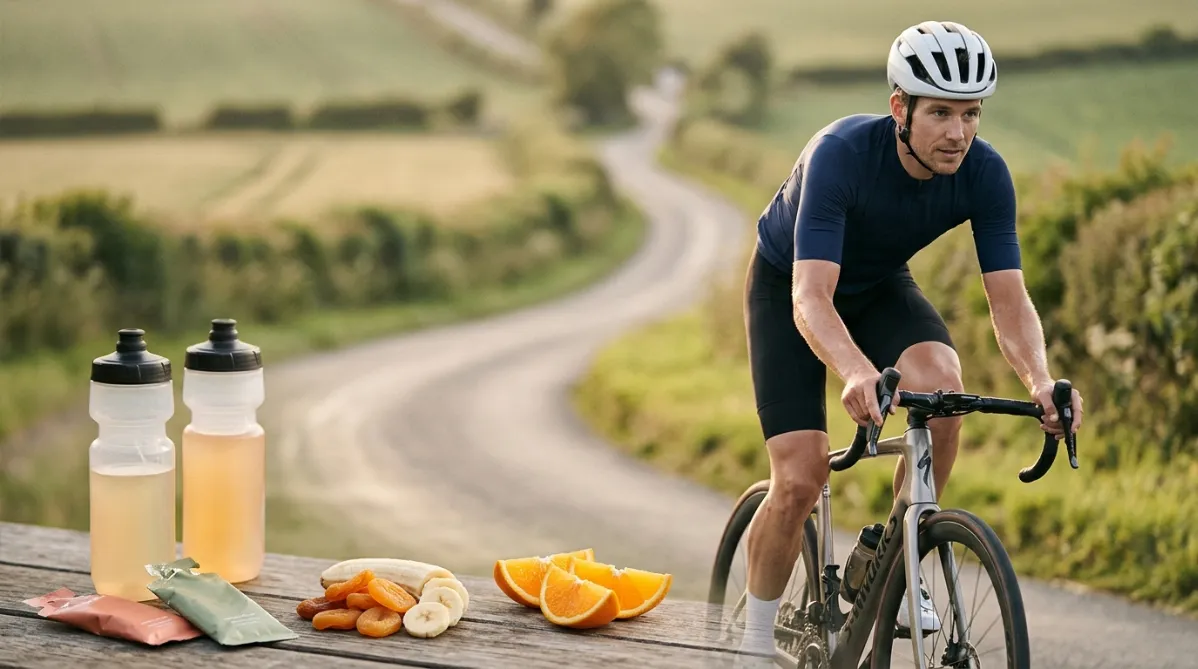
A cyclist in mid-ride, photographed from a low three-quarter side angle on a quiet country road at golden hour, wearing a matte navy jersey and a white helmet, with soft warm light catching the sweat on his forearms. His expression is calm and focused. The road bends gently through rolling green fields, and the background is softly blurred with creamy bokeh.

In the foreground on the left, a styled flat-lay-inspired still life sits on a weathered wooden surface and blends into the scene. It includes two clear water bottles with pale citrus-tinted liquid, a few torn energy gel packets in muted coral and sage, and a small pile of dried apricots and sliced banana. A handful of glossy orange slices adds a bright accent. The shallow depth of field keeps the cyclist sharp in the middle distance while the foreground items are gently softened.

The color palette is warm and editorial: soft peach, muted terracotta, sage green, cream, and deep navy. The light is natural and golden, with long, gentle shadows and a slight film-grain texture, like a high-end lifestyle or sports-science magazine spread. The composition follows the rule of thirds, with the cyclist on the right third and open negative space in the upper left, suitable for headline overlay.

The mood is energetic yet thoughtful, clean and modern, and the photograph feels authentic rather than staged. There are no logos, no readable text, and no futuristic or sci-fi elements. The overall look is crisp, airy, and refined, in the style of a contemporary health and performance journal cover.
nutrition

100 g de glucides par heure ont maintenu les cyclistes plus rapides — et le glycogène n’est pas la cause

BY COACH RYAN ·

Quatre heures après le départ d’une sortie exigeante, les cyclistes ayant ingéré 100 g de glucides par heure ont perdu moins de puissance que ceux qui n’en prenaient que 60 g. Étonnamment, le glycogène musculaire était à peu près identique dans les deux groupes. Cette étude randomisée, en double‑aveugle et en croisé, menée auprès de 15 hommes entraînés, montre qu’un autre mécanisme que l’épargne du glycogène est à l’œuvre. Nous décortiquons les chiffres, le protocole glucose / fructose 1 : 0,8 et les applications concrètes, tout en soulignant les limites liées à la petite taille de l’échantillon et à son caractère exclusivement masculin.

This page is available in