Dr. Gymbro
←

#fueling

1 article
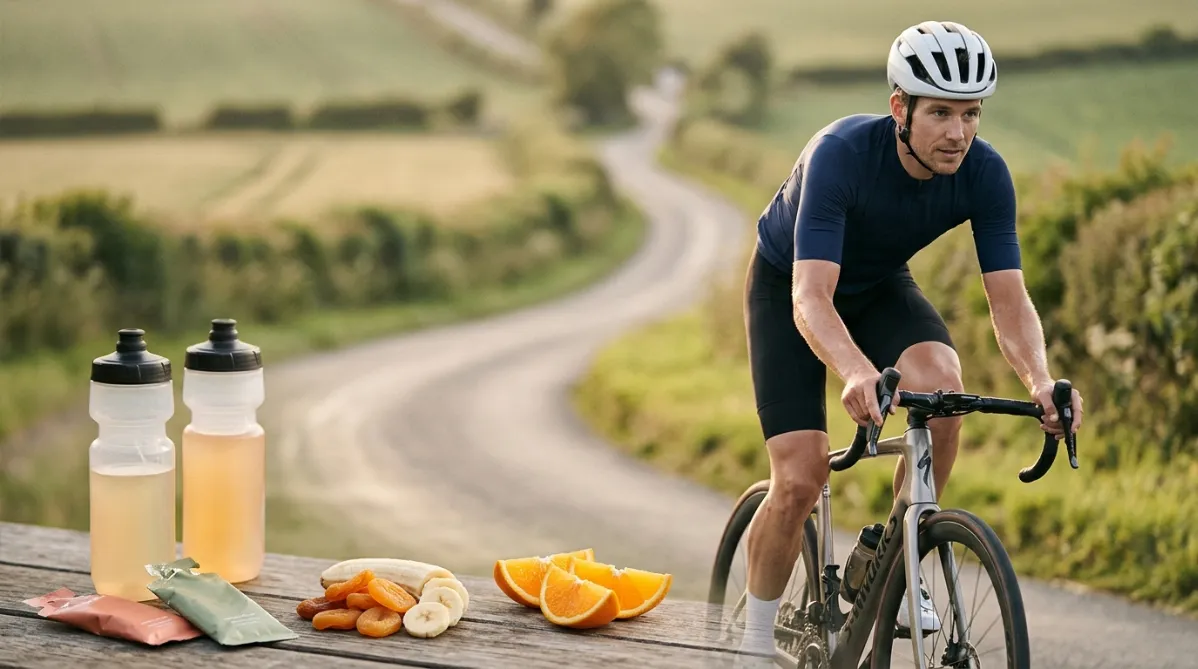
A cyclist in mid-ride, photographed from a low three-quarter side angle on a quiet country road at golden hour, wearing a matte navy jersey and a white helmet, with soft warm light catching the sweat on his forearms. His expression is calm and focused. The road bends gently through rolling green fields, and the background is softly blurred with creamy bokeh.

In the foreground on the left, a styled flat-lay-inspired still life sits on a weathered wooden surface and blends into the scene. It includes two clear water bottles with pale citrus-tinted liquid, a few torn energy gel packets in muted coral and sage, and a small pile of dried apricots and sliced banana. A handful of glossy orange slices adds a bright accent. The shallow depth of field keeps the cyclist sharp in the middle distance while the foreground items are gently softened.

The color palette is warm and editorial: soft peach, muted terracotta, sage green, cream, and deep navy. The light is natural and golden, with long, gentle shadows and a slight film-grain texture, like a high-end lifestyle or sports-science magazine spread. The composition follows the rule of thirds, with the cyclist on the right third and open negative space in the upper left, suitable for headline overlay.

The mood is energetic yet thoughtful, clean and modern, and the photograph feels authentic rather than staged. There are no logos, no readable text, and no futuristic or sci-fi elements. The overall look is crisp, airy, and refined, in the style of a contemporary health and performance journal cover.
nutrition

100 g koolhydraten per uur hield wielrenners sneller – en glycogeen was niet de reden

BY COACH RYAN ·

Vier uur na een intensieve rit presteerden wielrenners die 100 g koolhydraten per uur binnenkregen beter dan degenen die 60 g kregen, terwijl hun spierglycogeen ongeveer gelijk bleef. Deze gerandomiseerde, dubbelblinde crossover‑studie met 15 getrainde mannen wijst op een effect dat verder gaat dan alleen het sparen van glycogeen. We leggen de cijfers, het 1:0,8 glucose‑fructose‑protocol en de praktische toepassing uit. Ook bespreken we voor wie het (nog) niet geschikt is en waarom de kleine, uitsluitend mannelijke steekproef van belang is.

This page is available in