Dr. Gymbro
←

#lactate

2 articles
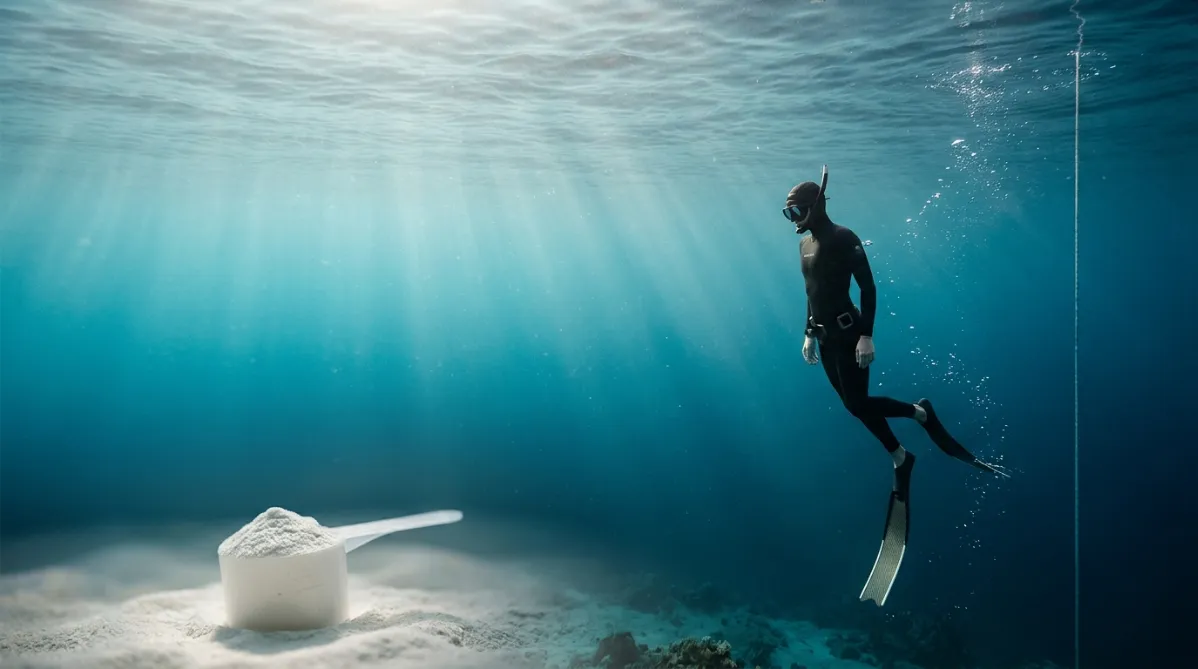
A wide, cinematic landscape photograph of a freediver suspended mid-water in a calm, sunlit turquoise sea, shot from slightly below so the surface glimmers above like rippling silver glass. The diver wears a sleek matte black wetsuit and a long, elegant pair of carbon fins. Their body is streamlined, arms relaxed at their sides, head tilted slightly down in a state of serene focus. Shafts of soft golden sunlight pierce the water diagonally and illuminate fine floating particles and a trail of tiny bubbles rising from the diver's fins. A single thin dive line descends vertically into deeper blue at the right of the frame, adding a graphic compositional element.

In the lower left foreground, slightly out of focus, a minimalist still-life element rests on a pale sandy seabed: a small, clean white scoop with a mound of fine white powder, casually echoing creatine without any text or labels. The scoop is softly lit and has a shallow depth of field blur, creating a gentle visual link between supplement and sport.

The color palette is refined and modern: deep teal, aquamarine, soft cerulean, warm cream highlights, and touches of sunlit gold. The water gradients smoothly from bright, luminous turquoise near the top to a rich inky navy at the bottom, giving depth and a sense of quiet intensity. Leave generous negative space on the left third of the image for headline placement, with the diver positioned on the right third following the rule of thirds.

The mood is calm, athletic, and contemplative, like an editorial image from a premium health and science magazine. Style: high-end editorial photography, natural light, subtle film grain, soft contrast, crisp detail on the diver and gentle bokeh in the background. No text, no logos, no futuristic or sci-fi elements, no graphics overlays.
nutrition

Kreatyna działa nawet, gdy nie możesz oddychać – badanie na freediverach

BY DR. GYMBRO ·

Kreatyna słynie z pomagania w podnoszeniu większych ciężarów i szybszym sprintowaniu, ale czy może wspomóc, gdy w ogóle nie oddychasz? Nowe podwójnie zaślepione badanie na wytrenowanych freediverach wykazało, że siedmiodniowa faza ładowania 20 g/dobę zwiększyła całkowitą pracę i czas wyczerpania w teście jazdy na rowerze przy wstrzymaniu oddechu. Co ciekawe, poziom mleczanu we krwi był niższy w grupie przyjmującej kreatynę niż w placebo, mimo lepszych wyników. Poniżej opisujemy, co zbadano, kto może odnieść z tego korzyść oraz dlaczego mała grupa 20 nurków wymaga zachowania ostrożnych oczekiwań.
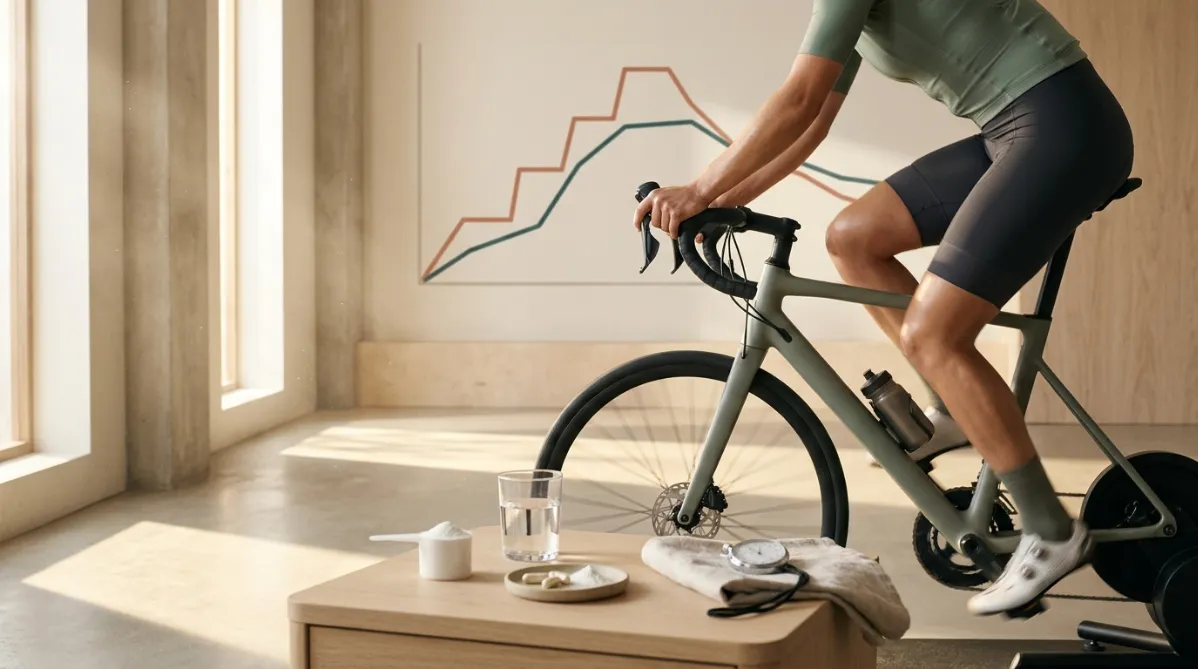
A wide, editorial-style photograph of a lone cyclist's legs and torso mid-sprint on a stationary indoor bike in a bright, minimalist performance studio. The scene is shot from a low three-quarter angle with shallow depth of field. The cyclist wears matte charcoal shorts and a fitted sage-green top, with a subtle sheen of sweat catching soft window light. Their hands grip the handlebars and the pedals are caught in a slight motion blur, which conveys explosive effort.

In the foreground, slightly out of focus on a pale oak side table, sit a small matte white scoop and a clear glass of water. Next to them is a little ceramic dish holding a few off-white capsules and a pinch of fine white powder. A folded linen towel and a slim stopwatch rest nearby. The stopwatch face is softly legible, hinting at timed sprint intervals.

The background is warm cream concrete and pale wood, with tall windows casting long diagonal shafts of golden morning light across the floor. Faint dust motes drift in the light. On the wall behind, a clean, abstract line graph is painted in muted terracotta and deep teal. It shows one line rising in steps like five sprint bouts and another line gently falling, a subtle visual nod to power up and lactate down. The graph is minimal and stylized, with no readable numbers or text.

The color palette is earthy and modern: sage green, terracotta, warm cream, soft charcoal, and touches of natural wood. The lighting is soft and directional with gentle highlights and natural shadows. The overall look is calm, refined, and contemporary, like a premium wellness and sports science magazine cover. The composition follows the rule of thirds, with the cyclist on the right and open negative space on the left for a headline. The image is crisp, grainy in a subtle film-like way, and free of any futuristic or sci-fi elements.
science research

Ta forma karnityny podniosła moc sprintu o 15 % i obniżyła poziom mleczanu

BY DR. GYMBRO ·

Badanie krzyżowe z 2009 roku wykazało, że jednorazowa dawka 4,5 g glikozyny propionyl‑L‑karnityny (GPLC) zwiększyła maksymalną i średnią moc sprintu od 2,6 % do 15 % w pięciu seriach maksymalnych jazd na rowerze, a poziom mleczanu we krwi po 14 minutach od zakończenia wysiłku był o 16,2 % niższy. Należy jednak podkreślić, że 15 % to maksymalny wynik w przedziale, a nie średni przyrost, a badanie obejmowało zaledwie 24 mężczyzn w jednym laboratorium. Artykuł wyjaśnia, czym GPLC różni się od zwykłej L‑karnityny i ALCAR, jak wpisuje się w teorię tlenku azotu oraz dla kogo może być przydatna. Omówiono także dawkowanie, moment przyjęcia i ograniczenia dostępnych dowodów.

This page is available in