Dr. Gymbro
←

#lactate

2 articles
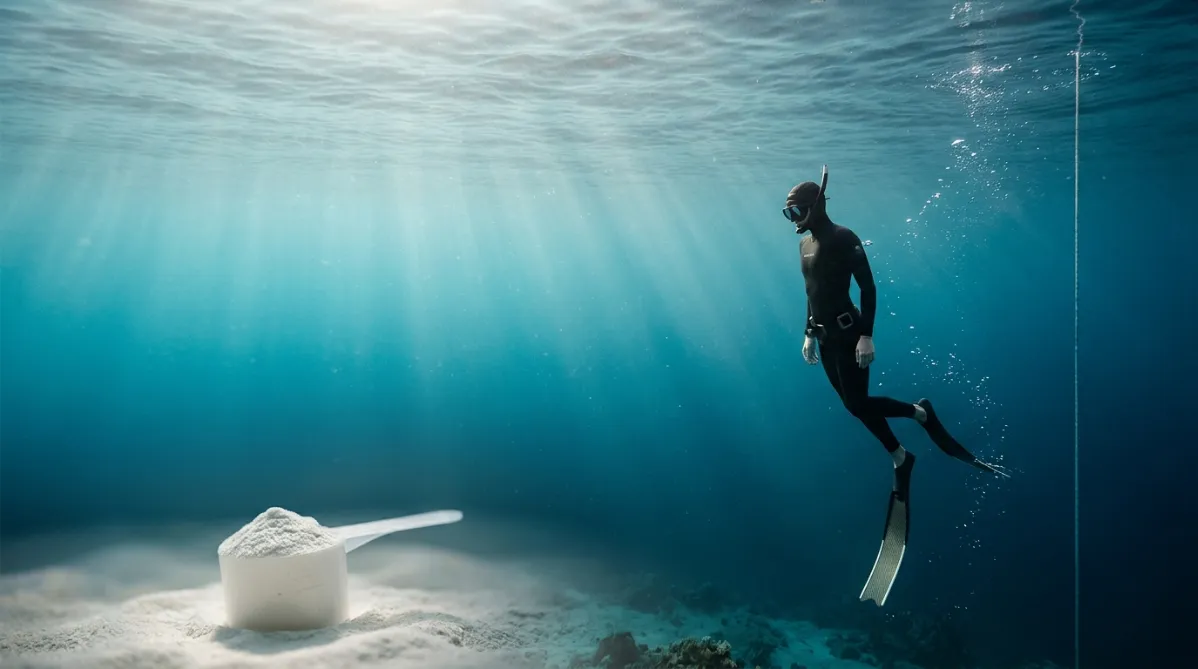
A wide, cinematic landscape photograph of a freediver suspended mid-water in a calm, sunlit turquoise sea, shot from slightly below so the surface glimmers above like rippling silver glass. The diver wears a sleek matte black wetsuit and a long, elegant pair of carbon fins. Their body is streamlined, arms relaxed at their sides, head tilted slightly down in a state of serene focus. Shafts of soft golden sunlight pierce the water diagonally and illuminate fine floating particles and a trail of tiny bubbles rising from the diver's fins. A single thin dive line descends vertically into deeper blue at the right of the frame, adding a graphic compositional element.

In the lower left foreground, slightly out of focus, a minimalist still-life element rests on a pale sandy seabed: a small, clean white scoop with a mound of fine white powder, casually echoing creatine without any text or labels. The scoop is softly lit and has a shallow depth of field blur, creating a gentle visual link between supplement and sport.

The color palette is refined and modern: deep teal, aquamarine, soft cerulean, warm cream highlights, and touches of sunlit gold. The water gradients smoothly from bright, luminous turquoise near the top to a rich inky navy at the bottom, giving depth and a sense of quiet intensity. Leave generous negative space on the left third of the image for headline placement, with the diver positioned on the right third following the rule of thirds.

The mood is calm, athletic, and contemplative, like an editorial image from a premium health and science magazine. Style: high-end editorial photography, natural light, subtle film grain, soft contrast, crisp detail on the diver and gentle bokeh in the background. No text, no logos, no futuristic or sci-fi elements, no graphics overlays.
nutrition

La creatina funziona anche quando non respiri: lo studio sugli apneisti lo dimostra

BY DR. GYMBRO ·

La creatina è celebre per aiutare a sollevare carichi più pesanti e a sprintare più forte, ma può essere utile quando non respiri affatto? Un nuovo studio in doppio cieco su apneisti allenati ha scoperto che una fase di carico di 7 giorni, con 20 g al giorno, aumenta il lavoro totale e il tempo all’esaurimento in un test di ciclismo a apnea. Curiosamente, il lattato ematico risulta più basso nel gruppo creatina rispetto al placebo, nonostante le prestazioni migliori. Ecco come è stato condotto lo studio, a chi può interessare e perché, con un campione di appena 20 apneisti, è necessario mantenere le aspettative sotto controllo.
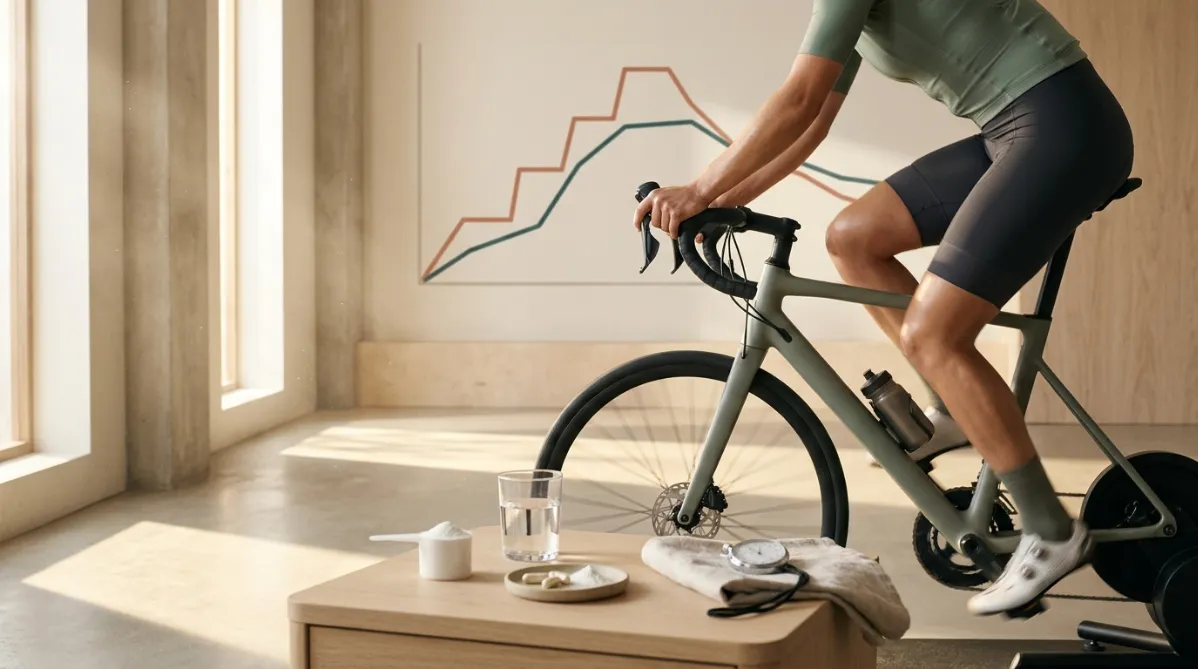
A wide, editorial-style photograph of a lone cyclist's legs and torso mid-sprint on a stationary indoor bike in a bright, minimalist performance studio. The scene is shot from a low three-quarter angle with shallow depth of field. The cyclist wears matte charcoal shorts and a fitted sage-green top, with a subtle sheen of sweat catching soft window light. Their hands grip the handlebars and the pedals are caught in a slight motion blur, which conveys explosive effort.

In the foreground, slightly out of focus on a pale oak side table, sit a small matte white scoop and a clear glass of water. Next to them is a little ceramic dish holding a few off-white capsules and a pinch of fine white powder. A folded linen towel and a slim stopwatch rest nearby. The stopwatch face is softly legible, hinting at timed sprint intervals.

The background is warm cream concrete and pale wood, with tall windows casting long diagonal shafts of golden morning light across the floor. Faint dust motes drift in the light. On the wall behind, a clean, abstract line graph is painted in muted terracotta and deep teal. It shows one line rising in steps like five sprint bouts and another line gently falling, a subtle visual nod to power up and lactate down. The graph is minimal and stylized, with no readable numbers or text.

The color palette is earthy and modern: sage green, terracotta, warm cream, soft charcoal, and touches of natural wood. The lighting is soft and directional with gentle highlights and natural shadows. The overall look is calm, refined, and contemporary, like a premium wellness and sports science magazine cover. The composition follows the rule of thirds, with the cyclist on the right and open negative space on the left for a headline. The image is crisp, grainy in a subtle film-like way, and free of any futuristic or sci-fi elements.
science research

Questa forma di carnitina incrementa la potenza negli sprint del 15 % e riduce il lattato

BY DR. GYMBRO ·

Uno studio crossover del 2009 ha mostrato che una singola dose di 4,5 g di glicina propionil‑L‑carnitina (GPLC) ha aumentato la potenza massima e media negli sprint dal 2,6 % al 15 % in cinque prove al massimo sforzo, e ha ridotto il lattato ematico del 16,2 % a 14 minuti dall’esercizio. Il “15 %” è il valore più alto del range, non la media, e lo studio ha coinvolto solo 24 uomini in un unico laboratorio. Questo articolo spiega le differenze tra GPLC, L‑carnitina e ALCAR, la teoria dell’ossido nitrico e chi potrebbe trarne beneficio, oltre a dosaggio, tempistica e limiti delle evidenze disponibili.

This page is available in