Dr. Gymbro
←

#gplc

1 article
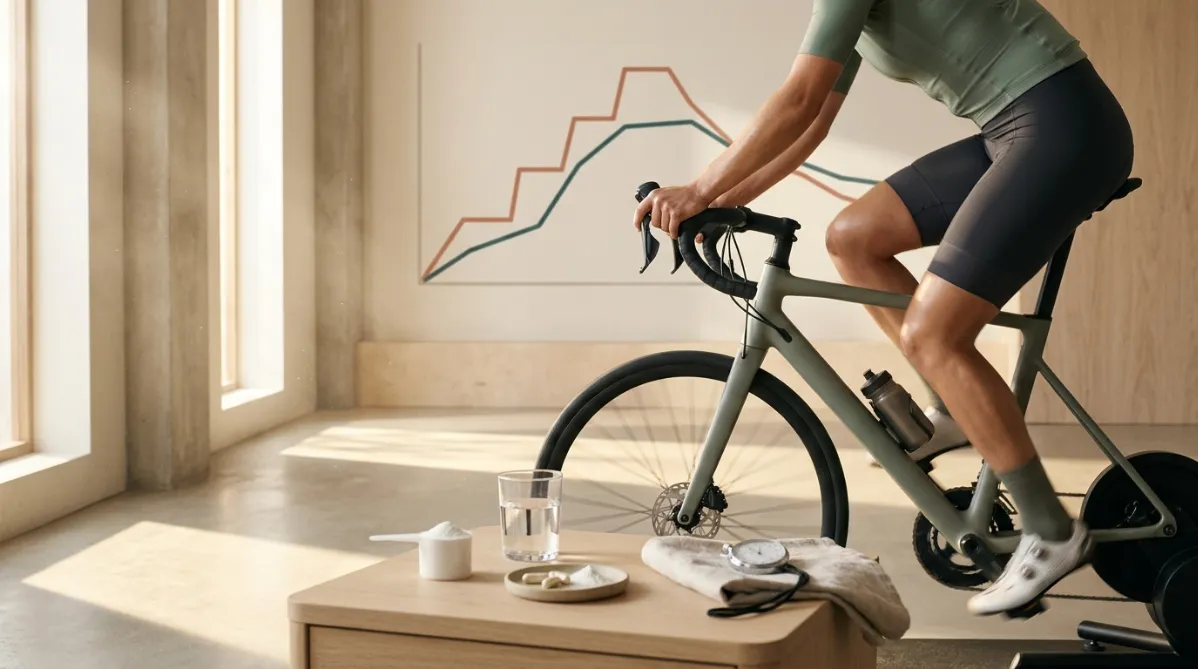
A wide, editorial-style photograph of a lone cyclist's legs and torso mid-sprint on a stationary indoor bike in a bright, minimalist performance studio. The scene is shot from a low three-quarter angle with shallow depth of field. The cyclist wears matte charcoal shorts and a fitted sage-green top, with a subtle sheen of sweat catching soft window light. Their hands grip the handlebars and the pedals are caught in a slight motion blur, which conveys explosive effort.

In the foreground, slightly out of focus on a pale oak side table, sit a small matte white scoop and a clear glass of water. Next to them is a little ceramic dish holding a few off-white capsules and a pinch of fine white powder. A folded linen towel and a slim stopwatch rest nearby. The stopwatch face is softly legible, hinting at timed sprint intervals.

The background is warm cream concrete and pale wood, with tall windows casting long diagonal shafts of golden morning light across the floor. Faint dust motes drift in the light. On the wall behind, a clean, abstract line graph is painted in muted terracotta and deep teal. It shows one line rising in steps like five sprint bouts and another line gently falling, a subtle visual nod to power up and lactate down. The graph is minimal and stylized, with no readable numbers or text.

The color palette is earthy and modern: sage green, terracotta, warm cream, soft charcoal, and touches of natural wood. The lighting is soft and directional with gentle highlights and natural shadows. The overall look is calm, refined, and contemporary, like a premium wellness and sports science magazine cover. The composition follows the rule of thirds, with the cyclist on the right and open negative space on the left for a headline. The image is crisp, grainy in a subtle film-like way, and free of any futuristic or sci-fi elements.
science research

Esta forma de carnitina aumentó la potencia de sprint hasta un 15 % y redujo el lactato

BY DR. GYMBRO ·

Un estudio cruzado de 2009 encontró que una dosis única de 4,5 g de glicina propionil‑L‑carnitina (GPLC) incrementó la potencia máxima y media en sprints entre un 2,6 % y un 15 % durante cinco series de ciclismo al máximo esfuerzo. Además, el lactato en sangre fue un 16,2 % más bajo 14 minutos después del ejercicio. Sin embargo, el “15 %” corresponde al extremo superior del rango, no a un promedio, y el estudio solo incluyó a 24 hombres en un único laboratorio. Este artículo explica cómo el GPLC difiere de la L‑carnitina tradicional y del ALCAR, dónde encaja la teoría del óxido nítrico y quién podría beneficiarse realmente. También se analizan la dosis, el momento de la ingesta y las limitaciones de la evidencia.

This page is available in