Dr. Gymbro
←

#aerobic-capacity

1 article
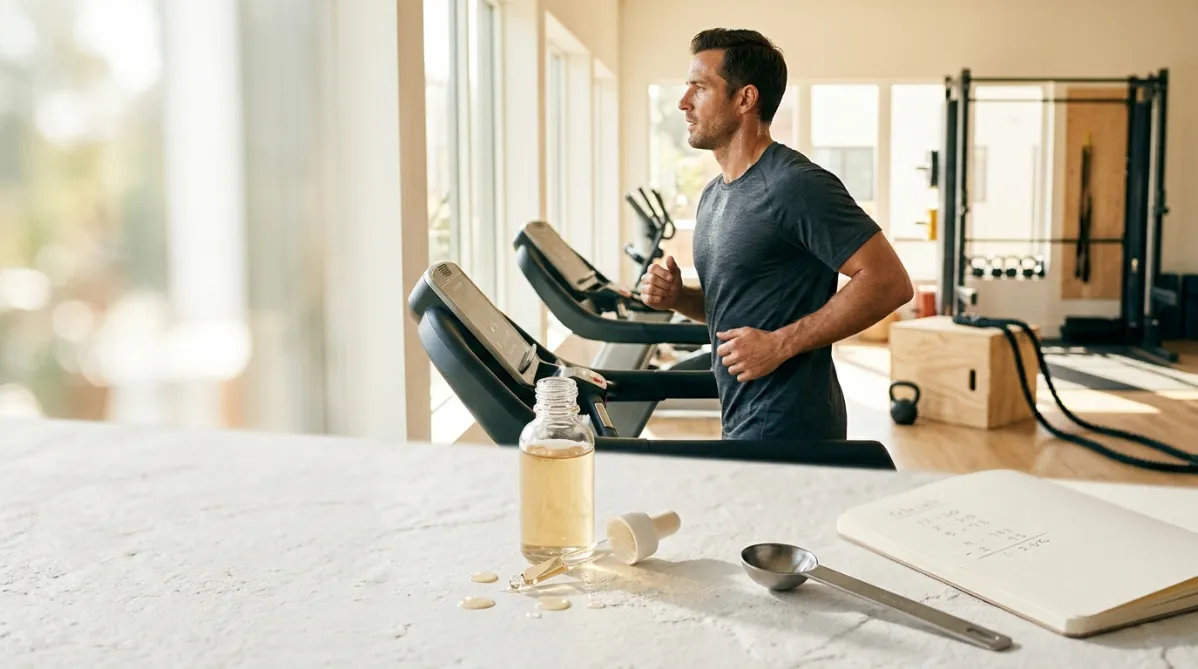
A wide, landscape editorial photograph with a modern wellness-journal feel. In the foreground, a clear glass vial of pale amber liquid sits on a matte white stone surface, with a small dropper beside it and a few droplets catching soft light. A slim brushed-steel measuring spoon and a minimalist notebook with handwritten dose calculations in pencil rest nearby. The numbers are blurred and unreadable.

In the softly blurred background, a bright, airy modern gym with large windows and morning light. A fit man in his thirties, in a charcoal athletic shirt, is mid-stride on a treadmill in profile, with a gentle sheen of sweat and a focused expression. Behind him, a wooden plyo box, a kettlebell, and a rope are arranged neatly, suggesting functional training.

The palette is calm and refined: warm cream, soft sage green, muted terracotta, and touches of deep navy. Natural golden side-light makes long, gentle shadows. Shallow depth of field with a crisp foreground and creamy bokeh. Clean composition with negative space on the left third for a title overlay. Premium magazine photography, subtle film grain, realistic textures, no text or logos, and no futuristic or digital elements.
nutrition

HMB migliora la capacità cardiovascolare, non la forza, nello studio del 2026

BY DR. GYMBRO ·

L'HMB è solitamente promosso come aiuto per mantenere la massa muscolare e accrescere la forza, ma uno studio triplo cieco del 2026 ha svelato qualcosa di diverso. In 90 uomini, una dose personalizzata di acido libero HMB (90 mg per kg di massa magra al giorno) associata a un allenamento funzionale ad alta intensità ha incrementato VO₂max e i parametri di soglia più del placebo. L’effetto è risultato più evidente negli atleti allenati, mentre la forza isometrica delle gambe è rimasta invariata. Ecco come è calcolata la dose, il confronto con la classica dose da 3 g e chi potrebbe trarne beneficio.

This page is available in