Dr. Gymbro
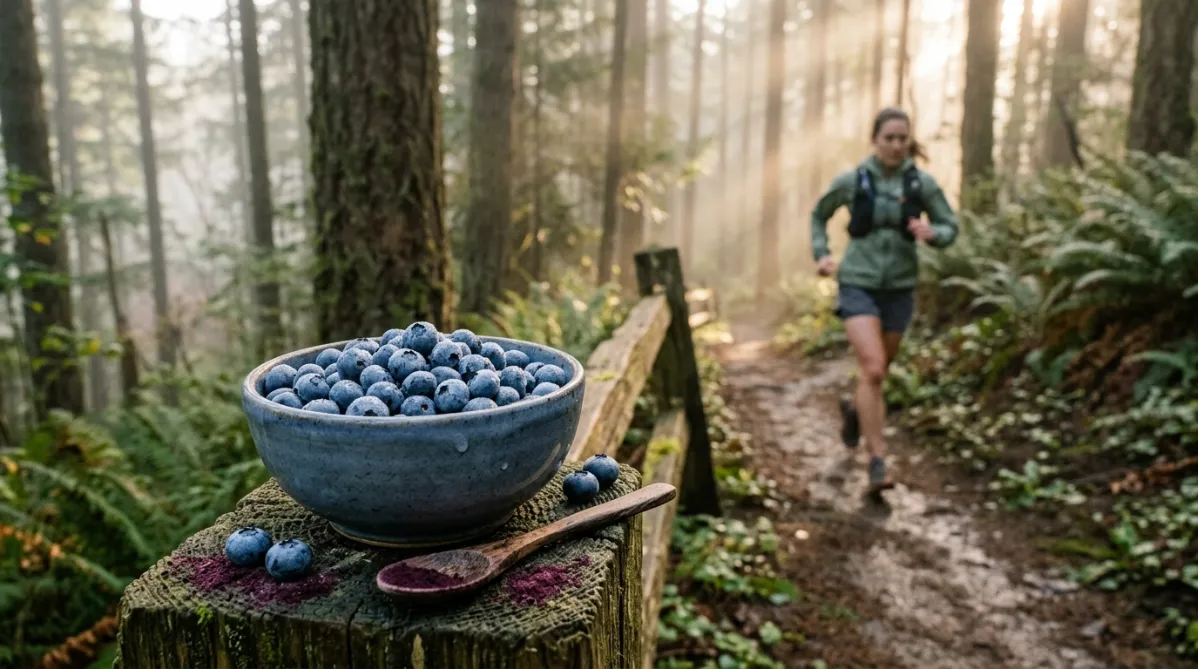
A landscape editorial photograph of a trail runner's moment of rest on a misty forest trail at early morning, shot at shallow depth of field. In the foreground, a rustic ceramic bowl in muted slate blue sits on a weathered wooden fence post, filled with plump, dusty-blue fresh blueberries with a few loose berries scattered on the wood grain. A small scatter of fine, deep-purple blueberry powder dusts the post beside the bowl, with a worn wooden spoon resting nearby. Soft dew clings to the berries and catches the light.

In the soft-focus midground and background, a lone trail runner in a sage green technical jacket and charcoal shorts descends a winding dirt path through tall evergreens and ferns, captured mid-stride, slightly blurred with gentle motion. Golden sunrise light filters through the trees in warm diagonal beams, creating a hazy atmosphere with light mist hanging between the trunks. The palette is harmonious and calm: deep indigo and dusty blue from the berries, moss greens, warm amber light, and soft cream highlights.

Composition follows the rule of thirds, with the blueberry bowl anchored in the lower left third and the runner small in the upper right, leaving negative space in the misty background for headline overlay. Natural film-like grain, muted tones, subtle vignette, and a clean, contemporary magazine aesthetic similar to a health and science feature in a modern online journal. Crisp detail on the berries, creamy bokeh behind. No text, no logos, no futuristic elements.
Fitness

Uma Semana de Mirtilos Deixou Corredores de Trilha Mais Rápidos, Mas Há uma Pegadinha

Power Brett · · 4 min read

Uma Semana de Mirtilos Deixou Corredores de Trilha Mais Rápidos, Mas Há uma Pegadinha

Um pequeno ensaio cruzado revelou que corredores completaram uma corrida simulada de trilha de 22,2 km mais rapidamente após sete dias de consumo de pó de mirtilo do que após sete dias de placebo. A frequência cardíaca e a percepção de esforço durante a prova não diferiram. As pernas também parecem ter lidado melhor com o esforço da descida no dia seguinte. Antes de colocar os mirtilos no freezer, é preciso saber o quão pequeno foi este estudo.

Os achados vêm de um ensaio randomizado controlado conduzido por Giles e colegas, publicado no International Journal of Sport Nutrition and Exercise Metabolism (PubMed; DOI).

O que os Pesquisadores Testaram

Correr em trilha, sobretudo em percursos com descidas pronunciadas, pode provocar dano muscular, estresse oxidativo e inflamação – fatores intimamente ligados à fadiga. Como os mirtilos são ricos em antioxidantes, a equipe investigou se uma janela curta de suplementação poderia atenuar esses danos e melhorar o desempenho.

Nove corredores experientes completaram a corrida simulada de 22,2 km após sete dias de consumo de pó de mirtilo highbush liofilizado (BLU) e, em outra fase, após sete dias de pó placebo (PLA). Cada atleta participou de ambas as condições, o que permite que cada um sirva como seu próprio controle – estratégia essencial quando a amostra é reduzida.

Os pesquisadores avaliaram um extenso painel de marcadores antes da corrida, imediatamente após e 24 h depois:

  • Sintomas e dor muscular
  • Análise de onda de pulso e velocidade da onda de pulso (marcadores vasculares)
  • Índice de força reativa e altura do salto em queda (função neuromuscular)
  • Função pulmonar
  • Cortisol salivar e imunoglobulina A
  • Fração de óxido nítrico exalado, antes e depois da corrida

Durante a prova, foram monitoradas a frequência cardíaca e as escalas de percepção de esforço para as pernas e a respiração.

Resultado de Destaque: Mais Rápido sem Trabalhar Mais

O tempo de prova foi significativamente menor com mirtilos (p = 0,003). A frequência cardíaca e as escalas de percepção de esforço durante a corrida não apresentaram diferenças entre as condições. Em suma, os corredores foram mais rápidos sem relatar maior dificuldade ou custo cardíaco maior, ao menos pelos parâmetros avaliados.

O resumo não informa a magnitude da diferença de tempo, portanto não se deve presumir que o ganho tenha sido grande. O p‑valor indica que o efeito foi improvável de ser fruto do acaso dentro da amostra, mas não quantifica quantos minutos foram economizados.

Indícios sobre a Recuperação

Alguns achados secundários favoreceram o mirtilo:

  • Frequência cardíaca supina foi menor no grupo BLU (p = 0,031).
  • Sensação de fadiga foi reduzida no grupo BLU (p = 0,005).
  • Relação FEV1/FVC, indicador de função pulmonar, foi maior no grupo BLU (p = 0,023).
  • Altura do salto em queda diminuiu 24 h após a corrida no grupo PLA (p = 0,022), mas permaneceu preservada no grupo BLU.

O salto em queda é o marcador mais relevante para a recuperação após descidas, pois reflete a capacidade explosiva e o ciclo encurtamento‑estiramento dos músculos das pernas. Esse resultado sugere que a ingestão de mirtilos manteve melhor a performance muscular no dia seguinte. Os autores concluíram que a suplementação melhorou o desempenho "sem elevar o estresse fisiológico ou perceptual".

Lições Práticas

Dosagem: O resumo não especifica a quantidade em gramas, portanto não podemos indicar a dose exata usada. Consulte o artigo completo antes de reproduzir o protocolo. A forma empregada foi pó de mirtilo highbush liofilizado, não fruta fresca nem extrato.

Tempo de suplementação: Os atletas consumiram o suplemento por sete dias consecutivos antes da prova. A recuperação foi avaliada imediatamente após o esforço e novamente às 24 h. Trata‑se de um carregamento de curto prazo, e não de uma dose única pré‑corrida.

Público-alvo que pode se beneficiar: Corredores experientes que se preparam para percursos com muitas subidas ou descidas, nos quais o dano muscular e a fadiga no dia seguinte são relevantes. Essa foi a população estudada.

Quem deve ter cautela ou evitar: O resumo não menciona contraindicações específicas, portanto o conselho é genérico. Quem tem alergia a frutas, intestino sensível ou condição médica que exija controle de carboidratos ou dieta deve consultar um profissional de saúde antes de usar. Iniciantes e não‑corredores ficam fora do escopo deste estudo.

O Detalhe que Modera o Entusiasmo: Nove Corredores

Este é o ponto que deve temperar a empolgação. Nove participantes constituem uma amostra muito pequena. Estudos com poucos sujeitos tendem a superestimar efeitos e os resultados podem não ser generalizáveis para mulheres, corredores mais velhos, iniciantes ou provas mais extensas. A corrida foi simulada, não uma competição de verdade. Além disso, o resumo não destaca diferenças em marcadores como cortisol salivar ou imunoglobulina A; a afirmação de "nenhum estresse adicional" refere‑se apenas ao fato de que esses indicadores não mostraram aumento, não que os mirtilos tenham reduzido o estresse de forma geral. Vários desfechos foram testados simultaneamente e o resumo não descreve como foi feito o controle estatístico desse múltiplo.

Conclusão

Trata‑se de um estudo promissor, que gera hipótese, e não de uma recomendação definitiva. Uma semana de suplementação com mirtilo highbush liofilizado esteve associada a um desempenho mais rápido em corrida de trilha, menor sensação de fadiga e melhor preservação do salto em queda no dia seguinte, sem custo perceptível de esforço. Se você é um corredor saudável e gosta de mirtilos, pode experimentar como um teste de baixo risco antes da sua próxima prova de subidas. Contudo, aguarde por replicações em maior escala antes de considerá‑lo um truque definitivo de performance.

Fonte: Giles et al., "Seven Days of Highbush Blueberry Supplementation Improves Trail Running Performance in Experienced Runners Without Elevating Physiological or Perceptual Stress Markers," Int J Sport Nutr Exerc Metab. PubMed 42521198.
Original study

Read the original research on pubmed.ncbi.nlm.nih.gov →

This article summarizes published research for general information. It is not medical advice.

PB

Written by

Power Brett

Power Brett writes for Dr. Gymbro: science-backed fitness, nutrition & performance.

Related Articles

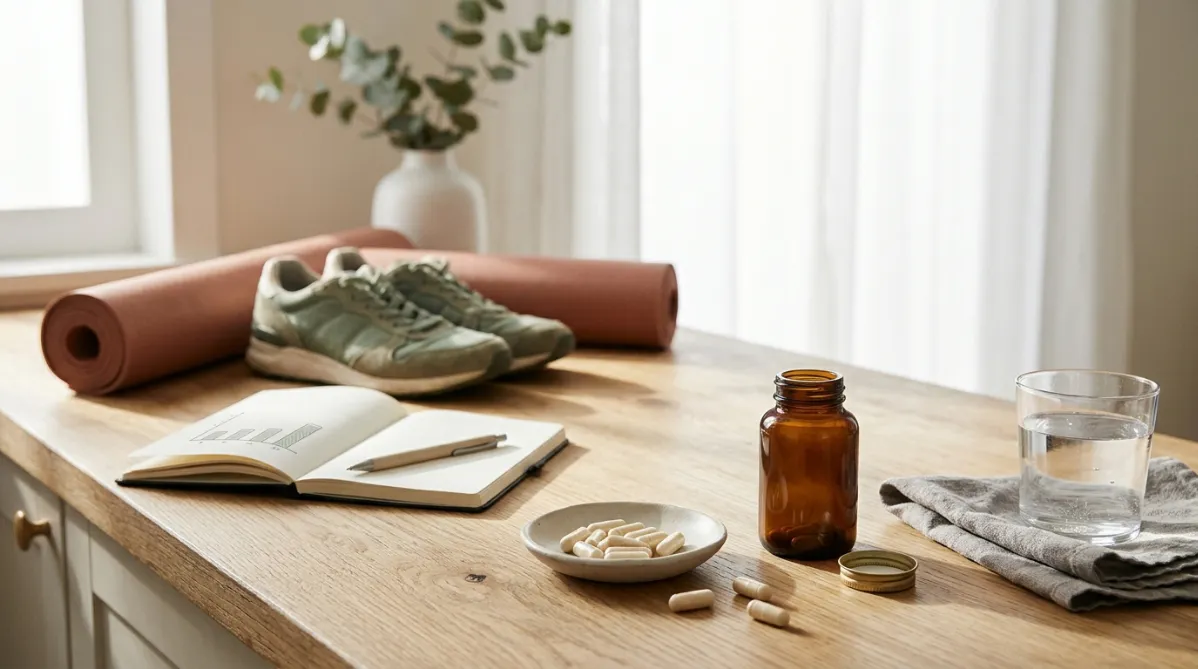
A wide landscape editorial photograph of a clean, sunlit kitchen counter in soft morning light, shot from a slightly elevated three-quarter angle with shallow depth of field. In the foreground, a small matte ceramic dish holds a handful of pale cream-colored supplement capsules, with a few spilled casually onto a pale oak surface. Beside them sits an unlabeled amber glass bottle with its cap off. A folded gray linen napkin and a glass of water with delicate condensation add a calm, everyday feel.

In the softly blurred midground, a pair of well-worn running shoes in muted sage green rests beside a rolled yoga mat in dusty terracotta. A small notebook lies open with a pencil resting across it, its pages showing faint hand-drawn bar charts that are nearly flat, with one or two slightly taller bars. The charts are suggestive rather than legible.

The background is a bright window with sheer white curtains, casting long, gentle shadows across the counter. A potted eucalyptus sprig in a simple white vase adds a touch of organic green.

The palette is restrained and modern: warm creams, soft sage, terracotta, muted oatmeal, and pale wood tones, with subtle highlights on the glass and ceramic. The mood is thoughtful, skeptical, and quietly informative, like a contemporary health and science magazine feature. Natural film-like grain, soft contrast, and generous negative space on the right third of the frame leave room for headline text. There are no people, no logos, no text, and no futuristic elements, only a minimalist, trendy, lifestyle-journal aesthetic.
fitness

2 g de Carnosina ao Dia por 12 Semanas: O Ensaio com 299 Pessoas Quase Não Apresentou Resultados

BY IRON MARCUS ·

As cápsulas de carnosina são promovidas como potencializadores da resistência muscular. Um estudo randomizado, controlado por placebo, com 299 participantes testou a dose de 2 g/dia durante 12 semanas e, na maior parte, não detectou efeitos. Alguns sinais surgiram em subgrupos específicos, mas devem ser interpretados com cautela.

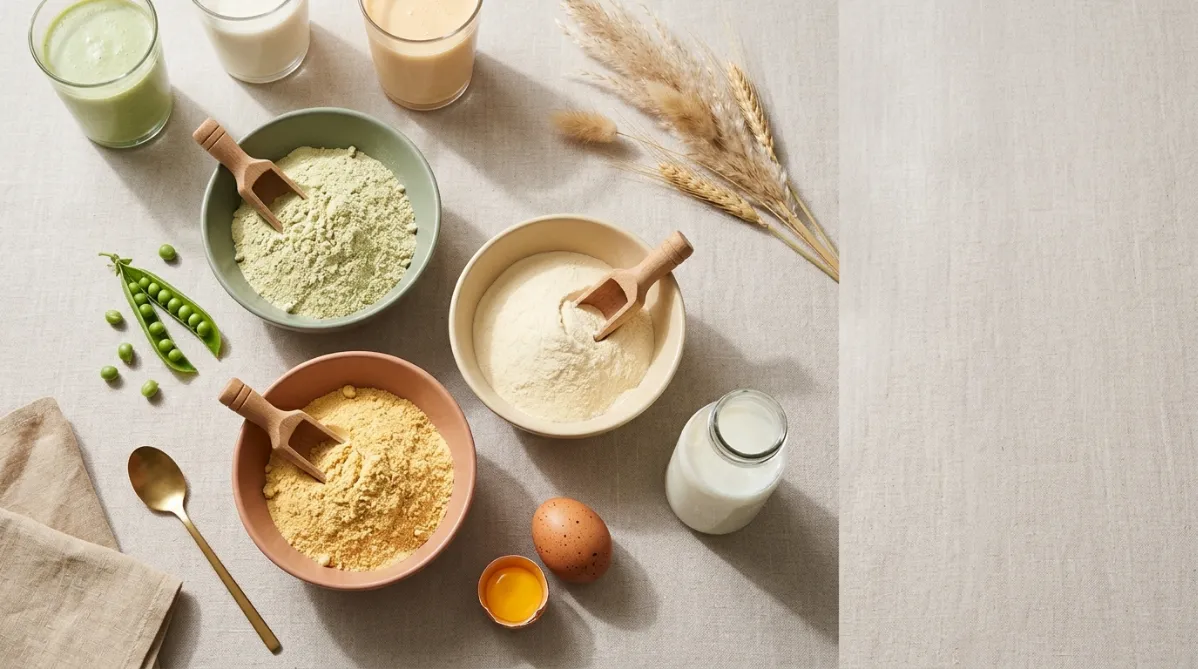
A overhead flat-lay photograph in a modern editorial style, shot on a pale oatmeal-colored linen surface with soft, diffused natural window light coming from the upper left, casting gentle, elongated shadows. Three ceramic bowls in matte, muted tones sit in a loose, balanced triangle composition: one in dusty sage green holding fine pale-green pea protein powder, one in warm cream holding silky ivory whey powder, and one in soft terracotta holding golden-yellow egg protein powder. Each bowl has a small wooden scoop resting against its rim, with a few powder specks scattered naturally across the linen.

Around the bowls, subtle ingredient cues add storytelling without clutter: a handful of fresh green peas in their open pod beside the sage bowl, a small glass bottle of milk with a faint condensation sheen near the cream bowl, and two brown speckled eggs, one whole and one cracked open to reveal a bright yolk, near the terracotta bowl. A sprig of dried wheat or pampas grass enters the frame from the top right corner for texture and height.

Three glass tumblers of smoothie-like shakes in slightly different hues, soft green, creamy white, and pale apricot, stand along the upper edge of the frame, slightly out of focus, creating depth and a gentle rhythm. A thin brass spoon and a folded sand-colored napkin add a refined touch in the lower left.

The palette is warm and earthy: sage, cream, terracotta, butter yellow, and soft beige, with tiny accents of brass. Negative space is left on the right third of the composition for possible title overlay, keeping the layout airy and uncluttered. The overall mood is calm, thoughtful, and approachable, like a contemporary wellness magazine or minimalist food journal, with crisp focus on the bowls, shallow depth of field toward the edges, subtle film-like grain, and a clean, sophisticated, slightly matte finish.
fitness

Whey vs Ervilha vs Ovo: 51 Estudos Avaliam Qual Proteína Constrói Músculo Após o Treino

BY COACH RYAN ·

Você esperaria que um duelo entre whey, proteína de ervilha e clara de ovo coroasse um vencedor evidente. Porém, o que os 51 ensaios rastreados de uma equipe da Universidade de Viena mostraram é mais intrigante do que uma simples classificação: apenas o whey padrão apresentou efeito estatisticamente significativo na síntese de proteína muscular pós‑treino. Isso nos leva a refletir sobre precisão estatística versus superioridade biológica.

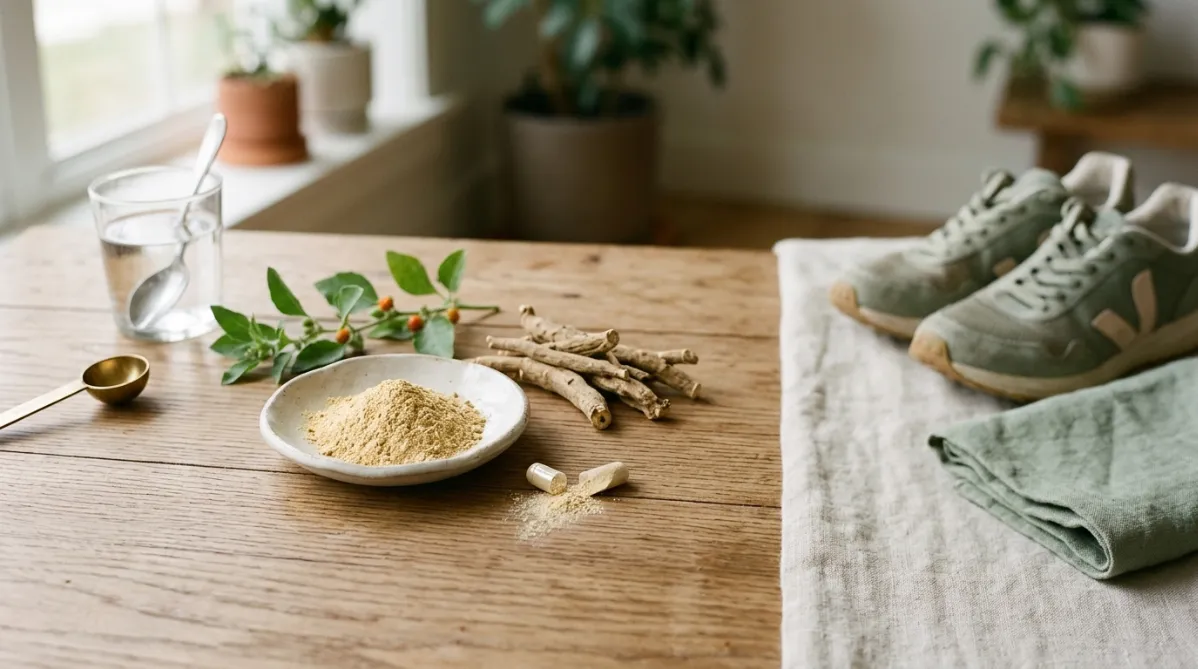
Wide landscape editorial photograph of a minimalist wooden table in soft morning light. At the center, a small ceramic dish holds a modest pile of pale golden ashwagandha root powder, with a few dried gnarled ashwagandha roots and a sprig of green leaves with tiny orange-red berries lying beside it. A single tiny capsule sits split open next to the dish, with a delicate dusting of powder spilling out, hinting at a very small dose. In the softly blurred background on the right, a pair of clean running shoes and a folded sage-green towel rest on a pale linen surface, suggesting endurance training and fitness without any people in frame. A small brass measuring spoon and a glass of water with subtle condensation add quiet detail on the left. The palette is warm and earthy: oat beige, muted sage green, terracotta, soft cream, and touches of burnt orange from the berries. Lighting is natural, diffused window light from the left, casting long gentle shadows and a subtle glow across the powder grains. Shallow depth of field with crisp focus on the powder and roots, creamy bokeh behind. Composition uses generous negative space on the right third for headline overlay, with a clean, calm, contemporary wellness-magazine aesthetic. Shot as if on a 50mm lens, fine film grain, matte finish, high-end editorial styling, tactile textures of ceramic, wood, and linen, with a restrained, thoughtful mood that hints at caution and careful consideration.
supplements

Apenas 30 mg de Ashwagandha aumentam o VO2máx em 8 semanas – veja os detalhes

BY JAKE THE TITAN ·

Os suplementos de ashwagandha costumam ser comercializados em doses de centenas de miligramas. Um estudo randomizado publicado na *Phytotherapy Research* testou apenas **30 mg por dia** e encontrou melhora significativa no VO2máx em oito semanas, comparado ao placebo. A pesquisa usou um extrato padronizado específico (Ashwa.30), não um pó de raiz genérico. Os resultados se aplicam a adultos saudáveis e não provam benefícios para outras doses ou para atletas de elite.

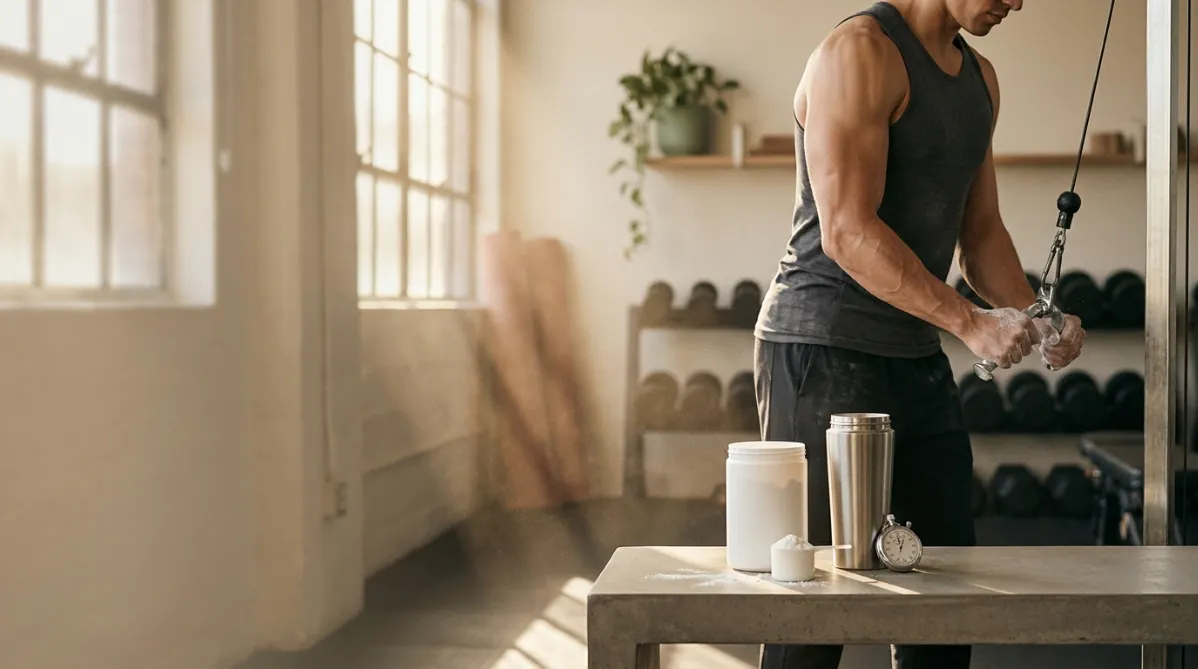
A softly lit, minimalist gym interior photographed in a modern editorial style. In the foreground, a muscular lifter in a fitted charcoal tank top is mid-set at a cable station, forearm and shoulder muscles defined, a light dusting of chalk on their hands. The frame is shot at a slight low angle with shallow depth of field, so the background gym equipment melts into creamy blur. On a matte concrete-textured bench beside them sits a clean, unbranded matte-white scoop container of white powder, a stainless steel shaker bottle, and a small analog stopwatch, arranged with careful, magazine-style composure. A few loose grains of white powder catch the light on the bench surface.

Warm golden late-afternoon sunlight pours through tall industrial windows on the left, creating long diagonal light streaks, gentle lens flare, and a subtle haze of floating chalk dust that glows in the beams. The palette is restrained and sophisticated: warm sand, soft cream, muted terracotta, deep charcoal, and a single accent of sage green from a potted plant on a shelf. Rows of neatly racked dumbbells in dark metal repeat in the mid-ground, adding rhythm and depth.

The composition follows the rule of thirds: the lifter and supplement still life occupy the right two-thirds, while the left third remains calm, with a smooth, softly blurred wall and window light, leaving generous negative space for headline text. Subtle film grain, natural color grading, and a slightly desaturated, high-end lifestyle photography look evoke a contemporary health and science journal. No text, logos, or graphics. Clean, aspirational, grounded, and tactile, with a sense of focused effort and quiet intensity.
nutrition

Beta‑Alanina Finalmente Funciona para Levantadores — Se Você Treinar Assim

BY DR. GYMBRO ·

A beta‑alanina tem um histórico nebuloso quando o assunto é musculação, mas um novo ensaio clínico randomizado pode explicar o porquê. Quando levantadores treinados tomaram 6,4 g por dia durante quatro semanas, o total de repetições aumentou 17,3 % em drop sets e 18,2 % em bi‑sets, enquanto o grupo placebo não apresentou ganhos significativos. O esforço percebido, a motivação e o afeto não diferiram entre os grupos, indicando que o ganho foi físico e não psicológico. Aqui estão a dose, o período de carga, a quem os dados se aplicam e quem ainda deve manter o ceticismo.

This page is available in