Dr. Gymbro
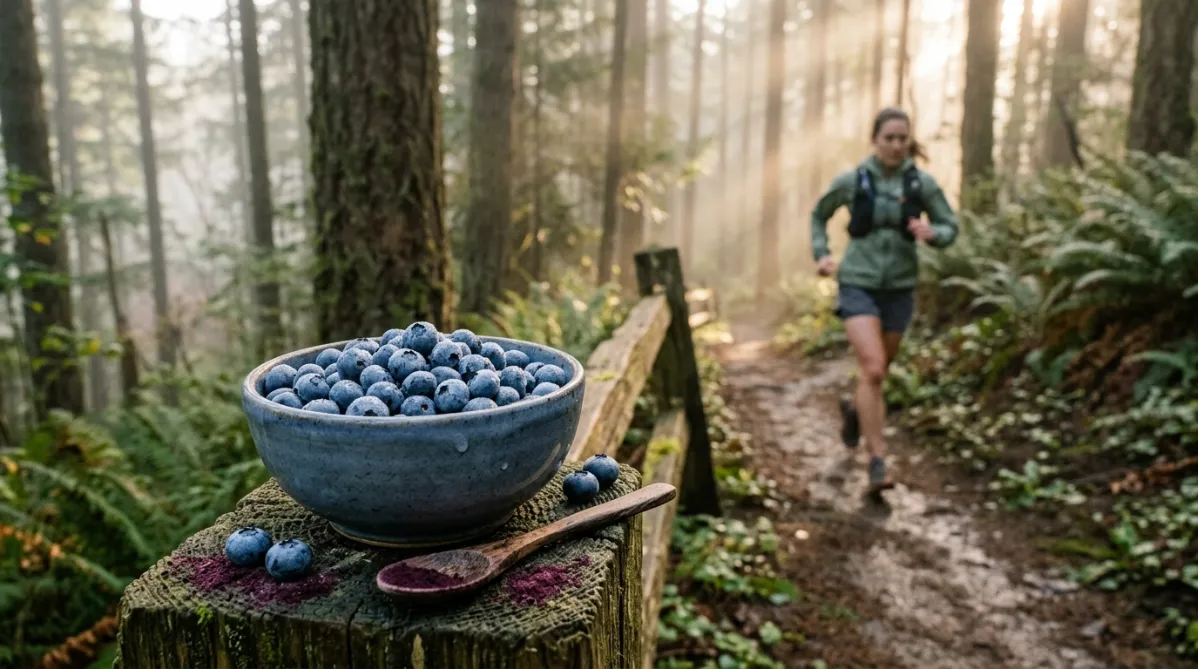
A landscape editorial photograph of a trail runner's moment of rest on a misty forest trail at early morning, shot at shallow depth of field. In the foreground, a rustic ceramic bowl in muted slate blue sits on a weathered wooden fence post, filled with plump, dusty-blue fresh blueberries with a few loose berries scattered on the wood grain. A small scatter of fine, deep-purple blueberry powder dusts the post beside the bowl, with a worn wooden spoon resting nearby. Soft dew clings to the berries and catches the light.

In the soft-focus midground and background, a lone trail runner in a sage green technical jacket and charcoal shorts descends a winding dirt path through tall evergreens and ferns, captured mid-stride, slightly blurred with gentle motion. Golden sunrise light filters through the trees in warm diagonal beams, creating a hazy atmosphere with light mist hanging between the trunks. The palette is harmonious and calm: deep indigo and dusty blue from the berries, moss greens, warm amber light, and soft cream highlights.

Composition follows the rule of thirds, with the blueberry bowl anchored in the lower left third and the runner small in the upper right, leaving negative space in the misty background for headline overlay. Natural film-like grain, muted tones, subtle vignette, and a clean, contemporary magazine aesthetic similar to a health and science feature in a modern online journal. Crisp detail on the berries, creamy bokeh behind. No text, no logos, no futuristic elements.
Fitness

Una Semana de Arándanos Hizo a los Corredores de Trail Más Rápidos: El Truco

Power Brett · · 4 min read

Una Semana de Arándanos Hizo a los Corredores de Trail Más Rápidos: El Truco

Una carrera de trail simulada de 2 km se completó más rápido después de siete días de consumo de polvo de arándano que tras una semana de placebo. La frecuencia cardíaca y la percepción del esfuerzo no variaron, pero las piernas parecieron manejar mejor el esfuerzo de la cuesta abajo al día siguiente. Antes de cargar tu congelador, debes saber cuán pequeño fue realmente este estudio.

Los hallazgos provienen de un ensayo aleatorizado y controlado realizado por Giles y colaboradores, publicado en el International Journal of Sport Nutrition and Exercise Metabolism (PubMed; DOI).

Qué Evaluaron los Investigadores

El trail running, sobre todo con tramos de descenso, puede provocar daño muscular, estrés oxidativo e inflamación, factores vinculados a la fatiga. Los arándanos son ricos en antioxidantes, por lo que el equipo se preguntó si una corta ventana de suplementación podía atenuar el daño y mejorar el rendimiento.

Nueve corredores experimentados completaron una carrera simulada de 22,2 km después de siete días de polvo de arándano alto deshidratado (BLU) y, en otra ocasión, después de siete días de polvo placebo (PLA). Cada corredor participó en ambas condiciones, lo que permite que cada atleta actúe como su propio control, una estrategia útil cuando la muestra es reducida.

Los investigadores midieron un amplio panel de variables antes de la carrera, inmediatamente después y 24 h más tarde:

  • Síntomas y dolor muscular
  • Análisis de la onda de pulso y velocidad de la onda de pulso (marcadores vasculares)
  • Índice de fuerza reactiva y altura del salto de caída (función neuromuscular)
  • Función pulmonar
  • Cortisol salival e inmunoglobulina A
  • Fracción de óxido nítrico exhalado, antes y después de la carrera

Durante la carrera se registró la frecuencia cardíaca y las puntuaciones de percepción del esfuerzo para piernas y pulmones.

Resultado Principal: Más Rápido sin Esforzarse Más

El tiempo de carrera fue significativamente más rápido con arándanos (p = .003). La frecuencia cardíaca y la percepción del esfuerzo durante la prueba no difirieron entre condiciones. En otras palabras, los corredores fueron más rápidos sin que se percibiera mayor dificultad ni un mayor costo cardíaco.

El resumen no indica el tamaño exacto de la diferencia, así que no asumas que la ventaja sea enorme. El valor p solo muestra que la diferencia no es atribuible al azar dentro de esta muestra; no comunica cuántos segundos o minutos se ganaron.

Pistas para la Recuperación

Varios hallazgos secundarios favorecieron al suplemento de arándanos:

  • Frecuencia cardíaca en decúbito fue más baja en BLU (p = .031).
  • Sensación de cansancio disminuyó en BLU (p = .005).
  • FEV1/FVC, relación de función pulmonar, fue mayor en BLU (p = .023).
  • Altura del salto de caída se redujo 24 h después de la carrera en PLA (p = .022) pero se mantuvo en BLU.

El salto de caída es el indicador más relevante para la pregunta de recuperación en descenso, ya que refleja la capacidad explosiva y la eficiencia del ciclo acortamiento‑estiramiento de los músculos de las piernas. Los autores concluyeron que la suplementación mejoró el rendimiento "sin incrementar el estrés fisiológico o perceptual".

Consejos Prácticos

Dosis: El resumen no especifica la cantidad en gramos, por lo que es necesario consultar el artículo completo antes de reproducir el protocolo. La forma utilizada fue polvo de arándano alto deshidratado, no fruta fresca ni extracto.

Timing: Los corredores consumieron el suplemento durante siete días consecutivos antes de la prueba. La recuperación se evaluó inmediatamente después y a las 24 h. Se trató de una estrategia de carga a corto plazo, no de una dosis única antes de la carrera.

A quién puede interesar: Corredores experimentados que se preparan para competiciones con muchas colinas o descensos, donde el daño muscular y la fatiga al día siguiente son críticos. Esta fue la población estudiada.

A quién debería ser cauteloso: El resumen no menciona exclusiones de seguridad, por lo que el consejo es general. Personas con alergia a frutos rojos, problemas digestivos o condiciones médicas que requieran un manejo dietético específico deberían consultar a un profesional de la salud antes de probarlo. Principiantes y no corredores están fuera del alcance de este estudio.

La Letra Pequeña: Nueve Corredores

Esta es la parte que modera el entusiasmo. Nueve participantes constituyen una muestra muy pequeña. Los ensayos con pocos sujetos pueden exagerar los efectos y los resultados no siempre se generalizan a mujeres, corredores mayores, novatos o pruebas más largas. Además, la carrera fue simulada, no una competencia real. El resumen tampoco destaca diferencias en marcadores como cortisol salival o inmunoglobulina A, de modo que la afirmación de "sin estrés adicional" se basa en la ausencia de cambios en esas medidas, no en la eliminación total del estrés. Se evaluaron varios resultados simultáneamente y el artículo no indica cómo se controló la multiplicidad estadística.

Conclusión

Se trata de un estudio prometedor que genera hipótesis, no de una receta definitiva. Una semana de arándanos deshidratados se asoció con un mejor rendimiento en una carrera de trail, menos sensación de cansancio y una mayor conservación del salto al día siguiente, sin aumento perceptible del esfuerzo. Si eres un corredor sano y disfrutas de los arándanos, puedes probarlo como una estrategia de bajo riesgo para tu próxima competencia con colinas. Trata los resultados como una pista preliminar y mantente a la espera de replicaciones con muestras más amplias antes de considerarlo un truco definitivo.

Fuente: Giles et al., "Seven Days of Highbush Blueberry Supplementation Improves Trail Running Performance in Experienced Runners Without Elevating Physiological or Perceptual Stress Markers", Int J Sport Nutr Exerc Metab. PubMed 42521198.
Original study

Read the original research on pubmed.ncbi.nlm.nih.gov →

This article summarizes published research for general information. It is not medical advice.

PB

Written by

Power Brett

Power Brett writes for Dr. Gymbro: science-backed fitness, nutrition & performance.

Related Articles

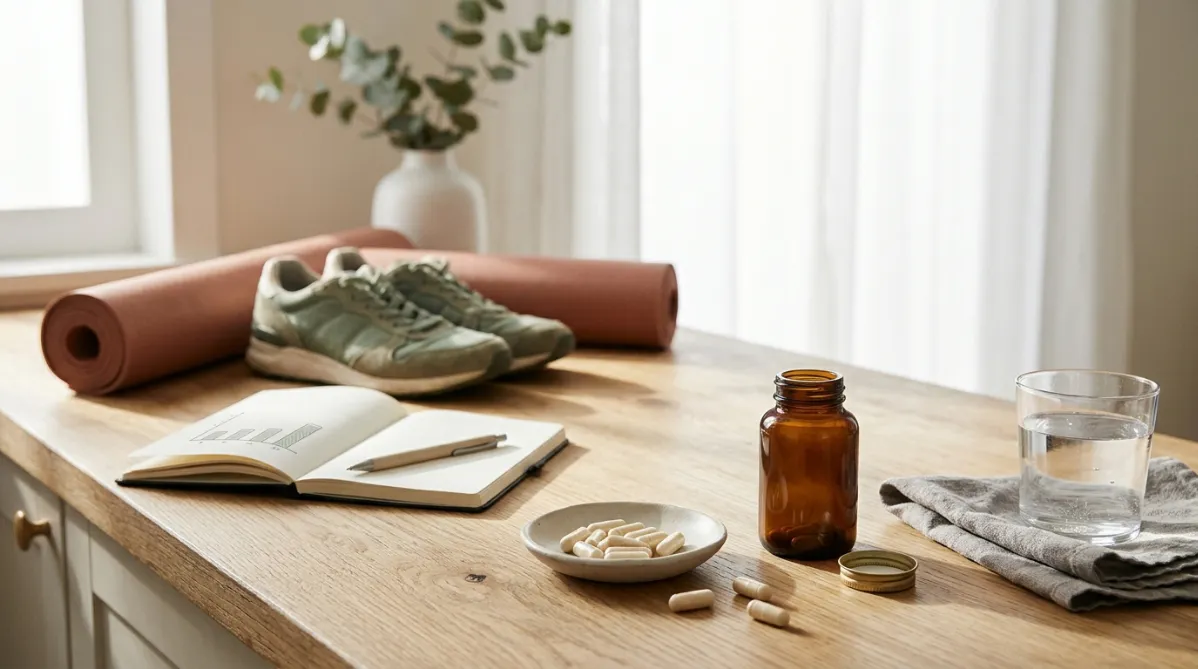
A wide landscape editorial photograph of a clean, sunlit kitchen counter in soft morning light, shot from a slightly elevated three-quarter angle with shallow depth of field. In the foreground, a small matte ceramic dish holds a handful of pale cream-colored supplement capsules, with a few spilled casually onto a pale oak surface. Beside them sits an unlabeled amber glass bottle with its cap off. A folded gray linen napkin and a glass of water with delicate condensation add a calm, everyday feel.

In the softly blurred midground, a pair of well-worn running shoes in muted sage green rests beside a rolled yoga mat in dusty terracotta. A small notebook lies open with a pencil resting across it, its pages showing faint hand-drawn bar charts that are nearly flat, with one or two slightly taller bars. The charts are suggestive rather than legible.

The background is a bright window with sheer white curtains, casting long, gentle shadows across the counter. A potted eucalyptus sprig in a simple white vase adds a touch of organic green.

The palette is restrained and modern: warm creams, soft sage, terracotta, muted oatmeal, and pale wood tones, with subtle highlights on the glass and ceramic. The mood is thoughtful, skeptical, and quietly informative, like a contemporary health and science magazine feature. Natural film-like grain, soft contrast, and generous negative space on the right third of the frame leave room for headline text. There are no people, no logos, no text, and no futuristic elements, only a minimalist, trendy, lifestyle-journal aesthetic.
fitness

2 g de carnosina al día durante 12 semanas: el ensayo con 299 participantes no mostró resultados

BY IRON MARCUS ·

Las cápsulas de carnosina se promocionan como potenciadoras de la resistencia muscular. Un ensayo aleatorizado, controlado con placebo y con 299 participantes puso a prueba esa afirmación, y la mayoría de los resultados resultaron nulos. Surgieron un par de señales en subgrupos, que deben analizarse sin exagerar sus implicaciones. El estudio, publicado en una revista especializada, no encontró diferencias significativas en los resultados globales.

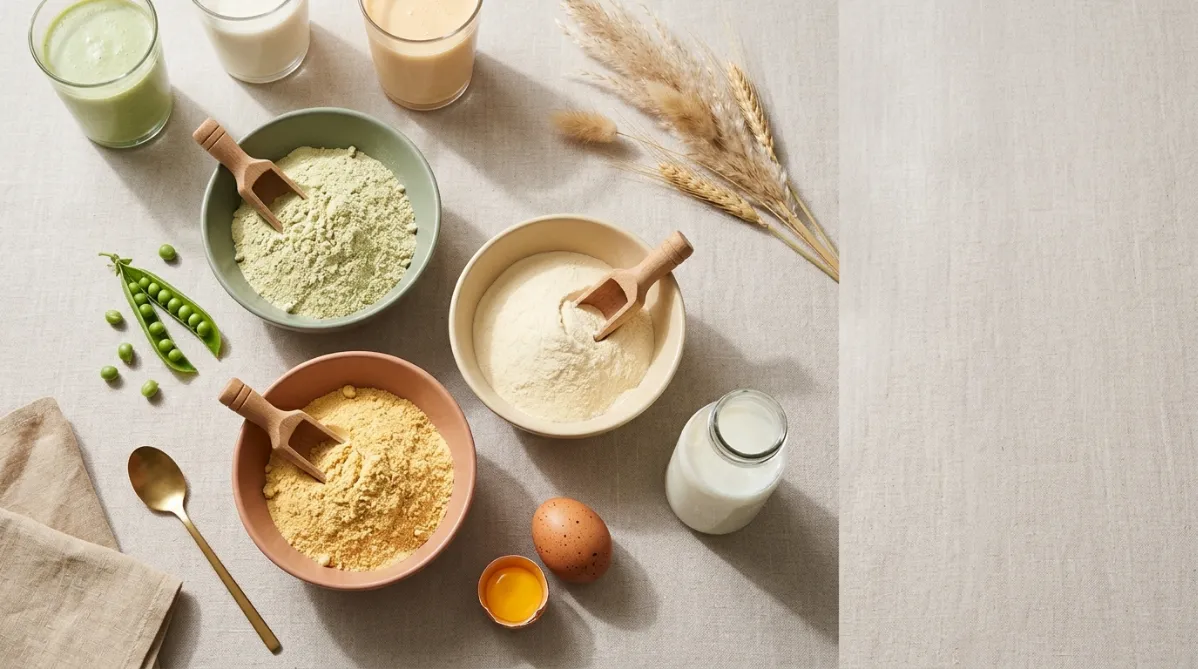
A overhead flat-lay photograph in a modern editorial style, shot on a pale oatmeal-colored linen surface with soft, diffused natural window light coming from the upper left, casting gentle, elongated shadows. Three ceramic bowls in matte, muted tones sit in a loose, balanced triangle composition: one in dusty sage green holding fine pale-green pea protein powder, one in warm cream holding silky ivory whey powder, and one in soft terracotta holding golden-yellow egg protein powder. Each bowl has a small wooden scoop resting against its rim, with a few powder specks scattered naturally across the linen.

Around the bowls, subtle ingredient cues add storytelling without clutter: a handful of fresh green peas in their open pod beside the sage bowl, a small glass bottle of milk with a faint condensation sheen near the cream bowl, and two brown speckled eggs, one whole and one cracked open to reveal a bright yolk, near the terracotta bowl. A sprig of dried wheat or pampas grass enters the frame from the top right corner for texture and height.

Three glass tumblers of smoothie-like shakes in slightly different hues, soft green, creamy white, and pale apricot, stand along the upper edge of the frame, slightly out of focus, creating depth and a gentle rhythm. A thin brass spoon and a folded sand-colored napkin add a refined touch in the lower left.

The palette is warm and earthy: sage, cream, terracotta, butter yellow, and soft beige, with tiny accents of brass. Negative space is left on the right third of the composition for possible title overlay, keeping the layout airy and uncluttered. The overall mood is calm, thoughtful, and approachable, like a contemporary wellness magazine or minimalist food journal, with crisp focus on the bowls, shallow depth of field toward the edges, subtle film-like grain, and a clean, sophisticated, slightly matte finish.
fitness

Suero, guisante y huevo: 51 estudios clasifican cuál proteína favorece más el crecimiento muscular tras el entrenamiento con pesas

BY COACH RYAN ·

Se podría pensar que un duelo entre proteína de suero, guisante y huevo coronaría a un claro vencedor. No fue así, y la razón resulta más intrigante que una simple clasificación. Un equipo de la Universidad de Viena reunió 51 ensayos con trazadores para comparar cómo distintas fuentes de proteína estimulan la síntesis de proteína muscular (MPS) tras el entrenamiento de fuerza. Sólo la proteína de suero estándar mostró un efecto estadísticamente significativo; las demás, aunque cercanas, carecían de la precisión suficiente.

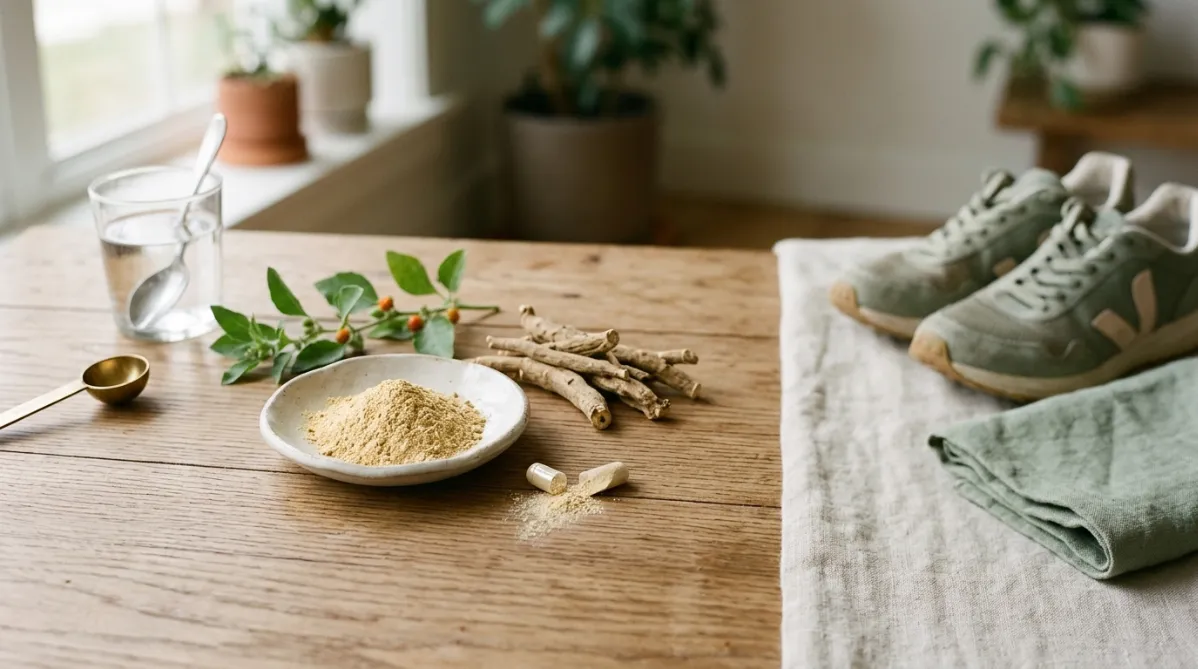
Wide landscape editorial photograph of a minimalist wooden table in soft morning light. At the center, a small ceramic dish holds a modest pile of pale golden ashwagandha root powder, with a few dried gnarled ashwagandha roots and a sprig of green leaves with tiny orange-red berries lying beside it. A single tiny capsule sits split open next to the dish, with a delicate dusting of powder spilling out, hinting at a very small dose. In the softly blurred background on the right, a pair of clean running shoes and a folded sage-green towel rest on a pale linen surface, suggesting endurance training and fitness without any people in frame. A small brass measuring spoon and a glass of water with subtle condensation add quiet detail on the left. The palette is warm and earthy: oat beige, muted sage green, terracotta, soft cream, and touches of burnt orange from the berries. Lighting is natural, diffused window light from the left, casting long gentle shadows and a subtle glow across the powder grains. Shallow depth of field with crisp focus on the powder and roots, creamy bokeh behind. Composition uses generous negative space on the right third for headline overlay, with a clean, calm, contemporary wellness-magazine aesthetic. Shot as if on a 50mm lens, fine film grain, matte finish, high-end editorial styling, tactile textures of ceramic, wood, and linen, with a restrained, thoughtful mood that hints at caution and careful consideration.
supplements

Solo 30 mg de Ashwagandha aumentaron el VO2max en 8 semanas. Lea la letra pequeña

BY JAKE THE TITAN ·

Los suplementos de ashwagandha suelen comercializarse en dosis de varios cientos de miligramos. Un estudio probó una dosis de apenas 30 mg al día y encontró que, durante ocho semanas, fue suficiente para mejorar significativamente el VO2max respecto al placebo. Esto sugiere que una dosis mucho menor podría ser eficaz, aunque el estudio presenta limitaciones que deben tenerse en cuenta.

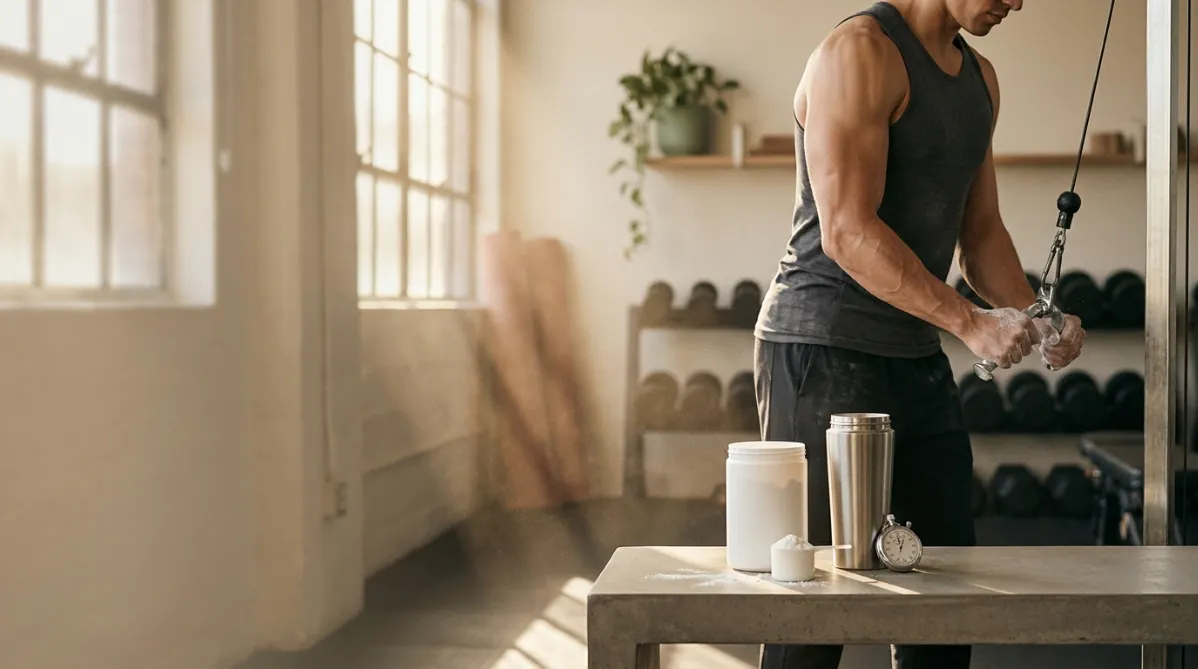
A softly lit, minimalist gym interior photographed in a modern editorial style. In the foreground, a muscular lifter in a fitted charcoal tank top is mid-set at a cable station, forearm and shoulder muscles defined, a light dusting of chalk on their hands. The frame is shot at a slight low angle with shallow depth of field, so the background gym equipment melts into creamy blur. On a matte concrete-textured bench beside them sits a clean, unbranded matte-white scoop container of white powder, a stainless steel shaker bottle, and a small analog stopwatch, arranged with careful, magazine-style composure. A few loose grains of white powder catch the light on the bench surface.

Warm golden late-afternoon sunlight pours through tall industrial windows on the left, creating long diagonal light streaks, gentle lens flare, and a subtle haze of floating chalk dust that glows in the beams. The palette is restrained and sophisticated: warm sand, soft cream, muted terracotta, deep charcoal, and a single accent of sage green from a potted plant on a shelf. Rows of neatly racked dumbbells in dark metal repeat in the mid-ground, adding rhythm and depth.

The composition follows the rule of thirds: the lifter and supplement still life occupy the right two-thirds, while the left third remains calm, with a smooth, softly blurred wall and window light, leaving generous negative space for headline text. Subtle film grain, natural color grading, and a slightly desaturated, high-end lifestyle photography look evoke a contemporary health and science journal. No text, logos, or graphics. Clean, aspirational, grounded, and tactile, with a sense of focused effort and quiet intensity.
nutrition

Beta‑alanina funciona para levantadores: si entrenas así

BY DR. GYMBRO ·

La beta‑alanina ha tenido una reputación ambivalente en el entrenamiento con pesas, pero un nuevo ensayo aleatorizado controlado ayuda a aclarar el panorama. Cuando levantadores experimentados tomaron 6,4 g al día durante cuatro semanas, sus repeticiones totales aumentaron un 17,3 % en series descendentes y un 18,2 % en bi‑series, mientras que el grupo placebo no mostró mejoras significativas. La percepción de esfuerzo, la motivación y el ánimo no cambiaron entre los grupos, de modo que el beneficio es puramente físico y no psicológico. Aquí tienes la dosis, el periodo de carga, a quiénes aplican los datos y quién debería seguir escéptico.

This page is available in