Dr. Gymbro
←

#sports-nutrition

3 articles
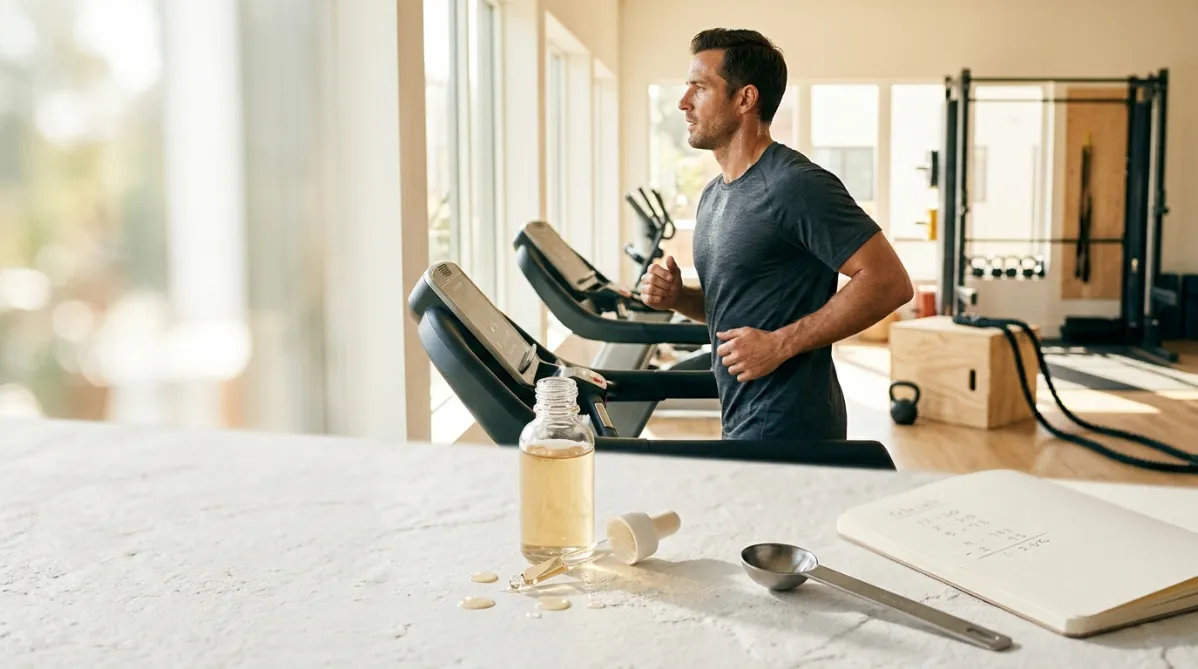
A wide, landscape editorial photograph with a modern wellness-journal feel. In the foreground, a clear glass vial of pale amber liquid sits on a matte white stone surface, with a small dropper beside it and a few droplets catching soft light. A slim brushed-steel measuring spoon and a minimalist notebook with handwritten dose calculations in pencil rest nearby. The numbers are blurred and unreadable.

In the softly blurred background, a bright, airy modern gym with large windows and morning light. A fit man in his thirties, in a charcoal athletic shirt, is mid-stride on a treadmill in profile, with a gentle sheen of sweat and a focused expression. Behind him, a wooden plyo box, a kettlebell, and a rope are arranged neatly, suggesting functional training.

The palette is calm and refined: warm cream, soft sage green, muted terracotta, and touches of deep navy. Natural golden side-light makes long, gentle shadows. Shallow depth of field with a crisp foreground and creamy bokeh. Clean composition with negative space on the left third for a title overlay. Premium magazine photography, subtle film grain, realistic textures, no text or logos, and no futuristic or digital elements.
nutrition

El HMB mejora la resistencia cardiorrespiratoria, pero no la fuerza, según un nuevo ensayo de 2026

BY DR. GYMBRO ·

El HMB suele promocionarse como conservador de masa muscular y potenciador de fuerza, pero un ensayo triple ciego encontró lo contrario. En 90 hombres, una dosis personalizada alta de HMB ácido libre en líquido (90 mg por kg de masa libre de grasa al día) combinada con entrenamiento funcional de alta intensidad incrementó el VO₂máx y los marcadores de umbral más que el placebo. El efecto fue más pronunciado en atletas entrenados, mientras que la fuerza isométrica de piernas no se modificó. Aquí tienes los cálculos de la dosis, su comparación con los habituales 3 g y quién podría sacarle mayor provecho.
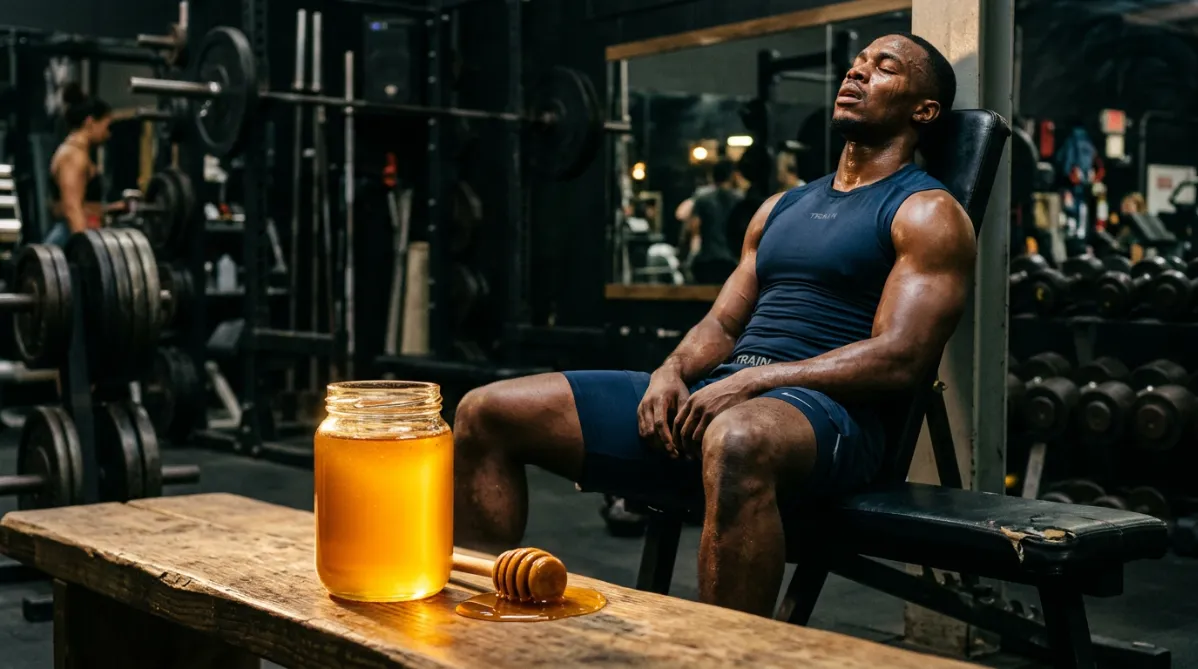
A muscular athlete in compression gear sits exhausted on a gym bench, head tilted back with sweat glistening on their skin, surrounded by heavy weights and exercise equipment. In the foreground, a glass jar of golden honey sits open with a wooden honey dipper resting beside it, honey slowly dripping from the dipper creating amber trails. Soft, warm lighting illuminates the honey jar, making it glow like liquid gold against the darker gym environment. The athlete's muscles appear defined but fatigued, with subtle visual indicators of strain. In the background, blurred gym equipment and mirrors create depth. The scene conveys the contrast between intense physical exertion and natural, healing nutrition, with the honey positioned as a beacon of recovery and protection for the overtrained body.
general

Atletas Sobreentrenados Encuentran un Dulce Alivio: Cómo la Miel Puede Proteger sus Músculos de la Degradación

BY DR. GYMBRO ·

Una investigación pionera de Irán muestra que la suplementación con miel reduce significativamente los marcadores de degradación muscular en atletas sobreentrenados. Gracias a sus más de 200 compuestos bioactivos, la miel se perfila como una herramienta natural para contrarrestar el síndrome de sobreentrenamiento y mejorar la recuperación.
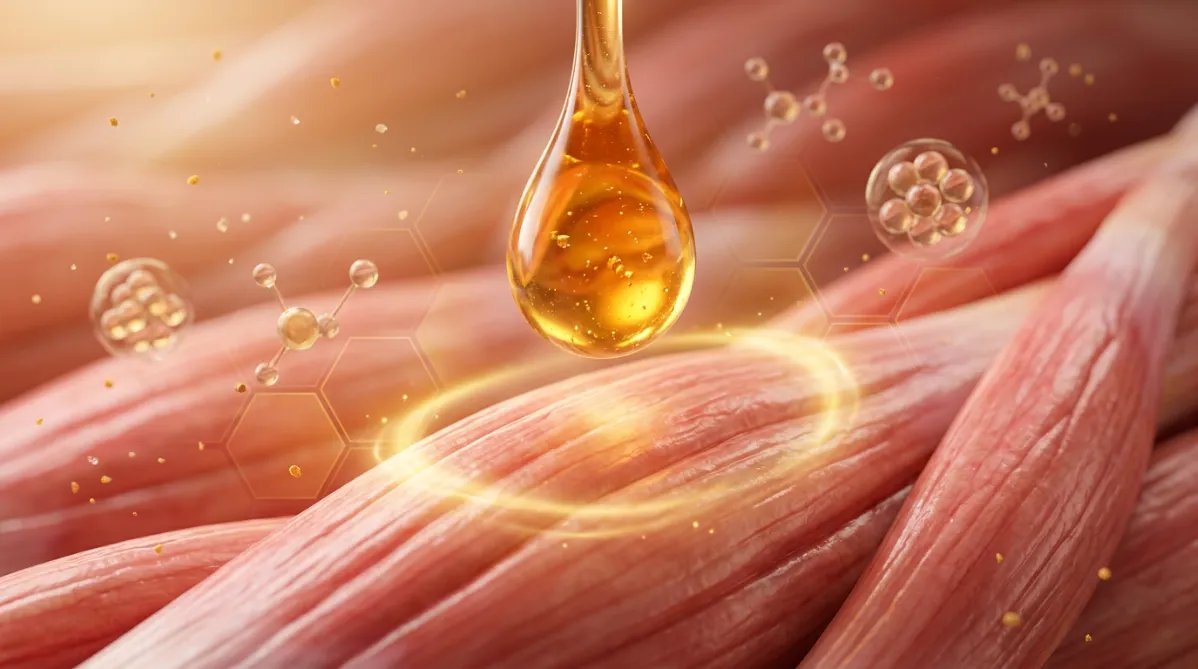
A close-up, golden honey drop suspended mid-air, crystalline and luminous, falling toward a background of defined human muscle fibers rendered in anatomical detail. The muscle tissue glows with a subtle protective golden aura where the honey makes contact. In the background, abstract representations of antioxidant molecules and anti-inflammatory compounds float like microscopic shields around the muscle strands. The scene has a scientific yet warm aesthetic, with honeycomb hexagonal patterns subtly integrated into the composition. Soft, amber lighting bathes the entire image, creating depth and highlighting the honey's natural transparency and the muscle's healthy pink-red tones. Small particles of pollen and natural honey crystals drift through the frame, emphasizing the organic nature of this protective relationship between honey and muscle tissue.
general

Estudio revolucionario revela cómo la miel protege los músculos durante el sobreentrenamiento

BY DR. GYMBRO ·

Un estudio pionero iraní demuestra que la suplementación con miel puede proteger los músculos de la degradación provocada por el sobreentrenamiento, ofreciendo a los atletas una solución natural a uno de los problemas más persistentes del deporte. La investigación muestra que la combinación única de antioxidantes, compuestos antiinflamatorios y carbohidratos especiales de la miel crea una barrera protectora contra el daño muscular inducido por el ejercicio. Los hallazgos sugieren que esta intervención simple y accesible podría revolucionar los protocolos de recuperación, tanto para deportistas de élite como para guerreros de fin de semana. Dado que el síndrome de sobreentrenamiento afecta a hasta el 60 % de los atletas en algún momento de sus carreras, la miel se presenta como un aliado inesperado en la búsqueda de un rendimiento óptimo y la preservación muscular.

This page is available in