Dr. Gymbro
←

#coffee

1 article
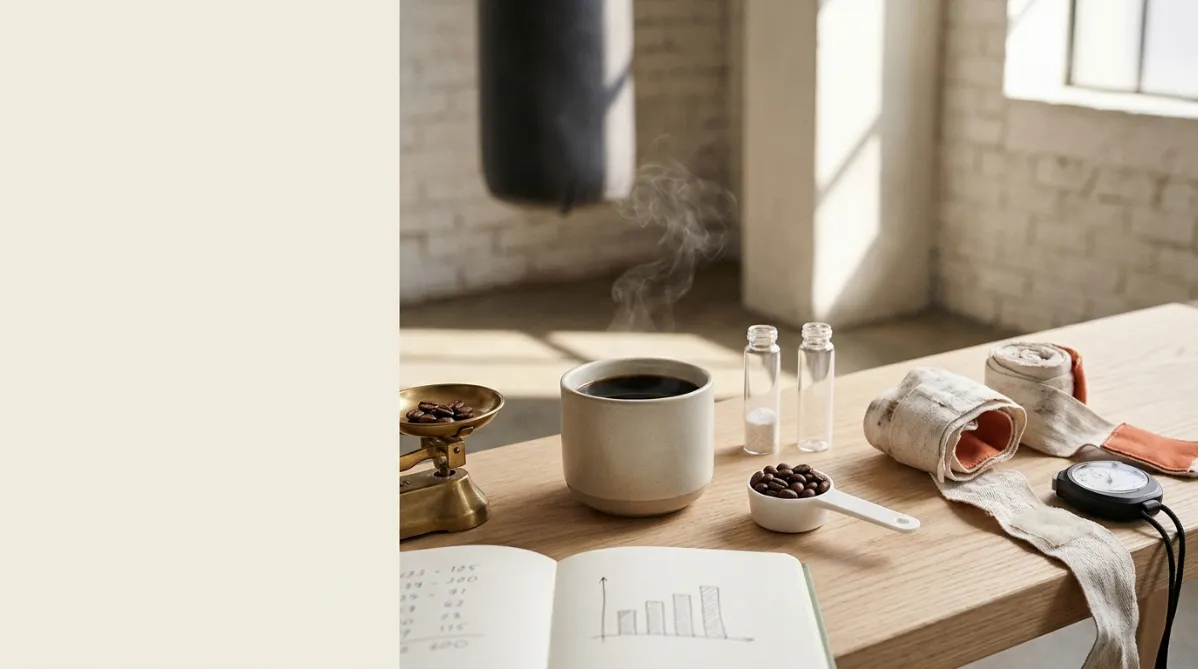
A wide, editorial-style still life shot from a slightly elevated angle on a pale oak gym bench, bathed in soft morning window light. In the center sits a matte ceramic cup of black coffee with delicate steam curling upward, flanked by a small white scoop of coffee beans and two identical glass vials, one filled with a few grains of fine powder and one empty, hinting at dose comparison. Next to the cup rests a pair of worn white boxing hand wraps, loosely coiled, and a slim black stopwatch with its face softly visible. In the foreground, a minimalist notebook lies open with blurred handwritten numbers and a simple pen sketch of a bar graph with bars of equal height, subtle and unreadable, suggesting a null result without any legible text. A small brass kitchen scale sits to the side with a few coffee beans on its tray.

In the soft-focus background, a boxing gym interior is visible: a hanging heavy bag in muted charcoal, exposed brick wall painted off-white, and tall windows casting long diagonal light across the floor. The color palette is warm and restrained: cream, sand, espresso brown, soft charcoal, with a single accent of muted terracotta orange in the hand wraps and a faint sage green in the notebook cover. Shallow depth of field with creamy bokeh, fine film grain, and gentle shadows give it a contemporary lifestyle-magazine and wellness-journal feel. The composition leaves generous negative space on the left third for headline overlay. Clean, calm, trendy, and tactile, with natural textures like wood grain, ceramic glaze, and cotton fabric. No people, no text, no futuristic elements.
science research

Il caffè a basse dosi di caffeina non ha migliorato gli sprint degli atleti di élite

BY DR. GYMBRO ·

Credi che il caffè pre‑allenamento possa darti una marcia in più negli sprint? Un nuovo studio randomizzato, doppio cieco e crossover su 15 atleti di combattimento di livello nazionale non ha riscontrato alcun beneficio di performance con dosi di caffeina di 1,5 e 3 mg/kg, cioè circa 100‑200 mg per un atleta di 68 kg. Potenza di picco, potenza media, indice di affaticamento e persino le stime dei contributi dei sistemi energetici non sono risultati differenti dal decaffeinato. Si tratta comunque di un risultato nullo su un campione ridotto, non di una prova che la caffeina non funzioni, e la maggior parte degli studi positivi utilizza capsule da 3‑6 mg/kg. Di seguito trovi i calcoli delle dosi, le limitazioni e consigli pratici per le prossime sessioni intense.

This page is available in