Dr. Gymbro
←

#durability

2 articles
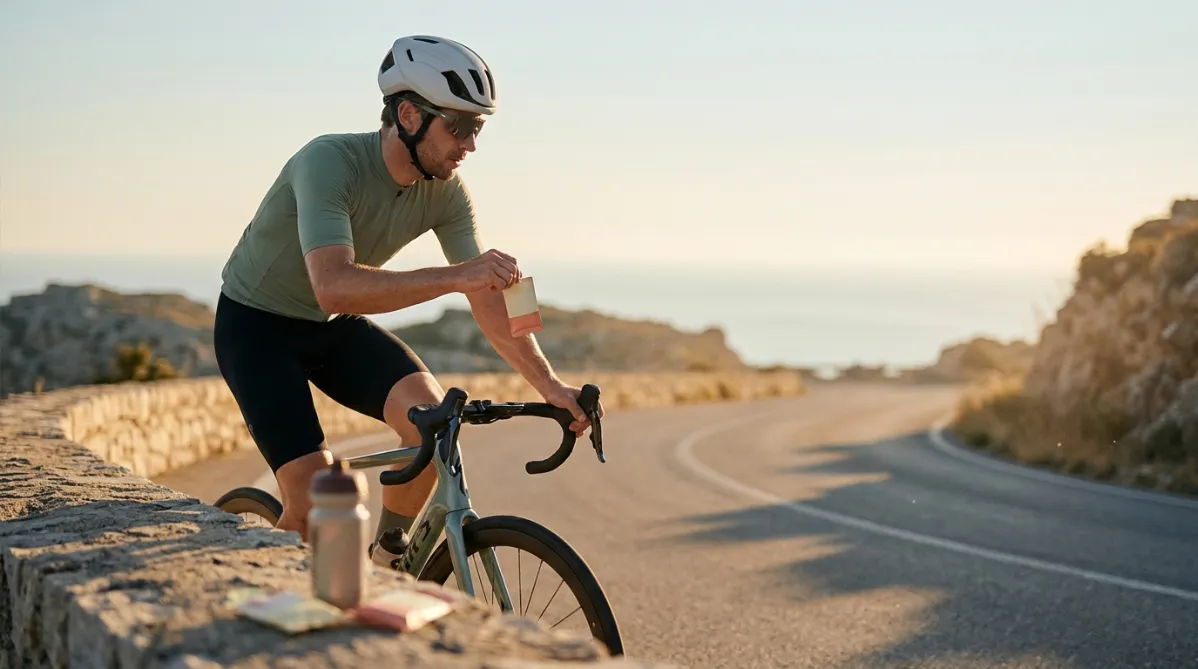
A cyclist in profile, riding a sleek road bike along a quiet coastal road in warm golden-hour light, shot from a low side angle with a shallow depth of field. The rider wears a muted sage-green jersey, black bib shorts, a matte white helmet, and sunglasses. Their face shows calm, focused fatigue, with a faint sheen of sweat on the forearms. One hand is lifted slightly from the handlebars, holding a small, unbranded matte gel packet in soft cream and coral tones, just before opening it. The road curves gently behind them toward a hazy, softly blurred horizon of pale sea and distant hills, with long amber shadows stretching across the asphalt.

In the foreground, slightly out of focus, a few gel sachets and a bike bottle rest on a weathered stone wall at the left edge of the frame, adding editorial depth. Fine dust and sunlight glow in the air. The palette is warm and restrained: butter yellow, soft peach, sage, and slate blue, with gentle film-like grain. The composition leaves open negative space in the upper right, a pale gradient sky, for headline overlay. The overall look is a modern, minimalist sports-science magazine photograph: natural, premium, and clean, with realistic textures, cinematic but understated color grading, and no text, logos, or graphics.
nutrition

Bikarbonátové gely během jízdy zvýšily výkon o 12 W ve 12‑minutovém závodě po tříhodinovém testu

BY DR. GYMBRO ·

Co kdyby nejvhodnější okamžik pro užití bikarbonátu nebyl před závodem, ale během něj? V náhodně křížové studii s 11 trénovanými cyklisty byly testovány gely obsahující bikarbonát a sacharidy během tříhodinové jízdy. Ve vyčerpaném stavu po jízdě byl výkon ve 12‑minutovém časovém závodě o 12 W vyšší než při čistých sacharidech a žaludeční potíže se nijak nelišily. Sprinty a dvouminutové úseky však významný přínos nepřinesly a vzorek byl velmi malý.
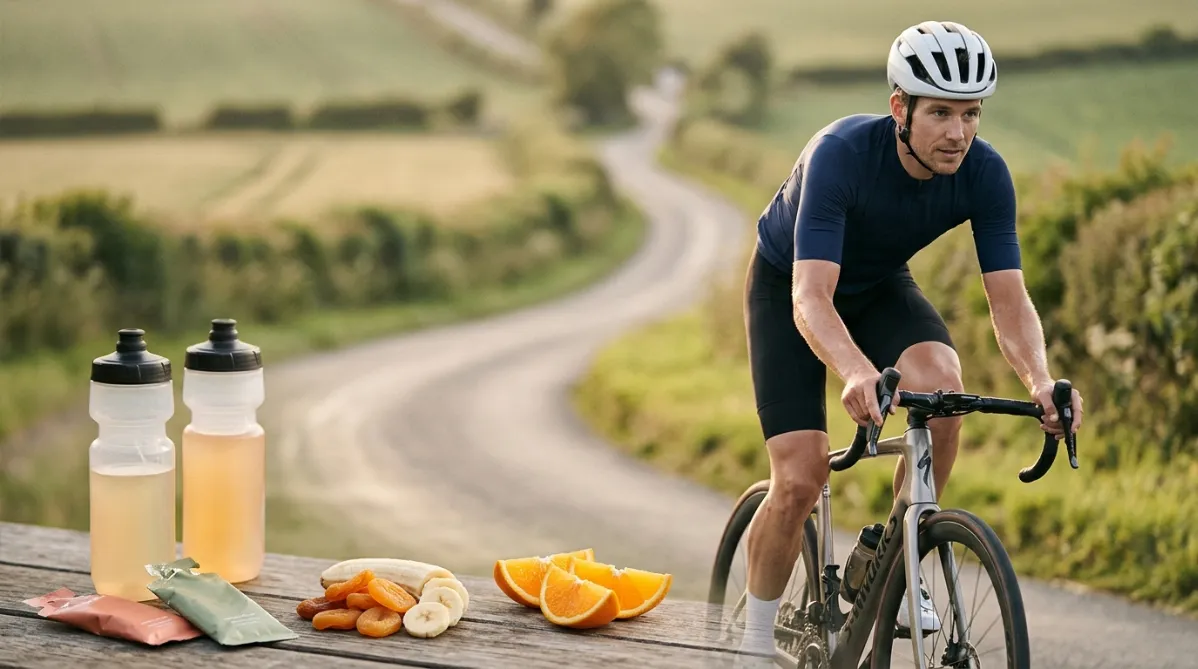
A cyclist in mid-ride, photographed from a low three-quarter side angle on a quiet country road at golden hour, wearing a matte navy jersey and a white helmet, with soft warm light catching the sweat on his forearms. His expression is calm and focused. The road bends gently through rolling green fields, and the background is softly blurred with creamy bokeh.

In the foreground on the left, a styled flat-lay-inspired still life sits on a weathered wooden surface and blends into the scene. It includes two clear water bottles with pale citrus-tinted liquid, a few torn energy gel packets in muted coral and sage, and a small pile of dried apricots and sliced banana. A handful of glossy orange slices adds a bright accent. The shallow depth of field keeps the cyclist sharp in the middle distance while the foreground items are gently softened.

The color palette is warm and editorial: soft peach, muted terracotta, sage green, cream, and deep navy. The light is natural and golden, with long, gentle shadows and a slight film-grain texture, like a high-end lifestyle or sports-science magazine spread. The composition follows the rule of thirds, with the cyclist on the right third and open negative space in the upper left, suitable for headline overlay.

The mood is energetic yet thoughtful, clean and modern, and the photograph feels authentic rather than staged. There are no logos, no readable text, and no futuristic or sci-fi elements. The overall look is crisp, airy, and refined, in the style of a contemporary health and performance journal cover.
nutrition

100 g sacharidů za hodinu udrželo cyklisty rychlejšími – glykogen nebyl příčinou

BY COACH RYAN ·

Čtyři hodiny po náročném kole byli cyklisté, kteří doplňovali 100 g sacharidů za hodinu, méně únavní než ti, kteří užívali 60 g. Překvapivě byl svalový glykogen téměř stejný. Randomizovaná dvojitě zaslepená crossover‑studie na 15 trénovaných mužích naznačuje, že efekt spočívá v něčem jiném než v úspoře glykogenu.

This page is available in