Dr. Gymbro
←

#durability

2 articles
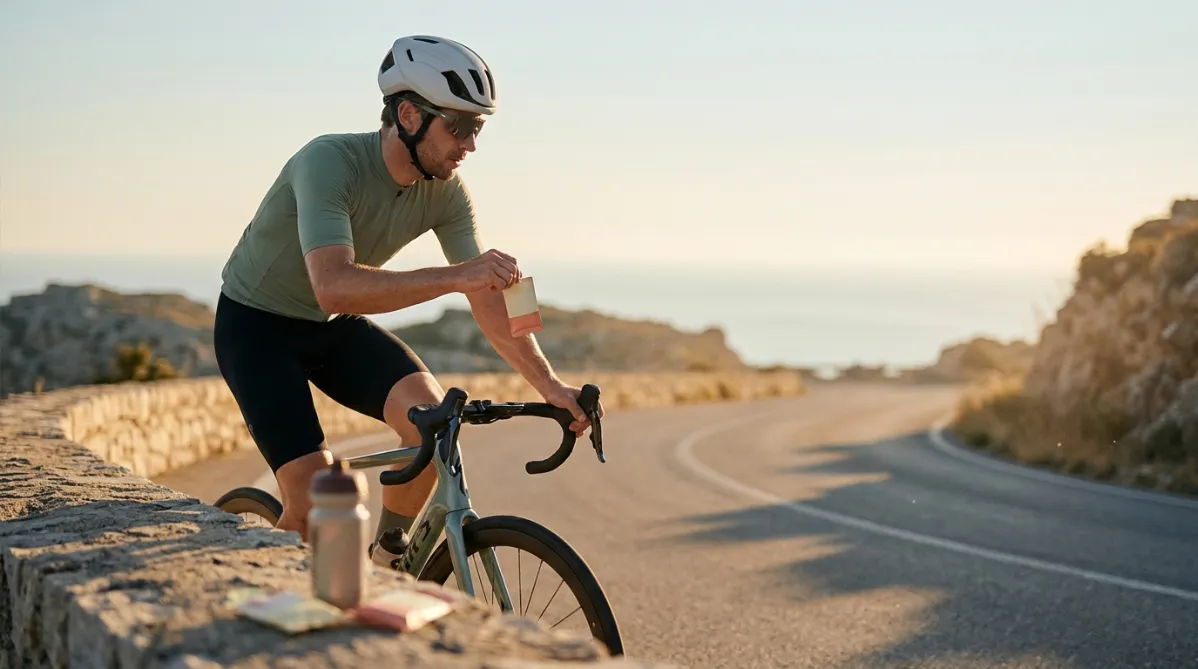
A cyclist in profile, riding a sleek road bike along a quiet coastal road in warm golden-hour light, shot from a low side angle with a shallow depth of field. The rider wears a muted sage-green jersey, black bib shorts, a matte white helmet, and sunglasses. Their face shows calm, focused fatigue, with a faint sheen of sweat on the forearms. One hand is lifted slightly from the handlebars, holding a small, unbranded matte gel packet in soft cream and coral tones, just before opening it. The road curves gently behind them toward a hazy, softly blurred horizon of pale sea and distant hills, with long amber shadows stretching across the asphalt.

In the foreground, slightly out of focus, a few gel sachets and a bike bottle rest on a weathered stone wall at the left edge of the frame, adding editorial depth. Fine dust and sunlight glow in the air. The palette is warm and restrained: butter yellow, soft peach, sage, and slate blue, with gentle film-like grain. The composition leaves open negative space in the upper right, a pale gradient sky, for headline overlay. The overall look is a modern, minimalist sports-science magazine photograph: natural, premium, and clean, with realistic textures, cinematic but understated color grading, and no text, logos, or graphics.
nutrition

Bicarb Gels Mid-Ride Added 12 W Late in a 3-Hour Cycling Test

BY DR. GYMBRO ·

What if the best time to take bicarbonate isn't before the race, but during it? A new randomized crossover trial in 11 trained cyclists tested bicarbonate-plus-carb gels across 3 hours of riding. In the fatigued state afterward, 12-minute time-trial power was 12 W higher than with carbs alone, and stomach symptoms didn't differ. But sprints and 2-minute efforts showed no significant gain, the sample was tiny, and the products came from MNSTRY. Here's what the numbers really say.
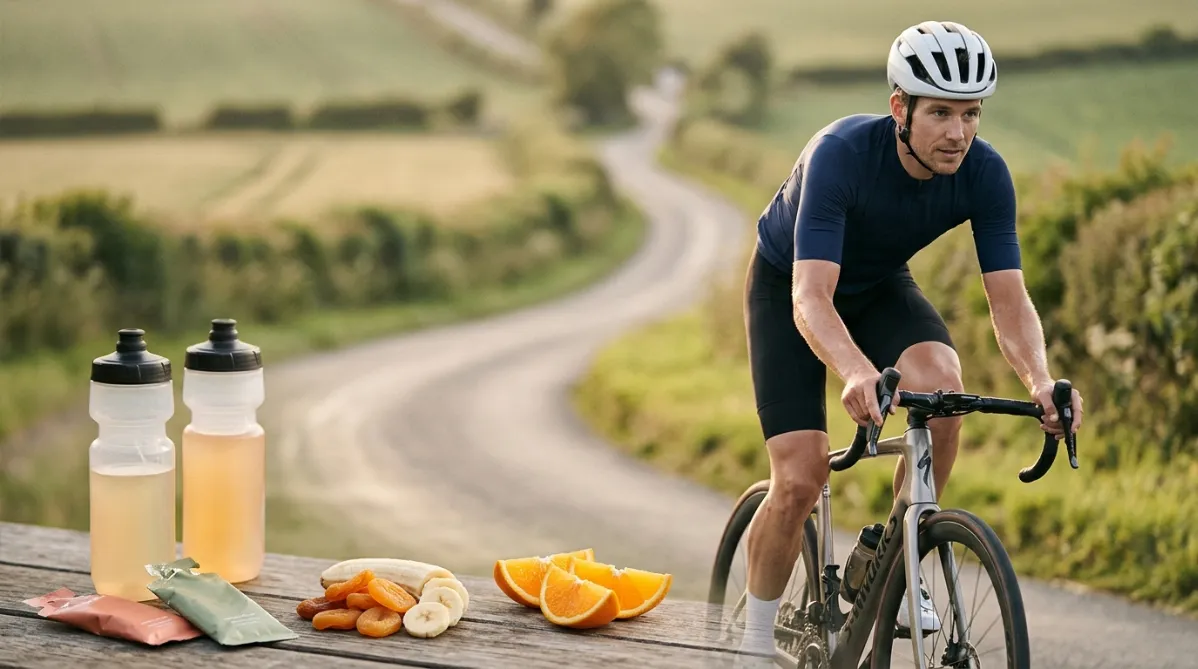
A cyclist in mid-ride, photographed from a low three-quarter side angle on a quiet country road at golden hour, wearing a matte navy jersey and a white helmet, with soft warm light catching the sweat on his forearms. His expression is calm and focused. The road bends gently through rolling green fields, and the background is softly blurred with creamy bokeh.

In the foreground on the left, a styled flat-lay-inspired still life sits on a weathered wooden surface and blends into the scene. It includes two clear water bottles with pale citrus-tinted liquid, a few torn energy gel packets in muted coral and sage, and a small pile of dried apricots and sliced banana. A handful of glossy orange slices adds a bright accent. The shallow depth of field keeps the cyclist sharp in the middle distance while the foreground items are gently softened.

The color palette is warm and editorial: soft peach, muted terracotta, sage green, cream, and deep navy. The light is natural and golden, with long, gentle shadows and a slight film-grain texture, like a high-end lifestyle or sports-science magazine spread. The composition follows the rule of thirds, with the cyclist on the right third and open negative space in the upper left, suitable for headline overlay.

The mood is energetic yet thoughtful, clean and modern, and the photograph feels authentic rather than staged. There are no logos, no readable text, and no futuristic or sci-fi elements. The overall look is crisp, airy, and refined, in the style of a contemporary health and performance journal cover.
nutrition

100 g Carbs an Hour Kept Cyclists Faster—And Glycogen Wasn't Why

BY COACH RYAN ·

Four hours into a hard ride, cyclists who fueled with 100 g of carbs per hour lost less power than those who took 60 g. The surprise is that their muscle glycogen ended up about the same. This randomized, double-blind crossover study of 15 trained men points to something beyond glycogen sparing. We break down the numbers, the 1:0.8 glucose:fructose protocol, and how to apply it. We also cover who should skip it and why the small, male-only sample matters.

This page is available in