Dr. Gymbro
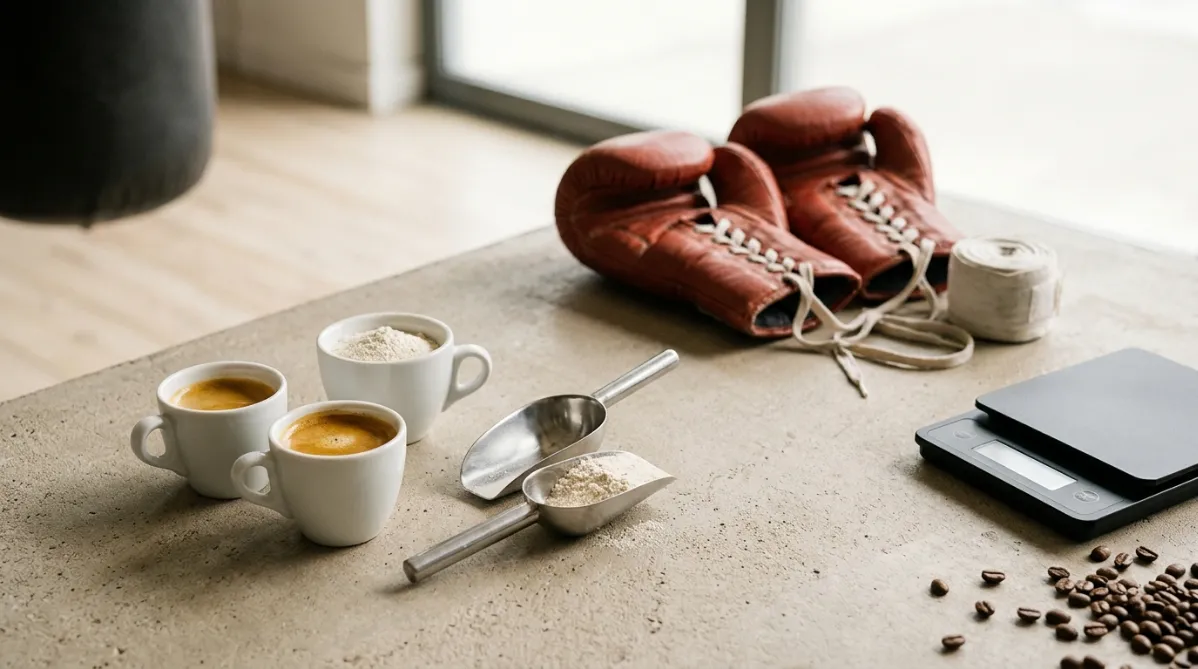
A softly lit, minimalist flat-lay composition in landscape format on a pale warm-beige linen surface. Three matching ceramic espresso cups in matte cream glaze sit in a graduated row from left to right. The first is filled a quarter of the way with dark, glossy coffee, the second halfway, and the third nearly to the brim. Fine wisps of steam curl up from each. The first cup is the clear focal point, sharply in focus and gently highlighted by a soft beam of morning window light. The other two sit slightly softer in the depth of field, which suggests that more is not necessarily better.

Beside the cups, a few scattered roasted coffee beans catch the light with a subtle sheen. A slim sage-green running shoe sits at the upper right edge of the frame, partly cropped, with its laces casually trailing. A small sprig of eucalyptus and a folded sheet of off-white paper with faint, minimal hand-drawn tick marks add an editorial, journal-like feel. In the lower left, a simple brass measuring spoon rests on the linen.

The palette is calm and modern: warm creams, soft terracotta accents, deep espresso browns, and muted sage green. Long, gentle shadows fall diagonally across the surface. The light is diffused and natural, with a slight film-like grain and a shallow depth of field. The overall look is clean, airy, and contemporary, like a health and wellness magazine feature or a trendy science-and-lifestyle blog. There is generous negative space on the right side of the frame for title overlay. The image has no text, no people, and no futuristic or technical elements, only an elegant, tactile, still-life mood that suggests balance, moderation, and mindful fitness.
Science & Research

Caffeine Đốt Mỡ: Vì sao liều 3 mg/kg lại tốt hơn liều 9 mg/kg

Dr. Gymbro · · 5 min read

Bạn có nghĩ rằng nếu tăng ba lần liều caffeine thì lợi ích đốt mỡ cũng sẽ tăng ba lần? Một thí nghiệm ngẫu nhiên mới lại cho thấy ngược lại: liều cao nhất lại mang lại ít lợi ích nhất cho việc oxy hoá chất béo, trong khi liều thấp hơn nhưng hiệu quả lại bảo vệ tim.

Nghiên cứu trong 30 giây

Các nhà nghiên cứu do Gong dẫn đầu, công bố trên Journal of the International Society of Sports Nutrition, đã thử caffeine trên một nhóm nhỏ phụ nữ sinh viên đại học – thừa cân hoặc béo phì và ít vận động. Mười một người tham gia (tuổi trung bình 20,2 năm, BMI 26,36 kg/m²) hoàn thành bốn buổi: uống giả dược (cellulose) hoặc caffeine ở các liều 3, 5 và 9 mg trên mỗi kg trọng lượng cơ thể (PubMed 42120324).

Mỗi buổi bao gồm 60 phút nghỉ ngơi, sau đó 40 phút đi bộ trên máy chạy bộ ở mức FATmax – cường độ mà cơ thể đốt chất béo nhiều nhất. Máy đo trao đổi khí gián tiếp ghi lại nguồn năng lượng đang được sử dụng. Huyết áp, nhịp tim và chỉ số thẩm thấu ngón tay (PI) được ghi nhận để theo dõi phản ứng tim mạch.

Kết quả nổi bật: Nhiều không đồng nghĩa với tốt hơn

  • Cả liều 3 mg/kg và 5 mg/kg đều làm tăng oxy hoá chất béo so với giả dược và so với liều 9 mg/kg (p < 0,05).
  • Liều 9 mg/kg không mang lại lợi ích trao đổi chất nào thêm, theo các tác giả.

Xu hướng tương tự cũng xuất hiện với oxy hoá carbohydrate: ở liều 5 mg/kg mức oxy hoá carbohydrate thấp hơn giả dược, và cả hai liều 3 mg/kg và 5 mg/kg đều có mức oxy hoá carbohydrate thấp hơn so với liều 9 mg/kg. Nói một cách đơn giản, các liều vừa phải giúp chuyển nguồn năng lượng sang chất béo, trong khi liều cao nhất không thể làm được điều này.

Caffeine không làm thay đổi nhịp tim nghỉ ngơi hay cách cơ thể sử dụng chất dinh dưỡng. Hiệu ứng đốt mỡ chỉ xuất hiện trong lúc tập luyện, không phải khi ngồi yên.

Điểm trừ: Tim của bạn cảm nhận được

Dữ liệu tim mạch là nơi câu chuyện thay đổi:

  • 3 mg/kg: không gây ảnh hưởng tim mạch đáng kể trong khi tập.
  • 5 mg/kg: nhịp tim và huyết áp tăng đáng kể trong khi tập.
  • 9 mg/kg: cũng gây tăng nhịp tim và huyết áp đáng kể.
  • Tất cả liều caffeine: chỉ số PI giảm (p < 0,05). PI là thước đo lưu lượng máu ngoại vi tại ngón tay.

Các tác giả kết luận rằng 3 mg/kg cung cấp sự cân bằng tốt nhất giữa kích thích oxy hoá chất béo và giảm thiểu gánh nặng tim mạch ở nhóm này. Liều 5 mg/kg cũng làm tăng oxy hoá chất béo, nhưng phải trả giá bằng áp lực tim mạch cao hơn.

Những điểm thực tiễn cần nhớ

Liều lượng. Điểm “ngọt” được xác định ở 3 mg/kg. Ví dụ, người nặng 70 kg sẽ tiêu thụ khoảng 210 mg caffeine. Liều 5 mg/kg tương đương khoảng 350 mg, còn liều 9 mg/kg khoảng 630 mg – đây chỉ là phép tính đơn giản, không phải số liệu chính xác trong bài báo.

Thời gian. Trong giao thức, người tham gia nghỉ 60 phút sau khi uống viên nén trước khi đi bộ 40 phút. Đó là thời điểm duy nhất mà dữ liệu hỗ trợ. Bản tóm tắt không nêu rõ người tham gia có ăn no hay không, vì vậy “cardio khi đói” không thể khẳng định từ nghiên cứu này.

Cường độ. Bài tập là đi bộ ở mức FATmax, một vùng cường độ vừa phải được đo lường. Không nên suy luận kết quả này áp dụng cho các buổi tập cường độ cao hoặc thời gian bền dài.

Đối tượng phù hợp. Kết quả chỉ áp dụng cho phụ nữ trẻ thừa cân hoặc béo phì, ít vận động, thực hiện một buổi tập nhẹ – chính là nhóm được nghiên cứu.

Ai cần thận trọng hoặc tránh. Bản tóm tắt không bao gồm người có vấn đề tim hoặc huyết áp. Vì liều 5 mg/kg và 9 mg/kg làm tăng nhịp tim và huyết áp trong khi tập, bất kỳ ai có huyết áp cao, bệnh tim, hoặc nhạy cảm với caffeine nên tham khảo ý kiến bác sĩ trước khi thử. Tránh các liều cao hơn là cách đọc hợp lý từ dữ liệu này cho mọi người.

Kiểm tra thực tế: Những gì nghiên cứu này không thể trả lời

  • Đây là một thí nghiệm rất nhỏ. Mười một người tham gia không đủ để khẳng định kết quả sẽ áp dụng cho toàn bộ dân số, và dữ liệu chỉ đến từ một nhóm phụ nữ trẻ.
  • Nam giới, vận động viên, người cao tuổi và những người thường xuyên dùng caffeine không được nghiên cứu, và bản tóm tắt không đề cập tới mức tiêu thụ caffeine hằng ngày.
  • Nghiên cứu chỉ đo một buổi duy nhất, không phải nhiều tuần luyện tập. Oxy hoá chất béo tăng trong một buổi đi bộ 40 phút không đồng nghĩa với việc giảm lượng mỡ cơ thể theo thời gian, và bài báo cũng không khẳng định như vậy. Việc sử dụng nguồn năng lượng trong khi tập không luôn dẫn tới giảm mỡ.
  • Sự giảm PI ở tất cả các liều caffeine đáng chú ý, nhưng bản tóm tắt không giải thích ý nghĩa lâm sàng của nó. Hãy coi nó như một tín hiệu cho thấy caffeine có ảnh hưởng tới mạch máu, chứ không phải bằng chứng của tổn thương.

Kết luận

Trong thí nghiệm ngẫu nhiên nhỏ này, liều caffeine 3 mg/kg tăng cường oxy hoá chất béo so với giả dược mà không gây tăng nhịp tim và huyết áp như các liều cao hơn. Liều 9 mg/kg không mang lại lợi ích chuyển hoá nào. Nghiên cứu ủng hộ việc dùng liều vừa, dựa trên trọng lượng cơ thể, thay vì liều lớn, đồng thời để lại nhiều câu hỏi về kết quả lâu dài và các nhóm dân số khác.

Nguồn: Gong et al., Journal of the International Society of Sports Nutrition. DOI: 10.1080/15502783.2026.2670558.
Original study

Read the original research on pubmed.ncbi.nlm.nih.gov →

This article summarizes published research for general information. It is not medical advice.

DG

Written by

Dr. Gymbro

Dr. Gymbro writes for Dr. Gymbro: science-backed fitness, nutrition & performance.

Related Articles

A sunlit, minimalist kitchen counter in a modern home, photographed from a slightly elevated three-quarter angle with soft natural morning light spilling in from a window on the left. In the center sits a matte white ceramic mug of black coffee with a thin curl of steam, beside a small glass jar of deep magenta beetroot powder with a wooden scoop resting on the lid. A scattering of fine crimson powder dusts the pale oak surface in an artful, casual swirl. Nearby, a halved raw beetroot reveals vivid concentric rings of purple and pink, next to a few roasted coffee beans and a neatly folded charcoal gym towel. In the soft-focus background, a pair of clean white running shoes and a stainless steel water bottle sit on a floating shelf, hinting at a pre-workout routine. A single sprig of green beet leaves adds a fresh accent.

The color palette is warm and editorial: creamy neutrals, espresso browns, and rich beet magenta, with gentle highlights and long soft shadows. The composition has generous negative space on the right side for headline text, shallow depth of field, and a crisp, tactile texture on the ceramic, powder, and wood grain. The mood is calm, health-conscious, and contemporary, like a lifestyle feature in a premium wellness magazine or a trendy nutrition journal. Clean, balanced, natural, with subtle film-like grain and a slightly muted, high-end finish.
science research

Caffeine trước khi tập luyện làm cứng động mạch; bột củ cải đầu bò xóa bỏ tác động

BY DR. GYMBRO ·

Một thử nghiệm ngẫu nhiên chuyển giao mới cho thấy liều caffeine 6 mg/kg (liên quan tới các sản phẩm pre‑workout) làm tăng các chỉ số cứng động mạch trong vòng 2,5 giờ. Khi đồng thời dùng bột củ cải đầu bò chứa 400 mg nitrate, các chỉ số này trở lại mức placebo. Huyết áp và chức năng nội mô không thay đổi, do đó đây là một tác động nhẹ chứ không phải dấu hiệu nguy hiểm. Nghiên cứu chỉ bao gồm 24 người trẻ khỏe mạnh và chỉ dùng một liều duy nhất, vì vậy còn nhiều câu hỏi về việc sử dụng lâu dài và ở người cao tuổi hoặc người bị tăng huyết áp.

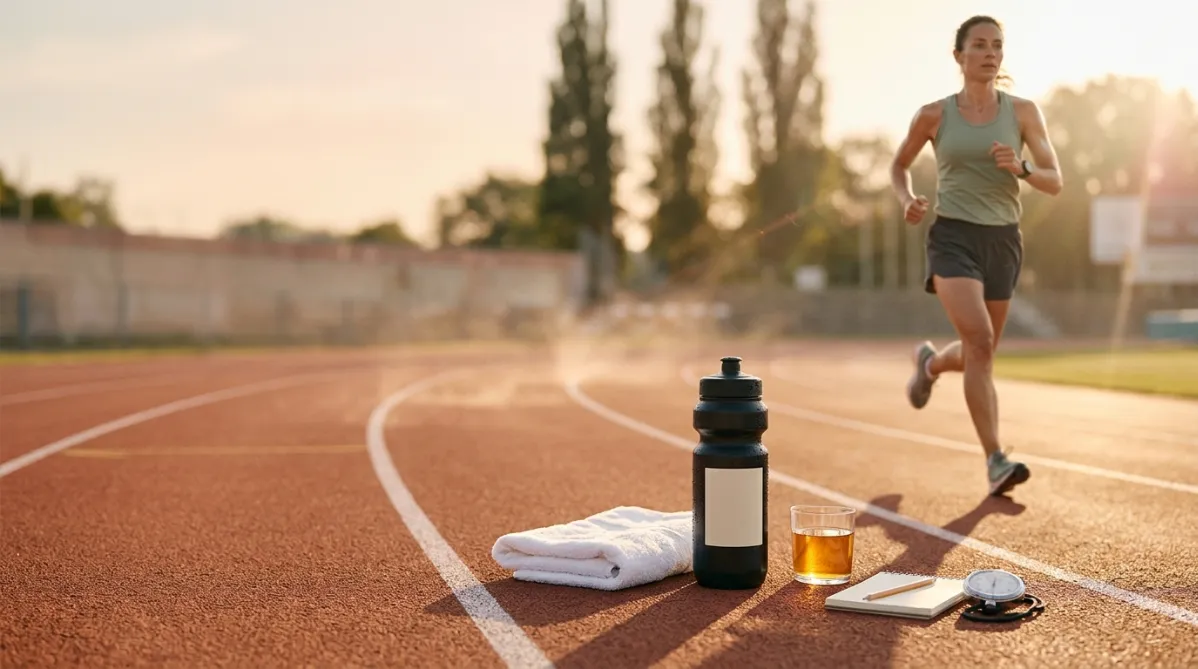
A sunlit outdoor running track in late afternoon, shot from a low angle with shallow depth of field. In the foreground, a matte black bottle with a minimal off-white label sits on the edge of a warm terracotta-colored track lane, beside a folded white towel and a small glass of amber liquid catching golden light. Condensation beads on the bottle. A faint heat shimmer rises from the track surface and softens the background.

In the midground, slightly out of focus, a lean athlete in a sage-green tank top and charcoal shorts runs on a treadmill-like stretch of track, a thin sheen of sweat on their shoulders, their expression focused and calm. Their motion is gently blurred, suggesting endurance and rhythm. Long soft shadows stretch across the lane lines.

The background fades into hazy peach, apricot, and pale yellow tones, with the suggestion of tall trees and a distant stadium wall. Warm sun flare enters from the upper right, creating a subtle glow and a few soft light streaks across the frame.

Subtle editorial touches: a small notebook with a pencil and a stopwatch rest beside the bottle, hinting at data and timing without any text legible. The color palette is warm and muted, with terracotta, cream, sage, and charcoal accents, and a fine film-like grain. The composition leaves open negative space on the left third for a headline overlay. The overall mood is clean, modern, and health-journal inspired, natural and aspirational, with a calm scientific curiosity rather than hype.
nutrition

Đồ Uống Ketone Trong Nhiệt Độ Cao: Thời Gian Chịu Đựng Lâu Hơn và Trí Nhớ Sắc Nhắc Tốt Hơn?

BY DR. GYMBRO ·

Đồ uống ketone thường được nhắc tới như một cách hỗ trợ giảm mỡ, nhưng một thử nghiệm mới trong môi trường nhiệt độ cao cho thấy chúng có thể giúp bạn hoàn thành buổi tập nóng bức một cách mạnh mẽ hơn. Trong 17 nam vận động viên đã được huấn luyện, ketone monoester kết hợp caffeine kéo thời gian chịu đựng lên 8,9 phút so với 7,0 phút khi dùng carbohydrate + caffeine, sau 90 phút chạy trên máy băng tải ở 34 °C. Độ chính xác của nhiệm vụ nhớ làm việc 1‑back cũng được cải thiện, trong khi nhịp tim và nhiệt độ cốt thể không có sự khác biệt đáng kể. Tuy nhiên, các chỉ số 2‑back, thời gian phản ứng và nhiệm vụ tránh vật không có lợi ích, và nghiên cứu này quy mô nhỏ, chỉ với nam giới và chỉ một buổi duy nhất. Dưới đây là những gì dữ liệu cho thấy và những gì không.

A landscape editorial photograph with a modern, clean magazine feel, shot on a pale warm-gray concrete surface in soft natural window light from the left. In the foreground, two matte white ceramic espresso cups sit side by side. The left cup holds a small amount of dark espresso with golden crema. The right cup is filled twice as high. Beside them, two small stainless steel scoops hold fine coffee-colored powder, one half full and one heaped, suggesting a dose comparison without any text or labels. A pair of worn red leather boxing gloves rests slightly out of focus behind the cups, laces loosely draped, with a white hand wrap rolled neatly beside them. A minimalist digital kitchen scale in matte black sits at the edge of the frame, with a few roasted coffee beans scattered across the surface. In the soft-focus background, a boxing gym corner appears: a hanging heavy bag in muted charcoal, pale wood plank flooring, and a tall window with diffused morning light. The palette is warm cream, espresso brown, brick red, and soft slate gray, with gentle shadows and a shallow depth of field. The composition follows the rule of thirds, with the cups and scoops in the lower left third and open negative space on the right for headline overlay. The look is tactile and refined, like a high-end health and performance journal. It has natural grain, subtle contrast, and a calm, confident mood. There are no people, no text, no logos, and no futuristic elements.
nutrition

Tăng liều caffeine không mang lại lợi ích đáng kể cho võ sĩ – Những điểm cần lưu ý

BY DR. GYMBRO ·

Bạn có nghĩ rằng gấp đôi liều pre‑workout sẽ gấp đôi hiệu suất? Một nghiên cứu mới trên 15 võ sĩ thi đấu cho thấy điều này không hẳn đúng. Các nhà nghiên cứu so sánh 3 mg/kg và 6 mg/kg caffeine với giả dược và thấy cả hai liều đều cải thiện khả năng nhảy, nhưng liều cao hơn không luôn tốt hơn. Cả hai liều đều tăng chiều cao và công suất nhảy sau 60 phút, trong khi 6 mg/kg chỉ có ưu thế ở một vài chỉ số như sức mạnh đẩy tay và mô-men xoắn đầu gối. Lưu ý: nghiên cứu không kiểm tra trực tiếp hiệu suất đấm.

A wide, landscape editorial photograph with soft natural morning light. In the foreground, a rustic matte ceramic bowl rests on a pale oak wooden table, filled with vivid deep-green spirulina powder heaped in a gentle mound. A small wooden spoon dusted with the powder lies beside it, and a few scattered green flecks dust the surface. Next to the bowl sits a clear glass of water with a swirl of emerald green just blending in, catching sunlight and casting soft green-tinted shadows.

In the middle ground, slightly out of focus, a pair of worn running shoes in muted sage and cream tones sits on the edge of the table, laces loosely undone. A simple analog stopwatch with a clean white face lies beside them, its hands frozen at a moment suggesting a close finish. A folded linen towel in warm oatmeal tone drapes casually nearby.

The background is a softly blurred outdoor setting seen through a large window: a quiet tree-lined running path at dawn, with golden-hazy light, dewy greenery, and a faint mist. The color palette is calm and modern: deep emerald, sage, cream, warm wood, and touches of soft gold. The composition leaves generous negative space on the right side for headline text, with a shallow depth of field, crisp detail on the powder texture, and a clean, minimalist, lifestyle-magazine aesthetic. Subtle film-like grain, natural shadows, and a fresh, healthy, energetic mood. No people, no text, no logos.
nutrition

Spirulina giúp vận động viên chạy bền tăng 32% — nhưng thực tế ra sao?

BY DR. GYMBRO ·

Các vận động viên chạy uống spirulina trong bốn tuần có thể kéo dài thời gian nỗ lực tối đa khoảng 32% so với bình thường sau một buổi chạy vất vả kéo 2 giờ. Nghiên cứu đồng thời cho thấy mức đốt mỡ tăng 10,9% và nồng độ glutathione – chất chống oxy hoá quan trọng – cũng cao hơn. Tuy nhiên, mẫu thử chỉ gồm chín người đàn ông và lợi ích thực tế chỉ khoảng 39 giây. Bài viết sẽ tóm tắt kết quả, giải thích cơ chế khả dĩ và hướng dẫn cách thử một cách an toàn.

This page is available in