Dr. Gymbro
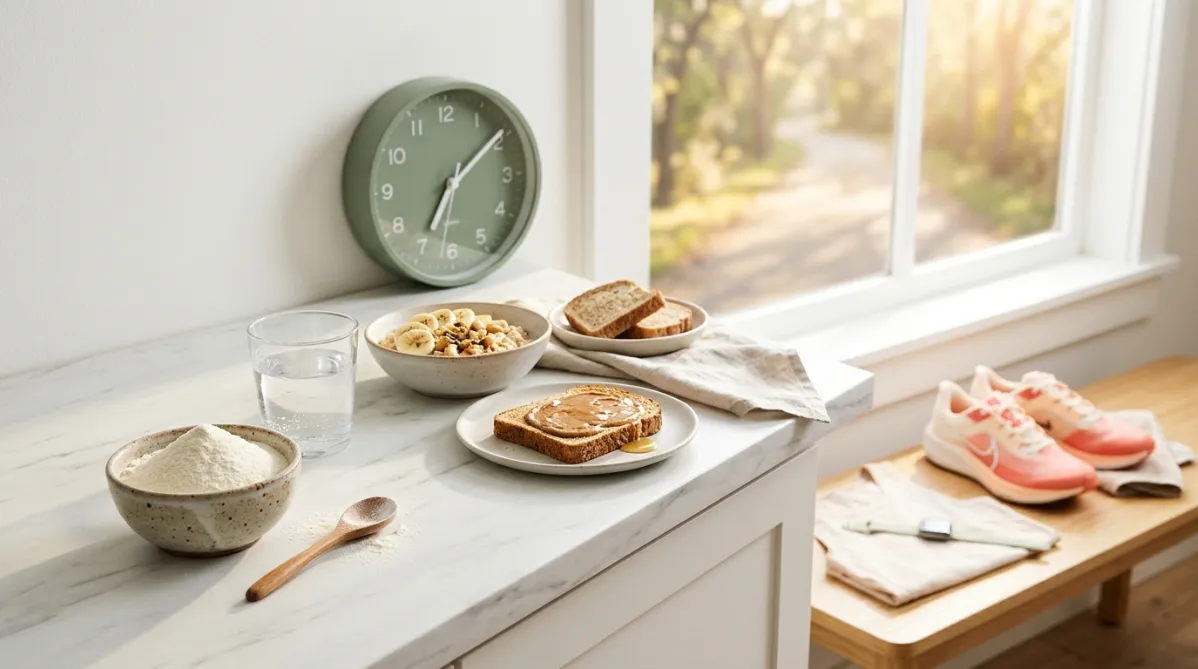
A bright, airy editorial photograph in landscape format of a clean white marble kitchen counter in soft morning light. On the left, a small rustic ceramic bowl holds a mound of fine white powder, with a wooden spoon resting beside it and a scattering of powder dusted across the marble. Next to it sits a glass of water with a faint ripple on its surface. In the middle ground, a simple breakfast spread: a bowl of oatmeal topped with sliced banana, a piece of toast with honey, and a few slices of white bread, all styled in muted, natural tones. A minimalist analog wall clock or a vintage round kitchen timer in matte sage green sits subtly in the background, hinting at the 90-minute timing.

On the right side of the frame, slightly out of focus, a pair of modern running shoes in soft coral and cream rests on a light oak floor or bench. Next to them are a folded running shirt and a slim sports watch. Through a large window behind the counter, a blurred sunlit tree-lined running path glows in warm golden light, suggesting a woman's morning run without showing a face.

The palette is soft and modern: warm whites, sage green, pale peach, light wood, and touches of coral. Shallow depth of field, gentle natural shadows, and a clean composition with generous negative space in the upper left for title overlay. The mood is fresh, trustworthy, and health-journal chic, like a high-end wellness magazine feature. Shot on a 50mm lens, crisp details, subtle film grain, and a calm, minimal, contemporary feel.
Nutrition

Baking Soda Cut 32 Seconds Off Women's 10Ks—Here's the Catch

Dr. Gymbro · · 4 min read

The 32-Second Finding Hiding in a Cheap Compound

Sodium bicarbonate, the compound in baking soda, has a reputation among endurance athletes: it may help, but it can wreck your stomach. A new study in the International Journal of Sport Nutrition and Exercise Metabolism (Aktitiz et al., DOI: 10.1123/ijsnem.2026-0041) tested it in a group that rarely gets studied, recreational women runners. It did so outdoors, on a real track.

The result: a faster 10K with no measurable increase in gut symptoms.

What the Researchers Actually Did

Twenty-one healthy women (average age 33.6 years, VO2max about 48.6 ml·kg⁻¹·min⁻¹) completed two 10-km outdoor track time trials. The design was randomized, double-blind and crossover, so every runner served as her own control.

  • Supplement condition: sodium bicarbonate (SB) at 0.3 g/kg body mass
  • Placebo condition: 0.03 g/kg table salt
  • Meal: a standardized carbohydrate-rich meal at 1.5 g/kg body mass, eaten with both SB and placebo
  • Timing: ingestion 90 minutes before exercise
  • Cycle control: both trials took place in the same phase of the menstrual cycle

That last detail matters. Matching the cycle phase removes one source of noise that many studies in women ignore.

The Numbers

After SB, the women finished the 10K in 3,046.1 ± 208.7 seconds, versus 3,078.4 ± 206.8 seconds on placebo (p = .011). That is about 32 seconds faster, or roughly 1% over a race lasting around 51 minutes.

The blood chemistry changed as expected:

  • Resting blood pH: 7.47 with SB vs. 7.42 with placebo (p < .001)
  • Resting bicarbonate: 27.7 vs. 22.2 mmol/L (p < .001)
  • Both stayed higher after the run at every measured time point (1, 3, 5 and 7 minutes post-exercise; p < .05)

In plain terms, the supplement made the blood more alkaline before the run started, and that advantage persisted afterward.

The Stomach Problem That Didn't Show Up

The usual complaint about bicarbonate is gastrointestinal distress, which can include bloating, nausea and urgent bathroom trips. The researchers tracked symptoms at 30, 60 and 90 minutes after ingestion. They found no significant differences between SB and placebo (p > .05 for all).

The authors describe the strategy as "practical and well-tolerated." The study design points to the carbohydrate-rich meal as the likely helper, but this study did not test SB without food. So it can't prove the meal is what prevented symptoms. It shows that this combination was tolerated in this group.

The Practical Playbook

Dose: 0.3 g of sodium bicarbonate per kg of body weight. A 60 kg runner would take 18 g. A 70 kg runner would take 21 g.

Carbs: 1.5 g per kg of body weight in the meal, so about 90 g of carbohydrate for a 60 kg runner.

Timing: take both together, 90 minutes before the run.

Practice first: the study doesn't say a first-timer will tolerate it, so rehearse it before a training session, not race morning. This is common-sense advice, not a finding from the paper.

Who It's For

The evidence applies most directly to healthy, recreational women runners in their 30s with a similar fitness level to the participants, racing around 10K distance. If that's you and you're chasing a time, this is a low-cost option worth discussing with a qualified sports dietitian or coach.

Who Should Skip It (or Ask First)

The paper doesn't test these groups, so this is general caution rather than study findings:

  • Anyone with high blood pressure, kidney disease, or a medical reason to limit sodium should talk to a doctor first. Bicarbonate is a sodium load.
  • Anyone who has had GI trouble with bicarbonate before should be careful, since this study can't predict individual reactions.
  • Runners training for much longer or much shorter events shouldn't assume the same benefit. Only a 10K was tested.
  • Anyone pregnant or managing a health condition should get medical advice.

Reality Check: Limits of the Study

The sample was 21 women, so this is a promising result, not a final verdict. The runners were recreational, not elite. Only one race distance on one track was tested. The abstract also doesn't report whether individual runners responded differently, so some may benefit more than others. And the improvement was about 1%, meaningful for a PR chaser but not a miracle.

It's also worth noting that the study used a specified sodium bicarbonate dose. Eyeballing a spoonful of kitchen baking soda isn't the same as measuring grams by body weight.

Bottom Line

For recreational women runners, a carefully measured dose of sodium bicarbonate with a carb-heavy meal 90 minutes before a 10K improved performance by about 32 seconds. It also raised blood pH and bicarbonate without a measurable rise in stomach symptoms. It's a cheap, targeted experiment worth testing in training, with medical advice where relevant.

Source: Aktitiz et al., "Acute Sodium Bicarbonate Supplementation Enhances 10-km Outdoor Track Running Performance in Recreational Female Runners," International Journal of Sport Nutrition and Exercise Metabolism. PubMed: 42926128.
Original study

Read the original research on pubmed.ncbi.nlm.nih.gov →

This article summarizes published research for general information. It is not medical advice.

DG

Written by

Dr. Gymbro

Dr. Gymbro writes for Dr. Gymbro: science-backed fitness, nutrition & performance.

Related Articles

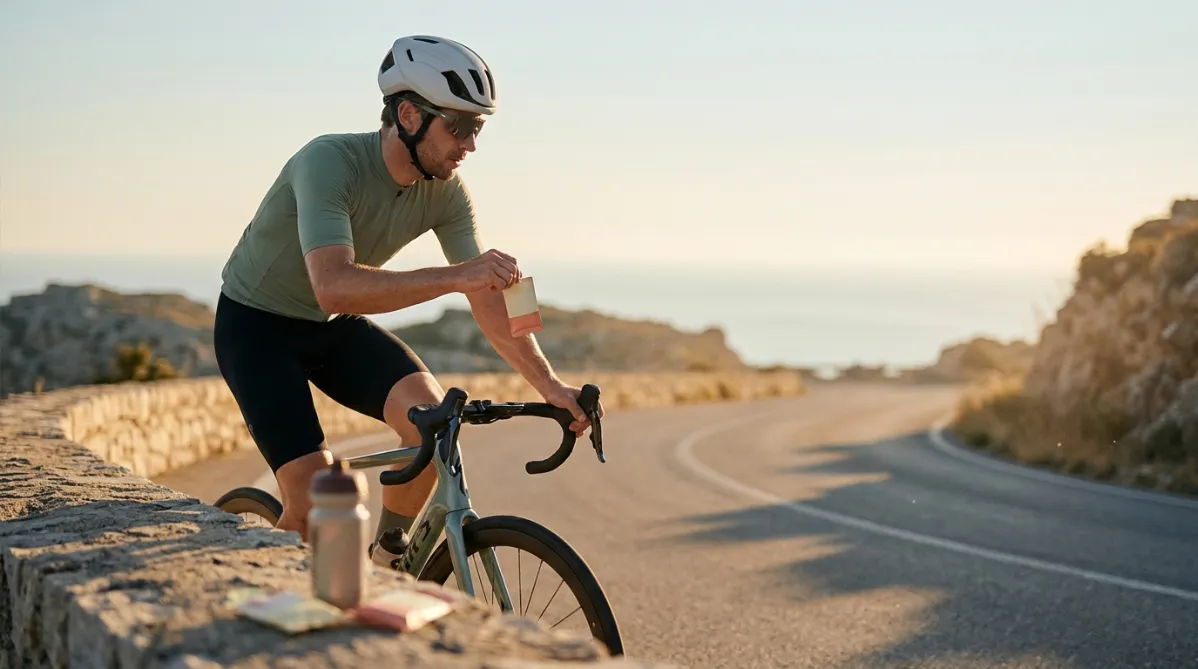
A cyclist in profile, riding a sleek road bike along a quiet coastal road in warm golden-hour light, shot from a low side angle with a shallow depth of field. The rider wears a muted sage-green jersey, black bib shorts, a matte white helmet, and sunglasses. Their face shows calm, focused fatigue, with a faint sheen of sweat on the forearms. One hand is lifted slightly from the handlebars, holding a small, unbranded matte gel packet in soft cream and coral tones, just before opening it. The road curves gently behind them toward a hazy, softly blurred horizon of pale sea and distant hills, with long amber shadows stretching across the asphalt.

In the foreground, slightly out of focus, a few gel sachets and a bike bottle rest on a weathered stone wall at the left edge of the frame, adding editorial depth. Fine dust and sunlight glow in the air. The palette is warm and restrained: butter yellow, soft peach, sage, and slate blue, with gentle film-like grain. The composition leaves open negative space in the upper right, a pale gradient sky, for headline overlay. The overall look is a modern, minimalist sports-science magazine photograph: natural, premium, and clean, with realistic textures, cinematic but understated color grading, and no text, logos, or graphics.
nutrition

Bicarb Gels Mid-Ride Added 12 W Late in a 3-Hour Cycling Test

BY DR. GYMBRO ·

What if the best time to take bicarbonate isn't before the race, but during it? A new randomized crossover trial in 11 trained cyclists tested bicarbonate-plus-carb gels across 3 hours of riding. In the fatigued state afterward, 12-minute time-trial power was 12 W higher than with carbs alone, and stomach symptoms didn't differ. But sprints and 2-minute efforts showed no significant gain, the sample was tiny, and the products came from MNSTRY. Here's what the numbers really say.

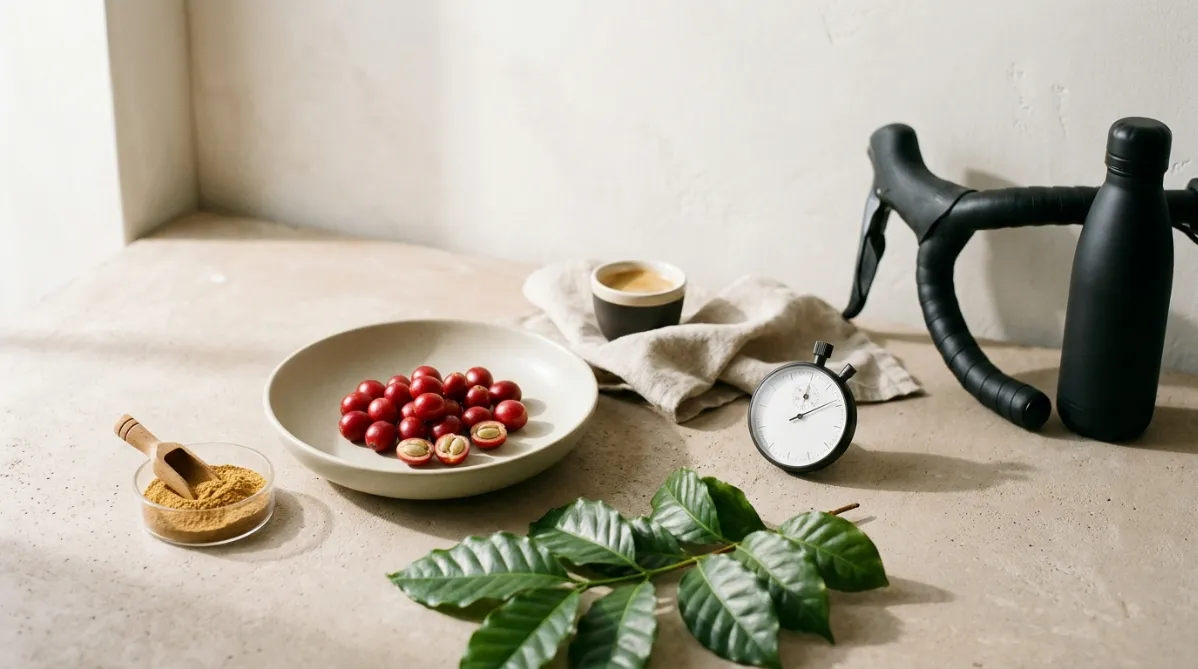
A wide editorial still life on a pale, warm-toned concrete surface in soft morning window light. In the center-left, a shallow matte ceramic bowl holds a small pile of bright red coffee cherries with glossy skins, a few sliced open to reveal pale mucilage and paired green-tan beans. Beside it, a small glass dish of fine, golden-brown powdered extract with a tiny wooden scoop resting on its edge. A sprig of coffee plant leaves, deep green and waxy, arcs across the foreground.

On the right side, slightly out of focus, a sleek road cyclist's handlebar and a matte black water bottle lean against a light plaster wall, suggesting athletic training without showing a person. A minimalist analog stopwatch with a clean white face and thin black hands sits in the mid-ground, angled toward the camera, its hands paused near the fifteen-minute mark. A folded linen cloth in oatmeal beige and a single small espresso cup with a thin crema ring add quiet texture.

The color palette is restrained and modern: cherry red, sage green, cream, soft terracotta, and charcoal accents. Light comes from the left, casting long, gentle shadows with a subtle warm glow and a hint of dust in the air. Shallow depth of field with crisp focus on the cherries and stopwatch, creamy bokeh in the background. Composition leaves open negative space in the upper right for a headline overlay. The overall feel is a clean, trendy health-and-science magazine cover: tactile, natural, minimal, and calm, shot in a 16:9 landscape frame with fine film-like grain and true-to-life tones.
nutrition

Coffee Cherry Extract: 200 mg Caffeine Lifted Cycling Output 4.6%

BY DR. GYMBRO ·

A low 200 mg caffeine dose from whole coffee cherry extract helped trained cyclists produce 4.6% more work in a 15-minute time trial. But the popular idea that it speeds up glycogen refuelling didn't hold up. This randomized, double-blind crossover trial involved just 12 cyclists and was industry-funded, with no plain-caffeine comparison group. Here's what the data show, what they don't, and who might want to try it.

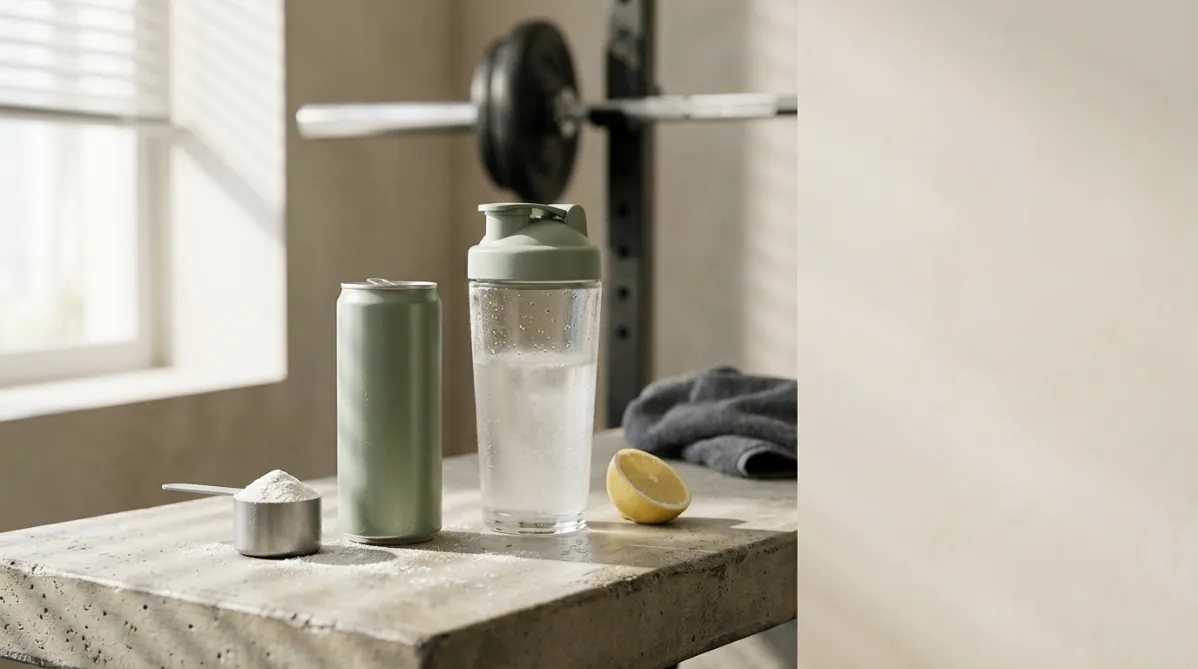
A sleek aluminum energy drink can and a matte scoop of white pre-workout powder sit side by side on a pale concrete gym bench, lit by soft morning window light. The can is slim and minimalist, with a muted sage green label and no legible text. Beside it is a clear glass shaker half full of cloudy, lightly frothy liquid with condensation beading on its surface. A few fine grains of powder are scattered across the bench, catching the light. Behind them, slightly out of focus, a stainless steel barbell rests on a rack, and a folded charcoal gym towel sits at the edge of the frame.

The color palette is warm neutral: oatmeal, soft gray, and sage, with a single accent of pale citrus yellow from a halved lemon wedge placed near the glass. A thin, elegant shadow from the window blinds falls diagonally across the scene, giving it an editorial, magazine-style rhythm. The composition leaves generous negative space on the right third of the frame, a smooth blurred wall in warm off-white, suitable for headline text overlay.

The shot is a low-angle, shallow depth-of-field product-style photograph, as if taken with an 85mm lens at f/2. The foreground objects are tack sharp and the background melts into creamy blur. The mood is calm, clean, and modern, like a wellness or science journal feature. Subtle film grain and gentle contrast add a tactile, contemporary lifestyle feel. There are no people, no logos, and no futuristic or sci-fi elements, just a quiet, considered still life that suggests the choice between a canned drink and a scooped supplement.
nutrition

Your Energy Drink May Work Like a Pre-Workout—With One Catch

BY DR. GYMBRO ·

Caffeine and taurine sit side by side in energy drinks and pre-workouts, but does the pair actually boost performance? A new meta-analysis of 11 randomized trials (234 participants) found moderate improvements in peak power and time to exhaustion, plus lower perceived effort. Heart rate didn't budge, and the reaction-time result was too inconsistent to trust. The catch is that the studies were small and can't show whether taurine adds anything beyond caffeine. Here's what the data say, and who should think twice.

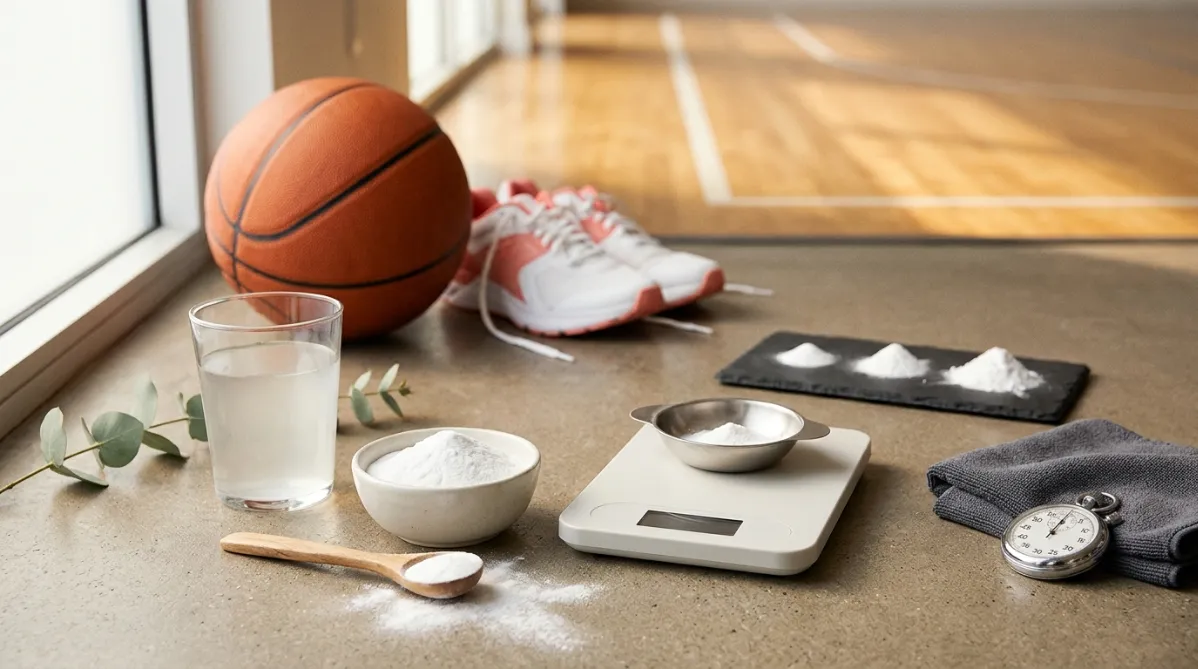
A wide, editorial-style still life shot from a slightly elevated angle on a pale, warm-gray concrete surface lit by soft natural window light from the left. In the center foreground, a clear glass of cloudy water sits beside a small white ceramic bowl heaping with fine white baking soda powder, a wooden measuring spoon resting beside it with a light dusting of powder spilling across the surface in a graceful arc. Next to them, a minimalist digital kitchen scale in matte white shows a small portion of powder in a shallow dish. Slightly behind, an orange basketball is partially in frame, its pebbled texture catching the light, resting beside a pair of clean white and coral athletic sneakers with the laces loosely undone. A folded charcoal gray towel and a stainless steel stopwatch lie to the right, the stopwatch face crisp and legible. Three small, neatly arranged piles of white powder on a slate tile in the midground, in ascending sizes, hint at different doses without any text or labels. In the soft-focus background, the faint outline of an indoor basketball court with warm honey-colored hardwood floor and blurred lane lines stretches across the frame, glowing with golden-hour light. The color palette is restrained and modern: warm off-white, soft gray, burnt orange, and touches of sage green from a single sprig of mint or eucalyptus laid near the glass. Shallow depth of field, crisp textures on powder grains and the ball's surface, gentle shadows, subtle film-like grain. Clean negative space in the upper right for headline overlay. The mood is calm, sleek, and contemporary, like a premium health and sports science magazine cover, with a fresh, minimalist composition and no people, no text, and no futuristic elements.
nutrition

Baking Soda + Sprints: The Dose That Beat Placebo on Every Test

BY DR. GYMBRO ·

A new randomized trial in basketball players found that adding sodium bicarbonate (baking soda) to four weeks of sprint interval training beat placebo on jumping, sprinting, agility, Yo-Yo distance and Wingate power. The higher dose of 0.45 g/kg then outperformed 0.3 g/kg on every single measure. That makes it a cheap, tempting add-on for team-sport athletes. But the stomach is the catch, and the study is small, short and male-only. Here's the dose math, the GI-distress workarounds, and who this actually applies to.

This page is available in