Dr. Gymbro
←

#cycling

6 articles
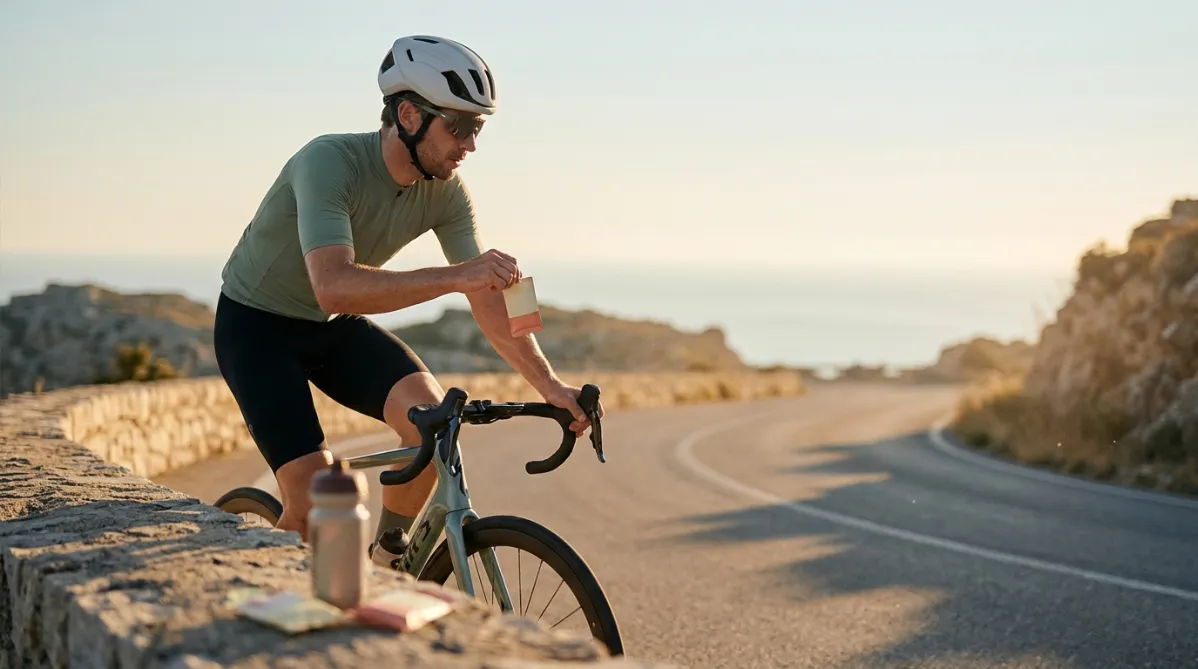
A cyclist in profile, riding a sleek road bike along a quiet coastal road in warm golden-hour light, shot from a low side angle with a shallow depth of field. The rider wears a muted sage-green jersey, black bib shorts, a matte white helmet, and sunglasses. Their face shows calm, focused fatigue, with a faint sheen of sweat on the forearms. One hand is lifted slightly from the handlebars, holding a small, unbranded matte gel packet in soft cream and coral tones, just before opening it. The road curves gently behind them toward a hazy, softly blurred horizon of pale sea and distant hills, with long amber shadows stretching across the asphalt.

In the foreground, slightly out of focus, a few gel sachets and a bike bottle rest on a weathered stone wall at the left edge of the frame, adding editorial depth. Fine dust and sunlight glow in the air. The palette is warm and restrained: butter yellow, soft peach, sage, and slate blue, with gentle film-like grain. The composition leaves open negative space in the upper right, a pale gradient sky, for headline overlay. The overall look is a modern, minimalist sports-science magazine photograph: natural, premium, and clean, with realistic textures, cinematic but understated color grading, and no text, logos, or graphics.
nutrition

Géis de Bicarbonato Durante a Pedalada Aumentam 12 W no Teste Final de 3 Horas

BY DR. GYMBRO ·

E se o melhor momento para tomar bicarbonato não for antes da prova, mas durante ela? Um estudo cruzado randomizado com 11 ciclistas treinados testou géis de bicarbonato + carboidrato ao longo de 3 horas de pedalada. Na fase de fadiga posterior, a potência no teste de 12 min foi 12 W maior que com apenas carboidrato, sem aumento de sintomas gastrointestinais. Sprints e esforços de 2 min não mostraram ganho significativo, a amostra foi pequena e os produtos eram da MNSTRY. Veja o que os números realmente dizem.
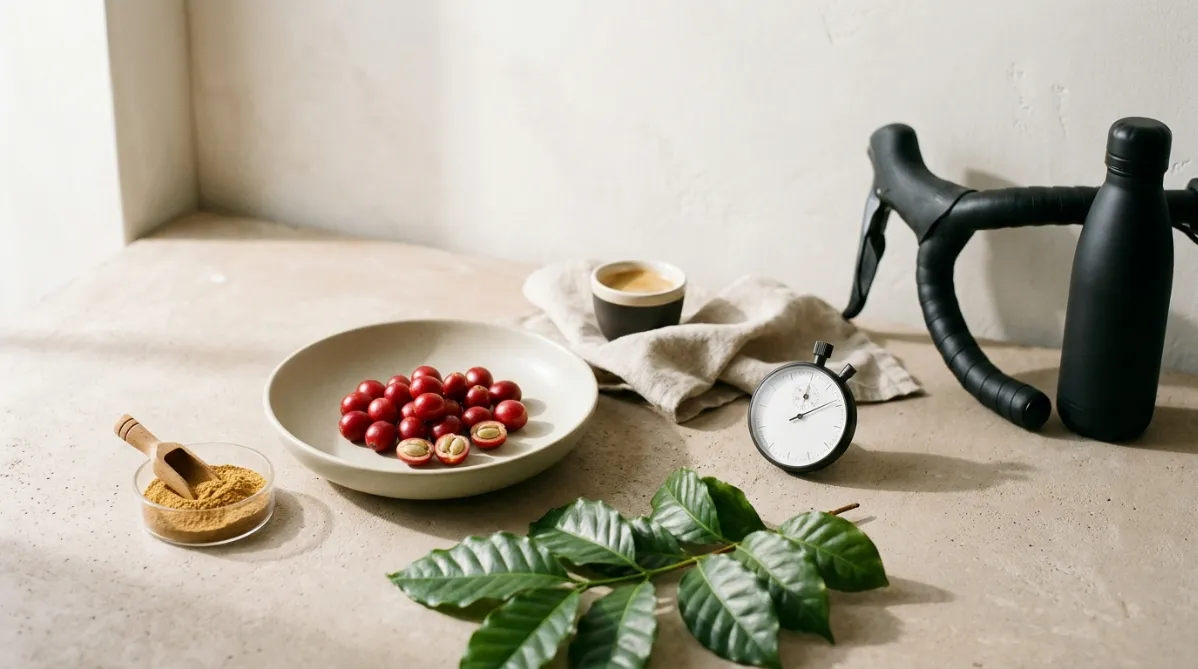
A wide editorial still life on a pale, warm-toned concrete surface in soft morning window light. In the center-left, a shallow matte ceramic bowl holds a small pile of bright red coffee cherries with glossy skins, a few sliced open to reveal pale mucilage and paired green-tan beans. Beside it, a small glass dish of fine, golden-brown powdered extract with a tiny wooden scoop resting on its edge. A sprig of coffee plant leaves, deep green and waxy, arcs across the foreground.

On the right side, slightly out of focus, a sleek road cyclist's handlebar and a matte black water bottle lean against a light plaster wall, suggesting athletic training without showing a person. A minimalist analog stopwatch with a clean white face and thin black hands sits in the mid-ground, angled toward the camera, its hands paused near the fifteen-minute mark. A folded linen cloth in oatmeal beige and a single small espresso cup with a thin crema ring add quiet texture.

The color palette is restrained and modern: cherry red, sage green, cream, soft terracotta, and charcoal accents. Light comes from the left, casting long, gentle shadows with a subtle warm glow and a hint of dust in the air. Shallow depth of field with crisp focus on the cherries and stopwatch, creamy bokeh in the background. Composition leaves open negative space in the upper right for a headline overlay. The overall feel is a clean, trendy health-and-science magazine cover: tactile, natural, minimal, and calm, shot in a 16:9 landscape frame with fine film-like grain and true-to-life tones.
nutrition

Extrato de Cereja de Café: 200 mg de cafeína aumentam o desempenho no ciclismo em 4,6 %

BY DR. GYMBRO ·

Uma dose baixa de 200 mg de cafeína proveniente de extrato de cereja de café ajudou ciclistas treinados a produzir 4,6 % a mais de trabalho em um teste de 15 minutos. No entanto, a ideia popular de que isso acelera a recarga de glicogênio não se confirmou. O estudo, randomizado, duplo‑cego e cruzado, contou com apenas 12 ciclistas e foi financiado pela indústria, sem grupo comparativo de cafeína pura. A seguir, veja o que os dados mostram, o que não mostram e quem pode se interessar em experimentar.
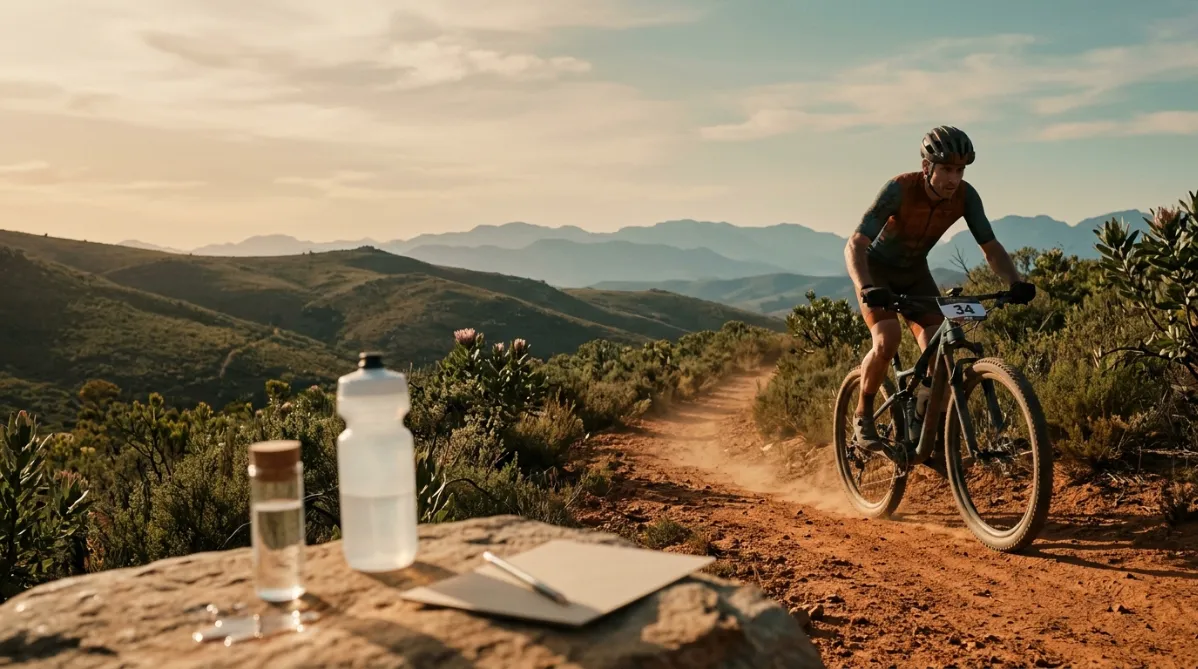
Wide landscape editorial photograph of a mountain biker mid-ride on a dusty red-orange singletrack trail in the South African Western Cape, golden hour light raking across the scene. The rider is in sharp focus on the right third of the frame, wearing a weathered cycling kit with a race number plate on the handlebars, dust kicking up from the rear tire. Behind them, rolling hills covered in fynbos shrubland and silhouetted protea plants fade into soft, hazy blue mountains. Warm amber sunlight creates long shadows and a soft rim light around the rider and bike.

In the lower left foreground, slightly out of focus, a small minimalist glass vial and a clear water bottle sit on a flat sun-bleached rock, with a few drops of liquid catching the light. Next to them, a simple matte paper notecard and a pencil suggest data collection, with no legible text. The vial and bottle are clean, understated, and modern, with no branding.

The color palette is earthy and refined: terracotta, ochre, sage green, dusty teal sky, and cream highlights. The composition uses shallow depth of field, a generous negative space in the upper left sky for headline overlay, and subtle film grain. The mood is contemplative, skeptical, and quietly sophisticated, like a feature photograph from a high-end outdoor sports and science magazine. Natural, candid, cinematic, shot on a 50mm lens with soft contrast and muted saturation. No futuristic elements, no glowing effects, no molecular graphics, no text.
science research

Ketone IQ aumentou as cetonas no Cape Epic, mas não fez mais nada

BY DR. GYMBRO ·

Ciclistas na prova de 8 dias Cape Epic tomaram Ketone IQ duas vezes ao dia e atingiram cerca de 1 mM de cetonas sanguíneas, mas seu cansaço, frequência cardíaca, tempo de reação e recuperação foram indistinguíveis dos que receberam placebo. O estudo duplo‑cego avaliou o R‑1,3‑butanodiol em condições reais de corrida, ao invés de laboratório. Os autores concluíram que a cetose moderada não trouxe benefícios e que o butanodiol não deve ser confundido com ésteres de cetona. Com apenas 18 participantes, o estudo tem limitações, mas oferece um ponto de dados importante para quem pensa em investir em bebidas de cetona caras para recuperação.
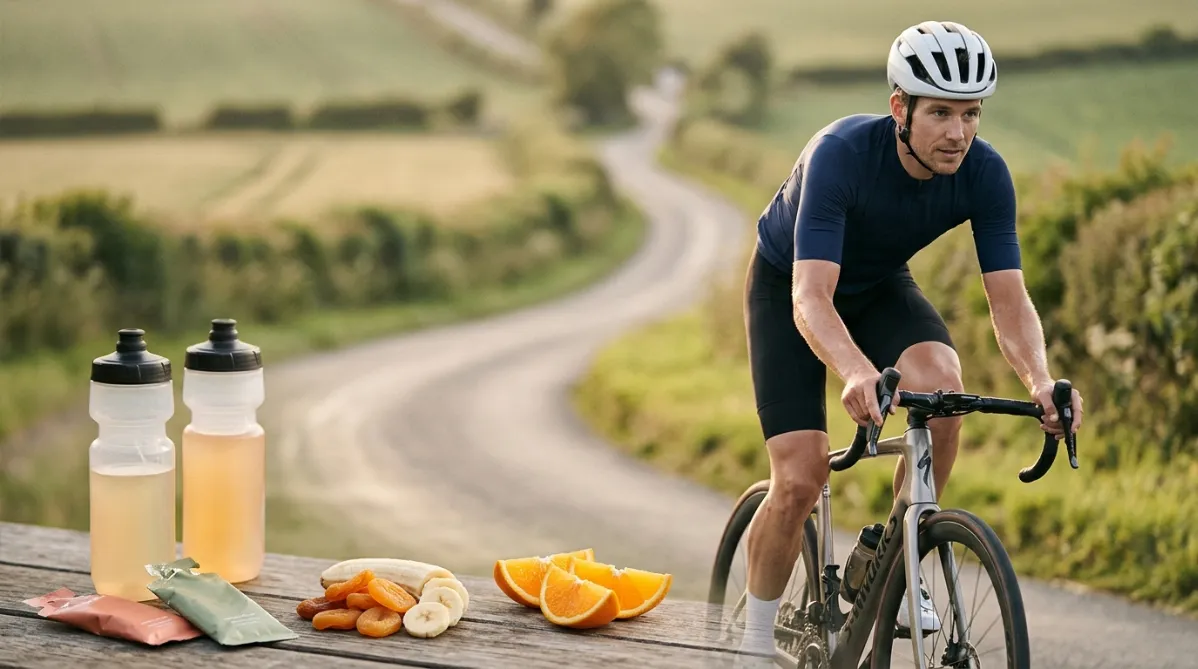
A cyclist in mid-ride, photographed from a low three-quarter side angle on a quiet country road at golden hour, wearing a matte navy jersey and a white helmet, with soft warm light catching the sweat on his forearms. His expression is calm and focused. The road bends gently through rolling green fields, and the background is softly blurred with creamy bokeh.

In the foreground on the left, a styled flat-lay-inspired still life sits on a weathered wooden surface and blends into the scene. It includes two clear water bottles with pale citrus-tinted liquid, a few torn energy gel packets in muted coral and sage, and a small pile of dried apricots and sliced banana. A handful of glossy orange slices adds a bright accent. The shallow depth of field keeps the cyclist sharp in the middle distance while the foreground items are gently softened.

The color palette is warm and editorial: soft peach, muted terracotta, sage green, cream, and deep navy. The light is natural and golden, with long, gentle shadows and a slight film-grain texture, like a high-end lifestyle or sports-science magazine spread. The composition follows the rule of thirds, with the cyclist on the right third and open negative space in the upper left, suitable for headline overlay.

The mood is energetic yet thoughtful, clean and modern, and the photograph feels authentic rather than staged. There are no logos, no readable text, and no futuristic or sci-fi elements. The overall look is crisp, airy, and refined, in the style of a contemporary health and performance journal cover.
nutrition

100 g de Carboidratos por Hora Mantiveram Ciclistas Mais Rápidos — E o Glicogênio Não Foi o Motivo

BY COACH RYAN ·

Quatro horas após um treino intenso, ciclistas que ingeriram 100 g de carboidrato por hora perderam menos potência que aqueles que consumiram 60 g. Surpreendentemente, o glicogênio muscular ficou quase igual nos dois grupos. O estudo randomizado, duplo‑cego e cruzado com 15 homens treinados aponta para um fator além da economia de glicogênio. Explicamos os números, o protocolo 1:0,8 de glucose:fructose e como aplicá‑lo. Também detalhamos quem deve evitar essa estratégia e por que a amostra pequena e exclusivamente masculina é relevante.
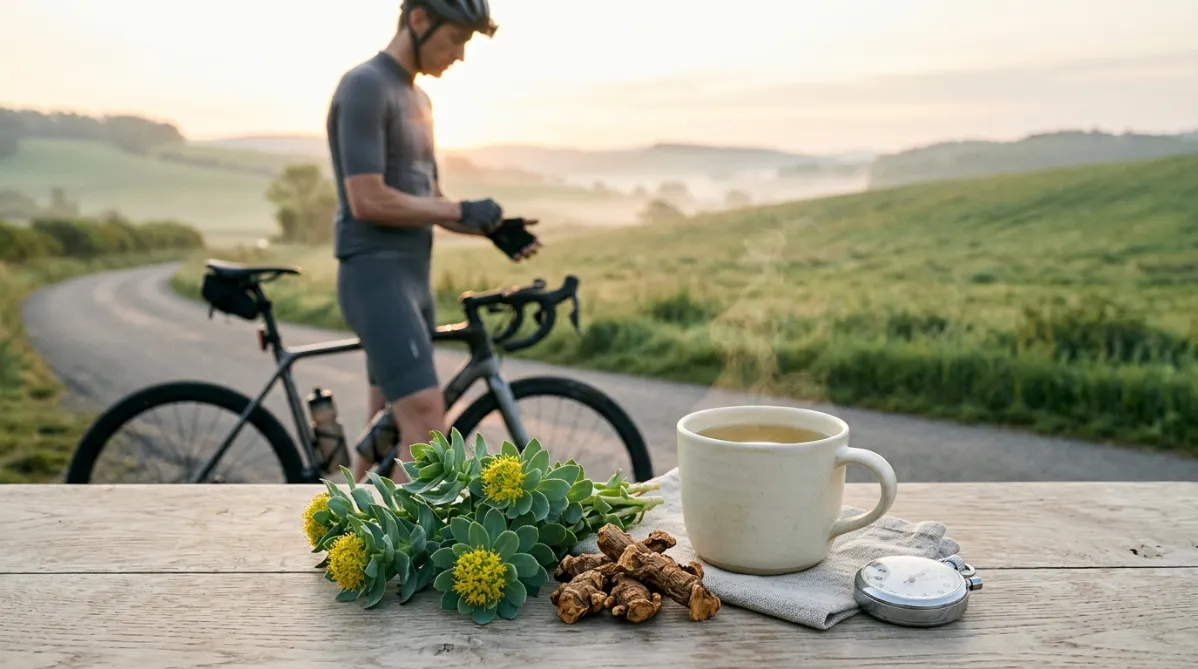
A landscape editorial photograph in soft natural morning light. In the foreground on a rustic light oak table, a small cluster of fresh Rhodiola rosea plants with thick succulent blue-green leaves and tiny golden-yellow flower clusters rests beside a few dried, knobby amber-brown rhizome pieces. A matte ceramic cup of pale golden herbal tea sits beside them, with a thin curl of steam and a small linen cloth. The plants and roots are sharp, with fine texture and dewy highlights.

In the softly blurred background, a lean cyclist in a fitted charcoal jersey stands beside a road bike on a quiet country lane at sunrise. Rolling green hills fade into pale mist behind them, and warm light rims the rider's shoulders. The cyclist tightens a glove, calm and focused, in a pre-ride moment of preparation. A water bottle is mounted on the bike frame, and a simple analog stopwatch with a brushed metal casing lies on the table near the herbs, hinting at timed effort.

The palette is muted and modern: sage green, warm cream, soft gold, and slate gray, with gentle peach tones from the sunrise. Shallow depth of field, a clean, airy composition with generous negative space on the right third for headline text, and subtle film grain. The mood is calm, health-conscious, and quietly athletic, like a premium wellness and sports science magazine cover. No text, no logos, no futuristic elements.
science research

Rhodiola Rosea: Um Pré‑treino sem estimulantes para cardio intenso?

BY DR. GYMBRO ·

Um ensaio cruzado de 2013 mostrou que uma dose única de 3 mg/kg de Rhodiola rosea, tomada uma hora antes de um teste de ciclismo de 6 milhas, reduziu o tempo de prova de 25,8 para 25,4 minutos. A frequência cardíaca no aquecimento caiu de 140 para 136 bpm e a percepção de esforço diminuiu de 6,6 para 6,0. O ganho, embora pequeno – cerca de 1,5 % – foi observado em apenas 18 participantes, então não se trata de um milagre. Ainda assim, a diminuição da sensação de esforço torna a Rhodiola uma opção intrigante para atletas de resistência que evitam estimulantes. Veja o que os dados revelam e como utilizá‑la de forma sensata.
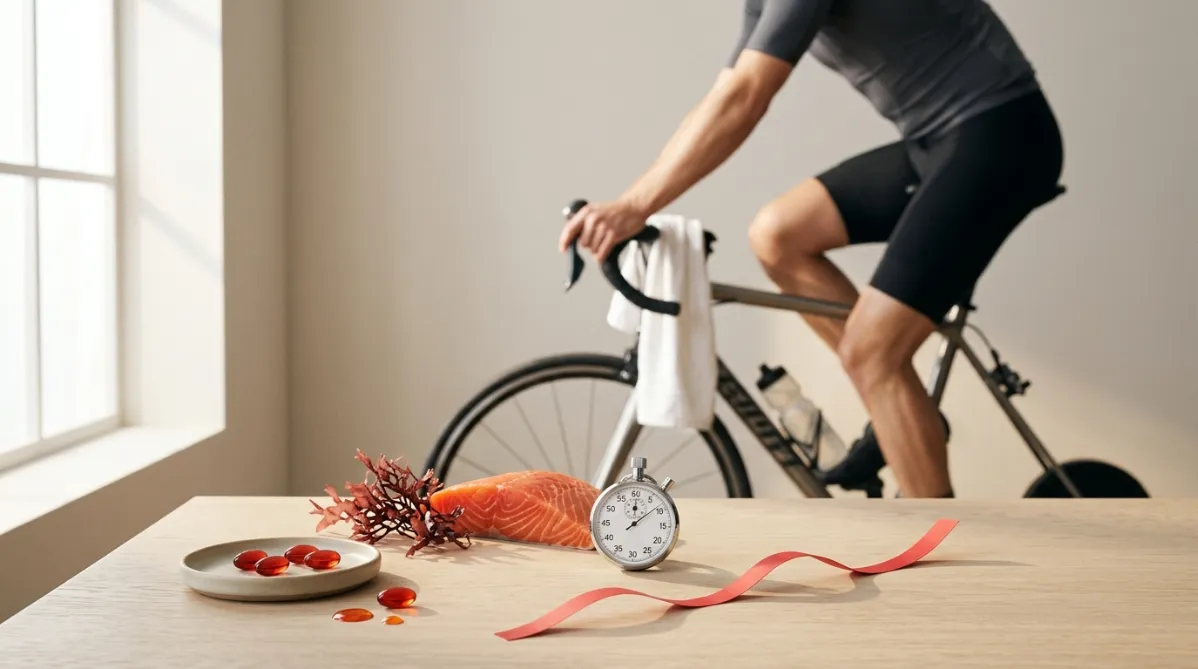
A cyclist's legs mid-pedal on a stationary road bike, shot in a bright, airy, minimalist studio with a soft warm-grey backdrop. In the foreground on a pale oak table sits a small ceramic dish holding four deep coral-red softgel capsules, with a few translucent droplets of red-orange oil glistening beside them. Beside the dish is a sprig of dried red microalgae-toned seaweed and a halved wild salmon fillet, its coral flesh echoing the capsule color. Behind the table, slightly out of focus, a cyclist in a fitted charcoal jersey and matte black shorts rides a bike on an indoor trainer. Only the torso and legs are visible, with no face. A white towel hangs over the handlebars and a clear water bottle catches the light.

Soft diffused morning light streams from a large window on the left, creating long gentle shadows and a subtle golden-hour glow on the skin and the glossy capsules. The palette is restrained and editorial: warm cream, sand, soft grey and charcoal, with vivid coral-red as the single accent color. A minimalist analog stopwatch with a clean white face sits on the table, its hands near the 85-minute mark. A thin, elegant line-graph shape is subtly suggested by a curved strip of red ribbon lying on the table, rising from left to right to hint at the performance gain without any text.

The composition follows the rule of thirds, with the capsules and stopwatch in the lower left and the cyclist's motion-blurred legs sweeping across the right. Shallow depth of field, crisp macro detail on the capsules, and a fine film-like grain. The overall feel is a modern health and science magazine cover: clean, calm, sophisticated, and natural, with negative space in the upper area for a headline. There are no futuristic elements, no glowing effects, no laboratory equipment, and no text or logos. Landscape 16:9 format.
nutrition

Astaxantina por 4 dias aumentou o tempo de exaustão no ciclismo de 72 para 85 minutos em um pequeno estudo

BY DR. GYMBRO ·

Quatro dias de astaxantina a 28 mg/dia aumentaram o tempo de exaustão no ciclismo de cerca de 72 para 85 minutos em um pequeno ensaio randomizado, um ganho de aproximadamente 18 %. O mesmo protocolo reduziu o aumento dos marcadores de dano muscular (CK e LDH) e da peroxidação lipídica (MDA) após um esforço intenso a 75 % do VO2máx. Os marcadores inflamatórios e o consumo de combustível não mudaram, portanto o mecanismo ainda é incerto. A dose também está bem acima do que a maioria das cápsulas oferece, e o estudo contou apenas com dez jovens adultos. Veja o que os números revelam e onde a evidência termina.

This page is available in