Dr. Gymbro
←

#cycling

6 articles
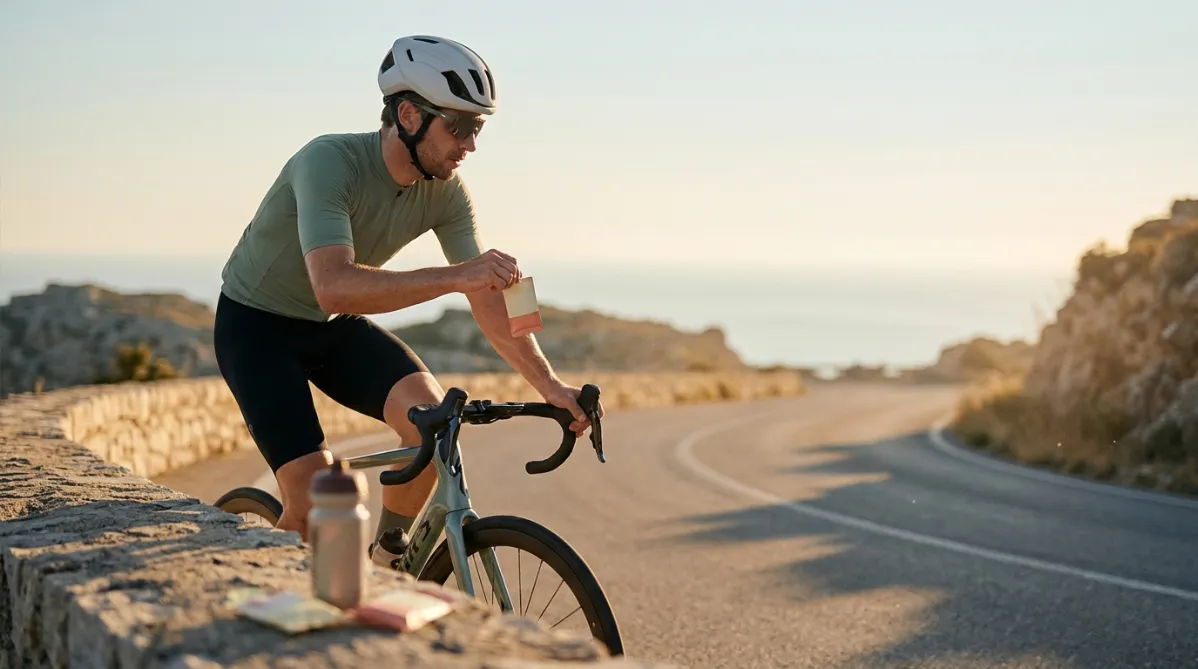
A cyclist in profile, riding a sleek road bike along a quiet coastal road in warm golden-hour light, shot from a low side angle with a shallow depth of field. The rider wears a muted sage-green jersey, black bib shorts, a matte white helmet, and sunglasses. Their face shows calm, focused fatigue, with a faint sheen of sweat on the forearms. One hand is lifted slightly from the handlebars, holding a small, unbranded matte gel packet in soft cream and coral tones, just before opening it. The road curves gently behind them toward a hazy, softly blurred horizon of pale sea and distant hills, with long amber shadows stretching across the asphalt.

In the foreground, slightly out of focus, a few gel sachets and a bike bottle rest on a weathered stone wall at the left edge of the frame, adding editorial depth. Fine dust and sunlight glow in the air. The palette is warm and restrained: butter yellow, soft peach, sage, and slate blue, with gentle film-like grain. The composition leaves open negative space in the upper right, a pale gradient sky, for headline overlay. The overall look is a modern, minimalist sports-science magazine photograph: natural, premium, and clean, with realistic textures, cinematic but understated color grading, and no text, logos, or graphics.
nutrition

Bicarb‑gels halverwege de rit: +12 W later in een 3‑uur fietstest

BY DR. GYMBRO ·

Stel je voor dat het beste moment om bicarb in te nemen niet vóór de wedstrijd, maar tijdens de rit is. In een nieuw gerandomiseerd crossover‑onderzoek met 11 getrainde wielrenners werd een bicarb‑plus‑koolhydraatgel gedurende drie uur fietsen getest. In de vermoeide toestand na de rit leverde een 12‑minuten tijdrit 12 W meer vermogen op dan alleen koolhydraten, terwijl maagklachten gelijk waren. Sprints en 2‑minuten‑inspanningen toonden echter geen significante winst, de steekproef was klein en de producten werden geleverd door MNSTRY. Hier lees je wat de cijfers écht zeggen.
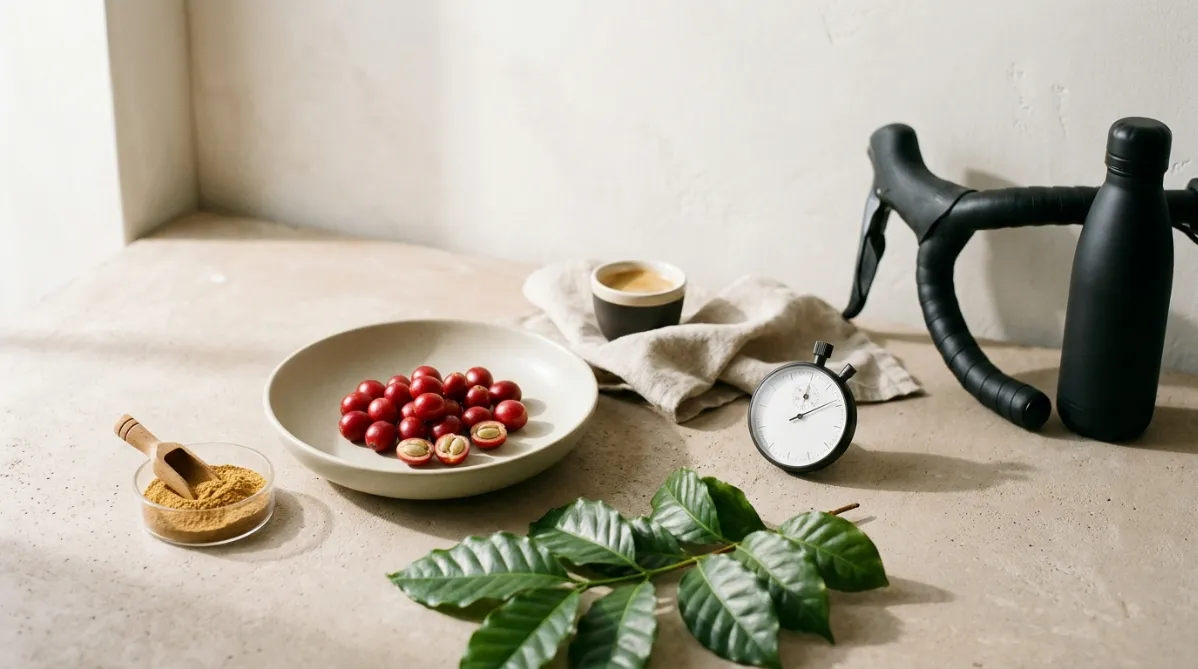
A wide editorial still life on a pale, warm-toned concrete surface in soft morning window light. In the center-left, a shallow matte ceramic bowl holds a small pile of bright red coffee cherries with glossy skins, a few sliced open to reveal pale mucilage and paired green-tan beans. Beside it, a small glass dish of fine, golden-brown powdered extract with a tiny wooden scoop resting on its edge. A sprig of coffee plant leaves, deep green and waxy, arcs across the foreground.

On the right side, slightly out of focus, a sleek road cyclist's handlebar and a matte black water bottle lean against a light plaster wall, suggesting athletic training without showing a person. A minimalist analog stopwatch with a clean white face and thin black hands sits in the mid-ground, angled toward the camera, its hands paused near the fifteen-minute mark. A folded linen cloth in oatmeal beige and a single small espresso cup with a thin crema ring add quiet texture.

The color palette is restrained and modern: cherry red, sage green, cream, soft terracotta, and charcoal accents. Light comes from the left, casting long, gentle shadows with a subtle warm glow and a hint of dust in the air. Shallow depth of field with crisp focus on the cherries and stopwatch, creamy bokeh in the background. Composition leaves open negative space in the upper right for a headline overlay. The overall feel is a clean, trendy health-and-science magazine cover: tactile, natural, minimal, and calm, shot in a 16:9 landscape frame with fine film-like grain and true-to-life tones.
nutrition

Koffie‑kersextract: 200 mg cafeïne verhoogde fietsprestatie met 4,6 %

BY DR. GYMBRO ·

Een lage dose van 200 mg cafeïne uit een geheel koffie‑kersextract hielp getrainde wielrenners om 4,6 % meer werk te leveren in een tijdrit van 15 minuut. Maar het populaire idee dat het de glycogeen‑herstel versnelt, bleek niet te kloppen. Deze gerandomiseerde, dubbelblinde cross‑over studie betrof slechts 12 wielrenners en werd gefinancierd door de industrie, zonder een zuivere cafeïne‑vergelijkingsgroep. Hier zie je wat de data laten zien, wat ze niet laten zien, en voor wie het interessant kan zijn.
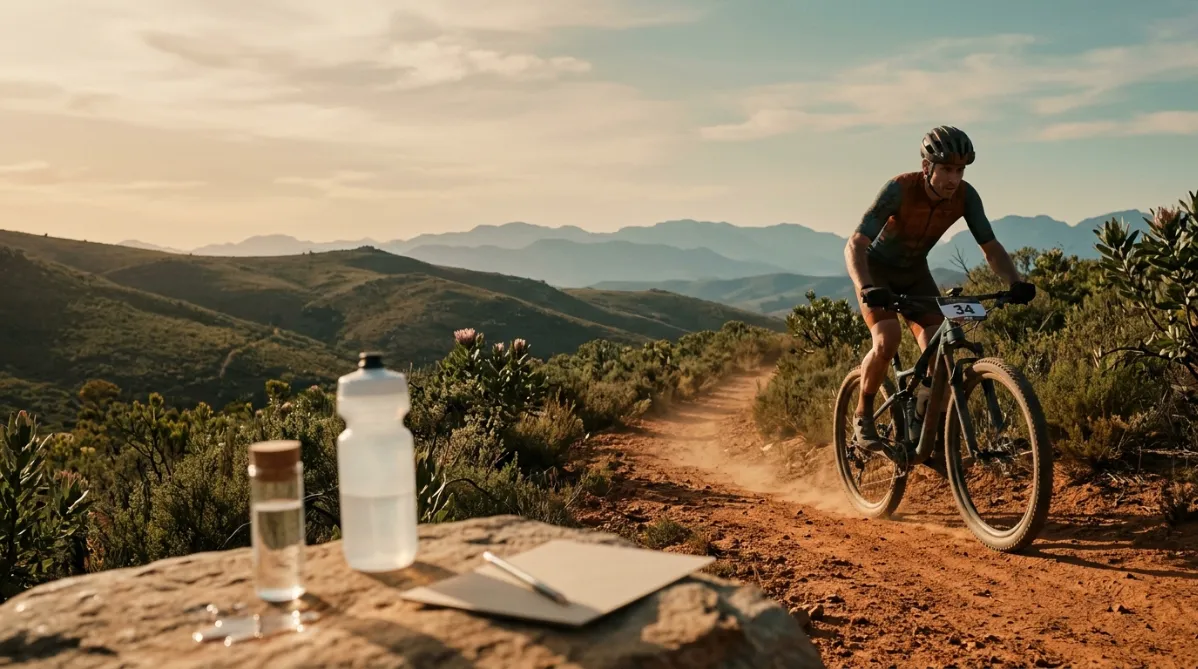
Wide landscape editorial photograph of a mountain biker mid-ride on a dusty red-orange singletrack trail in the South African Western Cape, golden hour light raking across the scene. The rider is in sharp focus on the right third of the frame, wearing a weathered cycling kit with a race number plate on the handlebars, dust kicking up from the rear tire. Behind them, rolling hills covered in fynbos shrubland and silhouetted protea plants fade into soft, hazy blue mountains. Warm amber sunlight creates long shadows and a soft rim light around the rider and bike.

In the lower left foreground, slightly out of focus, a small minimalist glass vial and a clear water bottle sit on a flat sun-bleached rock, with a few drops of liquid catching the light. Next to them, a simple matte paper notecard and a pencil suggest data collection, with no legible text. The vial and bottle are clean, understated, and modern, with no branding.

The color palette is earthy and refined: terracotta, ochre, sage green, dusty teal sky, and cream highlights. The composition uses shallow depth of field, a generous negative space in the upper left sky for headline overlay, and subtle film grain. The mood is contemplative, skeptical, and quietly sophisticated, like a feature photograph from a high-end outdoor sports and science magazine. Natural, candid, cinematic, shot on a 50mm lens with soft contrast and muted saturation. No futuristic elements, no glowing effects, no molecular graphics, no text.
science research

Ketone IQ verhoogde de ketonen tijdens de Cape Epic, maar leverde geen extra voordelen

BY DR. GYMBRO ·

Rijders van de 8‑daagse Cape Epic dronken tweemaal per dag Ketone IQ en bereikten ongeveer 1 mM bloedketonen, maar hun vermoeidheid, hartslag, reactietijd en herstel waren vergelijkbaar met die van de placebo‑rijders. De dubbel‑blinde proef testte R‑1,3‑butanediol onder echte race‑omstandigheden in plaats van in een laboratorium. De auteurs concluderen dat de bescheiden ketose niet effectief was en waarschuwen dat butanediol niet verward mag worden met keton‑esters. Met slechts 18 rijders heeft de studie duidelijke beperkingen, maar hij biedt een sobere beoordeling voor iedereen die een dure ketondrank overweegt voor herstel.
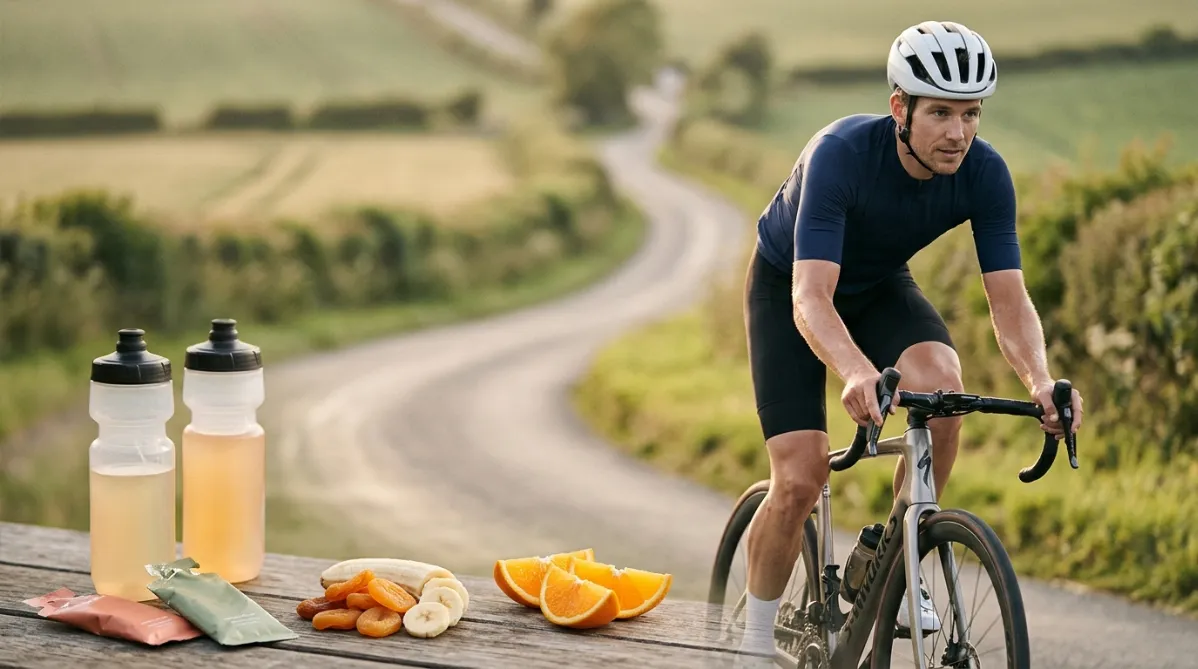
A cyclist in mid-ride, photographed from a low three-quarter side angle on a quiet country road at golden hour, wearing a matte navy jersey and a white helmet, with soft warm light catching the sweat on his forearms. His expression is calm and focused. The road bends gently through rolling green fields, and the background is softly blurred with creamy bokeh.

In the foreground on the left, a styled flat-lay-inspired still life sits on a weathered wooden surface and blends into the scene. It includes two clear water bottles with pale citrus-tinted liquid, a few torn energy gel packets in muted coral and sage, and a small pile of dried apricots and sliced banana. A handful of glossy orange slices adds a bright accent. The shallow depth of field keeps the cyclist sharp in the middle distance while the foreground items are gently softened.

The color palette is warm and editorial: soft peach, muted terracotta, sage green, cream, and deep navy. The light is natural and golden, with long, gentle shadows and a slight film-grain texture, like a high-end lifestyle or sports-science magazine spread. The composition follows the rule of thirds, with the cyclist on the right third and open negative space in the upper left, suitable for headline overlay.

The mood is energetic yet thoughtful, clean and modern, and the photograph feels authentic rather than staged. There are no logos, no readable text, and no futuristic or sci-fi elements. The overall look is crisp, airy, and refined, in the style of a contemporary health and performance journal cover.
nutrition

100 g koolhydraten per uur hield wielrenners sneller – en glycogeen was niet de reden

BY COACH RYAN ·

Vier uur na een intensieve rit presteerden wielrenners die 100 g koolhydraten per uur binnenkregen beter dan degenen die 60 g kregen, terwijl hun spierglycogeen ongeveer gelijk bleef. Deze gerandomiseerde, dubbelblinde crossover‑studie met 15 getrainde mannen wijst op een effect dat verder gaat dan alleen het sparen van glycogeen. We leggen de cijfers, het 1:0,8 glucose‑fructose‑protocol en de praktische toepassing uit. Ook bespreken we voor wie het (nog) niet geschikt is en waarom de kleine, uitsluitend mannelijke steekproef van belang is.
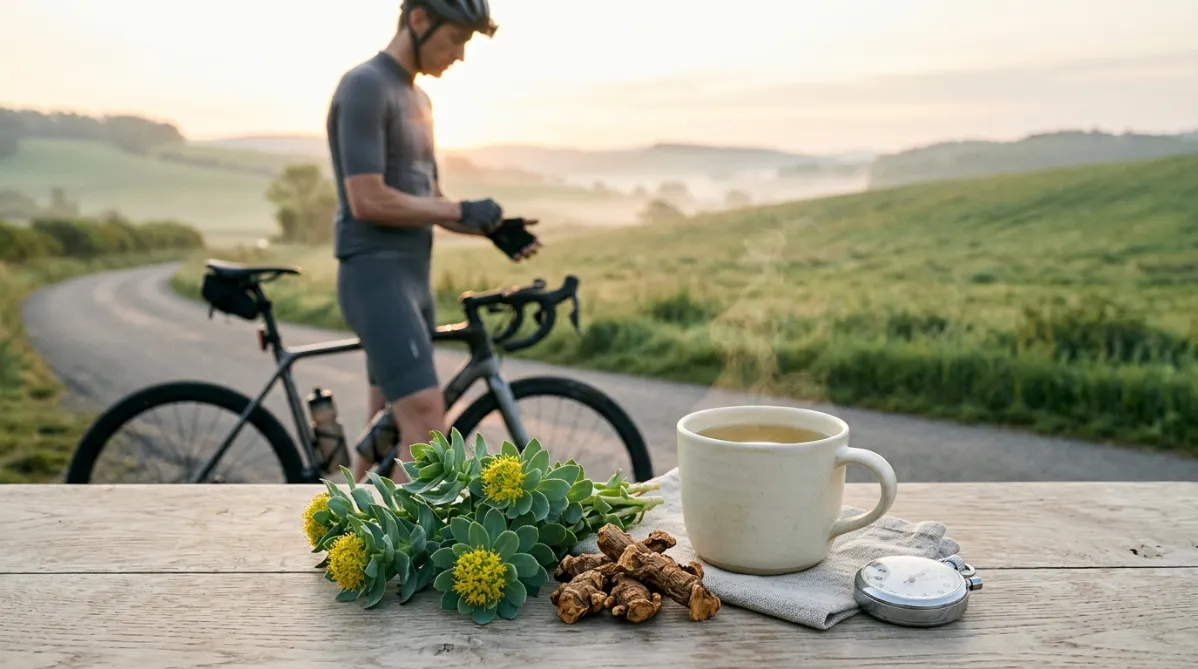
A landscape editorial photograph in soft natural morning light. In the foreground on a rustic light oak table, a small cluster of fresh Rhodiola rosea plants with thick succulent blue-green leaves and tiny golden-yellow flower clusters rests beside a few dried, knobby amber-brown rhizome pieces. A matte ceramic cup of pale golden herbal tea sits beside them, with a thin curl of steam and a small linen cloth. The plants and roots are sharp, with fine texture and dewy highlights.

In the softly blurred background, a lean cyclist in a fitted charcoal jersey stands beside a road bike on a quiet country lane at sunrise. Rolling green hills fade into pale mist behind them, and warm light rims the rider's shoulders. The cyclist tightens a glove, calm and focused, in a pre-ride moment of preparation. A water bottle is mounted on the bike frame, and a simple analog stopwatch with a brushed metal casing lies on the table near the herbs, hinting at timed effort.

The palette is muted and modern: sage green, warm cream, soft gold, and slate gray, with gentle peach tones from the sunrise. Shallow depth of field, a clean, airy composition with generous negative space on the right third for headline text, and subtle film grain. The mood is calm, health-conscious, and quietly athletic, like a premium wellness and sports science magazine cover. No text, no logos, no futuristic elements.
science research

Rhodiola Rosea: Een cafeïnevrij pre‑workout voor harde cardio?

BY DR. GYMBRO ·

Een crossover‑studie uit 2013 liet zien dat een enkele dosis van 3 mg/kg Rhodiola rosea, ingenomen een uur voor een 6‑mijl fietstijdrit, de eindtijd verkortte van 25,8 naar 25,4 minuten. De hartslag tijdens de warming‑up daalde van 140 naar 136 bpm en de subjectieve inspanning ging van 6,6 naar 6,0. De winst is bescheiden – ongeveer 1,5 % – en gebaseerd op slechts 18 deelnemers, dus geen wondermiddel. Toch is het effect op de waargenomen inspanning een intrigerend, cafeïnevrij alternatief voor duursporters. Hieronder vind je wat de data laten zien en hoe je het op een verstandige manier kunt uitproberen.
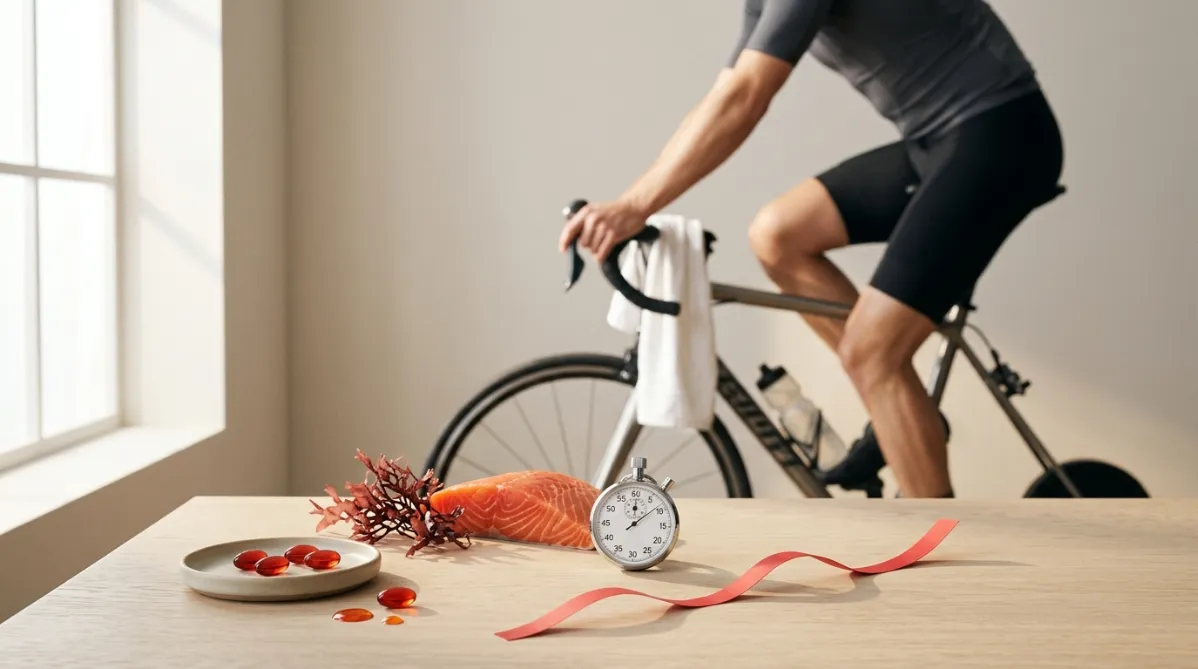
A cyclist's legs mid-pedal on a stationary road bike, shot in a bright, airy, minimalist studio with a soft warm-grey backdrop. In the foreground on a pale oak table sits a small ceramic dish holding four deep coral-red softgel capsules, with a few translucent droplets of red-orange oil glistening beside them. Beside the dish is a sprig of dried red microalgae-toned seaweed and a halved wild salmon fillet, its coral flesh echoing the capsule color. Behind the table, slightly out of focus, a cyclist in a fitted charcoal jersey and matte black shorts rides a bike on an indoor trainer. Only the torso and legs are visible, with no face. A white towel hangs over the handlebars and a clear water bottle catches the light.

Soft diffused morning light streams from a large window on the left, creating long gentle shadows and a subtle golden-hour glow on the skin and the glossy capsules. The palette is restrained and editorial: warm cream, sand, soft grey and charcoal, with vivid coral-red as the single accent color. A minimalist analog stopwatch with a clean white face sits on the table, its hands near the 85-minute mark. A thin, elegant line-graph shape is subtly suggested by a curved strip of red ribbon lying on the table, rising from left to right to hint at the performance gain without any text.

The composition follows the rule of thirds, with the capsules and stopwatch in the lower left and the cyclist's motion-blurred legs sweeping across the right. Shallow depth of field, crisp macro detail on the capsules, and a fine film-like grain. The overall feel is a modern health and science magazine cover: clean, calm, sophisticated, and natural, with negative space in the upper area for a headline. There are no futuristic elements, no glowing effects, no laboratory equipment, and no text or logos. Landscape 16:9 format.
nutrition

Astaxanthine verhoogt de tijd tot uitputting bij fietsen van 72 naar 85 minuten na vier dagen – een kleine studie

BY DR. GYMBRO ·

Vier dagen astaxanthine (28 mg per dag) verlengden de tijd tot uitputting bij een fietstest van ongeveer 72 naar 85 minuten in een kleine gerandomiseerde proef, een winst van circa 18 %. Hetzelfde protocol dempte de toename van spierbeschadigingsmarkers (CK en LDH) en lipideperoxidatie (MDA) na een zware rit op 75 % VO₂max. Ontstekingsmarkers en het brandstofgebruik bleven ongewijzigd, waardoor het onderliggende mechanisme onduidelijk blijft. De gebruikte dosis ligt ver boven wat de meeste softgels leveren en de studie betrof slechts tien jonge mannen. Hieronder zie je wat de cijfers laten zien en waar het bewijs stopt.

This page is available in