Dr. Gymbro
←

#cycling

6 articles
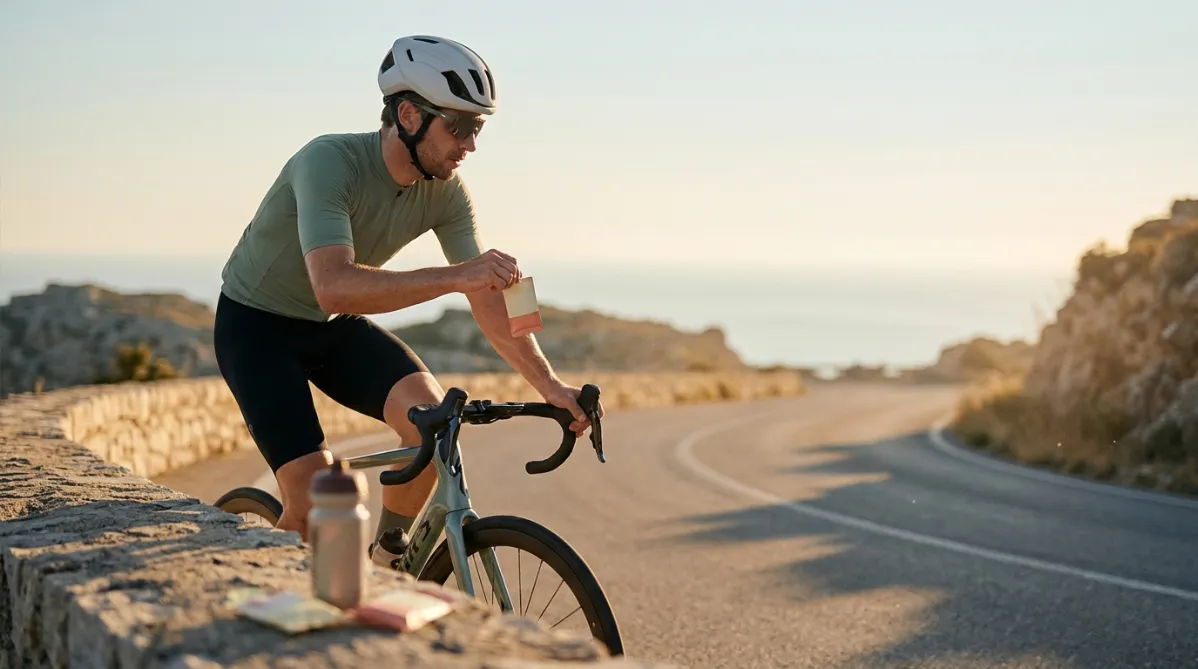
A cyclist in profile, riding a sleek road bike along a quiet coastal road in warm golden-hour light, shot from a low side angle with a shallow depth of field. The rider wears a muted sage-green jersey, black bib shorts, a matte white helmet, and sunglasses. Their face shows calm, focused fatigue, with a faint sheen of sweat on the forearms. One hand is lifted slightly from the handlebars, holding a small, unbranded matte gel packet in soft cream and coral tones, just before opening it. The road curves gently behind them toward a hazy, softly blurred horizon of pale sea and distant hills, with long amber shadows stretching across the asphalt.

In the foreground, slightly out of focus, a few gel sachets and a bike bottle rest on a weathered stone wall at the left edge of the frame, adding editorial depth. Fine dust and sunlight glow in the air. The palette is warm and restrained: butter yellow, soft peach, sage, and slate blue, with gentle film-like grain. The composition leaves open negative space in the upper right, a pale gradient sky, for headline overlay. The overall look is a modern, minimalist sports-science magazine photograph: natural, premium, and clean, with realistic textures, cinematic but understated color grading, and no text, logos, or graphics.
nutrition

Żele z wodorowęglanem przyjmowane w trakcie jazdy podniosły moc o 12 W w 3‑godzinnym teście rowerowym

BY DR. GYMBRO ·

A co, gdyby najlepszy moment na przyjęcie wodorowęglanu nie był przed zawodami, lecz w ich trakcie? Nowe, randomizowane badanie crossover z udziałem 11 wytrenowanych kolarzy sprawdziło żele z wodorowęglanem i węglowodanami podczas 3‑godzinnej jazdy. Po wysiłku w stanie zmęczenia moc w 12‑minutowym teście czasowym była wyższa o 12 W w porównaniu do samego węglowodanu, a objawy żołądkowo‑jelitowe nie różniły się. Jednak sprinty i wysiłki 2‑minutowe nie wykazały istotnej poprawy, próbka była mała, a produkty pochodziły od MNSTRY. Oto, co naprawdę mówią liczby.
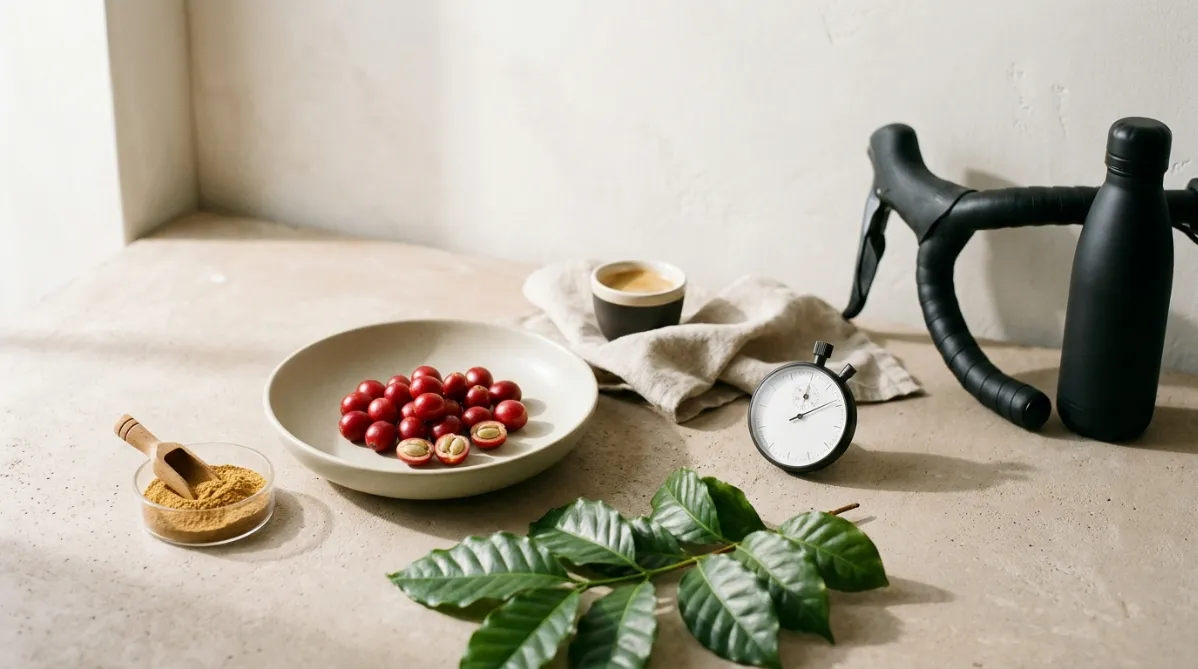
A wide editorial still life on a pale, warm-toned concrete surface in soft morning window light. In the center-left, a shallow matte ceramic bowl holds a small pile of bright red coffee cherries with glossy skins, a few sliced open to reveal pale mucilage and paired green-tan beans. Beside it, a small glass dish of fine, golden-brown powdered extract with a tiny wooden scoop resting on its edge. A sprig of coffee plant leaves, deep green and waxy, arcs across the foreground.

On the right side, slightly out of focus, a sleek road cyclist's handlebar and a matte black water bottle lean against a light plaster wall, suggesting athletic training without showing a person. A minimalist analog stopwatch with a clean white face and thin black hands sits in the mid-ground, angled toward the camera, its hands paused near the fifteen-minute mark. A folded linen cloth in oatmeal beige and a single small espresso cup with a thin crema ring add quiet texture.

The color palette is restrained and modern: cherry red, sage green, cream, soft terracotta, and charcoal accents. Light comes from the left, casting long, gentle shadows with a subtle warm glow and a hint of dust in the air. Shallow depth of field with crisp focus on the cherries and stopwatch, creamy bokeh in the background. Composition leaves open negative space in the upper right for a headline overlay. The overall feel is a clean, trendy health-and-science magazine cover: tactile, natural, minimal, and calm, shot in a 16:9 landscape frame with fine film-like grain and true-to-life tones.
nutrition

Ekstrakt z wiśni kawowej: 200 mg kofeiny zwiększyło wynik jazdy rowerowej o 4,6 %

BY DR. GYMBRO ·

Niska dawka 200 mg kofeiny pochodząca z ekstraktu całej wiśni kawowej pomogła wytrenowanym kolarzom wykonać o 4,6 % więcej pracy w 15‑minutowym wyścigu czasowym. Popularne przekonanie, że przyspiesza ona odbudowę glikogenu, nie zostało potwierdzone. Badanie randomizowane, podwójnie zaślepione, w układzie crossover, obejmowało zaledwie 12 kolarzy i było finansowane przez przemysł, przy braku grupy kontrolnej z czystą kofeiną. Oto, co pokazują wyniki, czego nie udowadniają i kto mógłby je wypróbować.
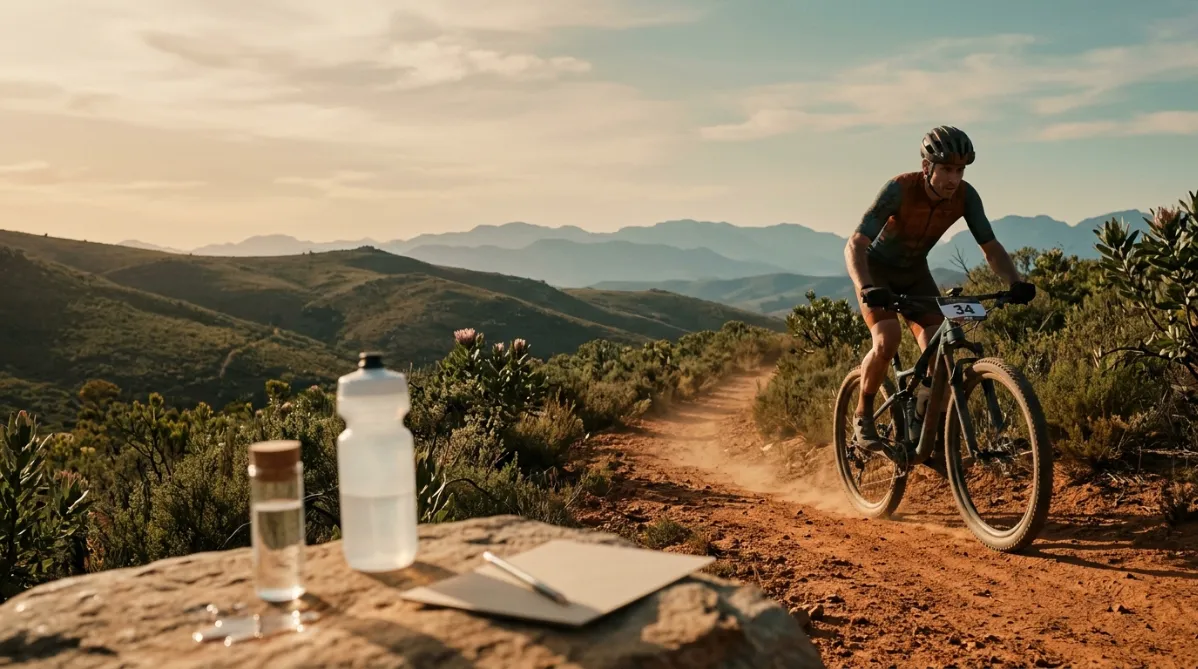
Wide landscape editorial photograph of a mountain biker mid-ride on a dusty red-orange singletrack trail in the South African Western Cape, golden hour light raking across the scene. The rider is in sharp focus on the right third of the frame, wearing a weathered cycling kit with a race number plate on the handlebars, dust kicking up from the rear tire. Behind them, rolling hills covered in fynbos shrubland and silhouetted protea plants fade into soft, hazy blue mountains. Warm amber sunlight creates long shadows and a soft rim light around the rider and bike.

In the lower left foreground, slightly out of focus, a small minimalist glass vial and a clear water bottle sit on a flat sun-bleached rock, with a few drops of liquid catching the light. Next to them, a simple matte paper notecard and a pencil suggest data collection, with no legible text. The vial and bottle are clean, understated, and modern, with no branding.

The color palette is earthy and refined: terracotta, ochre, sage green, dusty teal sky, and cream highlights. The composition uses shallow depth of field, a generous negative space in the upper left sky for headline overlay, and subtle film grain. The mood is contemplative, skeptical, and quietly sophisticated, like a feature photograph from a high-end outdoor sports and science magazine. Natural, candid, cinematic, shot on a 50mm lens with soft contrast and muted saturation. No futuristic elements, no glowing effects, no molecular graphics, no text.
science research

Ketone IQ podniosło poziom ketonów w Cape Epic, ale nie zrobiło nic więcej

BY DR. GYMBRO ·

Rowerzyści startujący w ośmiodniowym Cape Epic spożywali Ketone IQ dwa razy dziennie, co podniosło ich poziom ketonów do ok. 1 mM, ale ich zmęczenie, tętno, czas reakcji i regeneracja nie różniły się od grupy placebo. Badanie podwójnie zaślepione przeprowadzono w warunkach rzeczywistego wyścigu i wykazało, że umiarkowana ketoza nie przyniosła oczekiwanych efektów, a R‑1,3‑butanodiol nie należy mylić z esterami ketonowymi.
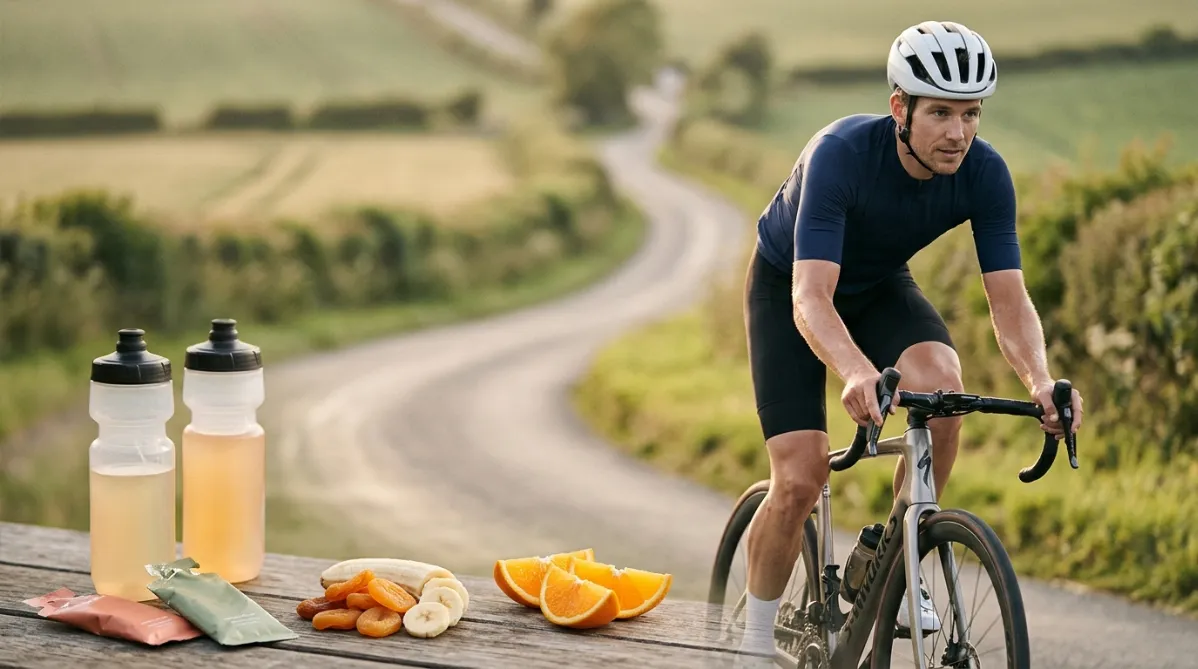
A cyclist in mid-ride, photographed from a low three-quarter side angle on a quiet country road at golden hour, wearing a matte navy jersey and a white helmet, with soft warm light catching the sweat on his forearms. His expression is calm and focused. The road bends gently through rolling green fields, and the background is softly blurred with creamy bokeh.

In the foreground on the left, a styled flat-lay-inspired still life sits on a weathered wooden surface and blends into the scene. It includes two clear water bottles with pale citrus-tinted liquid, a few torn energy gel packets in muted coral and sage, and a small pile of dried apricots and sliced banana. A handful of glossy orange slices adds a bright accent. The shallow depth of field keeps the cyclist sharp in the middle distance while the foreground items are gently softened.

The color palette is warm and editorial: soft peach, muted terracotta, sage green, cream, and deep navy. The light is natural and golden, with long, gentle shadows and a slight film-grain texture, like a high-end lifestyle or sports-science magazine spread. The composition follows the rule of thirds, with the cyclist on the right third and open negative space in the upper left, suitable for headline overlay.

The mood is energetic yet thoughtful, clean and modern, and the photograph feels authentic rather than staged. There are no logos, no readable text, and no futuristic or sci-fi elements. The overall look is crisp, airy, and refined, in the style of a contemporary health and performance journal cover.
nutrition

100 g węglowodanów na godzinę sprawiło, że kolarze byli szybsi — i nie był to glikogen

BY COACH RYAN ·

Po czterech godzinach intensywnego treningu kolarze, którzy przyjmowali 100 g węglowodanów na godzinę, tracili mniej mocy niż ci, którzy brali jedynie 60 g. Zaskoczeniem było to, że ich zapasy glikogenu w mięśniach były praktycznie takie same. To randomizowane, podwójnie ślepe badanie krzyżowe z udziałem 15 wytrenowanych mężczyzn wskazuje, że korzyść wykracza poza oszczędzanie glikogenu. Przedstawiamy liczby, protokół glukoza‑fruktoza 1:0,8 oraz praktyczne wskazówki, a także omawiamy, dla kogo ten protokół może nie być odpowiedni i dlaczego małe, wyłącznie męskie grupy badawcze mają znaczenie.
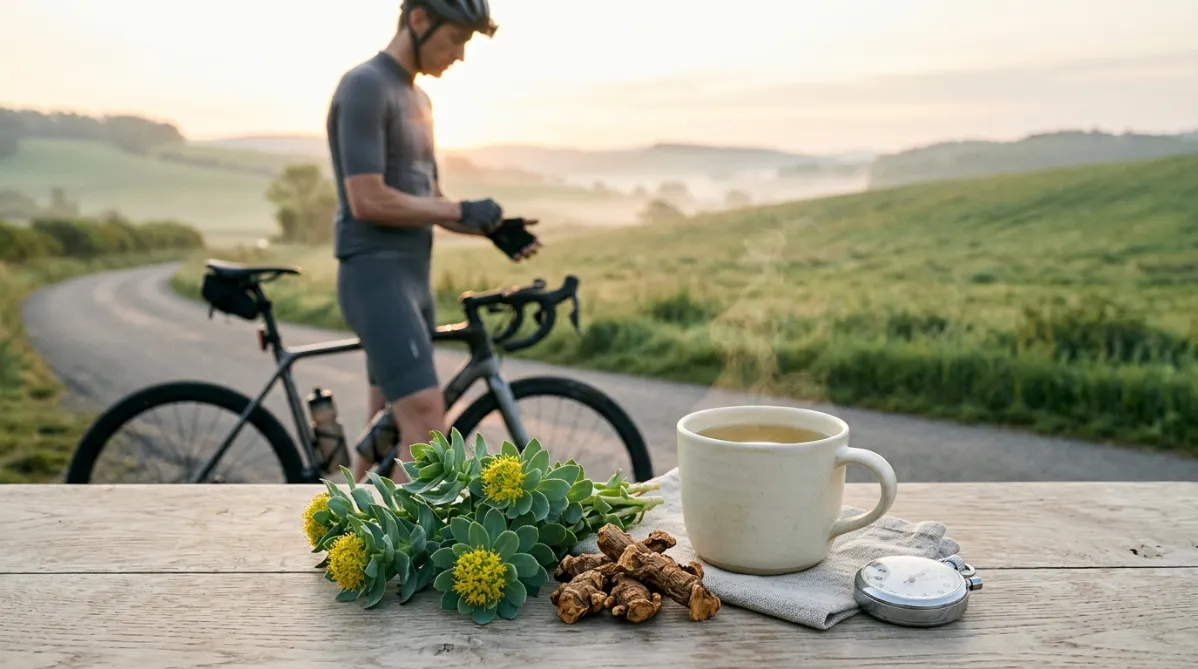
A landscape editorial photograph in soft natural morning light. In the foreground on a rustic light oak table, a small cluster of fresh Rhodiola rosea plants with thick succulent blue-green leaves and tiny golden-yellow flower clusters rests beside a few dried, knobby amber-brown rhizome pieces. A matte ceramic cup of pale golden herbal tea sits beside them, with a thin curl of steam and a small linen cloth. The plants and roots are sharp, with fine texture and dewy highlights.

In the softly blurred background, a lean cyclist in a fitted charcoal jersey stands beside a road bike on a quiet country lane at sunrise. Rolling green hills fade into pale mist behind them, and warm light rims the rider's shoulders. The cyclist tightens a glove, calm and focused, in a pre-ride moment of preparation. A water bottle is mounted on the bike frame, and a simple analog stopwatch with a brushed metal casing lies on the table near the herbs, hinting at timed effort.

The palette is muted and modern: sage green, warm cream, soft gold, and slate gray, with gentle peach tones from the sunrise. Shallow depth of field, a clean, airy composition with generous negative space on the right third for headline text, and subtle film grain. The mood is calm, health-conscious, and quietly athletic, like a premium wellness and sports science magazine cover. No text, no logos, no futuristic elements.
science research

Rhodiola Rosea: Bezstymulacyjny pre‑workout do intensywnego cardio?

BY DR. GYMBRO ·

Badanie krzyżowe z 2013 r. wykazało, że jednorazowa dawka 3 mg/kg Rhodiola rosea przyjęta godzinę przed 6‑milową jazdą na rowerze skróciła czas ukończenia z 25,8 do 25,4 minuty. Tętno w rozgrzewce spadło z 140 bpm do 136 bpm, a odczuwany wysiłek zmalał z 6,6 do 6,0 na skali Borga. Zysk wynosi zaledwie ok. 1,5 % i opiera się na 18 uczestnikach, więc nie jest to cud. Niemniej niższe odczucie zmęczenia może uczynić tę opcję atrakcyjną dla sportowców wytrzymałościowych, którzy unikają kofeiny.
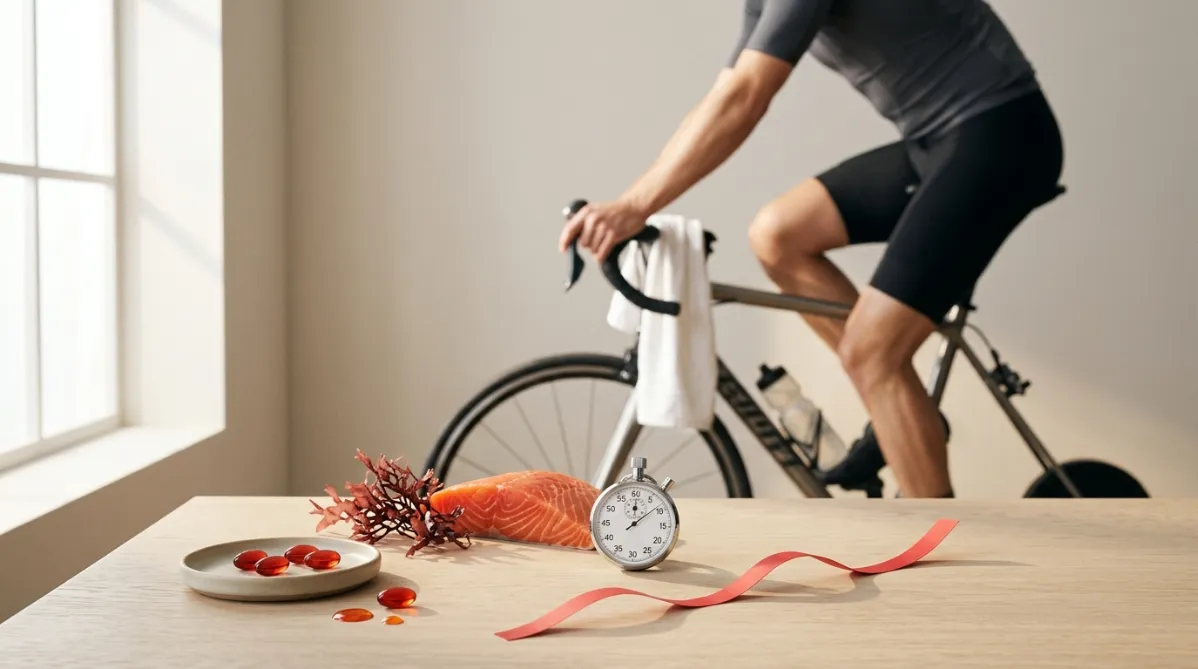
A cyclist's legs mid-pedal on a stationary road bike, shot in a bright, airy, minimalist studio with a soft warm-grey backdrop. In the foreground on a pale oak table sits a small ceramic dish holding four deep coral-red softgel capsules, with a few translucent droplets of red-orange oil glistening beside them. Beside the dish is a sprig of dried red microalgae-toned seaweed and a halved wild salmon fillet, its coral flesh echoing the capsule color. Behind the table, slightly out of focus, a cyclist in a fitted charcoal jersey and matte black shorts rides a bike on an indoor trainer. Only the torso and legs are visible, with no face. A white towel hangs over the handlebars and a clear water bottle catches the light.

Soft diffused morning light streams from a large window on the left, creating long gentle shadows and a subtle golden-hour glow on the skin and the glossy capsules. The palette is restrained and editorial: warm cream, sand, soft grey and charcoal, with vivid coral-red as the single accent color. A minimalist analog stopwatch with a clean white face sits on the table, its hands near the 85-minute mark. A thin, elegant line-graph shape is subtly suggested by a curved strip of red ribbon lying on the table, rising from left to right to hint at the performance gain without any text.

The composition follows the rule of thirds, with the capsules and stopwatch in the lower left and the cyclist's motion-blurred legs sweeping across the right. Shallow depth of field, crisp macro detail on the capsules, and a fine film-like grain. The overall feel is a modern health and science magazine cover: clean, calm, sophisticated, and natural, with negative space in the upper area for a headline. There are no futuristic elements, no glowing effects, no laboratory equipment, and no text or logos. Landscape 16:9 format.
nutrition

Astaksantyna przyjmowana przez 4 dni wydłużyła czas wyczerpania podczas jazdy na rowerze z 72 do 85 minut w małym badaniu

BY DR. GYMBRO ·

Cztery dni suplementacji astaksantyną (28 mg / dzień) przedłużyły czas do wyczerpania przy intensywnej jeździe rowerem z ok. 72 do 85 minut w małym, randomizowanym badaniu – wzrost o około 18 %. Ten sam protokół zmniejszył wzrost markerów uszkodzenia mięśni (CK, LDH) oraz peroksydacji lipidów (MDA) po wysiłku równym 75 % VO₂max. Poziomy markerów zapalnych i zużycie paliw nie uległy zmianie, więc mechanizm pozostaje niejasny. Dawkowanie jest wyższe niż w większości dostępnych suplementów, a badanie obejmowało jedynie dziesięciu młodych mężczyzn. Oto, co mówią liczby i gdzie kończy się dowód.

This page is available in