Dr. Gymbro
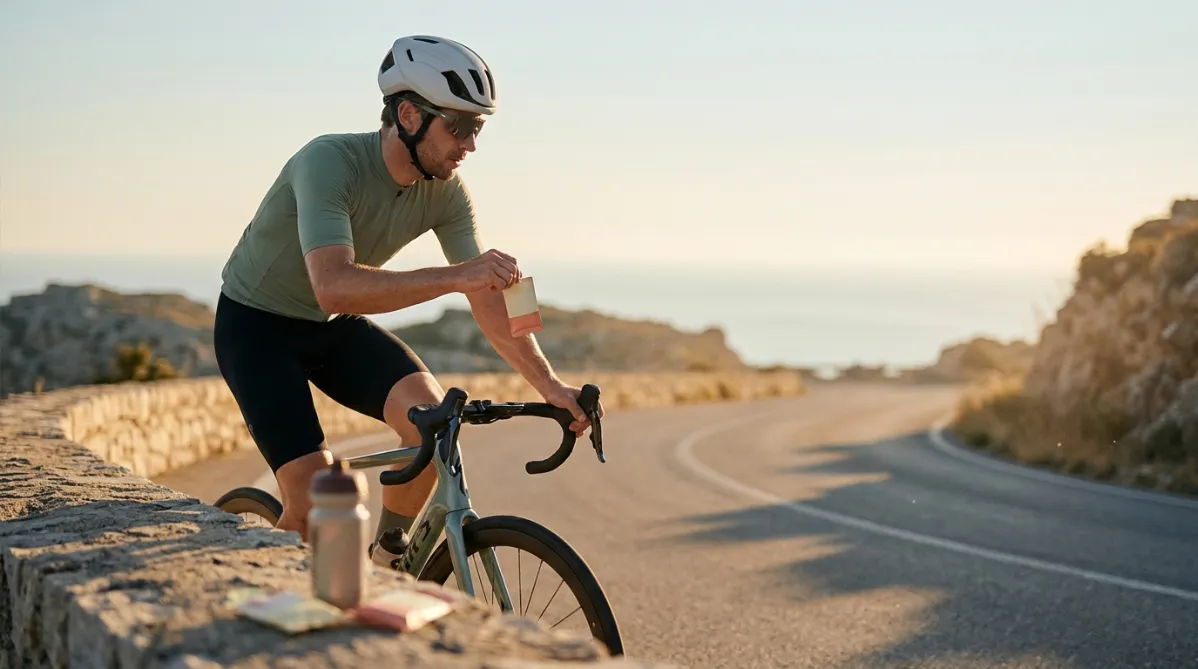
A cyclist in profile, riding a sleek road bike along a quiet coastal road in warm golden-hour light, shot from a low side angle with a shallow depth of field. The rider wears a muted sage-green jersey, black bib shorts, a matte white helmet, and sunglasses. Their face shows calm, focused fatigue, with a faint sheen of sweat on the forearms. One hand is lifted slightly from the handlebars, holding a small, unbranded matte gel packet in soft cream and coral tones, just before opening it. The road curves gently behind them toward a hazy, softly blurred horizon of pale sea and distant hills, with long amber shadows stretching across the asphalt.

In the foreground, slightly out of focus, a few gel sachets and a bike bottle rest on a weathered stone wall at the left edge of the frame, adding editorial depth. Fine dust and sunlight glow in the air. The palette is warm and restrained: butter yellow, soft peach, sage, and slate blue, with gentle film-like grain. The composition leaves open negative space in the upper right, a pale gradient sky, for headline overlay. The overall look is a modern, minimalist sports-science magazine photograph: natural, premium, and clean, with realistic textures, cinematic but understated color grading, and no text, logos, or graphics.
Nutrition

إضافة البيكربونات خلال السباق تُحسّن القوة بـ12 واط في اختبار الـ12 دقيقة بعد ثلاث ساعات من القيادة

Dr. Gymbro · · 3 min read

الجميع يعلم أن تخزين القواعد (مثل صودا الخبز) يتم عادةً قبل الجهد القاسي. القليل فقط جرّب ما يحدث إذا أُخذت البيكربونات أثناء ركوب طويل. دراسة إنسانية على راكبي دراجات مدربين قامت بذلك بالضبط، وكانت النتيجة لا يمكن تجاهلها: +12 واط في اختبار الوقت لمدة 12 دقيقة بعد ثلاث ساعات من القيادة.

ملاحظة: لم يتحسّن الأداء في الاندفاعات أو اختبار الجهد لمدة دقيقتين، والعينة صغيرة جداً.


لماذا تُعدّ هذه الدراسة الأولى من نوعها؟

بيكربونات الصوديوم (SB) لها سجل حافل في تحسين الأداء في جهود شديدة الشدة تتراوح من دقيقة إلى ساعة تقريباً، وغالباً ما تُؤخذ قبل البدء بالتمرين. وفقاً للمؤلفين، لا توجد دراسة سابقة اختبرت تناول SB أثناء التمرين، ولا بحثت إذا ما كان يمكنها أن تُخفّف الانخفاض المتعلق بالإجهاد (الذي يطلق عليه المدربون مؤخرًا "التحمل") خلال جهود طويلة.

الدراسة نشرت في المجلة الاسكندنافية للطب والعلوم في الرياضة (Norte et al., 2026) واختبرت بيكربونات الصوديوم مع الكربوهيدرات في جل مبتكر.


كيف صُفت التجربة

  • العينة: 11 راكباً مدرباً، تجربة إنسانية (ليست على حيوانات أو خلايا).
  • الإجراءات:
    1. اختبار أساسي للقدرة يتضمن ثلاث اندفاعات لمدة 6 ثوانٍ، اختبار وقت لدرجة 1 دقيقة (TT) واختبار وقت لدرجة 12 دقيقة.
    2. ساعتان ونصف إلى ثلاث ساعات من القيادة عند 95 % من عتبة تبادل الغازات، مع إمداد كربوهيدرات بمعدل 80 غ/ساعة.
    3. حالتان: كربوهيدرات فقط (CHO) أو كربوهيدرات مع بيكربونات (CHO + BI) بمقدار 18 غ صوديوم بيكربونات + 2 غ بوتاسيوم بيكربونات في جل الكربوهيدرات.
    4. بعد انتهاء الرحلة يُعاد اختبار القدرة نفسه لتقييم الأداء في حالة التعب.

النتائج الرئيسية

اختبار الـ12 دقيقة

  • متوسط القوة ارتفع 12 واط في حالة CHO + BI مقارنةً بـ CHO فقط (p = 0.01؛ Hedges' g = 1.07). حجم التأثير كبير ويُعد النتيجة الوحيدة ذات دلالة إحصائية في الدراسة.

باقي الاختبارات

  • اندفاع 6 ثوانٍ: +12 واط (p = 1.00؛ g = 0.18) – غير معنوي.
  • اختبار الـ2 دقيقة: +6 واط (p = 0.888؛ g = 0.32) – غير معنوي.

إذن الفائدة تظهر فقط في الجهد المستدام القريب من عتبة الشدة، وليس في الأعمال القصيرة المتفجّرة.


تأثير الجهاز الهضمي

انزعاج الجهاز الهضمي هو السبب الأكثر شيوعًا لتجنب البيكربونات. في هذه الدراسة لم تُظهر أي فروق ملحوظة في أعراض الجهاز الهضمي بين الحالتين. وصف المؤلفون الانزعاج بأنه «بسيط»، وربما يكون توزيع الجرعة داخل جل الكربوهيدرات على مدار الرحلة سبباً في تحسين التحمل الهضمي.


لماذا قد يهمك هذا في السباقات الطويلة؟

في سباقات الترياثلون، أو جران فوندوس، أو أي حدث طريق طويل، غالبًا ما تكون اللحظات الحاسمة في النهاية عندما يكون المتسابق مستنزفًا ويحتاج إلى دفعة. توحي الدراسة أن الدعم القاعدي خلال السباق، وليس فقط قبله، قد يساعد على الحفاظ على القدرة المستدامة في تلك اللحظات.


استنتاجات عملية

  • الجرعة المستخدمة: 18 غ صوديوم بيكربونات + 2 غ بوتاسيوم بيكربونات تُؤخذ طوال فترة الـ3 ساعات مع 80 غ/ساعة كربوهيدرات على شكل جل. إذا وزّعت بالتساوي فإنها تمثل تقريباً 6 غ من SB لكل ساعة مع إضافة حوالي 5 غ من الصوديوم من البيكربونات فقط.
  • التوقيت: تُؤخذ أثناء التمرين كجزء من خطة التغذية، وليس كجرعة مسبقة.
  • من قد يستفيد:
    • راكبو دراجات مدربون، متريثليون، وسباحون لمسافات طويلة يستهلكون كربوهيدرات بمعدلات مرتفعة.
    • رياضيون ينتهي سباقهم بجهد مستدام بين 10‑15 دقيقة.
    • أولئك الذين يرغبون في تجربة البروتوكول أولاً في التدريب.
  • من ينبغي أن يتوخى الحذر:
    • الأشخاص الذين يحدّون صوديومهم (ارتفاع ضغط الدم، أمراض الكلى أو القلب) – استشارة الطبيب ضرورية.
    • المتسابقون الذين عانوا من اضطرابات هضمية سابقة ولم يجرّبوا البيكربونات في التدريب.
    • الرياضيون الذين يركزون على الاندفاعات والجهود القصيرة؛ لم تُظهر الدراسة أي فائدة ملحوظة في هذه النطاقات.
    • من يتوقع حلًا سحريًا – هذه تجربة واحدة صغيرة ولا يمكن تعميمها.

القيود التي يجب مراعاتها

  1. العينة الصغيرة: 11 راكبًا فقط، ما يستدعي تكرار الدراسة على مجموعات أكبر تشمل النساء ومستويات أداء مختلفة.
  2. الفائدة الضيقة: الزيادة استُشهدت فقط في اختبار الـ12 دقيقة؛ لم يتحسّن أي من الاختبارات القصيرة.
  3. بروتوكول واحد: رحلة 3 ساعات عند 95 % من عتبة تبادل الغازات مع 80 غ/ساعة كربوهيدرات قد لا تعكس جميع ظروف السباقات الفعلية.
  4. تمويل وتصنيع: شركة MNSTRY وفرت منتجات التغذية، وشركة Siemens Healthineers قدمت محلل الدم. صرح المؤلفون بعدم وجود تأثير للممولين على التصميم أو التحليل أو النشر. أحد المؤلفين مرتبط بـ Precision Fuel & Hydration.
  5. محاكاة مختبرية: الاختبارات أُجريت في بيئة مُتحكم فيها وليس في منافسة حية؛ لذا قد تختلف النتائج في ظروف السباق الفعلية.

الخلاصة

هذه أول دراسة تفحص تأثير البيكربونات أثناء ركوب دراجة طويل الأمد. أظهرت تحسينًا ملحوظًا بمقدار 12 واط في اختبار الـ12 دقيقة بعد جهد شاق، دون زيادة في أعراض الجهاز الهضمي. النتيجة واعدة لكنها صغيرة ومحدودة؛ تحتاج إلى تأكيد من دراسات أكبر. يمكن للرياضيين الذين يركّزون على التحمل الطويل أن يجربوا هذا البروتوكول تحت إشراف مختص، لكن لا ينبغي الاعتماد عليه كحل سحري.
Original study

Read the original research on pubmed.ncbi.nlm.nih.gov →

This article summarizes published research for general information. It is not medical advice.

DG

Written by

Dr. Gymbro

Dr. Gymbro writes for Dr. Gymbro: science-backed fitness, nutrition & performance.

Related Articles

A cyclist in mid-ride, photographed from a low three-quarter side angle on a quiet country road at golden hour, wearing a matte navy jersey and a white helmet, with soft warm light catching the sweat on his forearms. His expression is calm and focused. The road bends gently through rolling green fields, and the background is softly blurred with creamy bokeh.

In the foreground on the left, a styled flat-lay-inspired still life sits on a weathered wooden surface and blends into the scene. It includes two clear water bottles with pale citrus-tinted liquid, a few torn energy gel packets in muted coral and sage, and a small pile of dried apricots and sliced banana. A handful of glossy orange slices adds a bright accent. The shallow depth of field keeps the cyclist sharp in the middle distance while the foreground items are gently softened.

The color palette is warm and editorial: soft peach, muted terracotta, sage green, cream, and deep navy. The light is natural and golden, with long, gentle shadows and a slight film-grain texture, like a high-end lifestyle or sports-science magazine spread. The composition follows the rule of thirds, with the cyclist on the right third and open negative space in the upper left, suitable for headline overlay.

The mood is energetic yet thoughtful, clean and modern, and the photograph feels authentic rather than staged. There are no logos, no readable text, and no futuristic or sci-fi elements. The overall look is crisp, airy, and refined, in the style of a contemporary health and performance journal cover.
nutrition

100 غرام من الكربوهيدرات في الساعة تجعل الدراجين أسرع — وليس الجليكوجين هو السبب

BY COACH RYAN ·

بعد أربع ساعات من ركوب شاق، كان الدراجون الذين استهلكوا 100 غرام من الكربوهيدرات في الساعة يفقدون طاقة أقل من الذين تناولوا 60 غرامًا، رغم أن مخزون الجليكوجين في عضلاتهم كان تقريبًا متساويًا. توضح الدراسة العشوائية ذات التعمية المزدوجة (15 رجلاً مدربًا) أن الفائدة لا تقتصر على حفظ الجليكوجين فحسب. نستعرض الأرقام، بروتوكول 1:0.8 للجلوكوز إلى الفركتوز، وكيفية تطبيقه، ومن يجب أن يتجنبه.

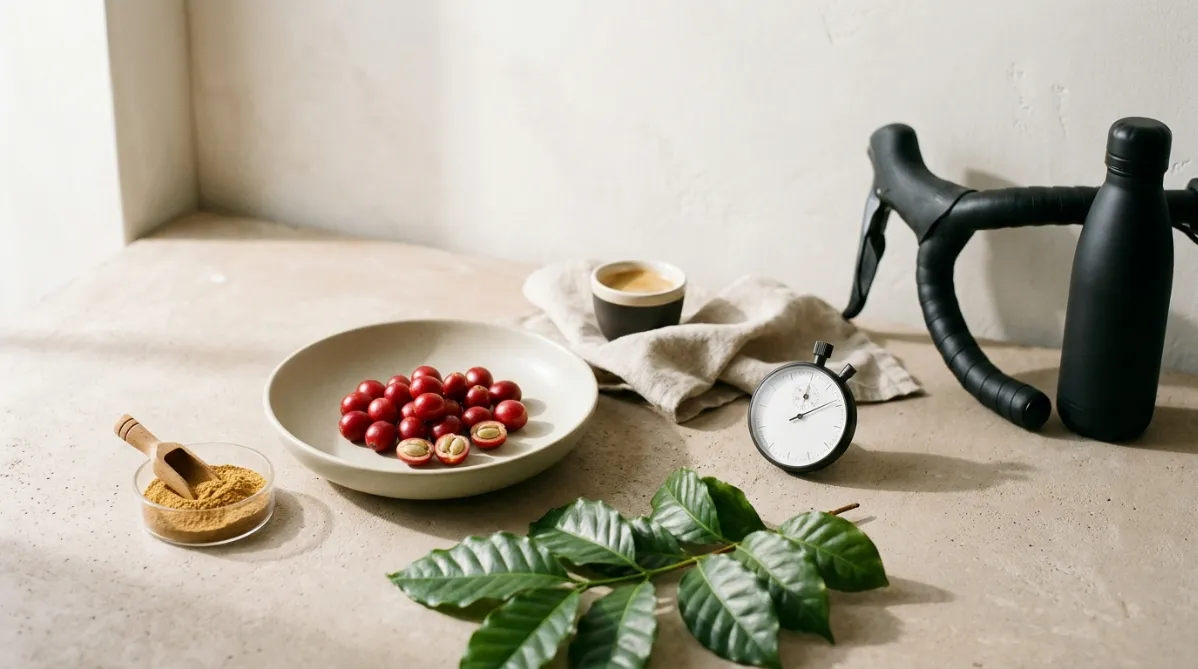
A wide editorial still life on a pale, warm-toned concrete surface in soft morning window light. In the center-left, a shallow matte ceramic bowl holds a small pile of bright red coffee cherries with glossy skins, a few sliced open to reveal pale mucilage and paired green-tan beans. Beside it, a small glass dish of fine, golden-brown powdered extract with a tiny wooden scoop resting on its edge. A sprig of coffee plant leaves, deep green and waxy, arcs across the foreground.

On the right side, slightly out of focus, a sleek road cyclist's handlebar and a matte black water bottle lean against a light plaster wall, suggesting athletic training without showing a person. A minimalist analog stopwatch with a clean white face and thin black hands sits in the mid-ground, angled toward the camera, its hands paused near the fifteen-minute mark. A folded linen cloth in oatmeal beige and a single small espresso cup with a thin crema ring add quiet texture.

The color palette is restrained and modern: cherry red, sage green, cream, soft terracotta, and charcoal accents. Light comes from the left, casting long, gentle shadows with a subtle warm glow and a hint of dust in the air. Shallow depth of field with crisp focus on the cherries and stopwatch, creamy bokeh in the background. Composition leaves open negative space in the upper right for a headline overlay. The overall feel is a clean, trendy health-and-science magazine cover: tactile, natural, minimal, and calm, shot in a 16:9 landscape frame with fine film-like grain and true-to-life tones.
nutrition

مستخلص حبة القهوة: جرعة 200 ملغ كافيين تعزز أداء الدراجين بنسبة 4.6 ٪

BY DR. GYMBRO ·

أظهرت جرعة منخفضة من الكافيين (200 ملغ) المستخلصة من حبة القهوة الكاملة قدرة الدراجين المدربين على زيادة عملهم بنسبة 4.6 ٪ خلال اختبار زمني مدته 15 دقيقة. ومع ذلك، لم تثبت الفرضية القائلة بأن ذلك يسرّع إعادة تعبئة الجليكوجين. اشتمل الاختبار العشوائي المزدوج التعمية المتقاطع على 12 دراجًا فقط وممولًا من الصناعة، دون مجموعة مقارنة مع جرعة كافيين عادية. إليكم ما أظهرته البيانات، وما لم تُظهره، ومن قد يرغب في تجربة هذا المكمل.

A wide, editorial-style flat lay photographed from above on a pale warm-gray linen surface in soft natural window light. At the center, a small open amber glass jar tips gently onto its side, spilling a few cream-colored capsules across the fabric. Next to the jar sits a loose arrangement of fresh mushrooms: a cluster of golden-tan reishi with glossy, lacquered caps, a few slender white enoki stems, a halved shiitake showing its pale gills, and a curl of turkey tail with concentric bands of rust, cream, and charcoal. A small wooden scoop holds a pile of fine beige mushroom powder.

On the left third of the frame, a matte black sports watch with a minimal face lies beside a folded sage-green running shirt and a pair of lightweight off-white running shoes, hinting at athletic training without showing a person. A slim white notebook with a single pencil rests nearby, open to a blank page with a faint hand-drawn line graph trending upward, in thin graphite strokes.

On the right side, a pair of clear glass beakers and a single small petri dish with a soft amber-tinted liquid add a subtle laboratory note, kept calm and organic. A single sprig of dried herbs and a few scattered oat-colored grains add texture.

The palette is earthy and refined: oatmeal, soft sage, terracotta, warm amber, and charcoal accents against the muted neutral background. Shadows are soft and diffused, with a gentle highlight on the glass and the glossy reishi cap. The composition leaves generous negative space in the upper right for a headline overlay. Shallow depth of field blurs the edges slightly, while the central mushrooms and capsules stay crisp. The overall feel is modern, clean, and trendy, like a wellness and science magazine cover, with tactile natural textures, minimal styling, and a quiet sense of curiosity and skepticism.
science research

كبسولة الفطر رفعت VO2max بنسبة 14.8% — لكن هناك عقبة كبيرة

BY DR. GYMBRO ·

كبسولة فطر لمدة 40 يوماً، وزيادة بنسبة 14.8 % في VO2max تبدو شبه خيال يصعب تصديقه. في ورقة جديدة نشرت في مجلة *Antioxidants* ارتفع متوسط VO2max لـ 50 رياضياً شاباً من 46.26 إلى 53.12 مل/كغ/دقيقة بعد تناول 320 ملغ يوميًا من مستخلص فطر غني بالبيتا‑جلوكان. المشكلة الكبيرة هي عدم وجود مجموعة دواء وهمي (placebo)، ولا عشوائية ولا تمويه، وكان الرياضيون مستمرين في التدريب طوال الفترة. التجارب الخلوية على خلايا قلب الفئران أضافت إشارة متعلقة بنقص الأكسجين، لكنها اختبرت مركبات منفصلة وليس الكبسولة نفسها. إليكم ما أكده الدراسة، وما لا يمكنه إظهاره، ومن ينبغي أن يتريّث قبل الاستخدام.

Wide landscape editorial photograph of a mountain biker mid-ride on a dusty red-orange singletrack trail in the South African Western Cape, golden hour light raking across the scene. The rider is in sharp focus on the right third of the frame, wearing a weathered cycling kit with a race number plate on the handlebars, dust kicking up from the rear tire. Behind them, rolling hills covered in fynbos shrubland and silhouetted protea plants fade into soft, hazy blue mountains. Warm amber sunlight creates long shadows and a soft rim light around the rider and bike.

In the lower left foreground, slightly out of focus, a small minimalist glass vial and a clear water bottle sit on a flat sun-bleached rock, with a few drops of liquid catching the light. Next to them, a simple matte paper notecard and a pencil suggest data collection, with no legible text. The vial and bottle are clean, understated, and modern, with no branding.

The color palette is earthy and refined: terracotta, ochre, sage green, dusty teal sky, and cream highlights. The composition uses shallow depth of field, a generous negative space in the upper left sky for headline overlay, and subtle film grain. The mood is contemplative, skeptical, and quietly sophisticated, like a feature photograph from a high-end outdoor sports and science magazine. Natural, candid, cinematic, shot on a 50mm lens with soft contrast and muted saturation. No futuristic elements, no glowing effects, no molecular graphics, no text.
science research

كيتون IQ يرفع مستويات الكيتون في سباق كيب إيبك لكنه لا يضيف أي فائدة

BY DR. GYMBRO ·

قضى المتسابقون في سباق كيب إيبك ذو الثمانية أيام ما يقرب من مائة كيلومتر من الطرق الوعرة في جنوب أفريقيا، وتناولوا مشروب كيتون IQ مرتين يوميًا، فأرتفعت مستويات الكيتون في الدم إلى نحو 1 مليمول. ومع ذلك، لم يتغير مستوى التعب، ولا معدل ضربات القلب، ولا زمن الاستجابة، ولا جودة الاستشفاء مقارنةً بالمجموعة التي تناولت دواءً وهميًا. أجرت التجربة ذات التعمية المزدوجة اختبارًا للـ R‑1,3‑بوتانديول في ظروف سباق حقيقية، وليس في المختبر. يوضح المؤلفون أن الكيتوزية المعتدلة لم تُظهر أي فائدة، ويؤكدون أن البوتانديول ليس هو نفسه الإستر الكيتوني.

This page is available in