Dr. Gymbro
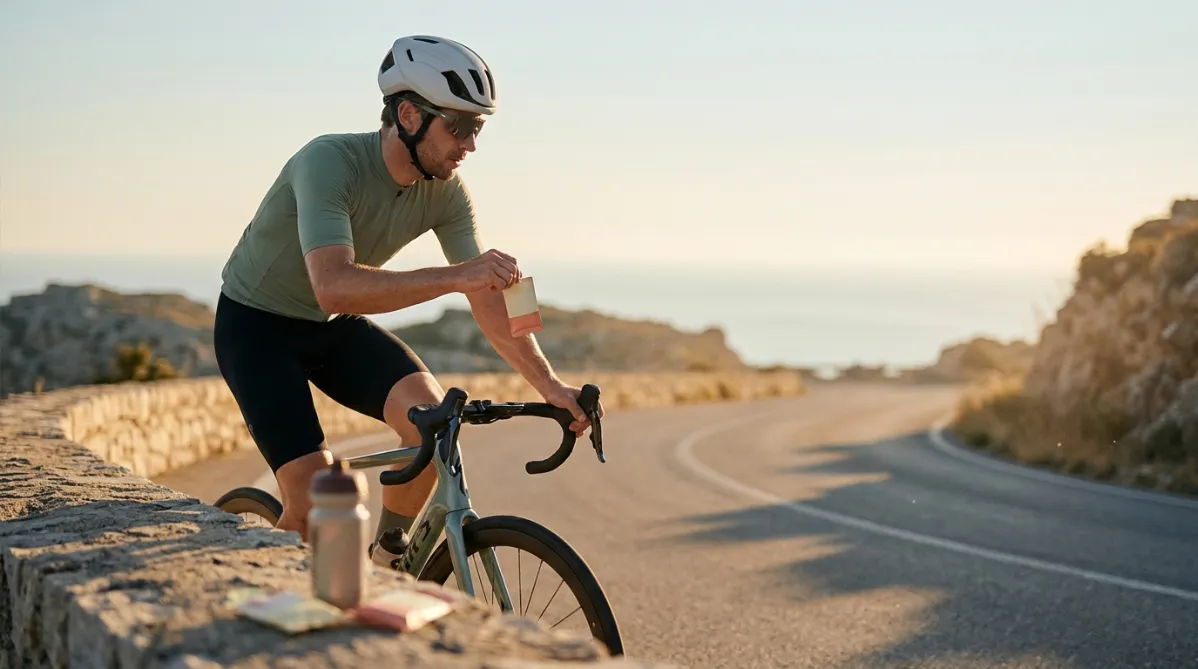
A cyclist in profile, riding a sleek road bike along a quiet coastal road in warm golden-hour light, shot from a low side angle with a shallow depth of field. The rider wears a muted sage-green jersey, black bib shorts, a matte white helmet, and sunglasses. Their face shows calm, focused fatigue, with a faint sheen of sweat on the forearms. One hand is lifted slightly from the handlebars, holding a small, unbranded matte gel packet in soft cream and coral tones, just before opening it. The road curves gently behind them toward a hazy, softly blurred horizon of pale sea and distant hills, with long amber shadows stretching across the asphalt.

In the foreground, slightly out of focus, a few gel sachets and a bike bottle rest on a weathered stone wall at the left edge of the frame, adding editorial depth. Fine dust and sunlight glow in the air. The palette is warm and restrained: butter yellow, soft peach, sage, and slate blue, with gentle film-like grain. The composition leaves open negative space in the upper right, a pale gradient sky, for headline overlay. The overall look is a modern, minimalist sports-science magazine photograph: natural, premium, and clean, with realistic textures, cinematic but understated color grading, and no text, logos, or graphics.
Nutrition

炭酸水素ナトリウムジェルを途中で摂取、3時間サイクリング後の12分TTで12 W増加

Dr. Gymbro · · 1 min read

炭酸水素ナトリウムジェルを途中で摂取、3時間サイクリング後の12分TTで12 W増加

背景

ハードな努力の前にベーキングソーダ系のバッファー(炭酸水素ナトリウム)を摂取できることは広く知られていますが、長時間のライド中に摂取した場合の効果を調べた研究はほとんどありません。そこで、訓練されたサイクリストを対象に行われたヒトクロスオーバー試験が、興味深い結果を示しました:3時間のサイクリング後の12分タイムトライアルで+12 Wという効果です。スプリントや2分TTでは変化が見られず、サンプル数はごく少数でした。

本研究の意義

  • 炭酸水素ナトリウム(以下、BICARB)は、1〜60分間の高強度運動に対して有効性が報告されていますが、従来は事前摂取に焦点が当てられてきました。
  • 本研究は、運動中に BICARB を摂取し、長時間の運動で生じるパワー低下(いわゆる“耐久性”)を抑制できるかを初めて検証したものです。
  • 結果は Scandinavian Journal of Medicine & Science in Sports(Norte et al., 2026)に掲載され、炭酸水素ナトリウムと炭水化物を組み合わせたジェル形態の効果が示されました。

実験デザイン

  • ベースライン測定:非疲労状態でのパワープロファイル(6秒スプリント×3、2分TT、12分TT)を取得。
  • 2つの試験条件(クロスオーバー設計)
    • CHO:炭水化物のみ(80 g/h)
    • CHO + BI:炭水化物(80 g/h)+炭酸水素ナトリウム 18 g と炭酸水素カリウム 2 g を混合したジェル
  • サイクル:95% ガス交換閾値(VT)での3時間サイクリングを実施。
  • テスト:ライド終了後、ベースラインと同様のパワープロファイルを再度測定し、疲労状態でのパフォーマンスを評価。

主な結果

  • 12分タイムトライアル:CHO + BI で 12 W 高出力(p = 0.01、Hedges' g = 1.07)。効果量が大きく、唯一統計的に有意な改善です。
  • その他の指標:
    • 6秒スプリント:+12 W(p = 1.00、g = 0.18)
    • 2分TT:+6 W(p = 0.888、g = 0.32) いずれも効果量が小さく、実用的な利益とは言えませんでした。
  • 胃腸症状:条件間で有意差はなく、特に不快感は報告されませんでした。炭水化物ジェルに少量ずつ混合したことが容認性向上に寄与したと考えられます。

実践的な考察

  • 使用した用量:3時間のライドで炭酸水素ナトリウム 18 g、炭酸水素カリウム 2 g、炭水化物 80 g/h をジェルとして摂取。時間で割ると約 6 g/h の BICARB(≒5 g のナトリウム)に相当します。
  • 摂取タイミング:レース前の「ボリューム」摂取ではなく、運動中の給餌計画の一部として均等に与えることが推奨されます(本研究では3時間を通して均等に投与したと想定)。
  • 適応しやすい選手像:
    • 高炭水化物率で給餌している訓練サイクリスト、トライアスリート、ロングコース選手
    • レース終盤に10〜15分の持続的ハードセグメントがある人
    • まずはトレーニングで十分にテストできる人
  • 注意すべき対象:
    • ナトリウム制限が必要、または血圧・腎臓・心臓に問題がある人は必ず医師に相談
    • 過去に胃腸トラブルがあり、BICARB プロトコルを未経験の人
    • スプリントや短時間イベントを主に対象とする選手(本研究では有意な効果が見られません)
    • 魔法のような効果を期待する人:本試験はサンプルが小さい単一研究です。

限界点

  • サンプルサイズ:11名の訓練サイクリストのみ。女性や異なるレベルの選手への再現が必要です。
  • 効果の限定性:有意だったのは12分TTのみで、スプリントや2分TTでは改善が見られませんでした。
  • プロトコルの特殊性:95% VTでの3時間、80 g/h 炭水化物という条件はすべてのレースに当てはまるわけではありません。
  • スポンサー:栄養製品は MNSTRY、血液分析装置は Siemens Healthineers が提供。研究者は両社が研究設計・解析・出版決定に関与していないと明言しています。1名の著者は Precision Fuel & Hydration に所属しています。
  • ラボ設定:コントロールされたライド後のタイムトライアルは実戦の混沌とは異なる点に留意が必要です。

結論

長時間サイクリング中に炭酸水素ナトリウムを摂取した初めての試みで、12分TTにおいて 12 W の遅延効果 が得られ、胃腸症状は増加しませんでした。期待できる点はあるものの、サンプルが小さく効果が限定的であることから、エンデュランスアスリートが導入を検討する際は、資格のある専門家と相談し、トレーニングで十分に検証した上で使用することが重要です。万能なパフォーマンス向上策とは捉えず、あくまで一つの補助手段として位置づけましょう。
Original study

Read the original research on pubmed.ncbi.nlm.nih.gov →

This article summarizes published research for general information. It is not medical advice.

DG

Written by

Dr. Gymbro

Dr. Gymbro writes for Dr. Gymbro: science-backed fitness, nutrition & performance.

Related Articles

A cyclist in mid-ride, photographed from a low three-quarter side angle on a quiet country road at golden hour, wearing a matte navy jersey and a white helmet, with soft warm light catching the sweat on his forearms. His expression is calm and focused. The road bends gently through rolling green fields, and the background is softly blurred with creamy bokeh.

In the foreground on the left, a styled flat-lay-inspired still life sits on a weathered wooden surface and blends into the scene. It includes two clear water bottles with pale citrus-tinted liquid, a few torn energy gel packets in muted coral and sage, and a small pile of dried apricots and sliced banana. A handful of glossy orange slices adds a bright accent. The shallow depth of field keeps the cyclist sharp in the middle distance while the foreground items are gently softened.

The color palette is warm and editorial: soft peach, muted terracotta, sage green, cream, and deep navy. The light is natural and golden, with long, gentle shadows and a slight film-grain texture, like a high-end lifestyle or sports-science magazine spread. The composition follows the rule of thirds, with the cyclist on the right third and open negative space in the upper left, suitable for headline overlay.

The mood is energetic yet thoughtful, clean and modern, and the photograph feels authentic rather than staged. There are no logos, no readable text, and no futuristic or sci-fi elements. The overall look is crisp, airy, and refined, in the style of a contemporary health and performance journal cover.
nutrition

1時間あたり100 gの炭水化物でサイクリストは速くなった――グリコーゲンは関与しなかった

BY COACH RYAN ·

ハードなライドから4時間経過後、1時間あたり100 gの炭水化物を補給したサイクリストは、60 gだけ摂取した人に比べてパワーダウンが小さく抑えられた。驚くべきは、両群の筋肉グリコーゲン量がほぼ同等だったことだ。15名の訓練された男性選手を対象にした無作為・二重盲検クロスオーバー試験は、グリコーゲン以外の要因がパフォーマンス向上に寄与した可能性を示唆している。本稿では実験結果と1 : 0.8のブドウ糖‑果糖プロトコル、実践への応用方法を解説し、対象外となるケースやサンプルが男性のみで小規模だったことの意味合いも検討する。

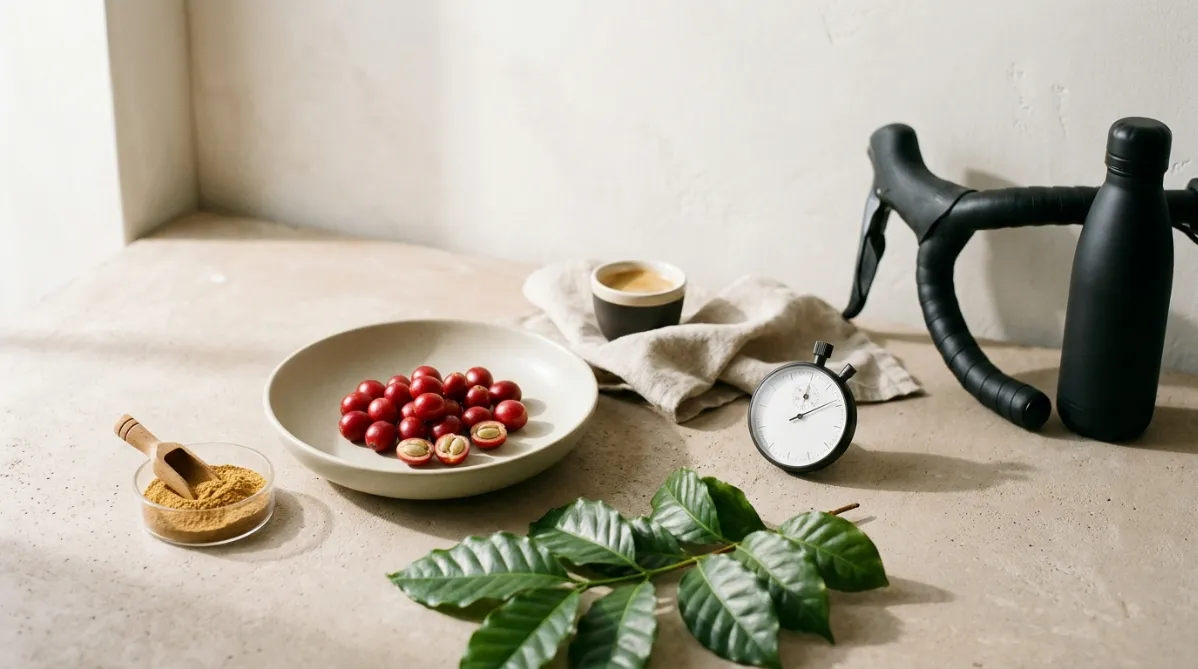
A wide editorial still life on a pale, warm-toned concrete surface in soft morning window light. In the center-left, a shallow matte ceramic bowl holds a small pile of bright red coffee cherries with glossy skins, a few sliced open to reveal pale mucilage and paired green-tan beans. Beside it, a small glass dish of fine, golden-brown powdered extract with a tiny wooden scoop resting on its edge. A sprig of coffee plant leaves, deep green and waxy, arcs across the foreground.

On the right side, slightly out of focus, a sleek road cyclist's handlebar and a matte black water bottle lean against a light plaster wall, suggesting athletic training without showing a person. A minimalist analog stopwatch with a clean white face and thin black hands sits in the mid-ground, angled toward the camera, its hands paused near the fifteen-minute mark. A folded linen cloth in oatmeal beige and a single small espresso cup with a thin crema ring add quiet texture.

The color palette is restrained and modern: cherry red, sage green, cream, soft terracotta, and charcoal accents. Light comes from the left, casting long, gentle shadows with a subtle warm glow and a hint of dust in the air. Shallow depth of field with crisp focus on the cherries and stopwatch, creamy bokeh in the background. Composition leaves open negative space in the upper right for a headline overlay. The overall feel is a clean, trendy health-and-science magazine cover: tactile, natural, minimal, and calm, shot in a 16:9 landscape frame with fine film-like grain and true-to-life tones.
nutrition

コーヒーチェリーエキス:200 mg カフェインでサイクリング出力が4.6%向上

BY DR. GYMBRO ·

全体のコーヒーチェリーエキスから得られる低用量200 mgのカフェインが、訓練されたサイクリストの15分タイムトライアルで作業量を4.6 %増加させました。しかし、グリコーゲン再合成を促進するという一般的な考えは裏付けられませんでした。このランダム化二重盲検クロスオーバー試験は12名のサイクリストを対象とし、業界から資金提供を受けましたが、純粋なカフェインとの比較群は設けられていませんでした。データが示すこと、示さないこと、そして誰が試すべきかをご紹介します。

A wide, editorial-style flat lay photographed from above on a pale warm-gray linen surface in soft natural window light. At the center, a small open amber glass jar tips gently onto its side, spilling a few cream-colored capsules across the fabric. Next to the jar sits a loose arrangement of fresh mushrooms: a cluster of golden-tan reishi with glossy, lacquered caps, a few slender white enoki stems, a halved shiitake showing its pale gills, and a curl of turkey tail with concentric bands of rust, cream, and charcoal. A small wooden scoop holds a pile of fine beige mushroom powder.

On the left third of the frame, a matte black sports watch with a minimal face lies beside a folded sage-green running shirt and a pair of lightweight off-white running shoes, hinting at athletic training without showing a person. A slim white notebook with a single pencil rests nearby, open to a blank page with a faint hand-drawn line graph trending upward, in thin graphite strokes.

On the right side, a pair of clear glass beakers and a single small petri dish with a soft amber-tinted liquid add a subtle laboratory note, kept calm and organic. A single sprig of dried herbs and a few scattered oat-colored grains add texture.

The palette is earthy and refined: oatmeal, soft sage, terracotta, warm amber, and charcoal accents against the muted neutral background. Shadows are soft and diffused, with a gentle highlight on the glass and the glossy reishi cap. The composition leaves generous negative space in the upper right for a headline overlay. Shallow depth of field blurs the edges slightly, while the central mushrooms and capsules stay crisp. The overall feel is modern, clean, and trendy, like a wellness and science magazine cover, with tactile natural textures, minimal styling, and a quiet sense of curiosity and skepticism.
science research

キノコカプセルでVO2maxが14.8%上昇――しかし大きな落とし穴がある

BY DR. GYMBRO ·

キノコのカプセルを40日間摂取し、VO2maxが14.8%上昇したという結果は夢のように聞こえます。『Antioxidants』に掲載された論文では、18〜22歳の男性アスリート50名が1日320 mgのベータグルカン豊富なマルチキノコ抽出物を摂取し、VO2maxが46.26 → 53.12 mL/kg/minへ上がったと報告されています。ただし、プラセボ群がなく、無作為化・二重盲検も行われていない点や、参加者が訓練を継続していたことなど、解釈に注意が必要です。

Wide landscape editorial photograph of a mountain biker mid-ride on a dusty red-orange singletrack trail in the South African Western Cape, golden hour light raking across the scene. The rider is in sharp focus on the right third of the frame, wearing a weathered cycling kit with a race number plate on the handlebars, dust kicking up from the rear tire. Behind them, rolling hills covered in fynbos shrubland and silhouetted protea plants fade into soft, hazy blue mountains. Warm amber sunlight creates long shadows and a soft rim light around the rider and bike.

In the lower left foreground, slightly out of focus, a small minimalist glass vial and a clear water bottle sit on a flat sun-bleached rock, with a few drops of liquid catching the light. Next to them, a simple matte paper notecard and a pencil suggest data collection, with no legible text. The vial and bottle are clean, understated, and modern, with no branding.

The color palette is earthy and refined: terracotta, ochre, sage green, dusty teal sky, and cream highlights. The composition uses shallow depth of field, a generous negative space in the upper left sky for headline overlay, and subtle film grain. The mood is contemplative, skeptical, and quietly sophisticated, like a feature photograph from a high-end outdoor sports and science magazine. Natural, candid, cinematic, shot on a 50mm lens with soft contrast and muted saturation. No futuristic elements, no glowing effects, no molecular graphics, no text.
science research

ケトンIQはケープエピックで血中ケトン体を上げたが、その他に効果はなかった

BY DR. GYMBRO ·

8日間にわたる南アフリカの過酷なシングルトラックを走り、選手は1日2回プレミアムケトン飲料を摂取したが、血中ケトン体は約1 mMに上がったものの、疲労感や心拍数、反応速度、回復状況はプラセボ群と同じだった。研究はR‑1,3‑ブタンジオール(BDO)を実際のレース環境でテストし、血中ケトン体の上昇が効果につながらないことを示した。著者らは、BDOはケトンエステルとは別物であり、両者を混同すべきでないと指摘している。参加者がわずか18名という小規模な調査である点は留意が必要だが、高価なケトンドリンクを回復目的で検討している人にとっては重要なデータとなるだろう。

This page is available in