Dr. Gymbro
←

#leucine

2 articles
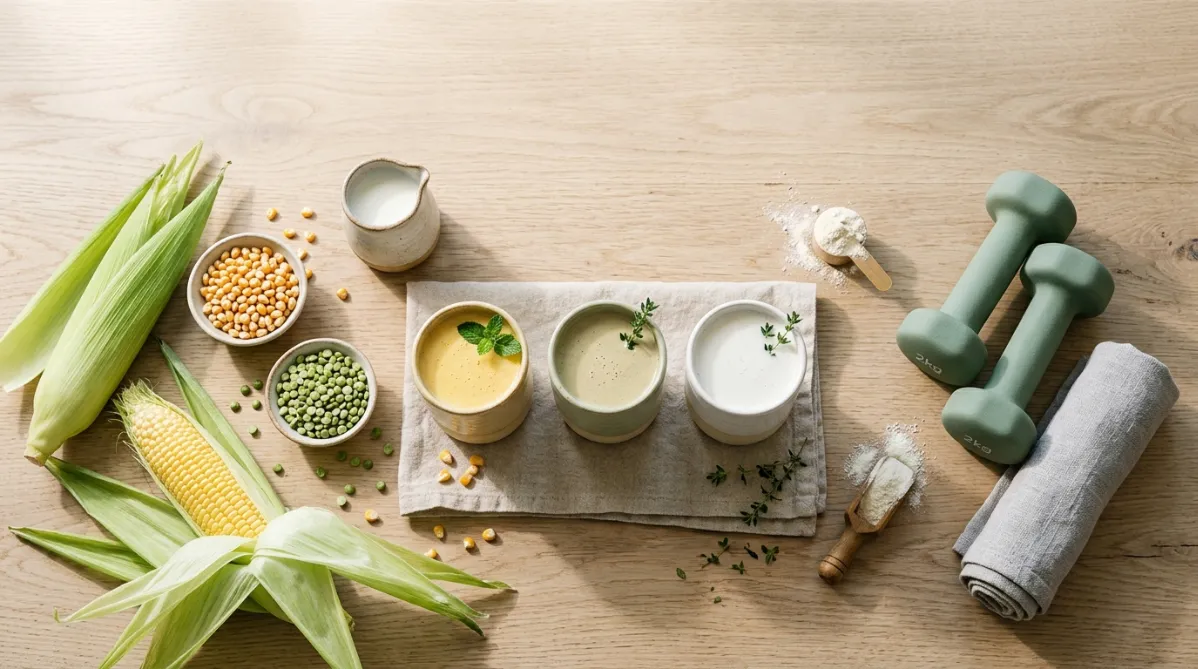
A bright, airy overhead flat-lay on a pale oak wooden table in soft morning daylight. At the center, three matching ceramic glasses in a neat row, each holding a creamy shake in a slightly different tone: one warm golden-yellow, one soft sage green-beige, one pure milky white. Beside the glasses, small shallow ceramic bowls hold the raw sources: dried yellow corn kernels, split green peas, and a small pitcher of fresh milk. A few fresh corn husks and a single ear of corn with pale green leaves are arranged diagonally across the left side of the frame, while a sprig of fresh herbs adds a touch of green. On the right, a pair of matte sage-green dumbbells and a rolled linen towel suggest light resistance exercise, placed with calm, editorial restraint. A linen napkin, a wooden scoop dusted with fine powder, and a few scattered kernels add natural texture. The color palette is warm cream, butter yellow, muted sage, and soft white, with gentle natural shadows falling to the lower right. Shallow depth of field, clean negative space at the top for headline overlay, minimalist modern magazine styling, crisp food-photography look, subtle film-like grain, wide landscape composition.
nutrition

A proteína vegetal que acabou de igualar o leite na síntese muscular

BY DR. GYMBRO ·

A proteína vegetal costuma ser considerada inferior ao leite na construção muscular, mas um novo estudo com idosos mostrou que a proteína de milho não recebeu esse alerta. Em um ensaio randomizado com 48 adultos saudáveis, em média com 68 anos, 20 g de proteína de milho, uma mistura de ervilha e milho e a proteína do leite aumentaram a síntese de proteína muscular muito além do placebo, sem diferenças entre os grupos de proteína. O exercício de resistência potencializou a resposta em todos os grupos. A seguir, a dose, os números, quem pode se beneficiar e as ressalvas antes de trocar seu shake.
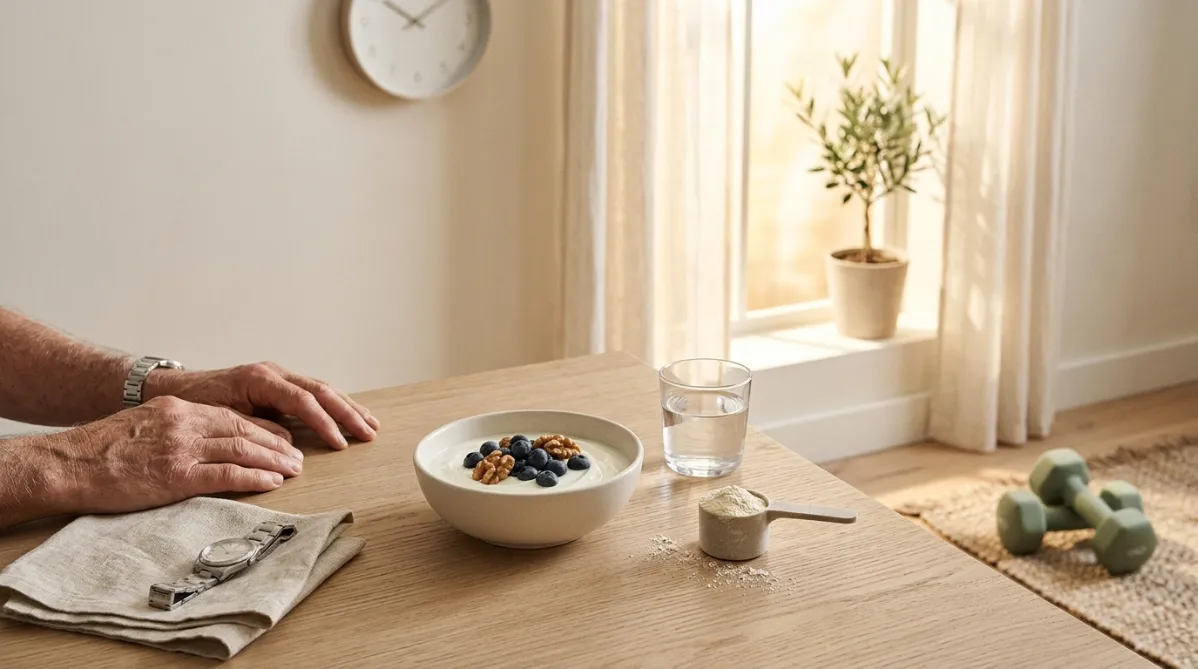
A landscape editorial photograph of a sunlit kitchen table in soft morning light, styled like a modern wellness journal cover. In the center sits a simple white ceramic bowl of plain Greek yogurt topped with walnuts and blueberries. Beside it are a small glass of water and a matte stone scoop holding a pale powder, with a few loose grains scattered on a light oak surface. To the left, a pair of weathered hands, clearly an older man's with silver hair on the wrist, rests near a neatly folded linen napkin and a slim stainless steel wristwatch. To the right, a pair of modest hex dumbbells in muted sage green sits on a woven rug at the edge of the frame, slightly out of focus, hinting at strength training. In the background, a tall window with sheer curtains lets in warm golden light, and a small potted olive plant stands on the sill. A minimalist analog clock on the wall is softly blurred, suggesting fasting windows without being literal. The palette is calm and earthy: warm cream, oatmeal, sage green, soft terracotta, and pale wood tones. The composition uses generous negative space on the upper left for headline overlay, shallow depth of field, and gentle natural shadows. The style is clean, contemporary, and slightly muted, like a lifestyle magazine or health journal feature, shot on a 50mm lens with soft film-like grain. Calm, thoughtful, and quietly authoritative, with no text, logos, or futuristic elements.
nutrition

Leucina vs Proteína em Dietas de Jejum: Resultado Surpreendente em Homens Mais Velhos

BY DR. GYMBRO ·

A leucina costuma ser chamada de “interruptor mestre” dos músculos, por isso se esperava que protegesse os atletas mais velhos em dietas de jejum. Contudo, em um estudo randomizado de 28 dias com 61 homens mais velhos submetidos a jejum em dias alternados, os suplementos de leucina e de proteína não apresentaram vantagem sobre o grupo controle. Todos os grupos melhoraram força, função, pressão arterial e marcadores de colesterol. Veja as doses testadas, quem ainda pode se beneficiar, quem pode dispensar e as limitações do estudo.

This page is available in