Dr. Gymbro
←

#leucine

2 articles
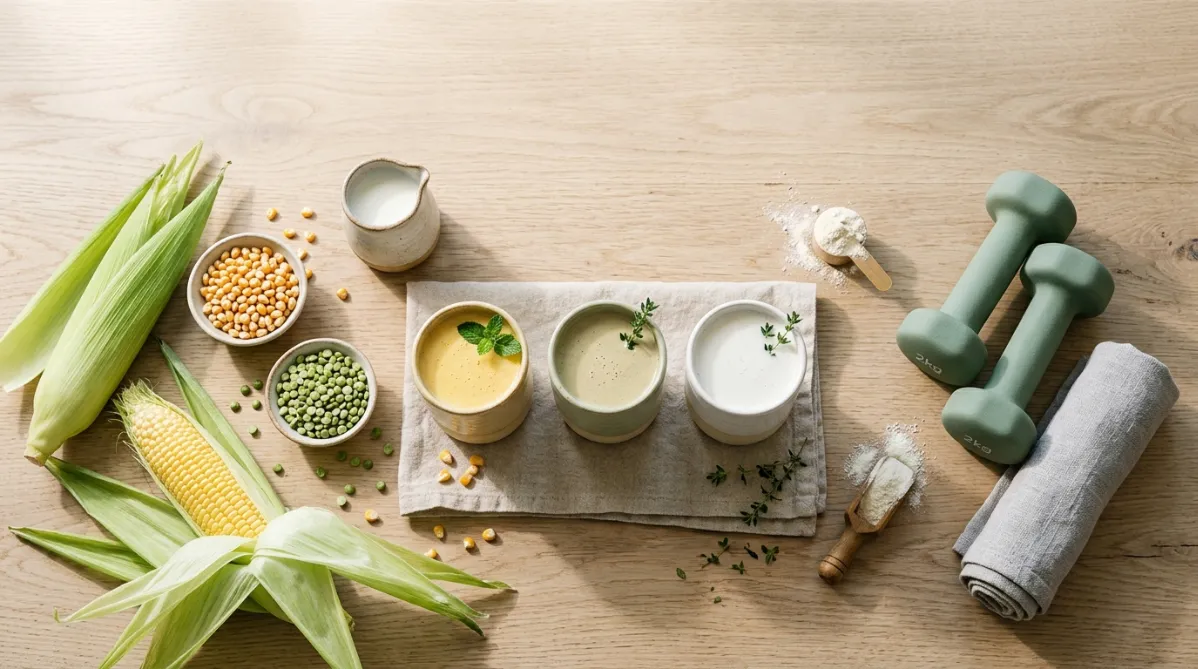
A bright, airy overhead flat-lay on a pale oak wooden table in soft morning daylight. At the center, three matching ceramic glasses in a neat row, each holding a creamy shake in a slightly different tone: one warm golden-yellow, one soft sage green-beige, one pure milky white. Beside the glasses, small shallow ceramic bowls hold the raw sources: dried yellow corn kernels, split green peas, and a small pitcher of fresh milk. A few fresh corn husks and a single ear of corn with pale green leaves are arranged diagonally across the left side of the frame, while a sprig of fresh herbs adds a touch of green. On the right, a pair of matte sage-green dumbbells and a rolled linen towel suggest light resistance exercise, placed with calm, editorial restraint. A linen napkin, a wooden scoop dusted with fine powder, and a few scattered kernels add natural texture. The color palette is warm cream, butter yellow, muted sage, and soft white, with gentle natural shadows falling to the lower right. Shallow depth of field, clean negative space at the top for headline overlay, minimalist modern magazine styling, crisp food-photography look, subtle film-like grain, wide landscape composition.
nutrition

La proteína vegetal que igualó a la leche en la síntesis muscular

BY DR. GYMBRO ·

Se suele pensar que la proteína vegetal queda rezagada frente a la leche a la hora de ganar músculo, pero un reciente ensayo en adultos mayores muestra que la proteína de maíz no se queda fuera del partido. En un estudio aleatorizado con 48 personas sanas, de alrededor de 68 años, 20 g de proteína de maíz, una combinación de guisante‑maíz y la proteína de leche aumentaron la síntesis de proteína muscular (MPS) mucho más que el placebo, sin diferencias significativas entre los grupos con proteína. El ejercicio de resistencia potenció la respuesta en todos los casos. Aquí tienes la dosis, los números, a quién podría interesar y las advertencias que debes considerar antes de cambiar tu batido.
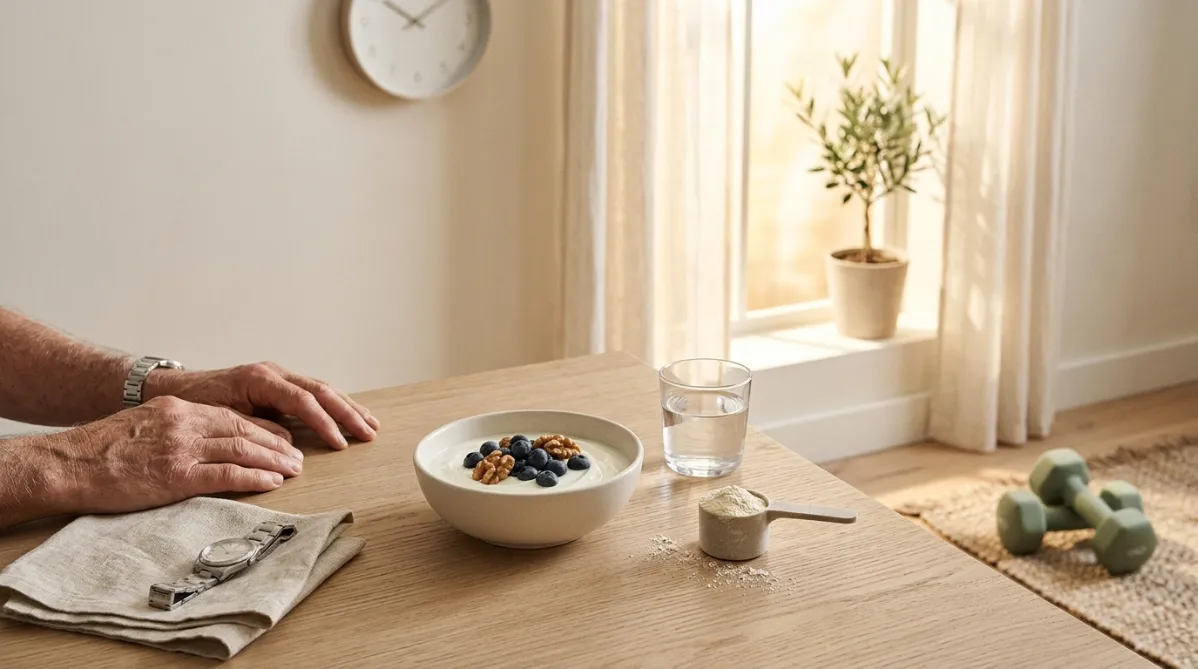
A landscape editorial photograph of a sunlit kitchen table in soft morning light, styled like a modern wellness journal cover. In the center sits a simple white ceramic bowl of plain Greek yogurt topped with walnuts and blueberries. Beside it are a small glass of water and a matte stone scoop holding a pale powder, with a few loose grains scattered on a light oak surface. To the left, a pair of weathered hands, clearly an older man's with silver hair on the wrist, rests near a neatly folded linen napkin and a slim stainless steel wristwatch. To the right, a pair of modest hex dumbbells in muted sage green sits on a woven rug at the edge of the frame, slightly out of focus, hinting at strength training. In the background, a tall window with sheer curtains lets in warm golden light, and a small potted olive plant stands on the sill. A minimalist analog clock on the wall is softly blurred, suggesting fasting windows without being literal. The palette is calm and earthy: warm cream, oatmeal, sage green, soft terracotta, and pale wood tones. The composition uses generous negative space on the upper left for headline overlay, shallow depth of field, and gentle natural shadows. The style is clean, contemporary, and slightly muted, like a lifestyle magazine or health journal feature, shot on a 50mm lens with soft film-like grain. Calm, thoughtful, and quietly authoritative, with no text, logos, or futuristic elements.
nutrition

Leucina vs. Proteína en Dietas de Ayuno: Un Resultado Sorprendente en Hombres Mayores

BY DR. GYMBRO ·

La leucina, conocida como el "interruptor maestro" del músculo, debería proteger a los levantadores de edad avanzada que siguen dietas de ayuno. Un ensayo aleatorio de 28 días con 61 hombres mayores en ayuno intermitente comparó suplementos de leucina y proteína con un grupo control. La fuerza, la función, la presión arterial y los marcadores de colesterol mejoraron en todos los grupos, y los suplementos no aportaron una ventaja medible en la mayoría de los resultados. Aquí se detallan las dosis probadas, quién podría seguir beneficiándose, quién puede prescindir de ellas y las principales limitaciones del estudio.

This page is available in