Dr. Gymbro
←

Nutrition

50 articles
nutrition

20 g de whey n'ont pas stimulé la synthèse musculaire chez les hommes âgés

BY DR. GYMBRO ·

Dans une étude de Maastricht portant sur 45 hommes d'environ 69 ans, le whey, les protéines végétales et les mélanges végétaux enrichis en leucine n'ont pas différé en termes de synthèse des protéines musculaires. Malgré des concentrations sanguines d'acides aminés variables – le whey étant le plus élevé et le mélange enrichi en leucine affichant le pic de leucine – aucune dose n’a dépassé le niveau basal à jeun. La leçon principale : la quantité de protéine compte davantage que sa source chez les seniors.

nutrition

HMB pendant la coupe : les personnes au régime conservent leur muscle et perdent 5 kg de graisse supplémentaire

BY DR. GYMBRO ·

Des personnes suivant un régime hypocalorique et consommant un shake enrichi en CaHMB pendant 12 semaines ont maintenu leur masse musculaire et éliminé environ 5 kg de graisse en plus par rapport à un groupe placebo. Ce résultat, l’un des plus marquants observés pour un supplément chez une population en restriction calorique, provient d’un essai en double‑aveugle portant sur 102 adultes obèses. La graisse viscérale, le métabolisme de base et la glycémie à jeun ont également évolué favorablement, même si le shake contenait 24 g de protéines alors que le contrôle était uniquement du glucide, ce qui empêche d’attribuer tous les bénéfices au HMB seul.

nutrition

12 semaines de 715 mg de DHA réduisent les courbatures post‑entraînement : le hic

BY DR. GYMBRO ·

Un essai de 12 semaines mené chez des personnes s’entraînant au moins cinq jours par semaine a montré que 715 mg/jour de DHA microencapsulé augmentait l’Omega‑3 Index d’environ 2,4 points. Les courbatures étaient plus faibles à 24 et 48 heures après un cyclisme excentrique très intense, et la hauteur de saut s’est mieux récupérée à 48 heures, avec une taille d’effet modérée. Mais il ne s’agit pas d’un hack de récupération aigu : les bénéfices n’apparaissent qu’après trois mois de prise quotidienne. L’essai était petit (38 participants) et les groupes étaient inégaux (12 contrôles, 26 DHA), donc les résultats restent prometteurs mais non définitifs. Voici ce que la dose, le calendrier et les mises en garde signifient pour vous.

nutrition

300 mg de caféine ont rendu les footballeurs plus rapides, mais pas plus réactifs

BY DR. GYMBRO ·

Tout le monde suppose que la caféine rend les athlètes plus vifs partout, mais une étude en double‑aveugle menée auprès de footballeurs amateurs montre un tableau plus nuancé. Une dose de 300 mg (≈ 3,7 mg/kg) a amélioré l’agilité planifiée (taille d’effet 0,62) et augmenté la hauteur de saut, tandis que les bénéfices sur l’agilité réactive restent faibles ou non significatifs. Voici les principales conclusions, leur interprétation et les profils qui pourraient réellement en profiter.

nutrition

Boire 60 g de glucides pendant la séance rend‑il plus fort ? Pas vraiment

BY DR. GYMBRO ·

Les boissons glucidiques intra‑entraînement sont omniprésentes, mais augmentent‑elles réellement votre force ? Un essai pilote randomisé, contrôlé par placebo et en cross‑over, portant sur 15 adultes entraînés en résistance, a testé 60 g de maltodextrine pendant une séance de musculation à charge égale. La glycémie a augmenté d’environ 19 mg/dL, alors que le lactate, la force réactive et la force de préhension n’ont montré aucun changement net. Les répétitions d’extension du genou à l’échec étaient environ 2,5 supérieures avec les glucides, mais ce signal provenait de seulement 10 personnes et n’était pas significatif après ajustement. Voici ce que l’étude démontre réellement, qui pourrait encore en bénéficier, et pourquoi il s’agit d’une génération d’hypothèses plutôt que d’un feu vert.

nutrition

Le chocolat noir augmente de 4,3 cm le saut vertical des femmes : cela vous intéresse ?

BY DR. GYMBRO ·

Une étude récente montre que des athlètes féminines de CrossFit ont sauté en moyenne 4,3 cm plus haut après trois jours de consommation de 30 g/jour de chocolat noir à 85 % de cacao, comparé à un placebo. La force du genou s’est aussi améliorée, tandis que la douleur musculaire est restée quasiment inchangée. Les auteurs soulignent que ces effets, bien que remarquables, restent préliminaires et nécessitent une confirmation. Ce résumé passe en revue la dose, le timing, la population étudiée et explique pourquoi il s’agit d’un signal prometteur, et non d’une preuve définitive.
A wide, editorial-style still life shot from a slightly elevated three-quarter angle on a pale oak gym bench, lit by soft morning window light. In the foreground sits a minimalist matte-white glass beaker of clear, faintly amber liquid, with a few condensation droplets on its surface. Beside it rests a small ceramic dish of white crystalline powder and a stainless steel scoop. In the middle ground, a chalk-dusted steel barbell with black bumper plates rests on the bench's edge. A pair of worn leather lifting straps and a small notebook with a pencil lie nearby, suggesting data logging. Behind them, softly blurred, is a bright, airy studio with concrete walls, a wooden plyo box, and a tall leafy plant catching the light.

The palette is warm and muted: cream, sand, soft sage green, and charcoal, with one small accent of burnt orange in the amber liquid and a terracotta towel draped over the bench. Fine chalk dust floats in sunbeams that cut diagonally across the frame. The shallow depth of field keeps the beaker and barbell sharp while the background melts into creamy bokeh. Composition follows the rule of thirds, with the beaker on the left third and generous negative space on the right for headline text. The mood is calm, premium, and contemporary, like a high-end wellness and sports-science magazine photograph with subtle film grain, natural shadows, and realistic textures.
nutrition

Les cétones ont maintenu une production de force 8 % plus élevée, mais les sauts n’ont pas changé

BY DR. GYMBRO ·

Une dose de 50 g de bis‑octanoyl‑(R)-1,3‑butanediol a fait grimper le taux sanguin de cétones à ≈ 2,2 mM et a permis de conserver un taux de développement de la force (RFD) 8 % plus élevé une heure après ingestion, sans aucune amélioration du saut en contre‑mouvement. L’étude, réalisée chez 20 adultes actifs, montre un effet potentiel sur la fatigue de force, mais reste préliminaire.
A bright, modern gym scene in soft natural morning light, shot in landscape with shallow depth of field. In the foreground, a matte white scoop sits on the rim of a minimalist matte-black tub of white powder, with a few fine grains scattered across a light oak wooden bench. Beside it is a clear glass shaker bottle filled with a pale, cloudy liquid, with condensation beads on the surface. In the soft-focus midground, a hack squat machine stands with a loaded barbell sled and stacked plates in brushed steel and black rubber. A lifter in a fitted charcoal t-shirt and shorts, face turned away, is mid-set with strong, defined quads and calves, and a light sheen of sweat catches the sunlight. Tall industrial windows in the background cast long golden light beams across a polished concrete floor, with a hint of green from a potted plant in the corner. The palette is warm and editorial: cream, sage green, charcoal, and a touch of terracotta orange. A small, neat notebook with a pen lies open on the bench, with tally marks hinting at counted reps. The composition follows the rule of thirds, with the supplement and shaker on the lower left, the lifter and machine on the right, and open negative space at the top for headline overlay. The style is clean, contemporary lifestyle photography, like a premium wellness magazine, with subtle film grain, natural color grading, and crisp detail on the foreground objects.
nutrition

8 g de citrulline malate augmentent d’environ 11 répétitions le hack squat – et réduisent les courbatures

BY DR. GYMBRO ·

Une dose de 8 g de citrulline malate prise une heure avant la séance de jambes a permis d’ajouter environ 11 répétitions supplémentaires au hack squat dans une étude croisée en double‑aveugle. Les mêmes athlètes ont aussi déclaré ressentir moins de courbatures à 24 h et 48 h qu’avec le placebo. Curieusement, le lactate sanguin et l’effort perçu sont restés inchangés, de sorte que la séance n’a pas semblé plus facile. Voici qui pourrait en profiter, comment le protocole a été dosé, et pourquoi la petite taille de l’échantillon et le design d’une seule séance imposent de rester prudent.
A wide, editorial-style still life photographed on a pale warm-gray concrete surface in soft morning window light. In the center sits an open, matte white supplement tub with a scoop resting beside it, a small mound of fine white powder spilling onto the surface. Next to it is a clear glass of water with a faint cloudy swirl of dissolved powder. A few loose capsules in muted coral and cream tones are scattered casually in the foreground. Behind them, slightly out of focus, is a clean running track lane in terracotta red with crisp white lines curving across the background. A pair of minimalist off-white sprint spikes rests on the edge of the track, laces loosely undone. A stopwatch with a brushed metal casing lies partially in frame at the right, its face reading a blurred, indistinct time.

The composition uses generous negative space on the left third, leaving a calm area of soft gray and cream for headline text. Shadows are long, gentle, and slightly cool, contrasting with the warm terracotta of the track. The palette is restrained: terracotta, bone white, soft sage green accents from a small leaf sprig tucked near the tub, and charcoal gray details. Shallow depth of field with a crisp focus on the scoop and powder, creamy bokeh behind. The mood is thoughtful, skeptical, and calm, like a modern wellness or science journal cover. Subtle film grain, natural color grading, and a tactile, tangible feel, with no text, no logos, and no futuristic elements.
nutrition

Bêta‑alanine : omniprésente dans les pré‑entraînements, mais aucune efficacité sur les sprints répétés

BY DR. GYMBRO ·

La bêta‑alanine figure dans presque tous les pré‑entraînements, et les sensations de picotement laissent penser qu’elle fonctionne. Pourtant, une méta‑analyse multiniveau de 2026 portant sur 17 essais contrôlés randomisés n’a montré aucun bénéfice sur la capacité de sprint répété, que ce soit en performance moyenne, maximale ou en perte de performance liée à la fatigue. La dose, la durée et le niveau d’entraînement n’ont pas modifié les résultats. Les auteurs suggèrent que la récupération du phosphocréatine, et non l’acidose, constitue la limite principale des sprints répétés, exactement le mécanisme visé par la bêta‑alanine.
A wide, editorial-style still life photographed in soft natural window light on a pale oak or light grey concrete surface. In the center-left, a shallow ceramic bowl filled with plump, dusky blue-black blackcurrants, some with tiny glossy highlights and a few still attached to slender green stems with serrated leaves. Beside the bowl, a matte black dumbbell handle rests diagonally, partially in frame and slightly out of focus, suggesting strength training without a gym setting. In the foreground, two small minimalist glass dishes sit side by side: one holds a small pile of deep purple powder, the other a larger pile, a subtle visual nod to the low versus high dose. A few scattered berries add a natural touch. A folded linen cloth in muted oatmeal tone adds texture, and a single white capsule sits near the dishes for scale.

The background is a soft, creamy off-white wall with gentle shadow gradients from the window, leaving generous negative space on the right third of the frame for title overlay. The color palette is restrained and modern: deep indigo and violet from the berries, warm neutral beige, charcoal black, and touches of fresh leaf green. Shallow depth of field, crisp focus on the berries in the foreground, subtle film grain, and a calm, refined, contemporary magazine aesthetic like a wellness or sports science journal cover. Overhead angle tilted slightly to about 35 degrees, balanced composition, clean and uncluttered, with natural soft shadows and a premium, quietly athletic mood.
nutrition

Cassis pour les haltérophiles : pourquoi la petite dose l’emporte sur la grande

BY DR. GYMBRO ·

Une semaine d’extrait de cassis a augmenté le 1RM au développé couché chez des haltérophiles entraînés ; la petite dose de 250 mg s’avère souvent aussi efficace, voire supérieure, à la dose de 600 mg. La haute dose a fait grimper la puissance au développé de près de 80 W par rapport au placebo, tandis que la petite dose a amélioré les scores du test Stroop. Le placebo a cependant dépassé le groupe sans capsule au leg‑press, ce qui oblige à interpréter ces gains avec prudence. Avec seulement 20 participants et une période de sept jours, il s’agit d’un signal prometteur plutôt que d’une preuve définitive. Voici ce qui tient la route, ce qui reste incertain, et qui pourrait l’essayer.
A bright, airy overhead flat-lay on a pale oak table in soft morning light. On the left, a vibrant plant-based protein spread in ceramic bowls: roasted chickpeas, marinated tofu cubes, lentil salad with herbs, edamame, sliced avocado, and a small dish of pumpkin seeds. On the right, a few contrasting items: a simple plate with grilled chicken breast, a hard-boiled egg halved, and a small bowl of Greek yogurt. Between the two sides, a pair of compact, matte-black hexagonal dumbbells rests on a folded sage-green linen towel, with a simple stainless-steel kitchen scale and a small open notebook with a pencil, suggesting tracking protein intake. A pair of weathered, elegant older hands, silver-haired and mid-60s, reaches in gently to pick up a bowl, with a casual cream knit sleeve visible. Natural window light casts soft diagonal shadows across the table. The palette is warm and muted: sage green, cream, terracotta, soft charcoal, with pops of fresh green and orange from the vegetables. Shallow depth of field, crisp focus on the food and dumbbells, gentle blur at the edges. The composition follows a clean editorial style with generous negative space at the top and right for headline text. The overall feel is modern wellness-magazine photography: calm, clean, and inviting, with tactile textures of linen, ceramic, wood, and fresh produce. Landscape 16:9 framing.
nutrition

Devenir végétarien après 55 ans ? Ce que révèle une étude sur 108 pratiquants de musculation

BY DR. GYMBRO ·

Vous envisagez d’abandonner la viande tout en continuant la musculation après la cinquantaine ? L’essai randomisé IMPACT, mené auprès de 108 adultes de plus de 55 ans, montre que végétariens et omnivores gagnent tous deux du muscle et de la force en 12 semaines d’entraînement. Cependant, les participants végétariens ont consommé moins de protéines (1,24 g/kg/j) et ont ajouté moins de masse musculaire des membres (+0,38 kg contre +0,66 kg). Les chercheurs n’ont pas pu démontrer la non‑infériorité du régime végétarien, et le résultat sur le muscle reste statistiquement indéterminé.

A wide, softly lit editorial still life photographed on a pale oak desk at the blue hour just before dawn. In the center-left foreground, a clear glass of water sits beside a small ceramic dish holding a mound of fine white powder, with a matte wooden scoop resting beside it, a light dusting of powder scattered across the wood grain. Behind them, a minimalist analog alarm clock in muted sage green reads close to 4:00. Next to it is an open linen-bound notebook with a pencil and a few abstract handwritten lines, plus a ceramic mug of black coffee with a thin trail of steam. To the right, a slim laptop is open to a blurred, softly glowing screen with no legible text. A window in the background shows a deep indigo sky turning peach at the horizon, with soft city silhouettes out of focus. Warm light from a small brass desk lamp creates a gentle pool of amber on the desk, contrasting with the cool blue ambient light from the window. The palette is muted and modern: dusty blue, warm cream, soft sage, and a touch of apricot. Shallow depth of field, fine film grain, and generous negative space on the right third for title overlay. The mood is calm, focused, and slightly weary but hopeful, like a contemporary health and science magazine cover. Clean composition, natural textures, subtle shadows, and a high-end lifestyle photography aesthetic.
nutrition

Créatine avant une nuit blanche : une dose plus faible atténue-t-elle toujours le crash cérébral ?

BY DR. GYMBRO ·

Et si une seule grosse cuillère de créatine pouvait atténuer le brouillard mental d’une nuit blanche ? Une étude récente publiée dans *Nutrients* montre qu’une dose unique de 0,2 g/kg – soit environ 14‑16 g pour la plupart des adultes – a limité la chute des performances logiques, numériques, de vitesse de traitement du langage et de vigilance pendant 21 heures d’éveil, avec des gains allant jusqu’à 12 %. Les femmes auraient tiré davantage profit de ce supplément. Cependant, l’échantillon était limité à 29 participants, la dose dépasse largement les apports quotidiens habituels, et l’effet était moindre que dans l’essai antérieur à 0,35 g/kg.

A wide, editorial-style still life photographed in soft natural window light on a pale oak gym bench. In the foreground, a small rustic ceramic bowl in warm sand tones holds a mound of fine golden-beige ashwagandha root powder, with a few dried gnarled ashwagandha roots and a sprig of green leaves with tiny orange-red berries resting beside it. A wooden scoop dusted with powder lies at an angle. Just behind, a matte black barbell with a single chalk-dusted steel plate sits slightly out of focus, a light haze of white chalk hanging in the air and catching the sunlight.

On the left side, a neat stack of printed research papers with a sharp black pen and a few muted sage-green sticky tabs. One page shows a simple, abstract forest-plot-style line graph with small squares and horizontal lines, subtly out of focus, hinting at statistics without legible text. A pair of minimal round reading glasses rests on the pages. A small linen gym towel is folded near the edge of the bench.

The palette is restrained and modern: warm cream, soft sage green, muted terracotta, charcoal black, and brushed steel highlights. The background is a softly blurred minimalist studio space with a pale plaster wall and a long soft shadow cast by a window frame, giving a calm, contemplative mood. Shallow depth of field, crisp detail on the powder and roots, gentle film-like grain, and generous negative space on the right third of the frame for a headline overlay. The overall look is a clean, trendy health-and-science journal cover, thoughtful and skeptical rather than promotional, balancing the natural herbal element against the discipline of strength training.
nutrition

Ashwagandha pour les haltérophiles : boost de force ou mirage statistique ?

BY DR. GYMBRO ·

L'ashwagandha est commercialisée auprès des haltérophiles comme un accélérateur de force et de masse, et une nouvelle méta‑analyse d’essais randomisés sur l’entraînement en résistance a mis en évidence des gains au développé couché et au squat en 1RM qui semblent impressionnants sur le papier. Mais seuls trois essais regroupant 161 participants pouvaient être synthétisés. Les deux résultats de force ont perdu leur signification sous le test plus strict HKSJ, chaque résultat reposant sur une seule étude influente. Le GRADE a évalué les preuves comme faibles à très faibles, et aucun effet fiable sur la masse grasse n’a été détecté. Voici ce que montre réellement la revue, et qui pourrait encore vouloir l’essayer.
A wide, editorial-style flat lay photographed from above on a pale warm-gray stone countertop, bathed in soft natural window light with gentle long shadows. On the left half, a minimalist keto plate: sliced avocado fanned out in creamy green, two soft-boiled eggs halved to reveal golden yolks, a small pile of dark leafy greens, a few walnuts, and a glossy drizzle of olive oil in a small ceramic dish. On the right half, a contrasting arrangement of carbohydrates: a rustic bowl of oats, a ripe banana, and a few slices of sourdough, arranged with equal visual weight. Between the two sides, a matte black kettlebell sits at the center, and a slim brushed-steel barbell collar rests nearby, suggesting resistance training without a gym setting. A simple, elegant glass of water with a lemon slice catches the light and casts a delicate refracted glow, hinting at water weight and glycogen. A linen napkin and a small, neutral-toned notebook with a pen add a journal-like touch. The palette is muted and modern: sage green, cream, terracotta, charcoal, and soft butter yellow. The composition is clean and balanced with generous negative space across the top and bottom edges, suitable for headline overlay. The mood is calm, thoughtful, and science-informed, like a contemporary health and wellness magazine cover. Shallow depth of field, crisp textures on the food, subtle film-like grain, and high-end, trendy food photography styling.
nutrition

Keto pour les haltérophiles : la graisse diminue, mais la masse maigre en retrait de 1,4 kg

BY DR. GYMBRO ·

Une revue de 50 études montre que les régimes cétogènes réduisent la graisse tout en maintenant généralement la force. Chez les pratiquants de musculation, la masse maigre était en moyenne 1,37 kg plus basse qu’avec des régimes non cétogènes, mais les auteurs estiment ce résultat de faible certitude. Ils soulignent que cela ne prouve pas une perte musculaire ; le glycogène et l’eau peuvent expliquer la différence. Les performances à haute intensité étaient le plus souvent inchangées ou légèrement détériorées. Voici à qui le keto peut convenir en phase de coupe, qui devrait l’éviter, et comment préserver la masse maigre.
A wide, airy editorial photograph shot in soft morning light. In the foreground, a small matte ceramic dish holds a few deep coral-red softgel capsules, and a sprig of pink-orange wild salmon-toned microalgae sits beside it as a subtle nod to the nutrient's natural source. The capsules catch a warm glint and lie on a pale oatmeal linen cloth over a light oak surface. A glass of water with a thin lemon slice sits slightly out of focus nearby.

In the soft-focus background, a woman in sage-green athletic wear cycles on a stationary bike in a bright, minimalist studio with large windows, white walls, and a few trailing green plants. Her posture is relaxed and steady, which suggests moderate effort and calm breathing. Her face is turned slightly away from the camera, and the background blur is creamy and shallow.

The palette is restrained and modern: warm coral and salmon accents against cream, soft sage, pale wood, and diffused daylight. A gentle diagonal composition leads from the capsules at lower left toward the cyclist at upper right, with generous negative space on the right third for headline overlay. The style is clean and contemporary, like a wellness or science journal: natural film-like grain, subtle depth of field, and no text, graphs, or lab equipment. The mood is calm, healthy, and quietly credible.
nutrition

L'astaxanthine fait passer la combustion des femmes des glucides aux graisses sans effort supplémentaire

BY DR. GYMBRO ·

Deux semaines de 12 mg/jour d'astaxanthine ont diminué le rapport d'échange respiratoire chez des femmes actives lors d'une séance de cyclisme modéré, indiquant un glissement vers une utilisation accrue des graisses. La fréquence cardiaque, le lactate sanguin et l'effort perçu sont restés stables, montrant que le changement s'est produit sans contrainte supplémentaire. L'essai randomisé, en double‑aveugle et croisé, ne comptait que 20 participantes et ne mesurait que le métabolisme du carburant, pas la perte de graisse. Voici ce que révèle la recherche, à qui elle pourrait convenir, et ce qu'elle ne prouve pas encore.
A quiet, sunlit editorial still life on a pale oatmeal linen surface, shot from a slightly elevated three-quarter angle with soft morning window light raking in from the left. On the left side, a small matte ceramic dish holds a few white round tablets, next to a minimalist amber glass bottle with a blank cream label. In the center, a slim glass of water sits beside a handmade stoneware espresso cup filled with dark coffee, with a thin ribbon of steam curling upward. On the right, a pair of worn but clean sage-green running shoes rests on a pale wooden bench, with a folded charcoal athletic towel and a stainless steel stopwatch beside them. The background is softly blurred: a calm bedroom-to-morning transition, with the left third of the frame in cool, dusky blue-gray tones suggesting night, with rumpled white bedding and a small bedside lamp glowing dimly. The tones then blend gradually across the frame into warm golden peach morning light on the right, where a blurred indoor court or track line is faintly visible through a tall window. The color palette is muted and modern: warm cream, soft sage, dusty blue, terracotta accents, and hints of amber. Delicate shadows, shallow depth of field, fine natural film grain, and generous negative space across the top of the frame for headline text. The mood is calm, precise, and thoughtful, in the style of a contemporary wellness and science journal photograph, clean and minimalist with tactile textures of linen, ceramic, glass, and wood.
nutrition

Mélatonine puis caféine : seule la combinaison réduit les marqueurs de dommages musculaires

BY DR. GYMBRO ·

La caféine a permis à des hommes entraînés de courir plus loin, mais seule la combinaison mélatonine‑caféine a fait baisser les marqueurs de dommages musculaires et d’inflammation. Le protocole consistait en 6 mg de mélatonine avant le coucher, suivis de 3 mg/kg de caféine une heure avant le test. La mélatonine n’a pas modifié le sommeil mesuré, ce qui rend le résultat d’autant plus intrigant. L’étude, petit essai croisé avec 14 participants, reste préliminaire.
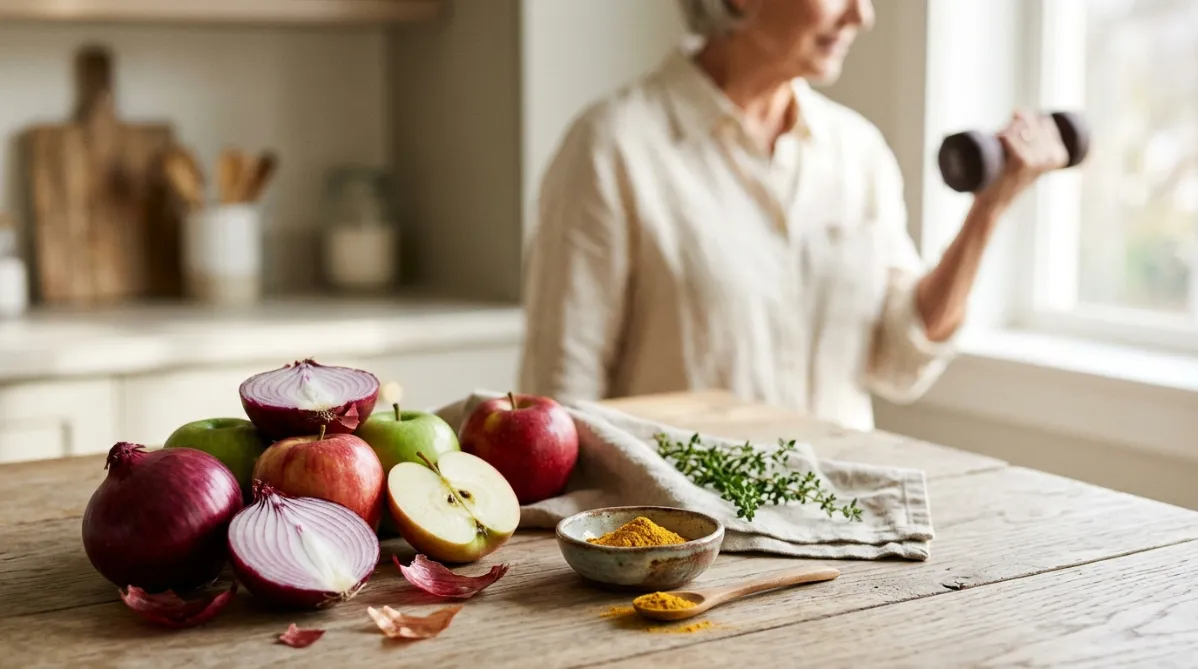
A landscape editorial photograph of a rustic kitchen table in soft morning window light. On a weathered light oak surface, a loose arrangement of fresh red onions, a few halved to show their purple-white rings, and crisp red and green apples, one sliced open to reveal pale flesh. A small ceramic bowl holds a pinch of golden-yellow quercetin powder, with a wooden spoon resting beside it. In the softly blurred background, an older woman in a cream linen shirt lifts a modest dumbbell near a sunlit window, her posture strong and relaxed. Her silhouette is out of focus, which keeps the produce as the main subject.

The palette is warm and natural: deep magenta onion skins, glossy apple reds, buttery yellow accents, and creamy neutrals. A gentle shallow depth of field gives creamy bokeh in the background. The light is diffused and golden, with delicate shadows and a few dried onion skin flakes scattered across the wood for texture. A folded linen napkin and a small sprig of thyme add a curated, modern lifestyle-magazine feel.

The composition follows the rule of thirds, with the produce at lower left and negative space on the right, where the blurred lifter and window glow provide balance. The overall look is clean, calm, and contemporary, like a premium health and wellness journal cover: natural, tactile, and optimistic, with fine film-like grain and true-to-life color.
nutrition

La quercétine a triplé les gains de force chez les pratiquants âgés — sans plus de muscle

BY DR. GYMBRO ·

Un flavonoïde bon marché présent dans les oignons et les pommes aurait simplement boosté les gains de force chez les pratiquants âgés bien au‑delà de ce que l’entraînement seul pouvait offrir. Dans un essai randomisé, en double‑aveugle, les adultes plus âgés prenant 200 mg/jour de glycosides de quercétine ont gagné environ 15 % de force au niveau du genou en six semaines, contre environ 5 % avec le placebo. Étrangement, la masse musculaire n’a varié dans aucun des deux groupes. L’avantage semblerait venir du système nerveux, avec des unités motrices à seuil élevé qui s’activent plus rapidement. Voici ce que l’étude a révélé, comment l’appliquer, et pourquoi la petite taille de l’échantillon impose la prudence.
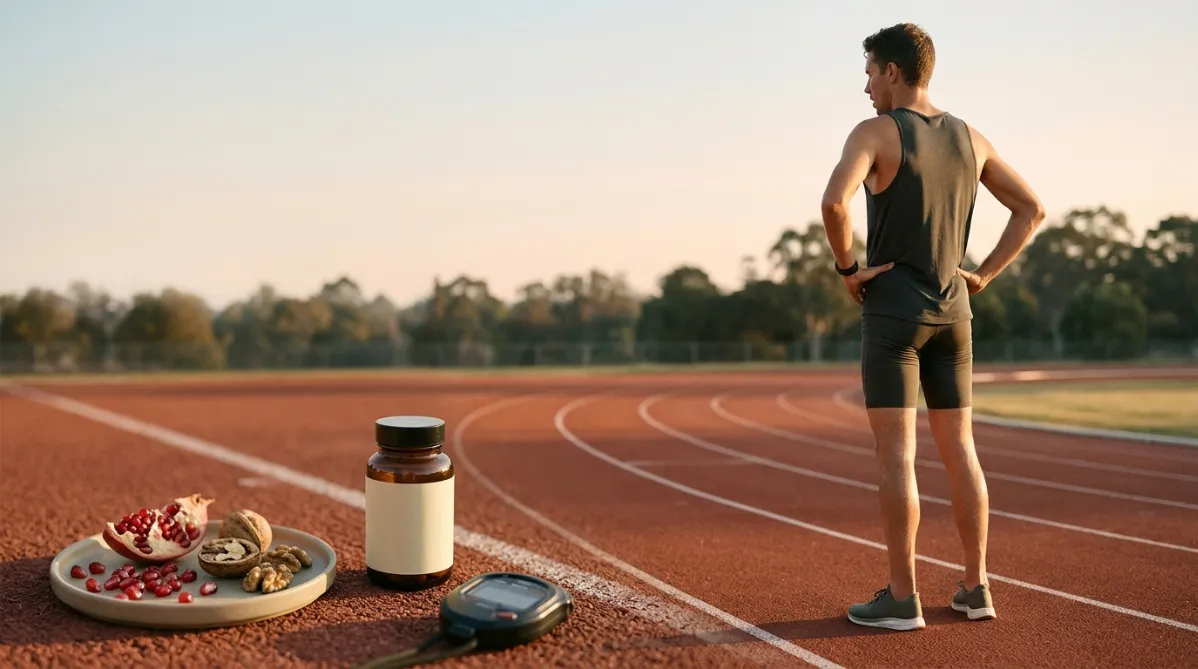
A wide landscape editorial photograph of a lone male distance runner, seen from behind in soft three-quarter profile, pausing on a red-clay outdoor running track at golden hour. He wears a minimalist charcoal singlet and fitted shorts, with a faint sheen of sweat on his calves and shoulders. His hands rest loosely on his hips as he catches his breath, and the white lane lines curve gracefully into the distance. Low amber sunlight rakes across the track and casts long, soft shadows. A hazy line of trees and a pale peach sky blur into creamy bokeh behind him.

In the lower foreground, slightly out of focus, a small matte ceramic dish holds a few pomegranate seeds and halved walnuts, a nod to the natural food sources of urolithin A. Beside it sits a minimalist amber glass supplement bottle with a plain cream label, and a stopwatch lies face-up on the track's edge. The stopwatch is blurred just enough to read as an object, not a number.

The palette is warm and earthy, with terracotta, burnt orange, soft cream, and muted sage green. The look is refined and contemporary, like a high-end wellness or sports-science magazine, with natural film-like grain, shallow depth of field, and gentle contrast. The composition follows the rule of thirds. The runner sits in the right third, the still life anchors the lower left, and open negative space in the upper left leaves room for a headline overlay. The mood is calm and thoughtful, suggesting recovery, measured results, and quiet scientific skepticism rather than hype. No text, no logos, no futuristic elements.
nutrition

Urolithine A n’a pas rendu les coureurs d’élite plus rapides — mais a réduit les lésions musculaires

BY DR. GYMBRO ·

L’urolithine A a été présentée comme le « supplément pour les mitochondries ». Les chercheurs l’ont testée chez des coureurs d’élite masculins au VO2max d’environ 66 mL·kg⁻¹·min⁻¹. Elle n’a pas accéléré leurs performances sur 3000 m, mais a diminué le marqueur de lésions musculaires (créatine kinase) et l’effort perçu après l’épreuve. Le VO2max a progressé de 5,4 % avec l’UA contre 3,6 % avec le placebo, différence qui n’est pas statistiquement significative. Voici ce que 1000 mg par jour pendant quatre semaines ont réellement apporté, ainsi que les réserves liées à la petite taille de l’échantillon et aux liens avec l’industrie.
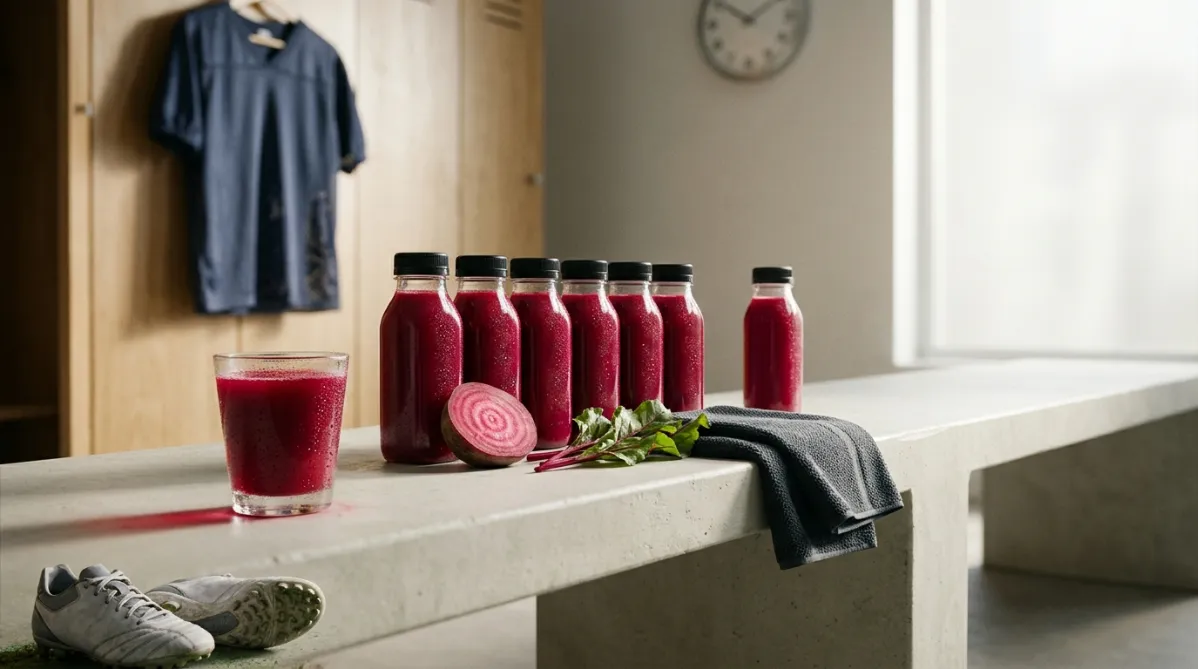
A landscape editorial photograph with a clean, modern magazine feel. On a pale concrete bench in a softly lit locker room, a single small glass shot of deep magenta-red beetroot juice sits in the left third of the frame. It is slightly out of focus in the foreground, with condensation beading on the glass and a faint ruby glow cast on the surface beneath it. Behind it, in crisp focus, is a neat row of seven identical small glass bottles of the same vivid juice, lined up like a weekly calendar. The bottles suggest multi-day loading, and the last one is subtly set apart from the others, with a simple analog wall clock blurred in the background.

Around the bottles are a few styled props: a halved raw beetroot showing concentric pink and crimson rings, a few small green-stemmed beet leaves, and a folded charcoal athletic towel. A pair of worn white and gray football cleats rests at the edge of the frame, with a hint of turf on the soles. A mesh-fabric team jersey in muted navy hangs on a wooden locker door in the soft background.

The lighting is natural window light from the right, with soft diffused shadows, warm highlights, and a gentle morning feel. The color palette is restrained and contemporary: deep beet magenta, warm off-white, slate gray, light oak, and touches of fresh leaf green. The composition has generous negative space on the right side, where the light falls across the empty bench, so there is room for a headline overlay. Shallow depth of field, a 35mm lens look, fine film-like grain, and a minimalist, high-end lifestyle-journal aesthetic. No people's faces, no text, no futuristic elements.
nutrition

Jus de betterave pour les sports d’équipe : pourquoi une dose pré‑match ne fonctionne pas

BY DR. GYMBRO ·

Ce petit shot rouge dans le vestiaire n’a probablement pas l’effet que vous imaginez. Une méta‑analyse récente de 24 essais chez des athlètes de sports d’équipe montre que le jus de betterave et le nitrate alimentaire offrent des bénéfices modestes, surtout sur des tâches spécifiques aux sports d’équipe (g = 0,143, certitude modérée). La stratégie la plus efficace consiste en une charge sur plusieurs jours avec une dose finale 2‑3 h avant l’effort ; une prise unique avant le match n’a aucun effet clair. Les sprints isolés, la plupart des marqueurs métaboliques et les réponses cardio‑respiratoires ne s’améliorent pas, et aucune relation dose‑réponse nette n’émerge. Voici qui devrait l’essayer, qui devrait l’éviter, et pourquoi le contraste chronique‑vs‑aigu est plus fragile qu’il n’y paraît.

A lone trail runner pauses on a high alpine ridge at dawn, holding a small enamel camp mug of steaming coffee, with thin ribbons of steam curling into crisp, cold air. She wears a fitted charcoal running vest and a muted sage windbreaker, and her breath is faintly visible. Behind her, layered mountain ranges fade into soft blue and lavender haze, and a sea of low clouds fills the valley below. Warm golden sunlight skims the ridgeline and rim-lights her profile, shoulders, and the rising steam. In the foreground, a scattering of dried alpine grasses and lichen-covered stones is in sharp focus, with a worn trail snaking toward the summit. Near the mug sits a small pair of trail running shoes with dusty soles and a simple analog wristwatch resting on a flat rock.

The composition follows a wide 16:9 editorial layout. The subject sits slightly right of center on the rule of thirds, leaving generous negative space in the pale peach-and-powder-blue sky on the left, where headline text could sit. The palette is restrained and modern: warm amber, soft cream, dusty sage, slate blue, and a touch of terracotta. The look is cinematic but natural, with shallow depth of field on the foreground details, gentle film grain, and a slightly matte finish. It evokes a high-end outdoor lifestyle magazine or a contemporary wellness journal. The mood is calm, focused, and quietly determined, capturing the contrast between thin, cold altitude air and the warmth of a coffee ritual. The image has no text, logos, or futuristic elements, and no gym equipment, only natural light, texture, and atmosphere.
nutrition

Caféine en haute altitude : le boost d’endurance que l’hypoxie ne peut pas effacer

BY DR. GYMBRO ·

L’air raréfié diminue nettement la capacité d’endurance, mais une méta‑analyse récente montre que la caféine pourrait récupérer une partie de cette perte. En regroupant neuf études croisées contrôlées par placebo (117 participants), les chercheurs ont observé un gain de performance modéré à important en hypoxie (g = 0,76). Curieusement, la saturation en oxygène et la perception de l’effort n’ont pas changé, tandis que la fréquence cardiaque, le lactate sanguin et la ventilation ont augmenté. Le niveau de preuve reste faible et seules 19 femmes ont participé, ce qui fait de ces résultats une piste prometteuse plutôt qu’une certitude. Voici qui pourrait en profiter, qui devrait l’éviter, et comment envisager dose et timing.
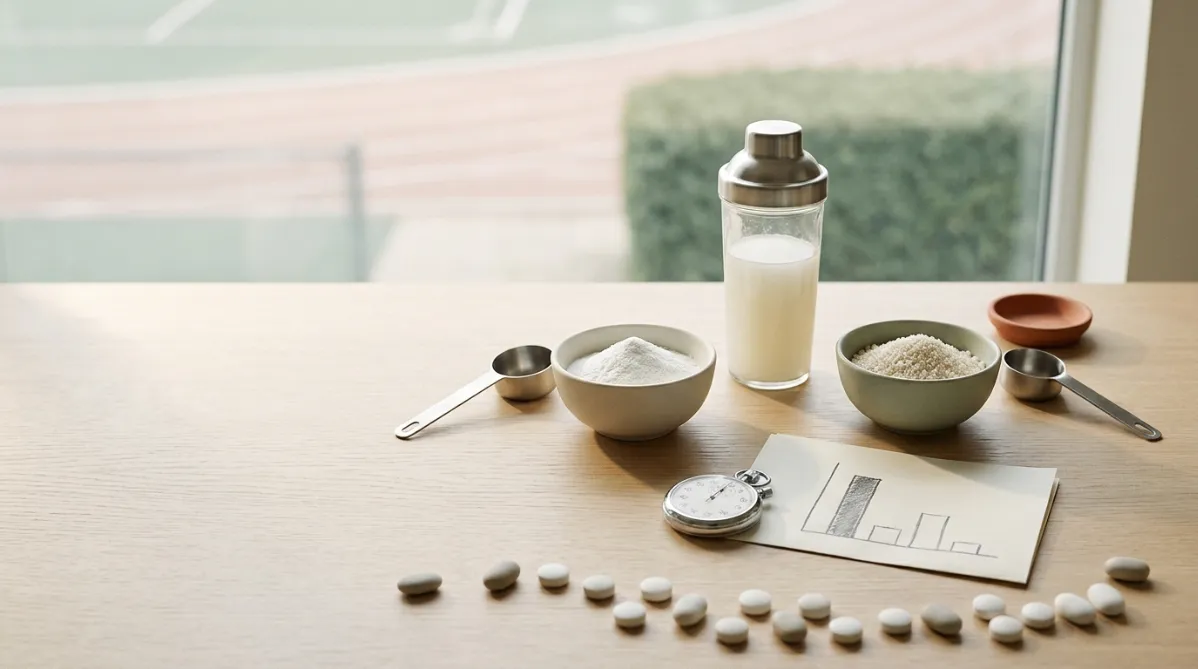
A wide, editorial-style still life shot from a slightly elevated angle on a pale oak laboratory-meets-kitchen countertop, bathed in soft, diffused morning window light. In the center, two small matte ceramic bowls sit side by side: one holds fine white creatine powder, the other holds slightly coarser off-white L-arginine crystals. A brushed steel scoop rests beside each. Between and slightly behind them stands a clear glass shaker bottle filled with a cloudy, pale liquid, catching a gentle highlight. In the foreground, a minimalist analog stopwatch lies on the wood surface, its face crisp and legible, next to a folded sheet of off-white paper with a hand-drawn simple bar chart in charcoal pencil, with one tall bar and a few shorter ones, no text or numbers. In the soft-focus background, a blurred gym-style window view shows a pale running track and a muted sage-green hedge, suggesting sprinting and athletic testing without any people. Eighteen small smooth stones or white pills are arranged in a neat loose arc across the lower edge of the frame, a subtle nod to the small sample size, with one stone set slightly apart. The color palette is calm and modern: warm cream, bone white, soft sage, muted terracotta accents from a small clay dish, and thin touches of brushed metal. Shadows are long and gentle, the depth of field shallow, with a fine film-like grain. The composition leaves generous negative space on the left third for a title overlay. The mood is clean, thoughtful, and trustworthy, like a contemporary health and science journal cover, with no futuristic elements, no glowing effects, and no text.
nutrition

Créatine + L‑arginine : +99 W de puissance de pointe – le détail

BY DR. GYMBRO ·

Un nouveau protocole croisé a montré qu’une prise simultanée de créatine et de L‑arginine, une heure avant le test, augmentait la puissance de pointe d’environ 99 W par rapport au placebo. La combinaison surpassait également chaque supplément pris seul en termes de puissance maximale et de hauteur de saut à contre‑mouvement. Cependant, les chercheurs n’ont pas démontré de véritable synergie entre les deux, et l’étude ne comptait que 18 hommes. Voici les chiffres, les dosages employés et les précautions à observer.
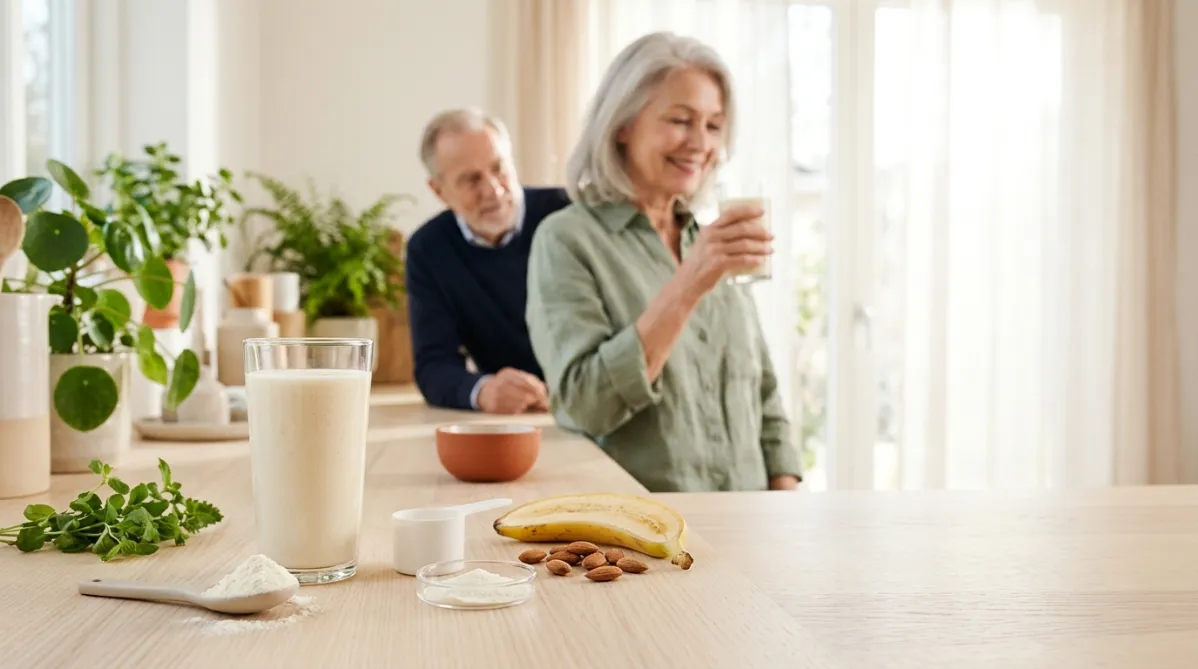
A bright, modern editorial still life on a clean, softly lit kitchen countertop of pale ash wood. In the foreground, a tall glass of creamy off-white protein shake sits beside a small ceramic spoon holding a mound of fine white powder. Next to it is a minimalist matte-white scoop and a small glass dish with a few pinches of powder. Scattered nearby are a few natural elements: a halved banana, a handful of raw almonds, and a sprig of fresh green herbs for a splash of color.

In the soft-focus midground, an older woman in her late 60s with silver-gray hair, wearing a sage-green linen shirt, smiles gently as she lifts a glass. Her face is slightly blurred and warm, bathed in natural window light. Beside her, slightly further back and out of focus, an older man in a navy sweater leans on the counter, a neutral presence that subtly contrasts with her. A wide window behind them floods the scene with soft morning light, with sheer curtains and a few leafy houseplants.

The color palette is muted and fresh: warm cream, soft sage, pale peach, and light oak, with a touch of terracotta from a small ceramic bowl. Shallow depth of field, creamy bokeh, subtle film-like grain, and gentle shadows give it a contemporary lifestyle-magazine feel. Composition follows the rule of thirds, with the shake and powder on the left third and open negative space on the right for headline overlay. The mood is calm, optimistic, and health-focused, polished like a trendy wellness journal cover, with no text, no logos, and no futuristic or sci-fi elements.
nutrition

3 g d’HMB + 40 g de whey : le boost surprenant qui profite aux femmes, pas aux hommes

BY DR. GYMBRO ·

On pensait que les compléments anabolisants profitaient surtout aux hommes plus âgés. Une nouvelle étude de traçage montre le contraire : ajouter 3 g de calcium‑HMB à un shake de 40 g de whey augmente la synthèse des protéines musculaires chez les femmes âgées, mais pas chez les hommes. L’HMB réduit également la dégradation musculaire tardive chez l’ensemble du groupe. Il s’agit toutefois d’une étude aiguë de trois heures, réalisée sur seulement 24 participants et avec des co‑auteurs d’Abbott Nutrition, ce qui ne constitue pas une preuve de gain musculaire à long terme. Voici le dosage, le moment de prise, qui pourrait en bénéficier et qui devrait l’éviter.
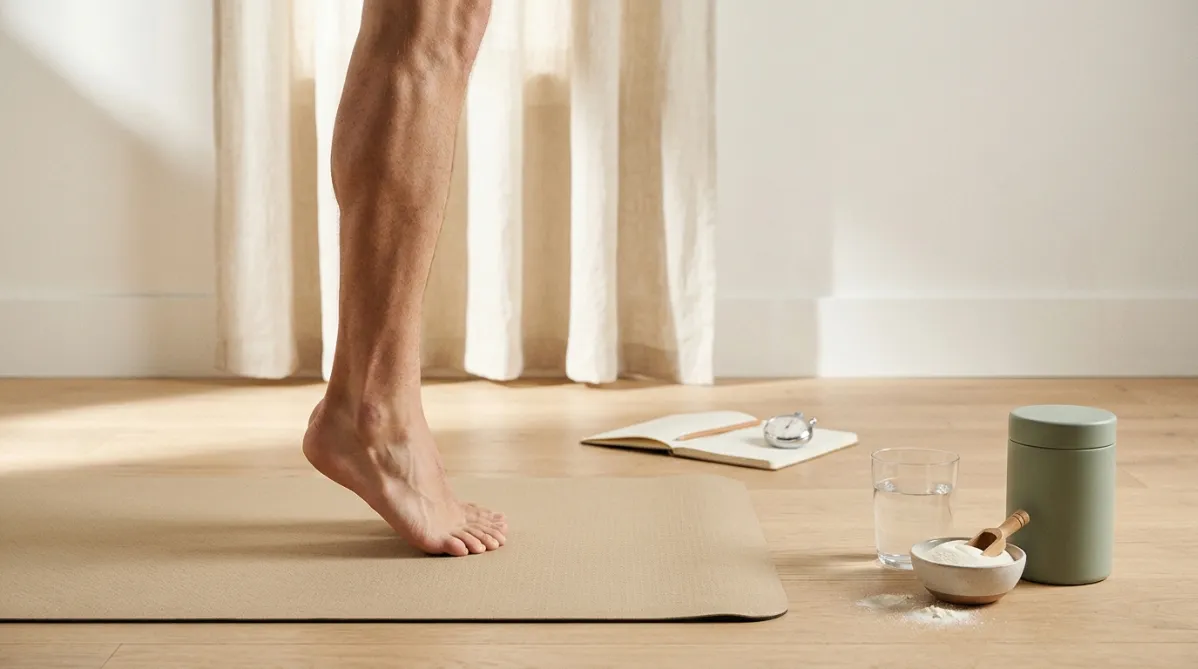
A wide, editorial-style landscape photograph of a calm, sunlit studio scene. In the center-left, a young man's bare lower leg and ankle are planted on a matte sand-colored yoga mat, heel slightly lifted in a mid calf-raise. The Achilles tendon and calf muscle are defined by soft, directional window light, with gentle shadows that emphasize natural contours. On a pale oak wooden surface at the right of the frame sits a minimalist glass of water beside a small ceramic bowl of fine white collagen peptide powder, with a wooden scoop resting on the rim. A few loose grains of powder catch the light. Beside them is a muted sage-green matte canister with no legible text or branding.

In the soft-focus background, a clean off-white wall and a tall linen curtain diffuse warm morning light. A slim notebook with a pencil and a small analog stopwatch lie on the wood, hinting at measured testing. The palette is restrained and modern: warm cream, sand, soft sage, pale oak, and subtle terracotta accents. Shallow depth of field with a creamy bokeh background, crisp focus on the ankle and tendon. The mood is quiet, thoughtful, and scientific without being clinical, like a contemporary wellness and science journal cover. Natural film-like grain, balanced negative space on the upper right for headline placement, and a soft, high-end magazine aesthetic. No text, no logos, no futuristic elements.
nutrition

Les peptides de collagène ont renforcé la rigidité des tendons et augmenté la puissance explosive

BY DR. GYMBRO ·

Le collagène n’est pas seulement un allié de la beauté. Dans un essai randomisé de 16 semaines, 10 g de peptides de collagène par jour ont rendu le muscle du mollet et le tendon d’Achille plus rigides et ont accéléré la production de force chez de jeunes hommes sédentaires. En revanche, la force maximale et la taille musculaire sont restées inchangées. Les auteurs sont rattachés à Morinaga, fabricant de compléments, et l’étude porte sur un groupe très restreint. Voici ce que montrent les données, qui pourraient en profiter, et ce qui reste à prouver.
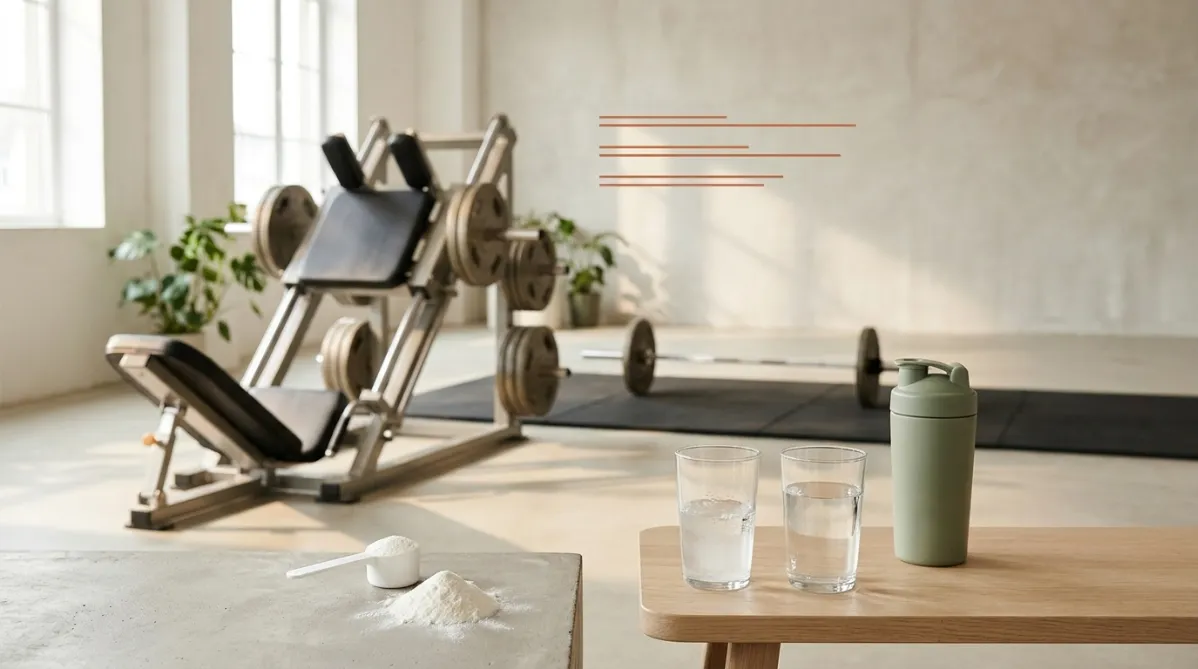
A bright, modern gym scene shot in soft natural daylight from large windows, with a wide landscape composition. In the foreground, slightly off-center to the left, sits a clean white ceramic scoop resting on a matte surface beside a small pile of fine white powder. Next to it are two clear glass tumblers on a pale oak bench. One is filled a third of the way with cloudy water and the other two-thirds of the way, a quiet visual nod to different doses. A minimalist matte shaker bottle in sage green stands behind them, slightly out of focus.

The middle ground shows a polished leg press machine with a black padded seat and brushed steel frame. Several weight plates are loaded on its pegs, and the machine catches warm highlights. Beyond it, a bent-over barbell rests on a rubber floor, deliberately softer in focus to suggest contrast between the two exercises.

The background is an airy, uncluttered studio-style gym with pale concrete walls, a few green potted plants, and long soft shadows across the floor. The color palette is muted and editorial: warm off-white, sand, sage green, charcoal, and a subtle accent of terracotta orange. A shallow depth of field gives it a magazine-like, premium wellness-journal look.

Add a subtle graphic touch: three thin horizontal lines of different lengths in terracotta, painted or projected on the wall, hinting at a bar chart comparing three results without any text or numbers. The overall mood is calm, focused, and scientific yet approachable, like a contemporary health and fitness publication cover. Clean lines, generous negative space on the right side for title overlay, and crisp, high-resolution photographic quality.
nutrition

8 g de citrulline malate, trop peu ? Seuls 12 g ont augmenté les répétitions au leg press

BY DR. GYMBRO ·

La plupart des pré‑workouts contenant de la citrulline malate misent sur une dose modérée, mais un nouveau test pilote en double‑aveugle suggère que cela ne serait peut‑être pas suffisant pour faire la différence. Chez 12 adultes entraînés, seule la dose de 12 g a augmenté de façon significative le nombre total de répétitions, tandis que 8 g n’a pas atteint la signification. Le gain s’est manifesté au leg press, avec environ 17 répétitions en placebo, 19 avec 8 g et 20 avec 12 g, mais pas au tirage penché. Pris une heure avant l’entraînement, le dosage plus élevé semble prometteur, même si la petite taille de l’échantillon ne permet de formuler qu’une hypothèse, pas de verdict.
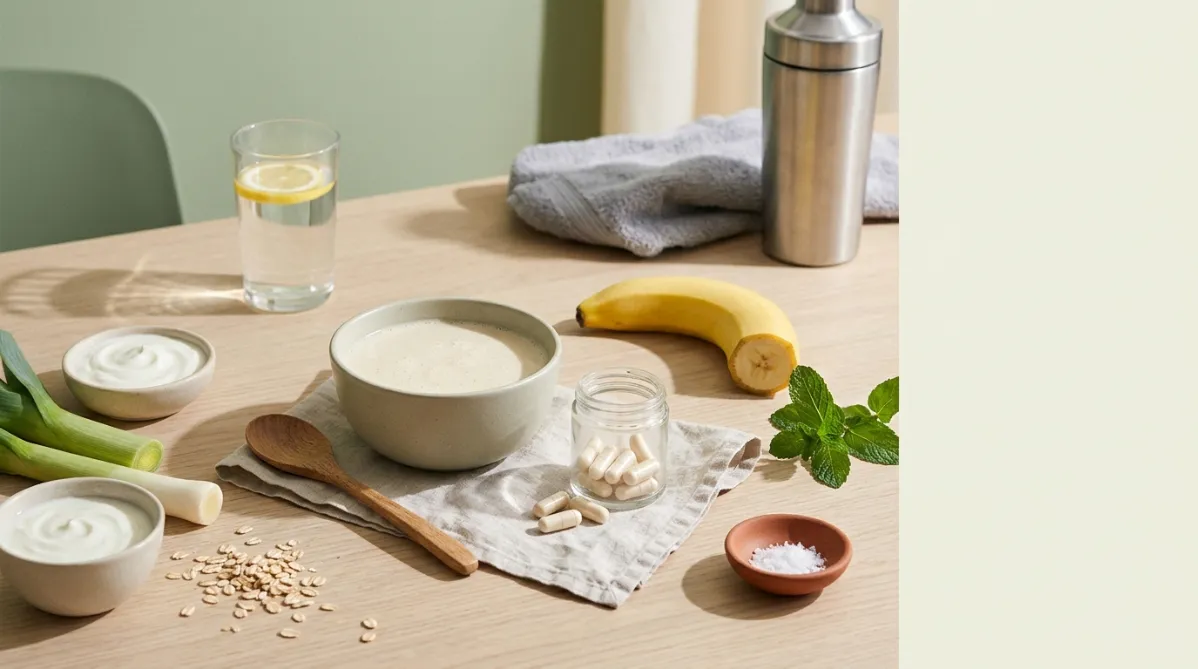
A bright, minimalist still life on a soft sage-green and warm cream backdrop, shot from a slightly elevated angle in natural morning window light. In the center sits a matte ceramic bowl of creamy vanilla protein shake with a wooden spoon resting beside it. Next to it, a small glass jar with a few off-white probiotic capsules spilling onto a pale linen napkin. Around them are fresh, gut-friendly foods arranged with editorial restraint: a halved ripe banana, a small bowl of plain yogurt with a swirl on top, a few stalks of leeks, a handful of oats scattered on the surface, and a sprig of fresh mint. A tall glass of water with a lemon slice catches the light and casts a delicate caustic shadow across the table.

In the background, slightly out of focus, a folded gray gym towel and a sleek stainless steel shaker bottle hint at an athletic lifestyle without dominating the scene. The surface is a pale oak tabletop with subtle grain. A soft diffused shadow falls to the left, giving gentle depth.

The palette is calm and modern: sage green, oatmeal, warm white, soft butter yellow, and touches of terracotta from a small clay dish holding a pinch of sea salt. The composition leaves generous negative space on the right third for headline overlay. The mood is clean, wellness-focused, and quietly editorial, like a feature in a contemporary health and science journal. Shallow depth of field, crisp focus on the capsules and bowl, subtle film grain, and natural color grading. No people, no text, no logos, no futuristic elements.
nutrition

Flatulences protéinées ? Le probiotique BB536 réduit les odeurs, mais seulement chez certains intestins

BY DR. GYMBRO ·

Des flatulences malodorantes dues à un régime riche en protéines ? Un essai a évalué le probiotique *Bifidobacterium longum* BB536 chez des athlètes et a constaté une diminution de composés odorants comme le méthylmercaptan et l’ammoniaque, mais uniquement dans certains sous‑groupes. L’étude, petite et exploratoire, était financée par le fabricant du probiotique. Voici ce qu’est le BB536, pourquoi votre microbiote de base peut déterminer qui en bénéficie, et des solutions moins coûteuses à essayer d’abord.
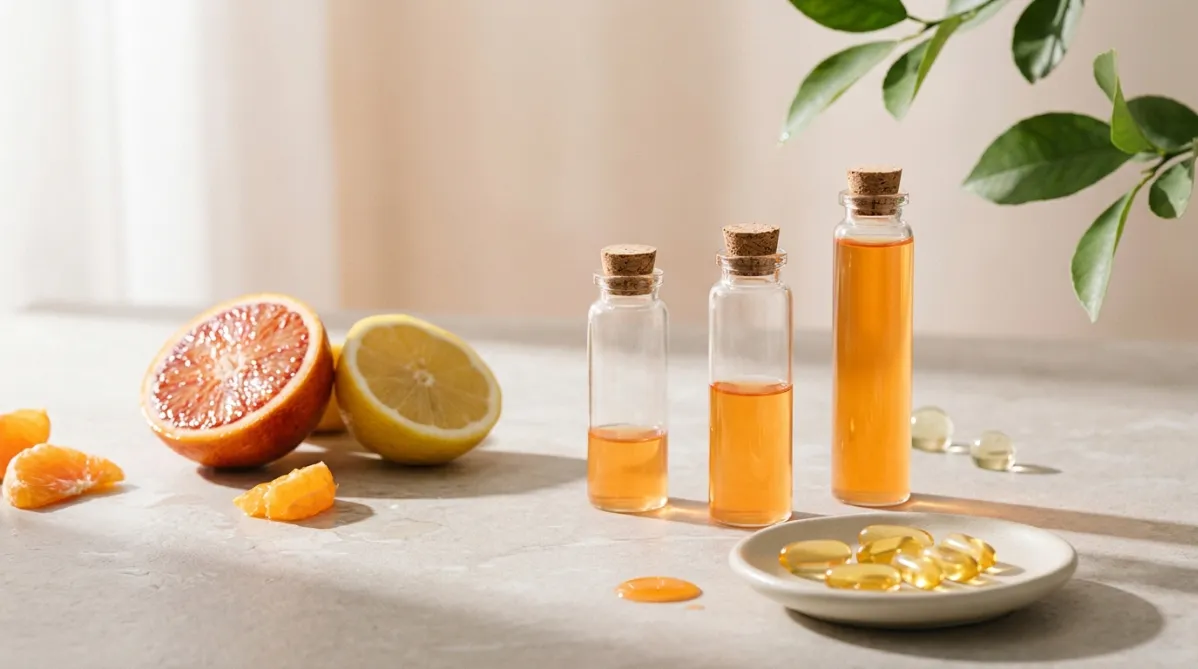
A wide, softly lit editorial still life on a pale warm-gray stone surface. In the center, three small clear glass vials of differing liquid heights stand in a staggered row, filled with luminous citrus-orange liquid. The shortest vial holds a thin layer of liquid, the middle one is about half full, and the tallest is nearly full, subtly suggesting rising levels without any charts or text. Beside the vials, a halved blood orange and a halved lemon sit with glistening, dewy pulp, and a few loose orange segments scatter across the surface. In the foreground, a shallow ceramic dish holds a few translucent golden softgel capsules catching the light, and a single droplet of orange liquid rests on the stone with a delicate glossy highlight.

Behind the vials, a large, out-of-focus backdrop in muted peach and cream tones fades into a gentle gradient. Soft morning window light enters from the left and casts long, elegant shadows to the right. Thin sprigs of green citrus leaves add a fresh contrast in the upper corner. A few macro-scale glossy spheres, resembling tiny bubbles of oil or water, float on the surface near the vials, their rounded, shimmering skins hinting at encapsulation in a natural, organic way.

The palette is warm and restrained: apricot, tangerine, cream, soft sage, and pale stone gray. The composition follows the rule of thirds, with the vials slightly right of center and generous negative space on the left for a headline overlay. Shallow depth of field, crisp focus on the middle vial, fine film-like grain, and a clean, minimalist styling reminiscent of contemporary wellness and science magazine photography. No people, no text, no lab equipment, no futuristic elements. A calm, modern, trustworthy, editorial mood.
nutrition

La vitamine C liposomale atteint un taux sanguin six fois supérieur ; une nouvelle forme le double

BY DR. GYMBRO ·

Une étude croisée récente a montré que la vitamine C liposomale conventionnelle génère environ six fois plus d’exposition sanguine que la vitamine C ordinaire, tandis qu’une forme à double encapsulation atteint près de onze fois ce niveau. L’échantillon était toutefois limité à 12 participants, une dose unique de 350 mg et une fenêtre d’observation de 8 heures. De plus, le financement provient du fabricant du nouveau produit, qui a déposé un brevet. Voici ce que révèlent réellement les chiffres, pourquoi l’encapsulation change l’absorption et qui pourrait en bénéficier (ou pas).
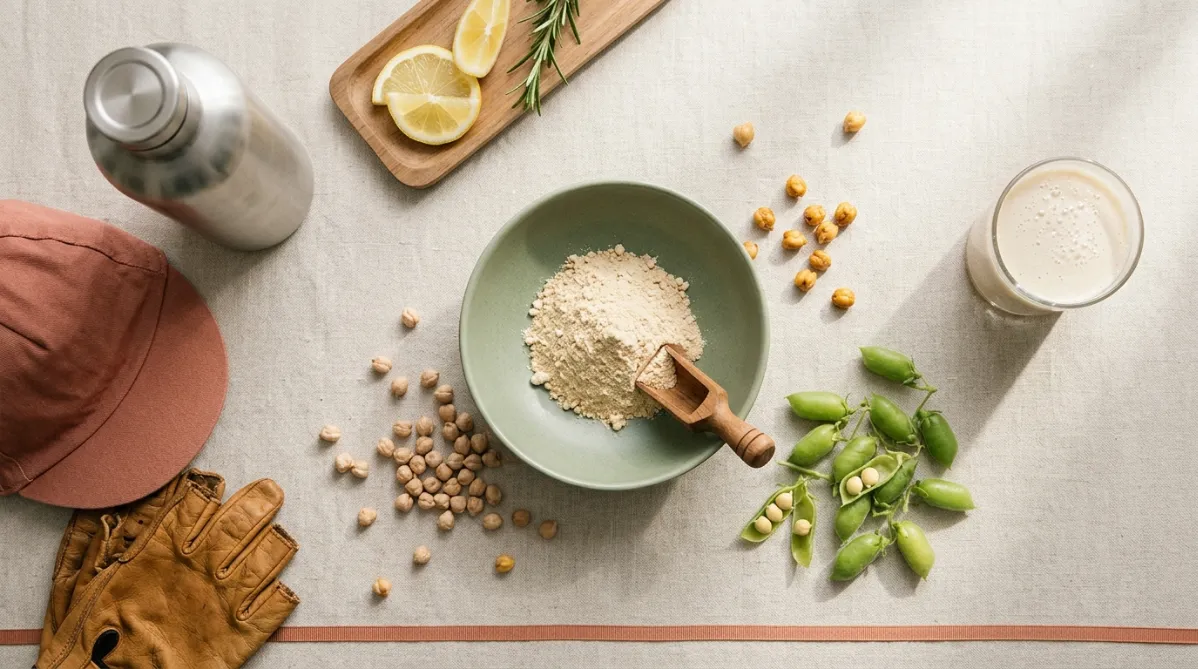
A wide, editorial-style flat lay photographed from above on a pale, warm oatmeal-colored linen surface, lit by soft natural window light with gentle long shadows. In the center, a matte ceramic bowl in muted sage green holds a small mound of fine, creamy beige chickpea protein powder, with a wooden scoop resting beside it. Scattered around the bowl are whole dried chickpeas, a few golden roasted chickpeas, and a handful of fresh green chickpea pods, some split open to show the pale round seeds. On the left side of the frame sits a sleek, minimalist stainless steel cycling bottle, slightly out of focus, with a folded cycling cap in dusty terracotta and a pair of well-worn leather cycling gloves. A slim wooden board holds sliced lemon and a sprig of rosemary, adding a fresh touch. On the right, a small glass of cloudy, cream-colored protein shake with condensation droplets catches the light. Between the objects there is generous negative space, so a headline could be overlaid. A thin, delicate line of terracotta ribbon crosses the lower edge of the frame. The palette is earthy and calm: cream, sage, terracotta, soft gold, and warm wood tones, with a subtle film-like grain. The look is contemporary and trendy, like a wellness and nutrition science magazine: clean, tactile, shallow depth of field, crisp focus on the powder and chickpeas, and soft, creamy falloff toward the edges. No text, no logos, no people, and no futuristic elements.
nutrition

La protéine de pois chiche réduit le CRP et le LDH chez les cyclistes en deux semaines

BY DR. GYMBRO ·

Deux semaines d’une petite dose post‑entraînement d’hydrolysat de protéine de pois chiche ont entraîné une diminution du CRP et du LDH chez des cyclistes compétitifs, comparativement à un placebo. L’essai en double‑aveugle a administré 12 g/jour à 24 coureurs déjà consommant plus de 2 g/kg de protéines quotidiennement. Cette évolution des biomarqueurs est d’autant plus intrigante, même si l’étude n’a mesuré aucun indicateur de performance, de récupération ou de courbature. Voici ce que sont les hydrolysats, à qui ils peuvent intéresser, et pourquoi il s’agit d’un signal prometteur plutôt que d’un outil de récupération avéré.
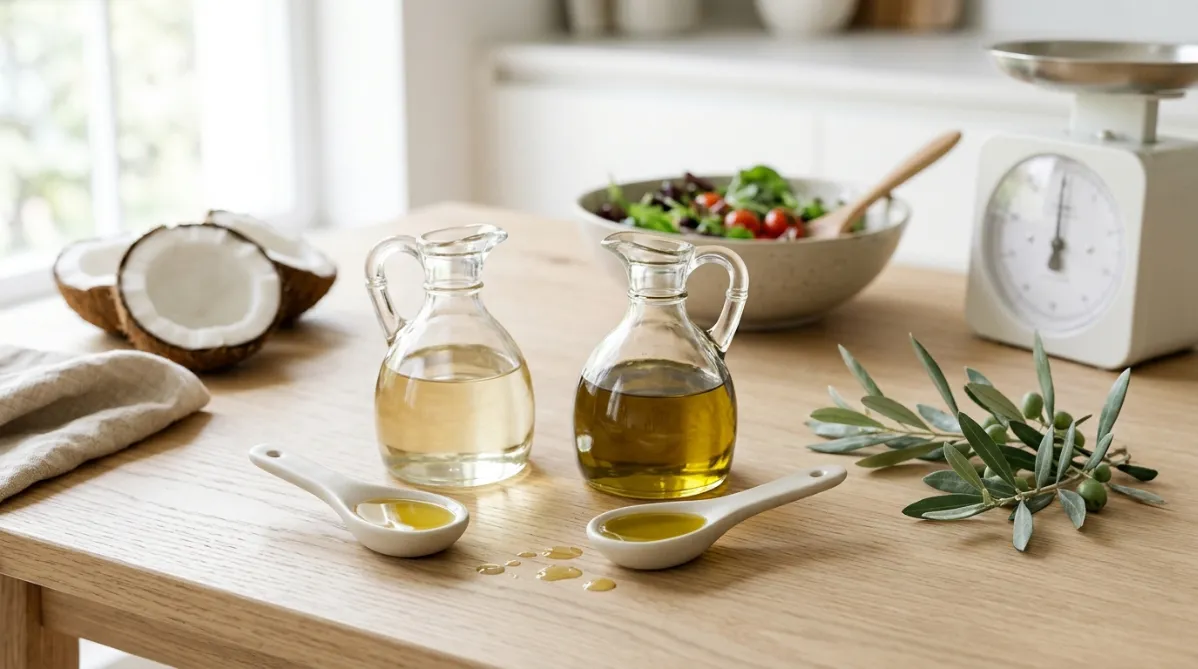
A calm, editorial-style still life shot from a slightly elevated angle, in a bright minimalist kitchen with soft natural window light coming from the left. On a pale oak wooden table sit two small glass cruets side by side: one filled with clear, pale golden MCT oil, the other with deeper green-gold extra virgin olive oil. Between and in front of them, two shallow ceramic spoons in matte off-white, each holding a glistening pour of its respective oil, with a few droplets catching the light on the table surface. A sprig of fresh olive branch with silvery-green leaves rests to the right, and a halved coconut with white flesh sits softly out of focus at the left edge, hinting at the source of MCTs. In the background, a blurred linen cloth in warm beige and a small bowl of mixed greens and cherry tomatoes suggest a healthy diet. A simple analog kitchen scale in brushed white metal sits subtly in the soft-focus background, a quiet nod to weight loss without being literal. Color palette: creamy whites, warm sand, soft sage green, and glowing golden amber highlights. Shallow depth of field, gentle shadows, delicate specular highlights on the oil, subtle film grain, clean negative space on the right third for headline overlay. Modern wellness magazine aesthetic, tactile, airy, and sophisticated, shot as if with an 85mm lens, 16:9 landscape composition.
nutrition

Huile MCT vs huile d'olive pendant un régime : un groupe a fini 1,7 kg plus léger

BY DR. GYMBRO ·

Un essai de 16 semaines comparant l’huile MCT à l’huile d’olive a montré que le groupe MCT terminait environ 1,7 kg plus léger et présentait une masse graisseuse abdominale légèrement plus basse. Toutefois, les différences de perte de graisse n’étaient que des tendances, plus d’un tiers des participants a abandonné, et l’étude date de 2008. Voici ce que les données réelles indiquent, pourquoi les MCT peuvent fonctionner, comment les doser sans gêne digestive et qui devrait les éviter.
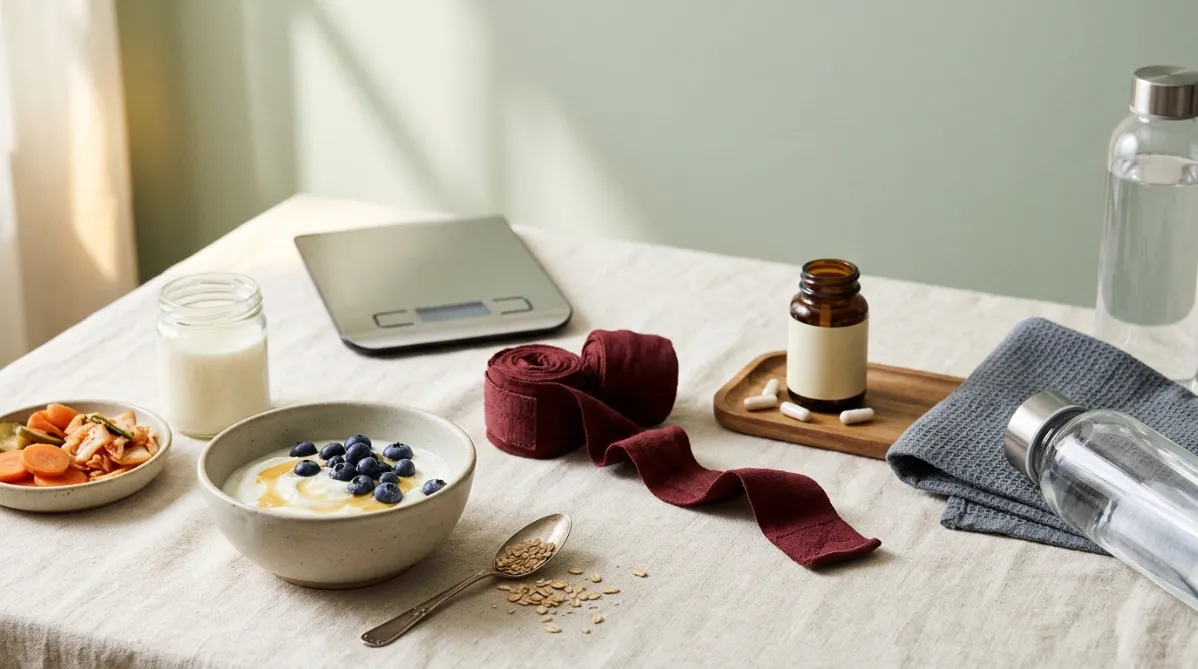
A wide, softly lit editorial still life on a warm off-white linen surface. In the foreground, a matte ceramic bowl holds creamy plain yogurt topped with fresh blueberries and a drizzle of honey. Beside it sit a small glass jar of pale kefir, a few fermented vegetables in a shallow dish, and a spoon with a dusting of oats. A pair of worn, dark red boxing hand wraps lies loosely coiled in the middle ground, partly unrolled across the linen. A slim brushed-steel digital kitchen scale sits just behind them, its display blurred. A small glass bottle with a minimalist cream label and a few capsules spilled onto a wooden tray add a subtle supplement cue. At the right edge, a folded gray towel and a sleek water bottle hint at training without cluttering the scene.

The background is a softly out-of-focus pale sage-green wall with gentle diagonal window light that casts long, delicate shadows and a warm golden highlight along the left side. The color palette is muted and modern: sage, oatmeal, terracotta, deep crimson, and touches of cobalt from the blueberries. The composition uses generous negative space on the upper right for headline overlay, with the objects arranged along a low diagonal from lower left to center right. Shallow depth of field, crisp textures on the ceramic, the grain of the wood, and the weave of the wraps. The mood is calm, clean, and quietly athletic, like a high-end health and science magazine cover. Photographic realism, natural color grading, subtle film grain, and a slightly overhead three-quarter camera angle.
nutrition

Probiotiques pendant une coupe de poids : les athlètes ont perdu davantage de graisse corporelle

BY DR. GYMBRO ·

Perdre du poids avant un combat est une épreuve difficile, mais une nouvelle étude suggère que le microbiote intestinal pourrait rendre le processus un peu plus efficace. Chez 32 athlètes de sports de combat soumis à une réduction de poids de 4 semaines, ceux ayant pris un probiotique ont perdu un pourcentage de graisse corporelle plus élevé que le groupe placebo. Ils présentaient également des triglycérides et du LDL‑C plus bas, des acides gras à chaîne courte plus élevés et une moindre hausse des acides gras libres circulants. Cependant, tous ont tout de même perdu du muscle, et l’étude reste petite, courte et limitée à un seul sport. Voici ce que les données montrent, ce qu’elles n’indiquent pas, et comment envisager les probiotiques comme un complément plutôt qu’un raccourci.
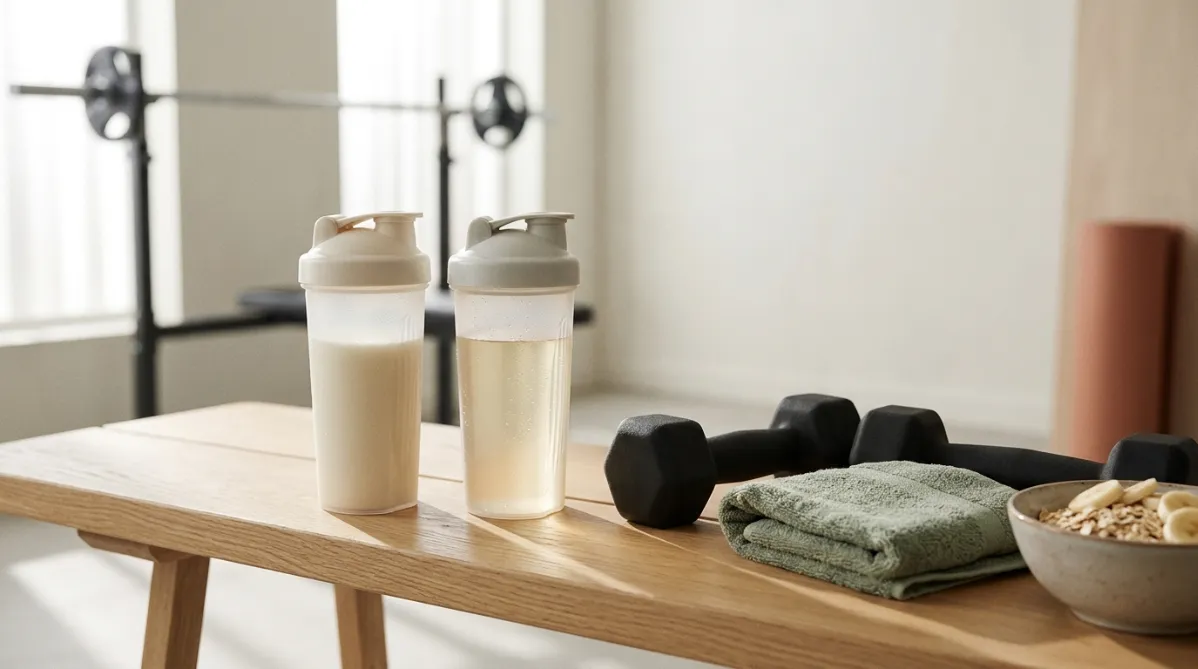
A wide, softly lit editorial still life on a clean, light oak gym bench in a bright, minimalist training studio. In the foreground, two matching frosted translucent shaker bottles stand side by side. One holds a pale, creamy white drink and the other a clear, faintly golden carbohydrate drink. Condensation beads on both. Beside them rest a pair of matte black hex dumbbells and a folded sage-green towel. A small ceramic bowl of rolled oats and a sliced banana sit at the edge of the frame, hinting at a balanced daily meal. In the soft-focus background, tall windows let in diffused morning light, and a barbell rack is blurred into gentle geometric lines. The palette is muted and modern: warm cream, sage green, charcoal, and soft terracotta accents. Light falls from the left in long, gentle shadows across the bench. The composition is airy, with generous negative space on the right third for the headline. The mood is calm, credible, and contemporary, like a premium health and science journal feature. Shallow depth of field, crisp textures on the wood grain and glass, and a subtle film-like grain. No people, no text, no futuristic elements.
nutrition

Shake protéiné intra‑séance : une étude biopsique de 8 semaines n’a pas révélé d’hypertrophie supplémentaire

BY DR. GYMBRO ·

Vous pensez devoir boire des protéines pendant l’entraînement sous peine de perdre vos gains ? Une étude suédoise randomisée, incluant des biopsies musculaires, montre le contraire. Pendant 8 semaines, des hommes entraînés à jeun ont développé autant de muscle avec une boisson uniquement glucidique qu’avec des glucides + protéines. En revanche, le simple fait de soulever des poids a entraîné une croissance généralisée des fibres de type IIA et a presque éliminé les fibres de type IIX. L’étude est petite et exploratoire, donc de modestes effets ne peuvent être écartés, mais le message pratique est clair : l’entraînement et l’apport quotidien total en protéines passent avant tout.
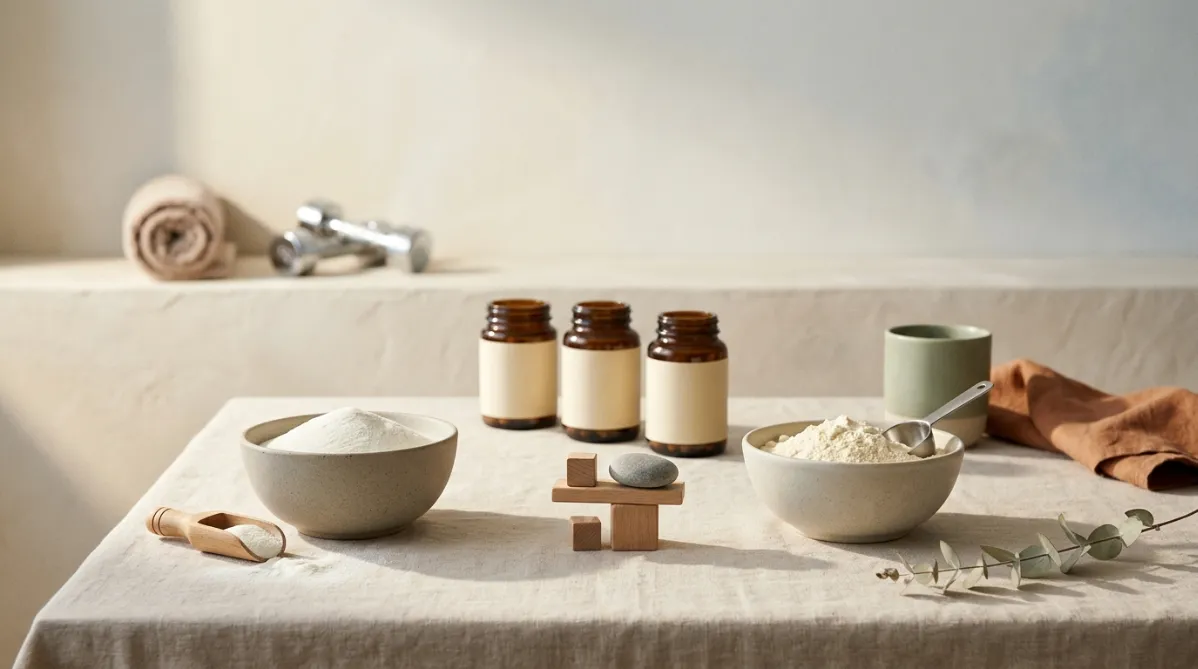
A bright, minimalist editorial still life on a pale oat-colored linen surface, shot from a slightly elevated three-quarter angle in soft natural window light. On the left, a matte ceramic bowl of fine white collagen powder with a wooden scoop resting beside it, a light dusting of powder spilling across the linen. On the right, a matching bowl of creamy off-white whey powder with a brushed-steel scoop. Between them sits a small, neatly balanced stack of simple geometric wooden blocks and a single smooth gray stone, hinting at a scale or comparison without showing a literal scale. Behind them, a lightly blurred row of three clean amber glass supplement jars with plain cream labels, unbranded. A single rolled yoga towel and a pair of small chrome dumbbells sit softly out of focus in the background on a pale plaster shelf. Accents of muted sage green and warm terracotta appear in a ceramic cup and a folded napkin, giving the palette a calm, contemporary wellness-magazine feel. A thin, elegant sprig of dried eucalyptus lies at the edge of the frame. Shadows are long, gentle, and slightly cool, with a creamy shallow depth of field and fine grain. The composition leaves generous negative space across the upper third for title overlay, with a subtle gradient from warm ivory to pale gray-blue in the background wall. The styling is clean and modern like a trendy health journal website, with a refined, tactile, editorial photography look, balanced symmetry, and no text, no people, no futuristic or laboratory elements.
nutrition

Le collagène surpasse la whey pour la musculation dans une analyse de 78 essais ?

BY DR. GYMBRO ·

Une méta‑analyse en réseau de 2026 portant sur 78 essais randomisés et 4 755 participants a placé le collagène en première position pour les gains de force et de masse maigre lors d’un entraînement en résistance, devant la whey. Plus surprenant encore, aucun autre supplément protéiné n’a surpassé le placebo. Pourtant, le collagène est une protéine incomplète, pauvre en leucine, et les intervalles de confiance sont larges. Voici ce que montrent réellement les chiffres, pourquoi le résultat doit être confirmé par des comparaisons directes, et comment ajuster votre pile de suppléments en attendant.
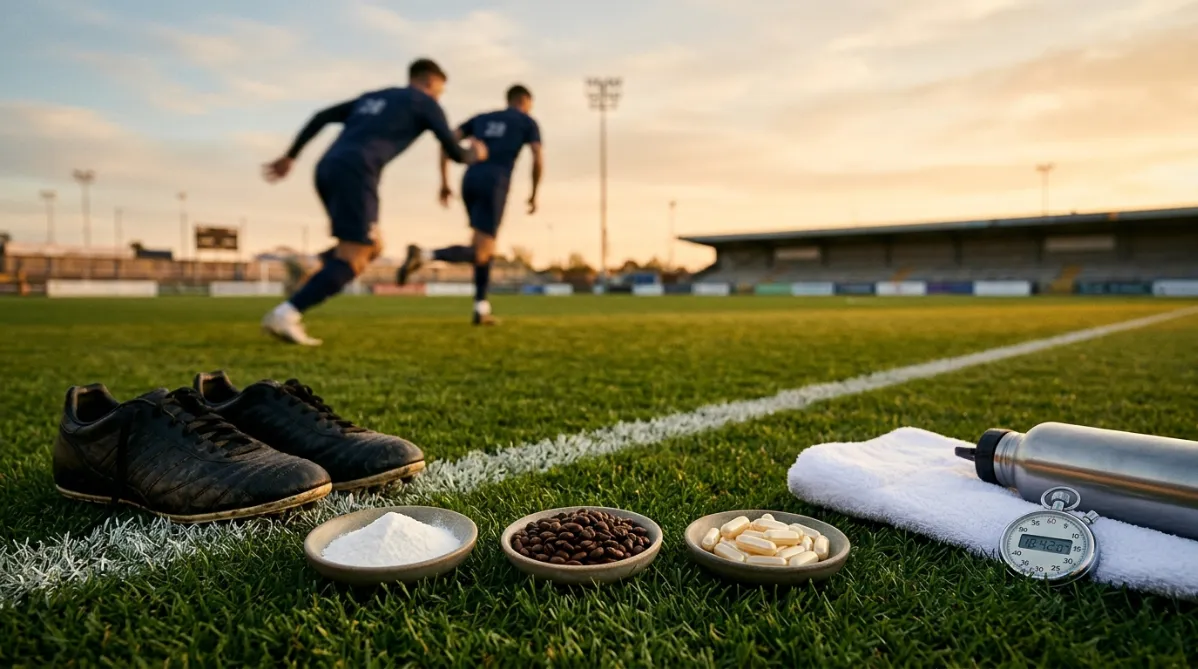
A wide, editorial-style photograph of a professional soccer pitch at golden hour, shot from a low angle at the edge of the grass. In the foreground, slightly off-center to the left, a pair of worn leather cleats sits beside a scatter of three small matte ceramic dishes. One holds fine white taurine powder, one holds dark roasted coffee beans, and one holds pale cream-colored softgel capsules. Soft warm light catches the textures: the grain of the beans, the powder's fine crystalline sheen, the glossy curve of the capsules. A clean white sports towel and a brushed-steel water bottle rest nearby, with a small stopwatch lying on the turf, its face softly glowing.

Behind them, the field stretches into a gentle blur. A lone player in a muted navy training kit mid-sprint leaves a faint streak of motion across the frame, with painterly bokeh from stadium floodlights and distant stands. The grass is a rich, deep green with crisp white line markings curving across the midground and leading the eye toward the athlete. Long amber shadows stretch across the pitch, and a hazy peach and pale blue sky fills the upper right, leaving open negative space for a title overlay.

The palette is restrained and modern: deep green, warm cream, soft amber, charcoal, and a touch of muted coral. The depth of field is shallow, with sharp detail on the supplements and cleats. The mood is calm, premium, and scientific without feeling clinical, like a contemporary sports-science magazine or wellness journal cover. The lighting is natural and cinematic, with gentle film grain and a subtle vignette. The composition follows the rule of thirds, with clean lines and no text, logos, or clutter.
nutrition

Taurine, caféine + PS : un cocktail qui a donné un avantage aux footballeurs professionnels – le hic ?

BY DR. GYMBRO ·

Des footballeurs professionnels ayant pris de la taurine, de la caféine et de la phosphatidylsérine pendant 14 jours ont enregistré de meilleurs temps sur 30 m, des temps de réaction plus courts et des scores de fatigue mentale inférieurs à ceux du groupe placebo, dans un essai randomisé portant sur 97 joueurs. Toutefois, doubler la dose de PS de 300 à 600 mg n’a généré qu’une différence modeste et incohérente. Les auteurs soulignent également que les données ne prouvent pas une meilleure résistance à la fatigue et que la PS n’a jamais été testée isolément. Voici ce que contenait le mélange, ce qu’il a produit et ce qu’il ne peut pas démontrer.
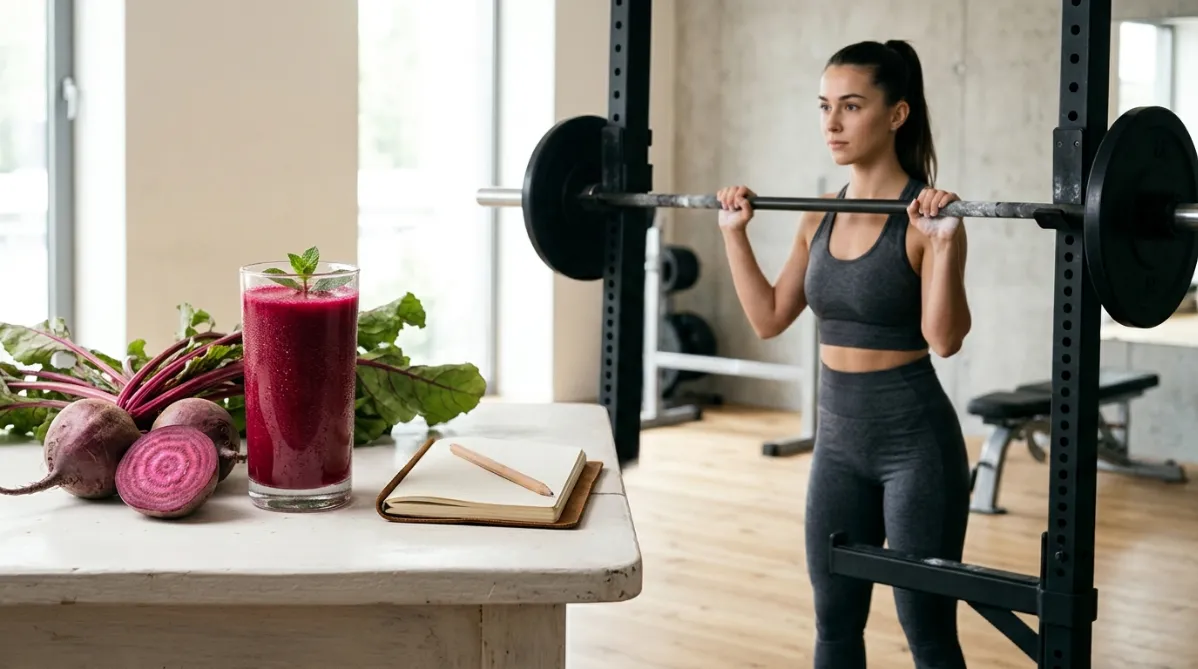
A wide, editorial-style photograph of a bright, modern gym corner softened by morning window light. In the foreground, a rustic matte-white ceramic table holds a tall clear glass of deep magenta beetroot juice, beads of condensation on the glass, a few fresh whole beetroots with leafy crimson-veined stems beside it, and one beetroot sliced in half to reveal its vivid concentric purple-pink rings. Next to the glass sits a small, neat notebook with a pencil, suggesting a research note, with no legible text. Behind the table, slightly out of focus, a young woman lifter with a tidy ponytail and a fitted charcoal training set stands at a barbell resting on a squat rack, chalk-dusted hands gripping the bar, calm and focused expression. A loaded bench with a bar is visible further back, with matte black plates and a light wooden floor. The palette is restrained and trendy: warm off-white, soft concrete gray, muted sage green accents from the beet leaves, and a bold beetroot magenta as the focal color. Shallow depth of field with a creamy bokeh background, natural side lighting casting long gentle shadows, subtle film grain. Composition follows the rule of thirds, with the juice and beets on the left third and the lifter on the right, leaving clean negative space in the upper area for a headline overlay. Mood is thoughtful, clean, and slightly skeptical, like a contemporary health and science journal cover. Realistic photography style, high-end magazine look, no text, no logos, no futuristic elements.
nutrition

Le jus de betterave n’a pas aidé les femmes haltérophiles — et a même ralenti le développé couché

BY DR. GYMBRO ·

Le jus de betterave est souvent présenté comme un booster naturel de performance, mais une étude croisée menée auprès de 18 femmes pratiquant la musculation n’a montré aucun bénéfice au squat. Plus surprenant encore, la puissance et la vitesse au développé couché ont légèrement diminué à une charge de 60 % du 1RM après une dose d’environ 6,7 mmol de nitrate prise 2,5 h avant l’entraînement. La baisse ne représente que ~5 W et 0,02 m/s, avec des p‑valeurs limites, ce qui reste loin d’être concluant. Voici ce que l’étude a testé, ce qu’elle ne peut pas nous dire, et ce que les athlètes peuvent encore envisager.
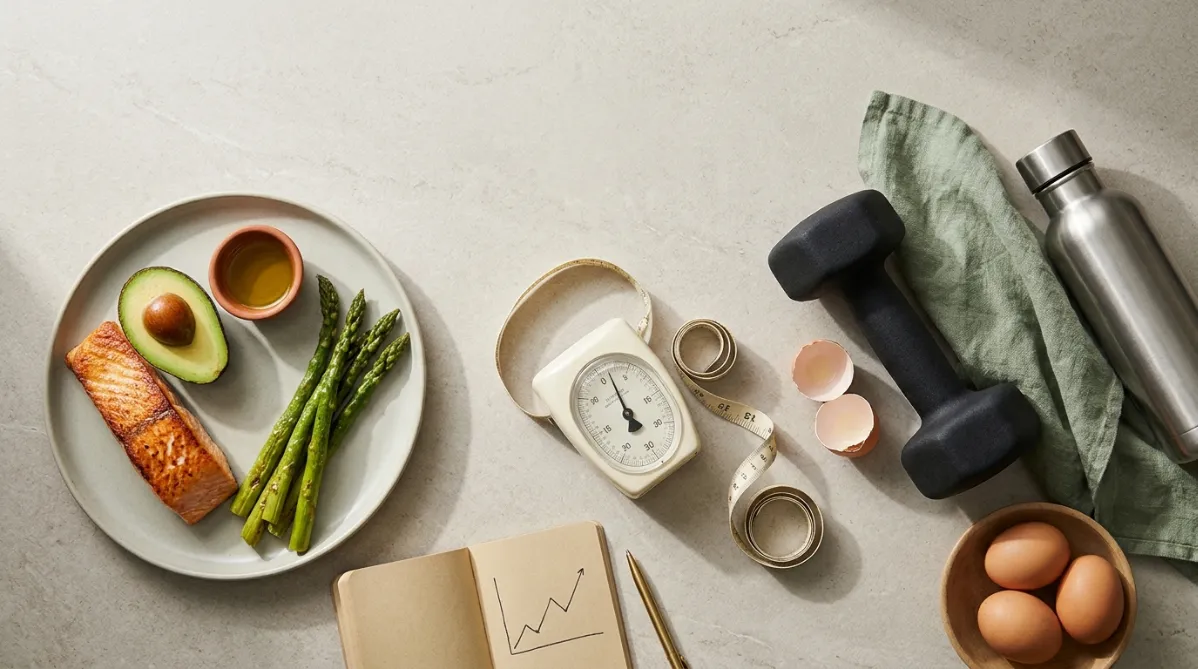
A bright, minimalist editorial flat-lay photographed from above on a pale warm-gray stone countertop in soft natural window light. On the left, a ceramic plate holds a keto-style meal: a seared salmon fillet with crisp skin, half an avocado with a glossy pit, a scattering of bright green asparagus spears, and a small dish of golden olive oil. On the right, a matte black dumbbell rests beside a folded sage-green linen towel and a slim stainless steel water bottle. A raw egg and a few whole eggs in a shallow wooden bowl add a protein cue. In the center, a clean analog kitchen scale and a flexible cream-colored measuring tape curl gracefully in a loose spiral, hinting at body composition tracking. A small open notebook with a minimal hand-drawn line graph, with no legible text, sits at the lower edge with a thin brass pen.

The palette is calm and modern: muted sage green, creamy ivory, warm terracotta accents from a small clay ramekin, and deep charcoal from the dumbbell. Shadows are soft and long, falling diagonally, giving gentle depth. The composition leaves generous negative space at the top and right for title placement. Shallow depth of field, crisp focus on the salmon and dumbbell, subtle film-like grain, and a refined, trendy health-journal look reminiscent of contemporary wellness magazines. Natural, airy, balanced, and slightly editorial, with no people, no text, and no futuristic elements.
nutrition

Le keto préserve-t-il la masse musculaire pendant un régime ? Les données sur la masse maigre surprennent

BY DR. GYMBRO ·

Le keto est souvent présenté comme une méthode de perte de poids qui préserve les muscles, grâce aux effets anti‑cataboliques supposés des cétones. Une nouvelle revue narrative publiée dans *Nutrients* met cette idée à l’épreuve des données cliniques et la trouve insuffisante. Les régimes cétogènes font surtout perdre de la graisse, mais les méta‑analyses montrent des pertes légèrement plus importantes de masse maigre que les régimes non cétogènes. Le problème, c’est que le DXA et le BIA ne distinguent pas le muscle de l’eau et du glycogène, rendant l’effet réel sur le muscle flou. Ce qui protège réellement les tissus maigres, c’est le trio bien connu : apport protéique suffisant, entraînement de résistance et déficit modéré.
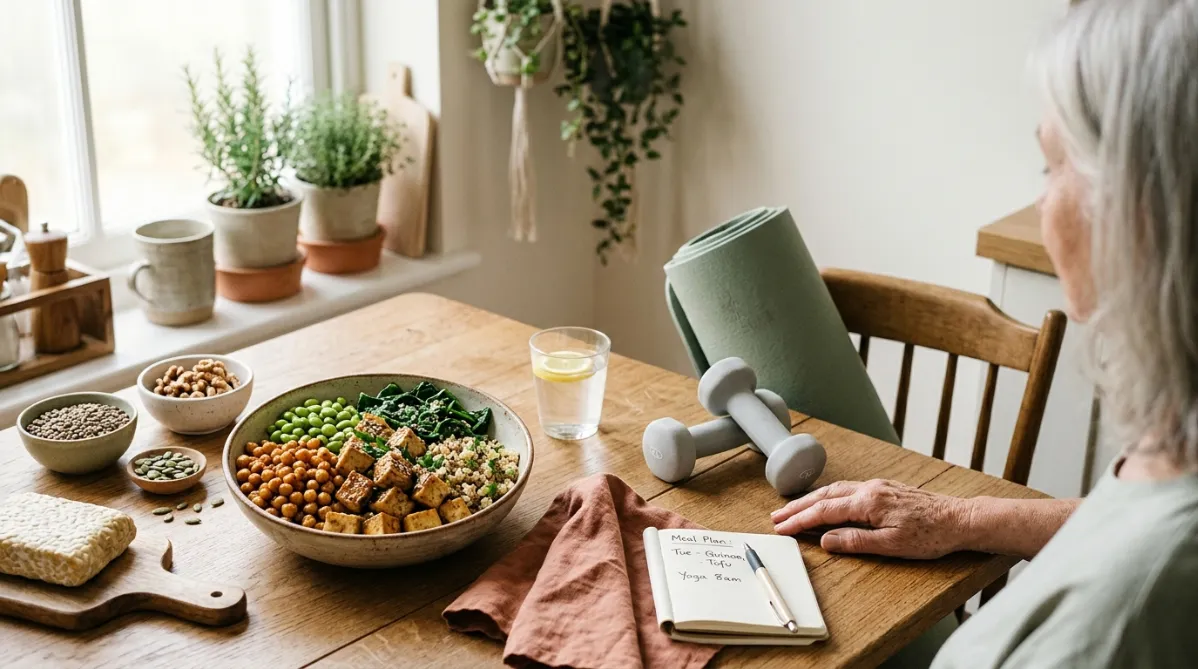
A landscape editorial photograph of a sunlit kitchen table, shot from a slightly elevated three-quarter angle. On the left, a rustic ceramic bowl holds a warm plant-based protein meal: roasted chickpeas, marinated tofu cubes, edamame, quinoa, and wilted greens, topped with toasted sesame seeds. Around it are small dishes of lentils, walnuts, pumpkin seeds, and a block of tempeh on a wooden board. On the right, a pair of weathered hands belonging to an older adult with silver hair, partially visible and softly out of focus, rests beside a pair of light dumbbells and a rolled sage-green yoga mat leaning against a chair. A linen napkin, a glass of water with a lemon slice, and a small handwritten notebook with a pen suggest careful planning. Soft morning light streams through a large window on the left and casts gentle long shadows across the pale oak tabletop. The color palette is muted and earthy: warm cream, sage green, terracotta, soft mustard, and natural wood tones. The background has shallow depth of field, with blurred shelves of herbs in pots and a few hanging plants. The mood is calm, hopeful, and health-focused, in the style of a modern lifestyle magazine or science journal feature, with clean composition, generous negative space in the upper right for headline text, and a subtle film-like grain. No text, no logos, no futuristic elements.
nutrition

Passer au véganisme à 65 ans et plus : perte de 1,15 kg de masse maigre en 12 semaines

BY DR. GYMBRO ·

Un essai randomisé de 12 semaines chez 72 adultes de 65 ans et plus a montré que passer au véganisme sans planifier son apport en protéines leur a coûté 1,15 kg de masse maigre. Le groupe omnivore est resté stable. L’ajout d’entraînement en résistance a limité la perte à 0,62 kg, ce qui aide beaucoup mais n’efface pas la diminution. Le vrai coupable était une baisse d’environ 20 à 28 g de protéines par jour, et non les plantes elles‑mêmes. Voici ce que montrent les données et comment protéger vos muscles avec un régime à base de plantes.
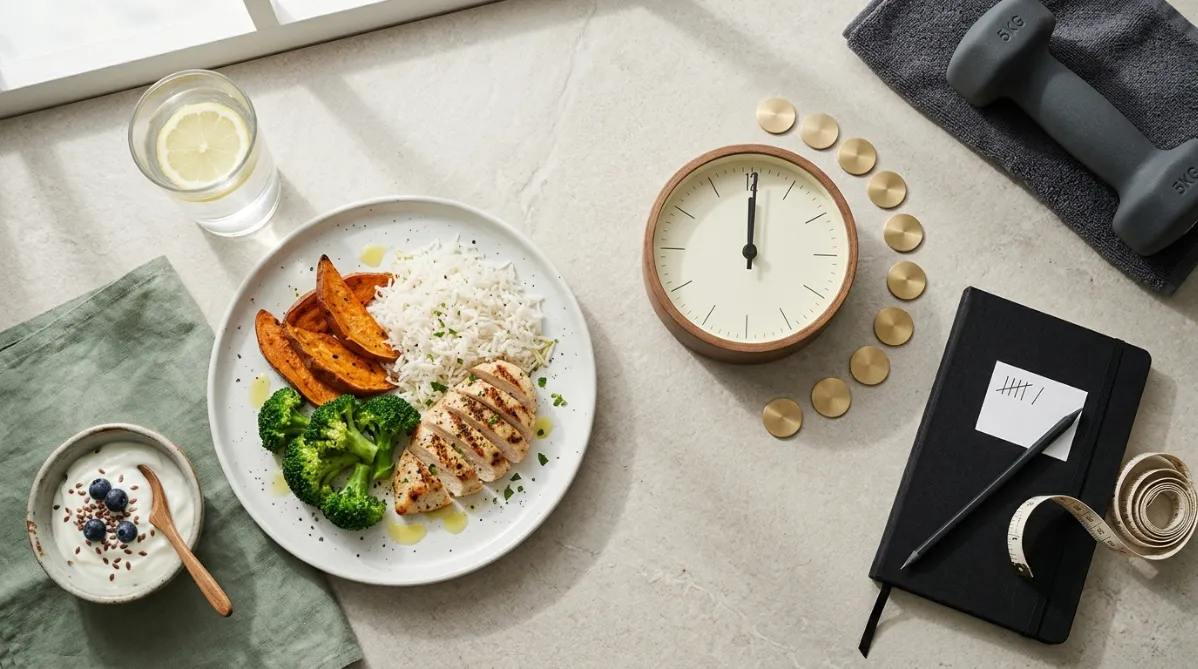
A wide, editorial-style flat lay photographed from above on a pale warm-gray stone surface, bathed in soft natural window light with gentle diagonal shadows. On the left side, a minimalist matte white ceramic plate holds a balanced bulking meal: sliced grilled chicken breast, a mound of fluffy basmati rice, roasted sweet potato wedges, and bright green broccoli, with a drizzle of olive oil glistening. Beside it sits a tall glass of water with a lemon slice and a small bowl of Greek yogurt topped with blueberries. On the right side, a round analog clock face is subtly placed, or a simple wooden clock with a minimalist design, its hands marking noon, with a soft arc of eight small brushed-brass discs arranged in a curved line beside it, suggesting an eight-hour eating window. A sleek black notebook with a pencil rests nearby, with a few hand-drawn tally marks and a tape measure loosely coiled next to it. A single dumbbell with a matte charcoal finish sits at the top right edge, partially cropped, hinting at strength training. The color palette is muted and sophisticated: sage green, warm cream, terracotta, soft charcoal, and touches of brass. Generous negative space on the right third for title text overlay. Shallow depth of field with crisp focus on the plate, subtle film grain, and a calm, modern wellness-magazine aesthetic reminiscent of contemporary health and fitness journals. Clean composition, natural textures like linen napkin and speckled ceramic, and no people or text visible.
nutrition

Jeûne 16 : 8 pendant la prise de masse : même muscle, moins de moitié de prise de graisse

BY DR. GYMBRO ·

Les culturistes qui ont limité leur prise de masse à une fenêtre de 8 heures ont gagné autant de muscle et de force que ceux qui mangent de façon classique, tout en accumulant moins de la moitié de la graisse supplémentaire. Le secret n’est pas un effet miracle du jeûne : le groupe 16 : 8 a simplement consommé moins que le surplus prévu, avec donc moins de protéines et de glucides. Cette étude randomisée sur 12 semaines indique que le repas limité dans le temps constitue surtout un outil d’adhérence pour un « lean‑bulk », et non un hack métabolique. Vous trouverez ci‑dessous les chiffres, la cible protéique qui a fonctionné, ainsi que les profils pour qui l’essayer ou l’éviter.
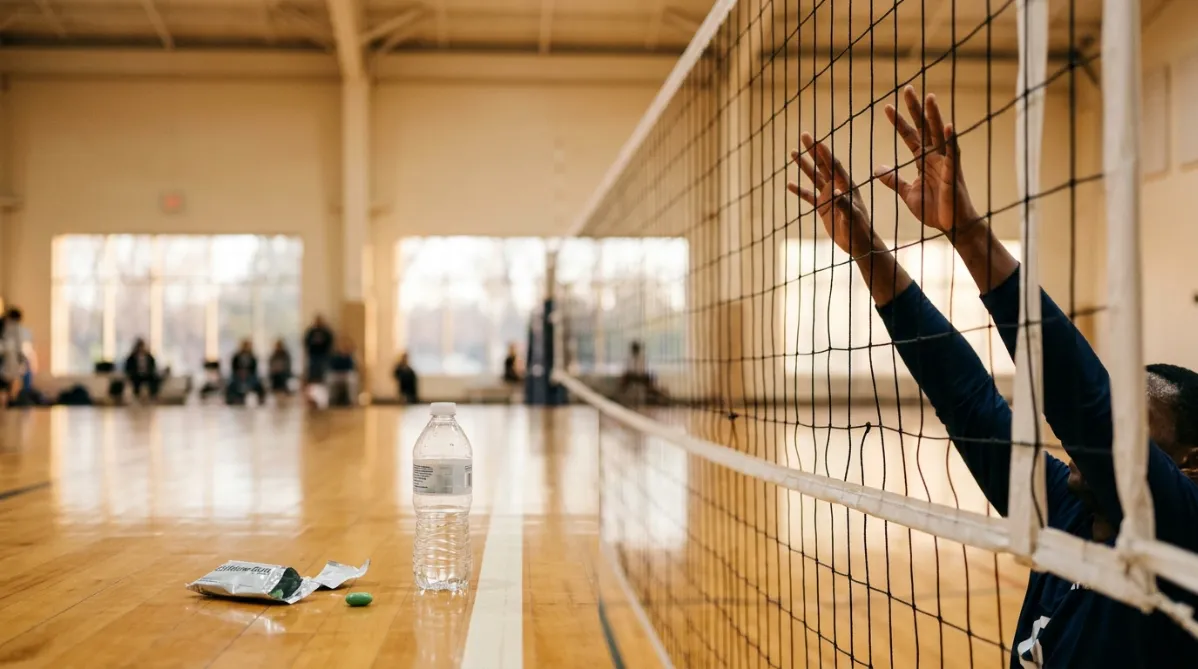
A landscape editorial photograph of a volleyball net in a softly lit indoor gym, shot from a low angle on the court. In the foreground, a pair of athletic hands in mid-block reach above the net, fingers spread, caught in crisp focus. The athlete's face is out of frame, so the attention stays on the hands and the net. In the lower left foreground, a small open foil pack of caffeine chewing gum sits on the polished maple floor, with two mint-green gum pieces beside it and a clear water bottle. The pack is unbranded and minimal.

The background is a warm blur of honey-toned hardwood, pale gym walls, and tall windows with diffused late-afternoon light streaming in. Dust motes glow in the light shafts. The palette is muted and modern: warm wood amber, soft cream, sage green, and a touch of deep navy from the athlete's jersey. Shallow depth of field and gentle film grain give the image a refined, magazine-like feel. The composition follows the rule of thirds, with the hands and net on the right and open negative space on the left, where headline text could sit.

The mood is calm, focused, and slightly cinematic, like a feature in a contemporary sports science journal. The lighting is soft and natural, with long gentle shadows across the court lines. No futuristic or digital elements, no charts, no text. The overall look is clean, tactile, and editorial.
nutrition

Fatigue : les temps de réaction ralentissent de 18 %. Le chewing‑gum à la caféine ne les réduit qu’à 3 %

BY DR. GYMBRO ·

Après un protocole de fatigue très exigeant, les joueuses de volleyball d’élite sous placebo ont vu leurs temps de réaction augmenter de 18,4 %. Un chewing‑gum contenant 6 mg/kg de caféine n’a limité ce ralentissement qu’à 3,0 %, tandis que 3 mg/kg n’ont entraîné qu’une hausse de 6,4 %. La puissance au saut‑bloc et la raideur du saut‑dégressif se sont également mieux maintenues avec la caféine. L’étude, toutefois, ne comporte que 15 athlètes, l’aveugle était incomplet et les effets indésirables étaient plus fréquents à la dose la plus élevée.
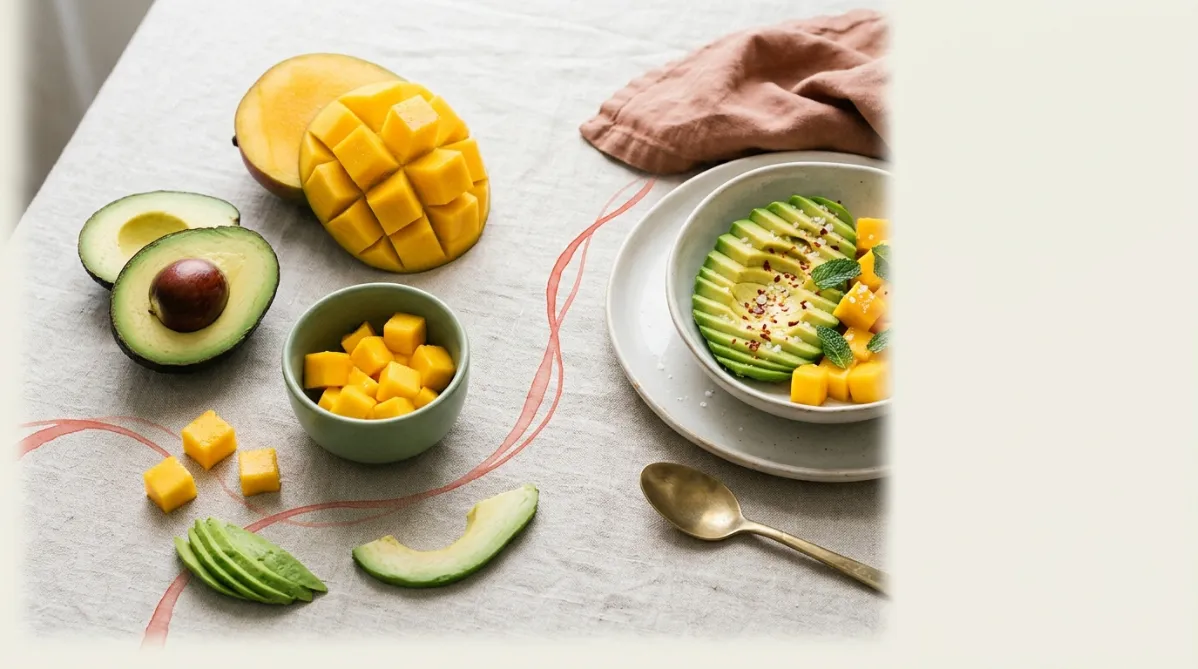
A wide, softly lit editorial still life photographed from slightly above on a pale oat-colored linen surface. On the left, a halved ripe Hass avocado with its glossy pit still nestled in one half, the flesh a buttery gradient from deep green at the skin to creamy yellow at the center. Beside it, a ripe mango is sliced into thick cheeks with a neat crosshatch pattern, the golden-orange flesh catching the light. A small ceramic bowl in matte sage green holds a cup of diced mango cubes. A few scattered mango cubes and a thin avocado slice fan out across the surface.

On the right, a minimalist ceramic plate holds a simple composed bowl: sliced avocado fanned over mango, with a sprinkle of flaky sea salt, a pinch of chili flakes, and a few torn mint leaves. A linen napkin in muted terracotta is draped casually at the edge of the frame. A single brushed-brass spoon rests nearby.

A subtle graphic touch ties in the artery theme: a thin, elegant line of warm coral red, like a hand-drawn ribbon or gentle wave, curves through the negative space on the surface, suggesting a blood vessel and flow without looking clinical. It passes softly beneath the fruit as if painted on the table in watercolor.

Natural morning window light enters from the upper left, creating soft long shadows and gentle highlights on the fruit's surface. The palette is warm and fresh: avocado greens, mango golds and oranges, cream, sage, and a hint of coral. Shallow depth of field blurs the background edges into creamy neutrals, leaving generous clean empty space on the right third for title text. Modern wellness magazine aesthetic, crisp but organic, high-end food photography, with a subtle film-like grain and calm, balanced composition.
nutrition

Avocat + mangue au quotidien : ce qui a changé dans les artères (et ce qui n’a pas changé)

BY DR. GYMBRO ·

Huit semaines de consommation quotidienne d’un avocat et d’une tasse de mangue ont modifié la fonction artérielle chez des adultes prédiabétiques, sans toucher à la glycémie. Dans un essai randomisé mené sur 82 participants, la dilatation dépendante du flux (FMD) a progressé d’environ 1 % avec le régime fruité, alors qu’elle a reculé avec le régime contrôle pauvre en fibres, soit une différence d’environ 2,1 % (P = 0,008). La pression artérielle diastolique s’est surtout améliorée chez les hommes, tandis que la plupart des autres biomarqueurs sont restés inchangés. L’étude, partiellement financée par le Hass Avocado Board et le National Mango Board, montre ce que le combo avocat‑mangue peut réellement apporter et ce qu’il ne prouve pas, ainsi que des pistes pour l’intégrer dans un régime de coupe ou d’entretien.
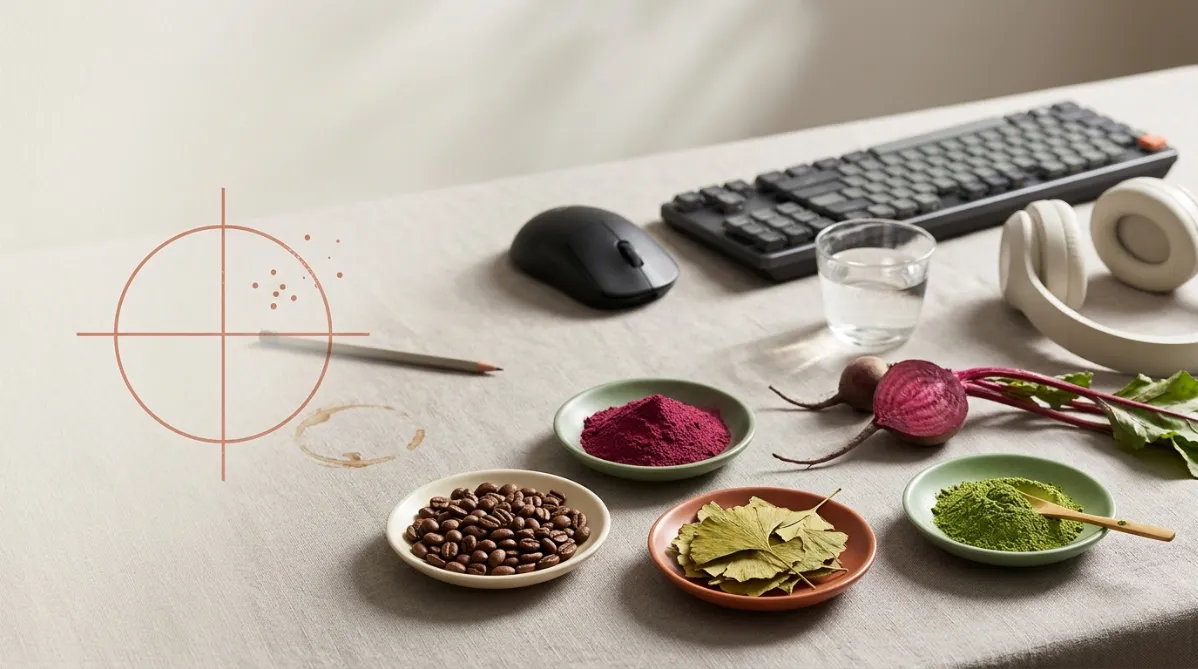
A landscape editorial still life on a softly textured warm-gray linen surface, shot from a slightly elevated three-quarter angle in diffused natural window light. In the foreground, four small ceramic dishes are arranged in a gentle arc. One holds roasted coffee beans, one holds deep magenta beetroot powder, one holds dried golden-green Ginkgo biloba leaves, and one holds bright jade matcha-style green tea powder with a tiny bamboo scoop. Each dish has a distinct, saturated color that stands out against the muted backdrop. Behind them, slightly out of focus, sits a minimalist matte-black gaming mouse beside a sleek, low-profile mechanical keyboard. A pair of matte off-white headphones rests on the right. A single fresh beetroot with its leafy stem and a halved beet showing concentric magenta rings lie casually near the dishes. A small glass of water catches the light, casting soft refracted highlights across the linen.

On the left, a clean, graphic crosshair motif is rendered as a thin circle and cross lines in soft terracotta ink, as if stamped on the paper surface, with a few tiny scattered dots clustered just off-center to hint at drifting aim. A subtle ring of coffee residue and a pencil lie near it, suggesting a researcher's desk. The color palette is warm and earthy: cream, sage green, terracotta, deep beet magenta, charcoal black, and touches of gold. The shallow depth of field gives creamy bokeh in the background, with soft shadows falling to the left. The mood is calm, modern, and intelligent, like a premium health and performance magazine cover, with generous negative space on the upper left for headline text. The composition is balanced and uncluttered, with crisp detail on the ingredients, fine natural textures like leaf veins and powder grain, and a refined, trendy editorial feel. There are no people, no text, and no futuristic elements.
nutrition

Cerveau grillé, visée perdue : quel supplément la restaure réellement ?

BY DR. GYMBRO ·

Après trois heures de partie classée, votre réticule dérive et vos tirs atterrissent légèrement à côté de la cible. Un nouvel essai croisé, mené sur 20 joueurs d’élite de FPS, a comparé caféine, nitrate de betterave, Ginkgo biloba et catéchines de thé vert après une fatigue mentale induite par le test de Stroop. Les quatre suppléments ont surpassé le placebo pour la récupération de la précision, sans différence entre eux, tandis que caféine, nitrate et catéchines ont également restauré la stabilité du tir. Aucun n’a amélioré la localisation spatiale ou le multitâche au‑delà de la récupération naturelle. Voici comment exploiter ces résultats, et pourquoi la petite taille de l’échantillon impose la prudence.
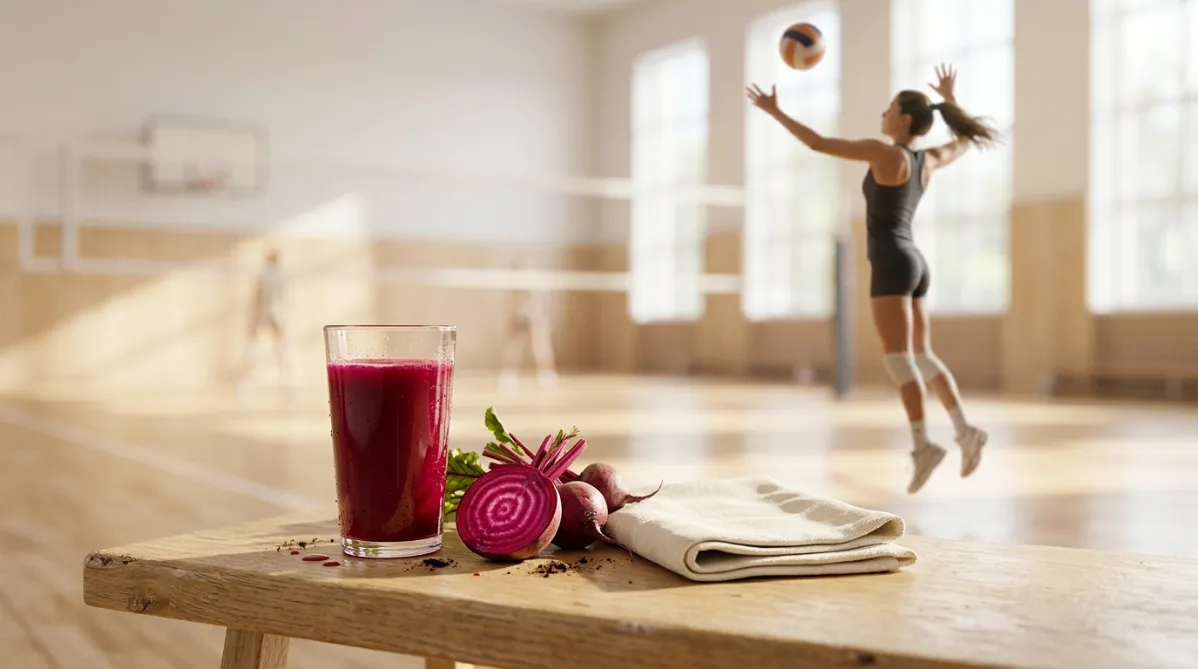
A wide, editorial-style photograph of a deep magenta glass of beetroot juice standing on a pale oak gym bench in soft morning light. Beside it sit a halved raw beetroot with vivid fuchsia and white concentric rings, a few whole beets with leafy stems, and a folded cream towel. Behind them, slightly out of focus, a female volleyball player in a fitted charcoal athletic set is caught mid-jump on an indoor court. Her arms are raised, her ponytail lifts, and a volleyball hangs near her fingertips. The polished wooden court floor reflects warm light from tall windows. The background fades into a creamy blur of pale wood tones, soft white walls, and hints of a net.

The composition follows a rule-of-thirds layout. The juice and beets fill the lower left third in crisp focus, and the jumping athlete is the softly blurred focal point on the right. Fine condensation beads on the glass, and a few juice droplets rest on the bench like small jewels. The palette is limited and modern: rich beet magenta, warm honey wood, soft off-white, and charcoal accents. The light is natural and diffused with gentle long shadows. The shallow depth of field suggests a high-end lifestyle and health magazine. The look is clean and minimal with plenty of negative space in the upper left for a title overlay. The mood is energetic yet calm, hinting at recovery and bounce. It has fine film-like texture and true-to-life color, with no text, logos, or futuristic elements.
nutrition

Jus de betterave et hauteur de saut : le jour 3 rend‑il le rebond ?

BY DR. GYMBRO ·

Deux cents sauts chargés laissent les jambes en compote, mais le jus de betterave pourrait‑il rendre le rebond au troisième jour ? Une nouvelle étude croisée menée chez des joueuses de volley‑ball montre une hauteur de saut accrue à 72 h et un meilleur seuil de douleur du mollet sous l’effet du jus de betterave. En revanche, la douleur, l’agilité, le gonflement et la plupart des mesures de force restent inchangés, l’interaction globale sur le saut n’étant qu’une tendance. Cet article décortique les résultats, leurs applications possibles pour les athlètes et les limites d’un petit échantillon exclusivement féminin.
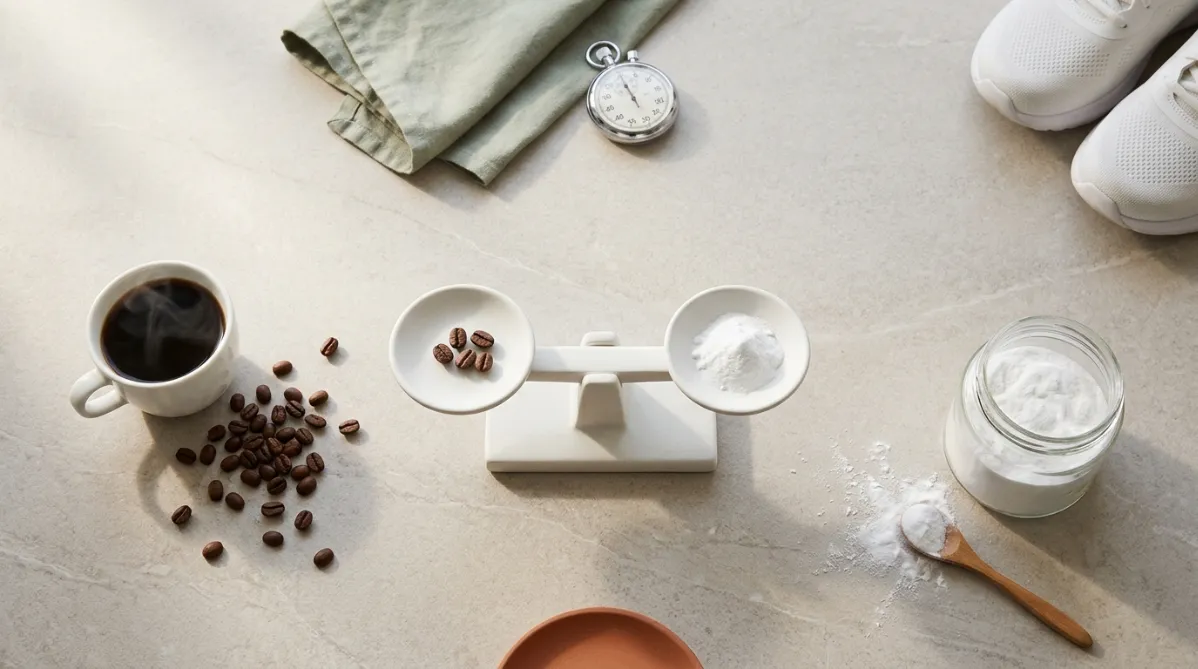
A calm, editorial-style flat lay photographed from above on a pale, warm-gray stone countertop in soft morning window light. On the left, a small white ceramic cup of black coffee with a delicate swirl of steam, beside a scattering of whole roasted coffee beans. On the right, a minimalist glass jar of fine white baking soda powder with a wooden spoon resting beside it, a few soft white grains dusted across the surface. In the center, a clean white scale-like balance made of matte ceramic with two small dishes: one holding a few coffee beans, the other a small mound of white powder, perfectly level to suggest the idea of equal outcomes. A folded sage-green linen napkin and a simple stainless steel stopwatch rest near the top edge, along with a pair of minimalist white running shoes partially visible in the corner. Subtle long shadows, gentle natural highlights, and a shallow depth of field give a tactile, premium feel. The color palette is muted and modern: cream, warm espresso brown, soft sage, and chalky white, with a single accent of pale terracotta in a small ceramic dish. Composition is balanced and uncluttered with generous negative space on the upper right for a title overlay. The overall mood is clean, contemporary, and quietly scientific, like a cover from a trendy health and performance journal. Wide landscape 16:9 framing, crisp detail, natural film-like grain.
nutrition

Caféine + bicarbonate de soude : le combo surpasse-t-il chaque ingrédient pris séparément ?

BY DR. GYMBRO ·

Combiner deux aides ergogéniques reconnues paraît être une garantie de performance, mais une méta‑analyse récente de 13 essais croisés montre que le calcul n’est pas si simple. Par rapport à un placebo, la combinaison caféine + bicarbonate de sodium a augmenté la puissance moyenne d’environ 8,4 W et réduit le temps d’épreuve de 1,6 %. Toutefois, ces effets disparaissent dès qu’on retire les études une à une, et le combo n’a pas surpassé la caféine ou le bicarbonate seuls. Voici ce que révèlent les données, quelles doses sont habituellement utilisées et qui devrait envisager ce mélange.
A wide, editorial-style still life photographed in soft natural morning light on a pale oak table. In the foreground, three tall glasses stand in a row: one with clear water, one with a lightly cloudy electrolyte drink with a faint citrus tint, and one with a creamy, milky protein beverage. Fine condensation beads on each glass, and a few water droplets catch the light on the wood surface. Beside the glasses sit a scoop of fine white protein powder spilling slightly from a matte ceramic bowl, a halved lemon, a small pinch of coarse sea salt on a slate dish, and a folded linen napkin in warm oatmeal. A sleek stainless steel sports bottle rests slightly out of focus on the right.

In the softly blurred background, a sunlit window frames a quiet urban running path with green trees. A pair of well-worn running shoes and a rolled yoga mat lean against a pale plaster wall, suggesting an athlete's post-workout moment without showing a face. The palette is calm and modern: warm creams, soft sage green, muted sky blue, and touches of citrus yellow. Shallow depth of field, gentle shadows, and generous negative space on the upper left for title text. The mood is clean, fresh, and contemporary, like a premium health and science journal cover, with subtle film-like grain and crisp, natural textures.
nutrition

Les protéines dans votre boisson hydratent‑plus ? 16 études disent oui, surtout

BY JAKE THE TITAN ·

La plupart des athlètes considèrent la réhydratation comme un problème à deux ingrédients : l’eau et les électrolytes, éventuellement des glucides. Une nouvelle revue systématique et méta‑analyse publiée dans *Sports Medicine* montre que les protéines méritent aussi d’être prises en compte. En regroupant 16 études humaines, une équipe de l’Université de Loughborough a constaté que les boissons contenant des protéines permettent de retenir davantage de liquide, de produire moins d’urine et d’obtenir un meilleur bilan hydrique net que les boissons de contrôle. Cependant, l’étude compare les boissons protéinées à un « contrôle » générique, dont la nature exacte n’est pas précisée. Malgré cette nuance, les résultats restent intéressants pour les sportifs en quête d’une stratégie de réhydratation plus efficace.
A wide, editorial-style flat lay on a pale warm-gray stone surface, shot from slightly above in soft natural window light with gentle diagonal shadows. On the left, a matte white ceramic bowl holds fine white baking soda powder, with a wooden scoop resting beside it and a light dusting of powder across the stone. In the center, a small glass jar of white beta-alanine powder sits next to a clear glass of water that catches the light. To the right, a neatly folded charcoal gym towel lies under a single brushed-steel dumbbell, and a sleek matte black stopwatch sits nearby. A printed anatomical cross-section of a thigh, in muted sage green and soft terracotta line-art tones, is tucked under the items like an elegant editorial illustration. It shows quad muscle groups in a stylized, minimalist way and is not clinical or futuristic. A few sprigs of dried eucalyptus and a lemon wedge add organic texture and a pop of soft yellow. The palette is cream, sage, warm gray, and charcoal, with small terracotta accents. The composition leaves generous negative space at the upper left for a title overlay. Shallow depth of field blurs the background edges, and the mood is calm, modern, and trustworthy, like a contemporary health and fitness journal. The look is high-end magazine photography with subtle film grain, clean and minimal.
nutrition

Stack de bêta‑alanine + bicarbonate de soude augmente la taille du quadriceps à l’IRM : le hic

BY DR. GYMBRO ·

Une étude de huit semaines a montré que les hommes supplémentés en bêta‑alanine et bicarbonate de soude voyaient leur quadriceps croître de 21‑24 % à l’IRM, contre 5‑9 % avec le placebo. Le groupe actif a aussi réalisé près de 29 % de volume d’entraînement supplémentaire, ce qui pourrait expliquer la majeure partie de l’effet. Avec seulement 20 participants et aucune amélioration de la force, le tableau reste plus nuancé que ne le laissent entendre les chiffres. Voici ce que l’étude a réellement démontré, ce qu’elle n’a pas montré, et comment interpréter doses, picotements et confort gastrique.
A wide, softly lit editorial photograph of a minimalist home gym corner with pale oak flooring and a warm off-white wall. In the foreground on a light wooden bench sits a matte ceramic scoop resting beside a simple frosted glass shaker bottle, with a delicate dusting of fine cream-colored protein powder spilled across the wood in a natural, casual arc. In the soft-focus midground, a loaded barbell rests on a squat rack with brushed steel plates, and a neatly folded charcoal towel hangs over the rack's upright. To the right, a small open notebook with a pencil lies on the bench, suggesting tracked training logs, with no legible text. Morning sunlight streams diagonally through a large window on the left, casting long gentle shadows and a warm golden glow across the scene, with subtle dust motes floating in the light. The color palette is muted and modern: sage green, warm sand, soft terracotta, and cream, with a single accent of deep forest green from a potted plant in the background corner. Shallow depth of field, crisp detail on the powder and scoop, creamy bokeh on the barbell. Shot as if with a 50mm lens at f/2, natural film-like grain, clean negative space on the upper right for headline overlay. The mood is calm, thoughtful, and science-minded, with a contemporary wellness magazine aesthetic, realistic and tactile, with no people, no logos, and no text.
nutrition

La poudre de protéine augmente-t-elle la force ? 23 essais dévoilent le hic

BY DR. GYMBRO ·

Ajouter de la poudre de protéine à votre entraînement rend‑il vraiment plus fort ? Une méta‑analyse de 2026, portant sur 23 essais randomisés et 611 jeunes adultes, a trouvé un avantage moyen de 7,4 kg au squat et de 2,6 kg au développé couché. Le bénéfice au squat était surtout présent dans les programmes de 12 semaines ou moins et dans les essais où la protéine était prise autour des séances et avant le coucher. Le signal lié au timing était toutefois marginal, aucune dose optimale n’a été établie, et les auteurs soulignent que le gain est conditionnel, pas universel. Voici ce que les données soutiennent et ce qu’elles ne soutiennent pas.
A wide landscape editorial photograph shot from above at a slight angle, showing a bright, minimalist kitchen counter of pale oak wood. Three matching ceramic bowls in soft matte tones (warm cream, sage green, and muted terracotta) sit in a loose row. Each holds a different protein powder: fine ivory whey, slightly coarser beige soy, and speckled pale yellow-green pea protein. A small fourth pile of tiny gray-black chia seeds sits apart on a folded linen napkin, off to the side, to suggest the lone outlier. Wooden scoops rest in each bowl, with a few soft dustings of powder on the surface. In the foreground, a clear glass shaker with a creamy blended drink and a single sprig of fresh mint stands beside a small stack of fresh produce: a halved avocado, a handful of edamame pods, and a few green peas in an open pod. A matte white notebook and a thin brass pen are tucked at the edge of the frame, suggesting research and note-taking. Natural morning light pours in from the left through an unseen window, casting long, soft shadows and gentle highlights on the powder textures. The color palette is calm and earthy, with creams, sage, soft terracotta, and warm wood tones, and a clean, slightly muted editorial grade. Shallow depth of field keeps the bowls crisp while the background, a blurred white tiled wall and a hint of a trailing green plant, melts away. Plenty of negative space on the right side of the frame leaves room for a headline overlay. The overall mood is fresh, trustworthy, and modern, like a contemporary wellness and science journal.
nutrition

Le lactosérum n’est pas indispensable pour les débutants ? Le soja et le pois le rejoignent

BY DR. GYMBRO ·

Vous croyez qu’il faut obligatoirement du lactosérum pour gagner du muscle quand on débute ? Une méta‑analyse récente portant sur cinq essais mesurés par DEXA montre que les protéines de soja et de pois n’ont pas, de façon significative, été en retrait du lactosérum concernant les variations de masse maigre ou de masse grasse chez des adultes non entraînés. Les auteurs soulignent toutefois que « aucune différence statistiquement significative » ne prouve l’équivalence, et que le corpus de preuves reste limité. Voici ce que les données révèlent, ce qu’elles ne montrent pas, et comment choisir et doser votre protéine. Les adeptes de protéine de chia voudront lire la partie consacrée au seul essai disponible.
A wide, editorial-style photograph of a single slim silver and blue energy drink can standing upright at center on a polished light-oak gym bench, shot in soft natural window light. The can is unbranded, with a clean, minimal design and a few beads of condensation. Behind it, the softly blurred interior of a bright modern indoor volleyball court stretches into the background, with a pale hardwood floor, a net, and a few volleyballs resting in a mesh cart. Warm morning sunlight enters through tall windows on the left and casts long, gentle shadows across the bench. Beside the can sit a small white towel folded neatly, a simple stopwatch, and a pair of white wireless earbuds. On the right, a small paper cup of white powder and a wooden scoop hint at measured dosing. They are placed deliberately, like a styled still life.

At the very edge of the frame, a pair of delicate white paper wings, origami-like and slightly crumpled, lie flat and unused on the bench, a subtle visual joke about the "wings" slogan. The wings are understated and tactile, not magical or glowing.

The color palette is muted and fresh: warm honey wood, soft cream, pale sky blue, and touches of silver, with a single accent of coral red from a volleyball panel in the background. The depth of field is shallow, with crisp focus on the can and the paper wings and a creamy bokeh background. The composition follows the rule of thirds, with the can slightly left of center and generous negative space on the right for a headline overlay. The mood is calm, clean, and contemporary, like a lifestyle and science magazine cover, with fine film grain and natural contrast. The camera angle is slightly low, at bench level, with a 50mm lens look.
nutrition

Le Red Bull vous donne-t-il des ailes ? 13 tests en salle n’ont rien trouvé

BY DR. GYMBRO ·

Le slogan de Red Bull promet des ailes, mais une récente étude croisée menée chez des joueuses de volley‑ball n’a rien décelé. Une canette standard n’a amélioré aucun des 13 paramètres testés (Wingate, saut, préhension) par rapport à un placebo. Huit des 15 sportives ont signalé une légère nausée. La raison la plus probable est que la dose de caféine était d’environ 1,1 mg/kg, bien en dessous des 3 à 6 mg/kg habituellement recommandés comme efficaces.
A landscape editorial still life in soft natural window light, set on a pale oak tabletop with a matte warm-white wall behind it. In the center-left, a few glossy strands of dark olive-brown kelp (Ecklonia cava) drape in an elegant curve over a shallow ceramic bowl in muted sage green. Next to the bowl, a small pile of fine, dry brown seaweed powder sits beside a minimalist wooden scoop. On the right, an unbranded matte-white supplement tub and a few loose cream-colored capsules are spilled neatly across the surface. A brushed steel cycling water bottle stands slightly out of focus in the background, with a folded gray cycling cap beside it. In the foreground, a clean white notebook with a thin pencil rests next to a simple analog stopwatch, hinting at a performance trial without any text or numbers visible.

The palette is earthy and calm: sage, olive, warm sand, cream and soft charcoal, with one subtle terracotta accent from a small ceramic dish. Long soft shadows fall diagonally across the table, and a gentle highlight catches the wet sheen of the seaweed. Shallow depth of field, with a creamy blurred background and crisp detail on the seaweed texture and capsules. The composition leaves generous negative space on the upper right for a headline overlay. Shot as if with a 50mm lens at f/2.8, top-down angle tilted about 30 degrees, in a modern wellness-magazine style that is minimalist, tactile and refined, with a subtle film-like grain and natural color grading.
nutrition

L'algue brune dans votre pré‑entraînement fait‑elle réellement quelque chose ?

BY DR. GYMBRO ·

L’extrait d’algue brune *Ecklonia cava* apparaît dans les compléments pré‑entraînement et les brûleurs de graisse, mais améliore‑t‑il vraiment vos performances ? Un essai randomisé, en double‑aveugle et croisé, a été réalisé chez 12 cyclistes entraînés qui ont reçu 263 mg d’extrait ou un placebo avant une heure de pédalage suivie de sprints maximaux. La glycémie a légèrement augmenté, tandis que le lactate, la consommation d’oxygène, l’utilisation des graisses par rapport aux glucides et la puissance de sprint sont restés inchangés. La petite taille de l’échantillon empêche d’exclure de minuscules effets, mais aucune preuve ne soutient un boost de performance aigu. Voici ce qui a été testé, ce que cela signifie et où votre argent pourrait être mieux dépensé.
A softly lit editorial still life on a pale oak table, shot from a slightly elevated three-quarter angle in a wide landscape frame. In the center sits an open amber glass supplement bottle on its side, with a small scatter of cream-colored capsules spilling onto the wood. Next to it is a ceramic dish holding a few dried rosehips in deep coral red, and a sprig of fresh rosehip with glossy orange-red berries and green leaves lies across the foreground. On the left, a neat pair of matching white capsules rests on a folded linen napkin, a quiet visual nod to the placebo and treatment groups. Behind them, slightly out of focus, a woman's hands in a soft oatmeal knit sweater rest on a knee in relaxed denim, suggesting everyday movement without showing a face. A pair of worn, clean running shoes sits at the edge of the frame on a woven jute rug. On the right side of the table, a minimalist notebook lies open with a hand-drawn simple line graph, two gently rising lines nearly overlapping, next to a matte black pen. Morning window light streams from the left, casting long, soft shadows and a warm golden glow with gentle highlights on the glass bottle. The background is a muted sage-green wall with a hint of a leafy plant in a terracotta pot, creamy bokeh throughout. The palette is earthy and calm: warm beige, sage, terracotta, coral red, and soft white. The mood is thoughtful, trustworthy, and quietly skeptical, like a modern health and science journal. Clean composition with generous negative space on the upper right for headline overlay. Fine-grain film texture, shallow depth of field, natural color grading, high-end lifestyle magazine photography.
nutrition

Le supplément pour les genoux qui n’a pas atteint son objectif mais a tout de même attiré l’attention

BY DR. GYMBRO ·

Un essai randomisé a évalué un supplément à base de cartilage de poulet hydrolysé et de cynorrhodon chez 138 adultes actifs souffrant de douleurs au genou. Le critère principal n’a pas été atteint. Les deux groupes, supplément et placebo, ont tous deux amélioré de plus de deux points sur une échelle de 10. Les analyses exploratoires laissent entrevoir un bénéfice sur la douleur lors des activités quotidiennes, surtout chez les femmes post‑ménopausées, mais ces signaux proviennent de petits sous‑groupes et ne sont pas concluants. L’étude a été rédigée par des employés des entreprises derrière le produit. Voici ce que les données montrent, ce qu’elles n’ont pas montré, et comment envisager son usage.
A warm, softly lit editorial scene of an older woman in her early seventies, with short silver hair and a calm, focused expression. She sits on the edge of a light oak bench in a bright, airy home gym, one hand resting on her thigh as she pauses between sets. She wears a muted sage-green athletic top and charcoal leggings. A well-worn leg extension machine sits blurred in the background, and a tall window floods the room with golden morning light.

In the foreground, slightly out of focus, a small ceramic dish on a pale wooden surface holds two translucent amber softgel capsules. Next to it sit a glass of water and a folded linen towel in warm cream. A single sprig of green algae-like seaweed rests beside the dish as a quiet nod to the algae-oil source. The sprig is delicate and natural, with no laboratory elements.

The color palette is earthy and modern: sage green, warm amber, oatmeal beige, and soft terracotta accents, with gentle highlights on the capsules. The composition follows the rule of thirds. The woman sits on the right, and the capsules and water fill the lower left. Negative space in the upper left keeps the layout clean for a headline overlay.

The photographic style is contemporary lifestyle editorial, shot on a 50mm lens at f/2, with shallow depth of field, soft natural grain, and subtle film-like tones. The mood is thoughtful, reassuring, and quietly skeptical. The scene suggests curiosity about whether a popular supplement delivers, with no drama and no clinical coldness. The image should look like the cover of a trendy health and wellness journal: clean, minimal, human, and sophisticated, with realistic textures in the skin, fabric, wood, and glass.
nutrition

Oméga‑3 pour soulager les jambes douloureuses après 65 ans ? L’essai a pris une tournure inattendue

BY DR. GYMBRO ·

Les compléments d’oméga‑3 sont souvent présentés comme un moyen d’atténuer les douleurs musculaires et d’accélérer la récupération. Un nouvel essai randomisé, en double‑aveugle et contrôlé par placebo, a mis cette affirmation à l’épreuve chez 43 adultes en bonne santé âgés de 65 à 85 ans, après une séance exigeante d’extensions de jambe excentriques. Après huit semaines de supplémentation à raison de 2 g d’oméga‑3 d’huile d’algues, la récupération fonctionnelle n’était pas meilleure que le placebo et la force était moindre à 24 h et 72 h. La réponse biochimique était différente, mais différente ne signifie pas meilleure. Voici ce qui a changé, ce qui est resté stable et ce que les pratiquants plus âgés doivent en retenir.
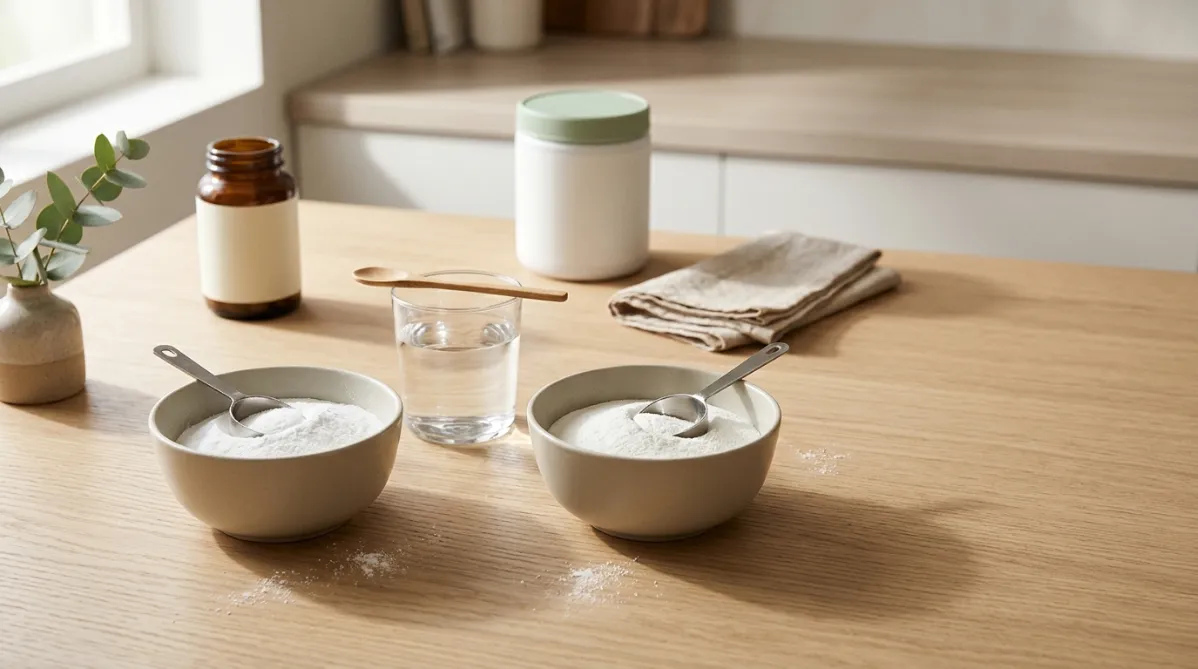
A wide, landscape editorial photograph of a clean, sunlit kitchen countertop in soft morning light. Two matching matte ceramic bowls sit side by side on a pale oak wood surface. One holds fine, bright white creatine powder, the other holds an almost identical powder, with a small stainless steel scoop resting in each. Between them sits a simple glass of water with gentle ripples and a thin wooden stirring spoon. In the soft-focus background, a minimalist amber glass supplement jar with a plain cream label and a sleek matte-white tub with a pastel sage-green lid stand slightly out of focus, suggesting a budget option and a premium option without any readable branding. A small, neatly folded linen napkin in warm oatmeal tones and a sprig of eucalyptus in a tiny stoneware vase add a calm, modern touch.

A few grains of powder are scattered naturally across the wood, catching the light. The color palette is warm neutrals with soft sage green, cream, and muted terracotta accents. The composition uses a shallow depth of field, a slightly elevated three-quarter angle, and generous negative space on the right side for title overlay. The lighting is natural window light from the left, creating long, gentle shadows and a subtle glow on the powder. The overall mood is calm, trustworthy, and thoughtful, like a contemporary health and wellness magazine or a minimalist lifestyle journal. High-resolution, crisp textures, film-like color grading, subtle grain, and a balanced, symmetrical sense of comparison between the two bowls.
nutrition

Cette créatine « plus absorbable » vient d'égaler le monohydrate ordinaire

BY DR. GYMBRO ·

Le marché de la créatine haut de gamme mise sur des promesses d’absorption supérieure et d’estomac plus doux, mais le monohydrate classique bénéficie d’une solide base de données scientifiques et d’un prix bas. Un essai randomisé, en double‑aveugle et en crossover, a comparé le produit plus récent OptiCreatine au monohydrate chez 17 jeunes adultes en bonne santé. Après une dose unique de 5 g, les courbes sanguines de créatine, les pics, le timing et les symptômes gastro‑intestinaux étaient statistiquement similaires. Voici ce que cela signifie en termes simples, ce que l’étude ne peut pas vous dire, et comment faire des achats intelligents.

This page is available in